
Roof Repair NJ › NJ Locations › Passaic County
Paterson · Clifton · Wayne · West Milford
Roof Repair in Passaic County, NJ
Roof Repair SNJ repairs flat, shingle, slate and metal roofs in all 16 Passaic County towns, from Paterson’s brick multi-family blocks to lake houses in West Milford and Ringwood. Every job starts with a free photo inspection and a written itemized quote, and repairs carry a 2-year written workmanship warranty. Send us your roof photos and we will take it from there.
- Flat roofs on Paterson and Passaic multi-family
- Ice dam and snow repairs in the Highlands
- Free inspection with photos, written quote
Free roof inspection in Passaic County
Photos of every problem we find and an itemized written price before any work. Emergency requests handled 24/7.
Roof Repair SNJ
16 Passaic County towns · all 21 NJ counties
Free inspection
Roof, attic and gutters checked at no cost.
Insured
Liability and workers’ comp; certificate on request.
Written quotes
Itemized price in writing before any work.
Photo-documented
Every problem photographed, before and after.
Passaic County at a glance
Passaic County at a Glance: Two Very Different Roofing Markets
Passaic County has the oldest housing of any New Jersey county, with a median year built of 1956, and it splits into two roofing worlds. The south is dense and urban, with Paterson, Passaic and Clifton holding most of the county’s 524,118 people. The north, around West Milford, Ringwood and Wanaque, is wooded Highlands with lakes, deeper snow and ice dams.
County seat
Paterson
Paterson had 159,732 residents in the 2020 Census, making it New Jersey’s third-largest city, with a housing stock built largely around its nineteenth-century mills.
Municipalities
16
Sixteen towns held 524,118 people in 2020, from Paterson down to Prospect Park’s 6,372, and each runs its own construction office for permits.
Median year built
1956
The oldest median of all 21 NJ counties in Census ACS 2023 five-year estimates; 28.1 percent of Passaic homes were built in 1939 or earlier.
Irene, Pompton Lakes
22.61 ft
The Ramapo River at Pompton Lakes crested at a record 22.61 feet on August 28, 2011, about 11 feet above its 11.5-foot flood stage, per the National Weather Service.
Irene, Little Falls
14.19 ft
The Passaic River at Little Falls reached 14.19 feet on August 30, 2011, second only to the 17.5-foot crest of October 1903 at that gauge.
Highlands snow
23.0 in
Ringwood measured 23.0 inches in the March 6-7, 2018 nor’easter. The state climatologist puts northern-zone annual snowfall at 40 to 50 inches.
Homes & roofs
What Kinds of Homes and Roofs Does Passaic County Have?
South Passaic is brick and frame multi-family housing with flat and low-slope roofs, plus older capes and colonials; north Passaic is lake cottages, raised ranches and colonials on wooded hillsides. Because so much of the county was built before 1960, we often find several generations of repairs on one roof, and the oldest layer is usually where the trouble starts.
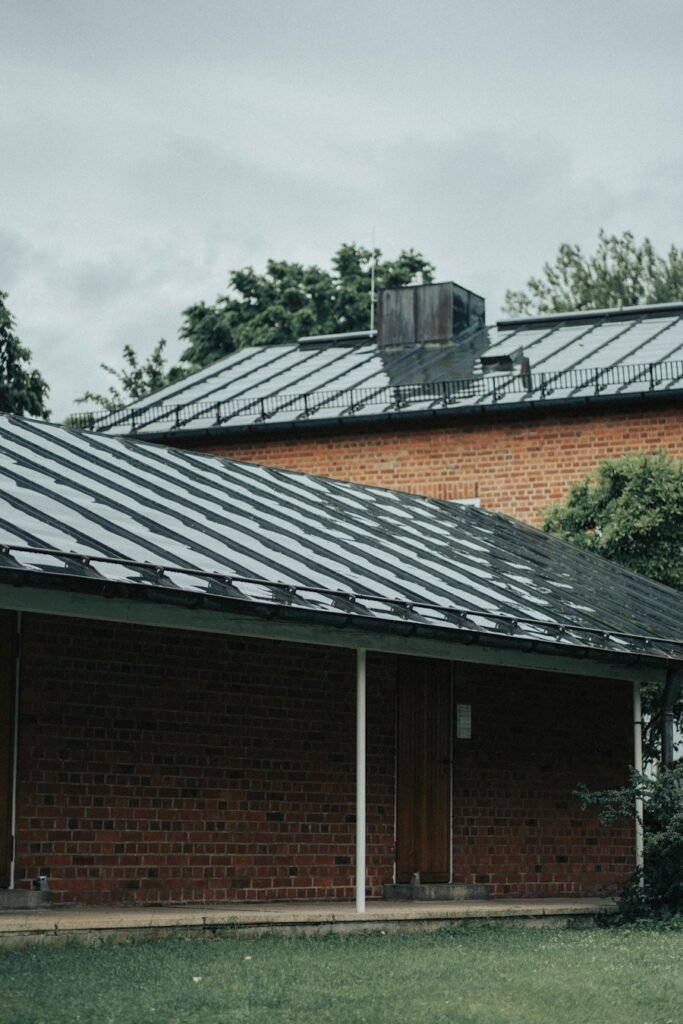
Mill-era brick and frame multi-family in Paterson
Paterson’s neighborhoods around the Great Falls, the Dublin and Riverside sections, and the blocks off Market and Main streets are full of late 1800s and early 1900s two-, three- and four-family houses and brick row buildings. Many have flat or nearly flat roofs behind parapet walls, with built-up tar, modified bitumen or rolled roofing over old plank decks. Leaks come at parapet caps, coping, chimneys and the single drain or scupper at the back.
Dense two- and three-family houses in the City of Passaic
Passaic packs 70,537 people into about three square miles, so houses sit almost wall to wall. Typical roofs are a pitched front with a flat or low-slope rear section, or a full flat roof on a three-family. Shared walls and close neighbors mean flashing between buildings, gutters that drain onto the next lot and ladder access through narrow alleys all shape the repair.
Capes, colonials and split-levels in Clifton
Clifton is the county’s second city and mostly single-family: 1920s to 1950s capes, colonials and bungalows in Botany Village, Lakeview and Albion, and postwar split-levels and ranches toward Allwood and Rosemawr. Dormer leaks, chimney flashing on older homes and wall flashing on split-levels are the common calls, along with tired second-layer shingle roofs that have reached the two-layer limit and need a full tear-off at the next replacement.
Postwar suburbs of Wayne, Totowa, Little Falls and Hawthorne
Wayne grew fast after World War II, and much of it, along with Totowa, Hawthorne and Little Falls, is colonials, split-levels, ranches and raised ranches from the 1950s through the 1980s. Most are on asphalt shingle roofs that have been replaced once or twice. Low sections along the Passaic and Pompton rivers in Wayne and Little Falls also deal with flood insurance and elevation questions.
Hillside homes in Haledon, North Haledon and Prospect Park
These boroughs climb the slopes north of Paterson toward the High Mountain area. Haledon and Prospect Park have older two-families and capes on small lots, while North Haledon has larger postwar and newer colonials. Hillside lots mean one side of a roof can be three stories off the ground, which changes ladder and staging plans, and wind exposure on the higher streets lifts shingles.
Lake cottages turned year-round in West Milford and Ringwood
Around Greenwood Lake, Upper Greenwood Lake, Lake Wanda, Pinecliff Lake and the many smaller lake communities, plenty of homes began as summer cottages and were later winterized. Low-pitch roofs, shallow attics with little insulation, additions at odd angles and a lack of ice and water shield make these houses the county’s ice dam leaders. Heavy shade from hardwoods adds moss and constant leaf load.
Raised ranches and colonials in Wanaque, Bloomingdale and Pompton Lakes
These river and hill towns have a lot of 1950s to 1980s raised ranches, bi-levels and colonials, with older cottages near Pompton Lake and the Wanaque reservoir area. Raised ranches leak at the front entry overhang and at bath fan and plumbing vents. Pompton Lakes homes near the Ramapo also carry flood history from Irene, when the river set its record crest.
Passaic County weather
How Does Passaic County Weather Damage Roofs?
Passaic roofs face river flooding in the south and center, heavy snow and ice dams in the northern Highlands, and wind and falling trees everywhere in between. The county climbs from the river valleys around Paterson into the Highlands, part of the state’s colder northern climate zone, so the same storm can bring rain to Clifton and a foot of snow to West Milford.
Irene, August 27-30, 2011: record river crests
Irene drove the Ramapo at Pompton Lakes to a record 22.61 feet and the Pompton at Pompton Plains to a record 25.24 feet, and the Passaic at Little Falls to 14.19 feet, its highest since 1903. Floods soak siding, sheathing at low eaves and attic insulation in flooded garages, and they add pressure to make roof decisions quickly. Wind with Irene also dropped trees on roofs in Wayne and the northern towns.
Ida, September 1-2, 2021: flash flooding in the cities
Ida’s remnants dropped 7.14 inches on Little Falls. In Paterson, responders rescued about 300 people and floodwater covered River Street near the Passaic River, and a man in the City of Passaic was swept away by floodwater. For roofs, Ida’s lesson was drainage: flat roofs with one clogged scupper and undersized gutters overflowed into walls and ceilings even where the roof itself had no hole.
Heavy Highlands snow and March nor’easters
The state climatologist puts northern-zone snowfall at 40 to 50 inches a year, with snow possible from mid-October to the end of April. In March 2018 West Milford got 8.3 inches in the first nor’easter and Ringwood 23.0 inches in the second. Wet late-season snow loads low-pitch cottage roofs, tears gutters off fascia and slides off steep colonials hard enough to strip shingles.
Ice dams in West Milford, Ringwood and Wanaque
Long cold stretches in the Highlands, with short thaws on sunny afternoons, are perfect ice dam weather. Winterized lake cottages with low roofs and thin attic insulation melt snow that refreezes at the eaves. Water backs up under shingles and runs into exterior walls and ceilings. The lasting fix combines ice and water shield at eaves and valleys with attic air sealing, insulation and ventilation.
Freeze-thaw on old masonry and flat roofs in Paterson and Passaic
In the southern cities, temperatures swing around freezing many times each winter. Water soaks into old brick parapets and chimneys, freezes and spalls the face, and opens mortar joints that let water behind flashing. Flat roofs with ponding water crack at the edges as ice forms and melts. Repointing, new parapet caps and proper counter flashing keep these roofs tight.
Wooded hills, wind and falling trees
From Garret Mountain in Woodland Park to the ridges of Ringwood and the forests around Wanaque, much of the county is heavily treed. Nor’easters, summer thunderstorms and remnant hurricanes bring limbs down on roofs, knock off ridge vents and crush gutters. Constant shade also keeps north slopes damp, which grows moss and shortens shingle life in the lake communities.
Roofing services
Roof Repair Services We Provide in Passaic County
We cover every roof type found in Passaic County, and the mix here leans heavier on flat and multi-family roofs in the south and on ice dam and snow repairs in the north than most counties. Here is how each of our services applies to Passaic homes and buildings, as part of our wider roof repair NJ work.
Roof Leak Repair in Passaic County
In Paterson and Passaic, leaks usually come from parapets, coping and flat-roof edges on multi-family buildings. In Clifton and Wayne it is chimney, dormer and split-level wall flashing. In West Milford and Ringwood, many winter leaks are ice dams. We trace the source before quoting.
Emergency Roof Repair in Passaic County
When a tree comes down on a Ringwood roof in a nor’easter or a flat roof in Paterson fails in a cloudburst, send an emergency request through our contact page at any hour. We schedule tarping or temporary membrane patches and document the damage for insurance.
Storm Damage Roof Repair in Passaic County
Storm damage in Passaic County ranges from wind-lifted shingles in Wayne to limb punctures in Wanaque and snow-torn gutters in West Milford. We photograph every issue, separate storm damage from age-related wear, and write an itemized scope for your adjuster.
Roof Replacement in Passaic County
With a 1956 median year built, many Passaic homes are on their second or third roof. When replacement is the better value we strip to the deck, replace rotted boards, install ice and water shield at eaves and valleys, and correct ventilation so the new roof lasts.
Roof Inspection in Passaic County
Our free inspection includes photos of shingles, flashing, chimneys, parapets and the attic. It is especially useful when buying an older Paterson multi-family, a converted lake cottage in West Milford, or any home where you cannot tell how many layers are on the roof.
Flat Roof Repair in Passaic County
Flat roofs are a big part of Passaic County’s housing in Paterson, Passaic, Prospect Park and Haledon. We repair modified bitumen, EPDM, TPO and old built-up roofs, rebuild parapet and wall flashing, replace failed scuppers and drains, and reduce ponding.
Metal Roof Repair in Passaic County
We see standing-seam metal on porch roofs and some newer Highlands homes, and corrugated or ribbed panels on garages, barns and outbuildings in West Milford and Ringwood. We replace failed fasteners and washers, reseal seams and fix flashing where snow slides off metal.
Slate Roof Repair in Passaic County
Older parts of Paterson, Clifton and the Haledons still have slate on churches, mill-era buildings and prewar homes. We replace broken slates with matching stone and copper fasteners and repair valleys and flashing, and we tell you plainly when a slate roof is at the end of its life.
Shingle Roof Repair in Passaic County
Asphalt shingles cover most single-family homes from Clifton to Bloomingdale. We replace wind-blown and cracked shingles, fix nail pops and lifted tabs, replace pipe boots and ridge caps, and match colors as closely as current shingle lines allow.
Roof Cleaning in Passaic County
Shade in the lake communities and the wooded hills of Ringwood, Wanaque and North Haledon feeds moss and black algae on roofs. We soft-wash at low pressure to protect granules and remove moss by hand where it has lifted shingle edges, then suggest zinc or copper strips.
Gutter Repair in Passaic County
Heavy snow pulls gutters off Highlands homes, and city gutters overflow in cloudbursts like Ida. We fix the roof edge and gutters together: drip edge, rotted fascia, new hangers, larger downspouts and leader connections on multi-family buildings.
Commercial Roofing in Passaic County
Passaic County has old mill buildings in Paterson, industrial and retail roofs along Route 46 and Route 23 in Clifton, Totowa, Wayne and Little Falls, and mixed-use storefronts in Passaic. We repair TPO, EPDM, modified bitumen and built-up roofs, with permits where needed.
Passaic County rules
Passaic County Permits, Historic Districts, Highlands and Insurance
Permits & local review
On a detached one- or two-family house anywhere in Passaic County, repairing or replacing the roof covering is ordinary maintenance and needs no permit, up to a maximum of two layers. That is the rule in N.J.A.C. 5:23-2.7 since March 5, 2018. A permit is required for sheathing or rafter replacement, a third layer, and any building that is not a detached one- or two-family home.
That last trigger catches a large share of Passaic County. Three- and four-family houses in Paterson and Passaic, row buildings, mixed-use storefronts, condos and townhomes all need a permit from the town’s construction office for roof work. Paterson’s Historic Preservation Commission reviews exterior alterations in designated districts such as the Great Falls Historic District and on designated landmarks, and the city requires HPC approval for all demolitions. Clifton, Little Falls, Pompton Lakes, Wayne and West Milford also have local preservation bodies, so ask about landmark status before changing a visible roof material.
In the northern Highlands towns, the Highlands Act exempts improvements to an existing single-family home, so ordinary roof work is not a Highlands issue; large additions or new impervious surface can be. In river flood zones in Wayne, Little Falls, Pompton Lakes and Paterson, major repairs after a flood fall under FEMA’s substantial damage review. Ordinary maintenance must still meet code.
Insurance claims
Homeowners insurance in Passaic County usually pays for sudden roof damage from wind, hail, falling trees and the weight of ice or snow, and usually not for wear, age, neglect or flood. Two Passaic situations cause most claim confusion. First, flood: water from the Passaic, Pompton or Ramapo rising into a home, as in Irene and Ida, is covered only by a separate flood policy. Second, ice dams: many policies cover the interior water damage from a sudden ice dam leak, while insurers may push back if the roof had obvious, long-standing ventilation or maintenance problems.
For multi-family owners in Paterson and Passaic, check whether your policy is a homeowners form or a dwelling or commercial form, since coverage and deductibles differ. Before anything is cleaned up, photograph the roof, attic, ceilings and any fallen tree. Keep tarping receipts, and get a written scope that separates storm damage from old wear. Your policy and your agent have the final word.
Pricing · updated November 2026
How Much Does Roof Repair Cost in Passaic County?
As of November 2026, most Passaic County roof repairs cost between $350 and $2,500, with flat-roof work on city multi-family buildings and deck rot under old layers at the higher end. A full replacement on a typical single-family home falls in the statewide range of about $8,500 to $17,000. Our roof repair cost guide explains how each factor moves a quote.
Replace a few shingles
$350 – $800
Matching shingles after wind or a limb strike on a Clifton cape or Wayne colonial, resealing the surrounding tabs and checking for nail pops. Discontinued colors or steep hillside roofs in the Haledons push the price up.
Single-source leak repair
$400 – $1,500
Tracing and fixing one leak, such as a dormer cheek wall, a split-level wall junction or a raised ranch entry overhang, including flashing replacement and shingles around the repair.
Flat-roof patch or seam
$400 – $2,500
Repairs to modified bitumen, EPDM or built-up roofs on Paterson and Passaic multi-family homes, including parapet or wall flashing and scupper work. Large or saturated areas move toward section replacement.
Chimney re-flashing
$600 – $1,800
New step and counter flashing on brick chimneys of older Paterson, Clifton and Haledon homes, often with repointing of the joints the counter flashing sits in. Spalled brick and cap repairs are quoted separately.
Valley repair
$500 – $1,500
Rebuilding a valley with ice and water shield and new metal or woven shingles, a common job on West Milford and Ringwood homes where ice dams and leaf load concentrate water in valleys.
Rotted deck section
$500 – $2,000+
Replacing soft sheathing or old plank decking found under worn layers, common on pre-1940 Passaic homes and winterized lake cottages. Deck replacement requires a construction permit.
What moves the price in Passaic County
- Building type. Three- and four-family houses and mixed-use buildings in Paterson and Passaic need permits and often commercial-grade materials, which adds cost compared with a detached house.
- Access in tight city blocks. Zero-lot-line houses, narrow alleys and street parking in Passaic and Paterson can require roof-to-roof access, hand-carrying materials and a parking plan.
- Age and layers. With the oldest housing in New Jersey, many roofs here hide plank decks, multiple layers or old repairs that must come off before a lasting fix.
- Masonry. Parapets and chimneys on brick buildings often need repointing or new caps along with roof flashing.
- Slope and height. Hillside lots in Haledon, North Haledon and Woodland Park can put one eave three stories off the ground.
- Highlands travel and access. Long, steep driveways and lake lots in West Milford and Ringwood can limit dumpster placement and add hauling time.
- Ice dam corrections. Adding ice and water shield, ventilation or attic air sealing raises the price compared with a patch but stops repeat leaks.
- Season. After a nor’easter or flood, demand spikes and crews are booked across the county.
These are planning ranges, not quotes. They come from our site-wide repair ranges, the Roof Observations New Jersey cost guide (January 2026) and Fixr’s 2026 New Jersey replacement data. Your written quote after a free inspection is the real number.
Who does the work
Why Passaic County Homeowners Choose Roof Repair SNJ
- Repairing NJ roofs for 25+ years
- General liability + workers’ comp insurance
- Workmanship warranty: 2 years on repairs, 10 years on full replacements, in writing
- Photo report with every inspection
Check any roofer before you sign in Passaic County
Ask for the 13VH registration number and confirm it on the NJ license lookup. NJ law requires a signed written contract showing the registration number and total price, and gives you until midnight of the third business day to cancel (N.J.S.A. 56:8-151).
16 towns
Roof Repair Notes for Passaic County Towns
Passaic County’s 16 towns run from the third-largest city in New Jersey to forested lake communities on the New York line, and roof problems change with them. Here are notes on the towns we see most. Nearby areas are covered on our Bergen County roof repair and Morris County roof repair pages.
Paterson
Paterson’s late nineteenth and early twentieth century multi-family houses and brick buildings dominate its roofing work. Flat roofs behind parapets, old built-up layers, spalled brick chimneys and failing scuppers are routine. Buildings with three or more units need permits, and anything in the Great Falls Historic District or on a designated landmark goes through the Historic Preservation Commission.
Clifton
Clifton’s 90,296 residents mostly live in single-family capes, colonials, bungalows and split-levels. Older neighborhoods such as Botany Village and Lakeview have prewar homes with chimneys and dormers; Allwood and Rosemawr have postwar split-levels. Commercial roofs line Route 46 and Route 3. Dormer flashing and second-layer shingle roofs are the common jobs.
Passaic
The City of Passaic is one of the densest places in the state, with two- and three-family houses almost touching. Flat rear roofs, shared walls and drainage onto neighbors make repairs technical. During Ida in 2021 the city saw deadly flooding, a reminder that gutters, leaders and roof drains here need real capacity.
Wayne
Wayne is the county’s largest suburb, with colonials, split-levels and ranches from the 1950s through the 1990s. Many are now on aging second roofs. Neighborhoods along the Passaic and Pompton rivers have repeated flood history, including Irene in 2011, so roof and flood-insurance questions often come together.
West Milford
West Milford covers a large, wooded area with Greenwood Lake, Upper Greenwood Lake and many lake communities. Converted summer cottages with low roofs and thin insulation produce the county’s worst ice dams. Heavy snow, hardwood shade and long driveways are part of every roofing job here, and metal outbuildings are common.
Ringwood
Ringwood sits in the Ramapo Mountains near Skylands and Ringwood Manor and took 23.0 inches of snow in the March 6-7, 2018 nor’easter. Raised ranches, colonials and lake homes deal with snow load, ice dams, falling limbs and moss on shaded slopes. Gutters need strong hangers to survive sliding snow.
Little Falls and Woodland Park
Little Falls sits on the Passaic River, where Irene produced the second-highest crest on record in 2011, and recorded 7.14 inches of rain during Ida. Woodland Park rises toward Garret Mountain. Both have postwar capes, colonials and split-levels, with some hillside homes exposed to wind on the higher streets.
Pompton Lakes and Wanaque
Pompton Lakes saw the Ramapo River’s record crest of 22.61 feet during Irene. Wanaque includes the Haskell section and land around the Wanaque Reservoir. Raised ranches, bi-levels and older cottages are common, and leaks around entry overhangs, vent pipes and valleys are the usual calls.
Haledon, North Haledon and Prospect Park
These hillside boroughs border Paterson. Haledon and Prospect Park have older two-families and capes on small lots, often with flat rear sections. North Haledon has larger colonials on bigger lots near the High Mountain area. Steep lots complicate ladder setup, and higher streets catch more wind.
Hawthorne, Totowa and Bloomingdale
Hawthorne is a compact borough of colonials, capes and two-families; Totowa mixes postwar homes with industrial and commercial roofs; Bloomingdale climbs into the Highlands with raised ranches and lake-area homes. Expect shingle and flashing repairs in the first two and more snow and ice work in Bloomingdale.
Seasonal roof care
Passaic County Roof Maintenance Calendar
Plan four seasonal roof checks in Passaic County, timed differently in the Highlands than in the cities: spring damage review, summer drainage prep, fall leaf and ice dam prevention, and winter snow watch. The Highlands snow season can run from mid-October to the end of April, so northern homeowners should start fall prep early.
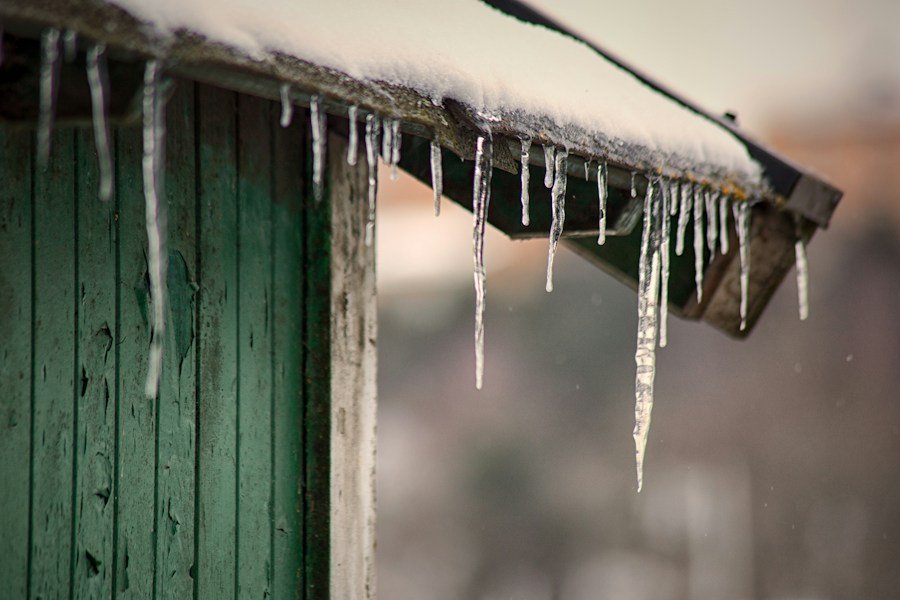
Spring is the time to find winter damage before spring rains do. In Paterson, Passaic and Clifton that is usually March; in West Milford, Ringwood and Wanaque wait until the snow is truly gone, often April. Walk around the house and look for shingle pieces, granules, fallen ridge vent sections and bent gutters. On flat roofs, check for cracked membrane at the edges, open seams and loose parapet caps after a winter of freeze-thaw. On lake cottages, look at ceilings near outside walls for stains left by ice dams, and check the attic for wet insulation or dark streaks on the deck. Chimneys on older homes often lose mortar over winter, which opens the joint the counter flashing sits in. Spring is also a good time to book a free inspection so repairs are done before summer thunderstorms.
Summer is about drainage, because Passaic County’s worst summer storms deliver rain faster than roofs can shed it. Ida dropped more than 7 inches on Little Falls in 2021. Before July, clear every gutter, downspout, scupper and roof drain. On Paterson and Passaic flat roofs, remove debris from drains, check that leaders are connected and not crushed, and look for ponding that stays more than two days after rain. In the Highlands, trim limbs hanging over the roof, since summer storms bring them down on shingles and gutters. Check pipe boots for cracks and sealant at skylights, as heat dries them quickly. If you plan to replace a roof, summer and early fall offer the best weather for sealing shingles and curing flat-roof adhesives, and you avoid the rush that follows the first big nor’easter.
Fall is the most important season for Highlands roofs, because what you do in October decides how many ice dams you get in January. Clean gutters after the leaves drop; in the hardwood forests of West Milford, Ringwood, Wanaque and Bloomingdale that may take two cleanings. Clear valleys and the areas behind chimneys. Go into the attic and make sure soffit vents are open, insulation is not blocking them, and bath fans vent outside. Seal gaps around attic hatches, recessed lights and plumbing stacks, since warm air leaking into the attic is what melts roof snow. In the cities, finish any masonry, parapet or chimney work before the first freeze, since mortar needs temperatures above about 40 degrees to cure. Check that heat cables, if you use them, work before snow arrives.
Winter is snow and ice season, especially north of Pompton Lakes. After each storm, look for thick ice along the eaves and long icicles, which mean heat is escaping and ice dams are forming. Use a roof rake from the ground to clear the lowest few feet of snow on low cottage roofs and raised ranch overhangs, but stay off icy roofs and never chip ice with tools. Heavy wet snow, like the March 2018 nor’easters, can overload older roofs and tear gutters loose, so watch for sagging. On city flat roofs, keep drains clear of ice where safe and watch for water at top-floor ceilings during thaws. If water comes in, catch it, photograph it, and send an emergency request through the contact page so we can schedule a repair as soon as it is safe.
In depth
Passaic County Roofing Questions Most Contractors Skip
Flat roofs on Paterson and Passaic multi-family buildings
Most leaks on Paterson and Passaic multi-family flat roofs start at the parapets, wall flashing and drains, and a lasting repair deals with masonry and drainage along with the membrane. These buildings, many from the late 1800s and early 1900s, often have a flat roof surrounded by brick parapet walls, with a single scupper or interior drain at the back. Over a century they collect layers: built-up tar, rolled roofing, modified bitumen, coatings and patches. Water gets in where the membrane turns up the parapet, under loose coping stones or metal caps, through cracked brick and open mortar joints, and at a drain that is clogged or pulling away from its leader.
A proper repair starts with a core cut or test opening to see how many layers there are and whether the deck is sound. If the roof has more than one layer and the deck is soft, patching only buys time. Where the roof is basically sound, we rebuild base flashing up the parapet, install counter flashing or a new cap, repoint open joints, and replace or enlarge scuppers so water leaves quickly. Ponding water that sits more than 48 hours speeds up membrane failure, so we add crickets or tapered insulation where we can.
Buildings with three or more units are not ordinary maintenance under state code, so the construction office will issue a permit for the work. Access is part of the plan: narrow alleys, adjoining roofs and street parking. Patch and seam work typically runs $400 to $2,500. Our flat roof repair in Passaic County service covers modified bitumen, EPDM, TPO and built-up systems.
Ice dams on converted lake cottages in West Milford and Ringwood
Ice dams on Highlands lake cottages start with heat escaping from the house into a cold roof, and they stop when warm air stops reaching the roof deck. Many homes around Greenwood Lake, Upper Greenwood Lake, Lake Wanda, Pinecliff Lake and the smaller lake clubs started as summer cottages. They were winterized later, sometimes in stages, with additions, low-pitch roofs, shallow attics or cathedral ceilings, and little room for insulation or ventilation. Add the northern zone’s 40 to 50 inches of yearly snow and long cold spells, and heat leaking from the living space melts snow that refreezes at the cold overhang.
The water then backs up under the shingles, past the nails, and into walls and ceilings. Heat cables and roof raking help in the moment. The lasting fix has two parts. On the roof, install ice and water shield from the eave to at least 24 inches inside the warm wall line, and in all valleys, at the next reroof or repair. In the attic, air seal the ceiling plane around lights, hatches, chimneys and plumbing stacks, add insulation, and make sure soffit-to-ridge ventilation actually moves air. On cathedral ceilings that have no vent channel, options include a vented over-roof assembly or exterior rigid insulation at reroof time.
We document where the dams form, check the attic with you, and quote roof and attic work separately so you can see what each costs. Valley repairs with new ice and water shield typically run $500 to $1,500. Shade and leaf load in the lake communities also matter: keeping valleys and gutters clear reduces how much meltwater gets trapped.
After river flooding: Wayne, Little Falls, Pompton Lakes and Paterson
After a river flood, deal with the house’s flood damage and its roof as two separate claims and two separate scopes, because flood and homeowners policies cover different things. Passaic County’s rivers have a long flood record. During Irene in 2011, the Ramapo at Pompton Lakes and the Pompton at Pompton Plains set their record crests, and the Passaic at Little Falls reached its second-highest level since 1903. Ida in 2021 brought flash flooding and rescues across Paterson and the City of Passaic.
Floodwater rarely touches a roof, but floods and roofs connect in three ways. Wind and falling trees from the same storm open roofs, which is a homeowners claim. Flood-soaked attached garages, porches and low additions can need sheathing, fascia and soffit work near the roof edge. And if your home is in a mapped flood zone, a large repair after the flood may trigger FEMA’s substantial damage review, where repairs costing 50 percent or more of the structure’s market value require bringing the house up to current flood standards. Roof work can count toward that total.
Here is a practical order. Stay safe, and photograph everything before cleanup: the waterline, the roof, the attic and any fallen trees. Ask the construction office whether your home is in a flood zone and whether a damage determination is needed. Get a written roof scope that shows only roof and storm-related items, so the adjuster for each policy sees a clean line between flood and wind. Keep receipts for tarps and drying. In a widespread event, clear paperwork moves claims faster.
Paterson’s historic districts and old masonry buildings
If your Paterson building is in a designated historic district or is a landmark, plan for Historic Preservation Commission review before visible roof changes, and expect masonry work to be part of most roof jobs. Paterson is one of America’s first planned industrial cities, and the Great Falls area holds mill buildings, raceways and workers’ housing that are now part of a national historical park and a local historic district. The city’s Historic Preservation Commission reviews exterior alterations in designated districts and on designated landmarks, and the city requires HPC approval for every demolition, regardless of location.
For roofing, this mainly matters when you want to change a visible material, such as replacing slate with asphalt on a pitched roof, removing a decorative cornice or changing a parapet. Flat roofs hidden behind parapets are usually less visible, but parapets, cornices and chimneys are part of the building’s face. Ask the construction office or HPC staff before you start, and keep photos of the existing roof.
Old masonry buildings bring their own problems. Brick parapets absorb water, freeze and spall. Mortar joints erode, letting water behind counter flashing. Cast or pressed metal cornices rust and leak into the top floor. A good repair treats the masonry and the roof as one system: repoint the parapet, install a proper cap with drip edges, and set counter flashing into a reglet cut in a mortar joint. Slate on church and mill roofs can often be repaired stone by stone with copper fasteners. Rushing these jobs with sealant usually means doing them again within a few years.
Repair or replace when your house is older than 1956
On Passaic County’s older houses, the decision between repair and replacement depends more on what is under the shingles than on the shingles themselves. The county’s median home was built in 1956, and more than a quarter were built in 1939 or earlier. Those houses often have plank decks instead of plywood, two layers of shingles, or a newer layer laid over old roll roofing. Some have been patched by several owners with different materials.
Start with the basics. How old is the current layer, and how many layers are there? New Jersey code allows no more than two layers, so a two-layer roof cannot be covered again; the next roof means a full tear-off. Is the deck solid? Plank decks with wide gaps or rot need new sheathing, which requires a permit. Are the leaks in one or two places, such as a chimney or dormer, or spread across slopes? A single leak on a roof under about 18 years old is usually worth repairing, often for $400 to $1,500.
If the shingles are past 20 years, granules are washing into gutters, there are two layers already, and leaks keep coming from different places, replacement usually costs less over the next decade than a string of repairs. A typical replacement in New Jersey runs about $8,500 to $17,000, more if deck work is needed. On a multi-family building, plan for permits and possibly a commercial-grade flat roof. Our inspection photos show you each slope and the attic, so you can see the condition yourself and decide with real information.
Choosing a roofer in Passaic County
Hire a Passaic County roofer who is registered with New Jersey, insured, gives you a written itemized contract, and has real experience with your type of roof, whether that is a Paterson flat roof or a West Milford lake cottage. Every New Jersey home improvement contractor must register with the Division of Consumer Affairs, and the number begins with 13VH. Check it on the state’s verification site at newjersey.mylicense.com. Registration requires at least $500,000 in commercial general liability insurance; ask for the certificate directly from the insurance agent.
Under N.J.S.A. 56:8-151 your contract must be in writing and signed, and must show the contractor’s legal name, business address, registration number, total price and a copy of the insurance certificate. You have three business days to cancel. Be careful after floods and nor’easters, when door-knockers move through Wayne, Clifton and the Haledons offering quick deals and asking for large cash deposits.
Ask questions that match your house. For a multi-family flat roof: how will you handle the parapets, and will you pull the permit? For a lake cottage: how will you stop the ice dams from coming back after the leak is patched? For an older home: how many layers are on my roof, and what is the deck made of? For a Paterson landmark: have you worked with HPC review? Ask what the workmanship warranty covers and for how long. Ours is 2 years on repairs and 10 years on full replacements, in writing.
FAQ
Roof Repair in Passaic County, NJ: Frequently Asked Questions
Do I need a permit for roof repair in Passaic County?
Not for a detached one- or two-family house: repairing or replacing roof covering is ordinary maintenance under N.J.A.C. 5:23-2.7. You do need a permit for deck or rafter work, a third layer, and any three-family or larger building, condo, townhome or commercial property, which covers many buildings in Paterson and Passaic.
What does flat roof repair cost on a Paterson multi-family?
Patch and seam repairs on Paterson and Passaic flat roofs usually cost $400 to $2,500 as of November 2026, depending on size, layers and parapet condition. Large saturated areas need section replacement. Buildings with three or more units also need a construction permit for most roof work.
Why do lake houses in West Milford and Ringwood get so many ice dams?
Many began as summer cottages and were winterized later, so they have low roofs, shallow attics and little insulation or ventilation. Heat escaping into the attic melts snow that refreezes at the eaves. Air sealing, insulation, ventilation and ice and water shield at eaves and valleys stop repeat ice dams.
Does homeowners insurance cover ice dam leaks in Passaic County?
Many policies cover interior water damage from a sudden ice dam leak, and some cover roof repair if ice or snow weight damaged it. Insurers may resist claims tied to long-standing neglect or ventilation problems. Photograph the ice, the roof and interior damage, and check your policy with your agent.
Is river flood damage covered by my roof or homeowners claim?
No. Water rising from the Passaic, Pompton or Ramapo rivers into your home is flood damage, covered only by a separate flood policy. Wind or tree damage to the roof in the same storm is usually a homeowners claim. Keep separate photos and scopes for each.
Do I need approval to change the roof on a historic Paterson building?
If the building is a designated landmark or sits in a designated district such as the Great Falls Historic District, Paterson’s Historic Preservation Commission reviews exterior alterations. Visible changes like slate to asphalt or cornice removal should be cleared first. All demolitions in Paterson need HPC approval regardless of location.
Does the Highlands Act affect roof work in northern Passaic County?
Usually not. The Highlands Act exempts improvements to an existing single-family home, and roof repair or replacement on an existing house falls well within ordinary work. Large additions, new structures or added impervious surface can raise Highlands questions, so check with your town for anything beyond the roof.
How long does a roof last on an older Passaic County home?
Architectural asphalt shingles commonly last about 20 to 30 years in North Jersey, less on shaded lake lots or poorly vented attics. Flat roofs vary from about 10 to 25 years by material. Slate can last much longer if valleys and flashing are maintained. An inspection shows where your roof stands.
How can I verify a roofer in Paterson, Clifton or Wayne?
Ask for the New Jersey home improvement contractor registration number, which begins with 13VH, and check it at newjersey.mylicense.com. Registration requires at least $500,000 in liability insurance. Your contract must be written, signed, list the total price and give you three business days to cancel.
Can you repair a roof during a Passaic County snowstorm?
We do not put crews on icy or snow-covered roofs during a storm, because it is unsafe and can break shingles. We can schedule emergency tarping or temporary repairs as soon as conditions allow. Until then, catch water inside, keep people away from wet ceilings and take photos.
Reviewed by the Roof Repair SNJ team · Last updated November 2026
Nearby
Roof Repair Near Passaic County
We also work in the counties next to Passaic County. See every county we serve on our New Jersey service areas page, or start from our roof repair NJ homepage.
Free inspection
Book a Free Roof Inspection in Passaic County
From a leaking parapet in Paterson to an ice dam on a Ringwood lake house or a tired second roof in Wayne, it starts with a free inspection and photos of every problem we find. Request your Passaic County roof inspection and get a written, itemized quote. There is no pressure, and every repair comes with a written 2-year workmanship warranty.
No pressure and no obligation. If a repair will do, we’ll tell you.
Roof Repair SNJ
- Serving all 16 Passaic County towns
- Request roof service in Passaic County
- Mon–Fri 5:00 AM–10:00 PM · Sat 5:00 AM–6:00 PM · Emergencies 24/7
Sources: N.J.A.C. 5:23-2.7 Ordinary maintenance (Cornell LII) · NJ Division of Consumer Affairs license and registration verification · N.J.S.A. 56:8-151 Home improvement contract requirements (Justia) · Stacker: Counties with the oldest homes in New Jersey (ACS 2023 5-year) · NWS MARFC: Passaic River at Little Falls top crests · NWS MARFC: Ramapo River at Pompton Lakes top crests · NWS MARFC: Pompton River at Pompton Plains top crests · Office of the NJ State Climatologist: Ida remnants strike New Jersey · ABC7 NY: Paterson residents bracing as Passaic River set to crest after Ida · CBS New York: Man swept away by floodwaters in Passaic during Ida · FEMA: New Jersey Remnants of Hurricane Ida disaster declaration · Office of the NJ State Climatologist: March 2018 summary · Office of the NJ State Climatologist: NJ climate overview · City of Paterson Historic Preservation Commission · NJ Highlands Council: Highlands Act exemptions · NJ Historic Preservation Office: directory of local preservation bodies · Roof Observations: New Jersey roof cost guide (Jan 2026) · Fixr: Roof replacement cost in New Jersey (2026). Prices are planning ranges, not quotes. Permit and insurance information is general guidance; your town, policy and agent have the final word.