
Roof Repair NJ › NJ Locations › Bergen County
Hackensack · Teaneck · Ridgewood · 70 towns
Roof Repair in Bergen County, NJ
Roof Repair SNJ fixes leaking, storm-damaged and worn roofs across all 70 Bergen County municipalities, from Fort Lee co-ops to Mahwah colonials. You get a free inspection with photos, a written itemized quote and a written workmanship warranty: 2 years on repairs and 10 years on full replacements. Send your details through our free roof inspection request any time of day.
- 25+ years working on NJ roofs
- Free photo inspection, written itemized quote
- Split-levels, capes, Tudors, slate and flat roofs
Free roof inspection in Bergen County
Photos of every problem we find and an itemized written price before any work. Emergency requests handled 24/7.
Roof Repair SNJ
70 Bergen County towns · all 21 NJ counties
Free inspection
Roof, attic and gutters checked at no cost.
Insured
Liability and workers’ comp; certificate on request.
Written quotes
Itemized price in writing before any work.
Photo-documented
Every problem photographed, before and after.
Bergen County at a glance
Bergen County at a Glance: What Shapes Roof Work Here
Bergen County is New Jersey’s most populous county, with 70 separate towns and a housing stock whose median year built is 1959. That mix of mid-century split-levels, prewar Tudors, Palisades high-rises and Meadowlands warehouses, plus river and tidal flooding, decides what fails on a roof here and how a repair should be done.
County seat
Hackensack
Hackensack is also the largest municipality, with 46,030 residents in the 2020 Census, and mixes older frame houses with apartment buildings on flat roofs.
Municipalities
70
Seventy boroughs, townships, cities and villages held 955,732 people in the 2020 Census, each with its own construction office, so permit questions go town by town.
Median year built
1959
Census ACS 2023 five-year estimates put Bergen’s median home at 1959, and 19.4 percent of homes were built in 1939 or earlier.
Ida rainfall
9.02 in
North Arlington logged 9.02 inches on September 1-2, 2021, and Lyndhurst took 3.58 inches in a single hour, a rate rated a 500-year event.
Sandy surge
8.5-9.5 ft
On October 29, 2012 the Meadowlands surge topped 5-7 foot earthen berms and flooded Moonachie, Little Ferry and Carlstadt for days, according to the NJ DCA recovery plan.
Big snow
26.0 in
Oakland measured 26.0 inches in the March 6-7, 2018 nor’easter; the January 2016 blizzard dropped 15.1 to 23.9 inches across the county.
Homes & roofs
What Kinds of Homes and Roofs Does Bergen County Have?
Most Bergen roofs sit on postwar split-levels, capes and colonials covered in asphalt shingles, but the county also holds prewar slate and Tudor homes, two-family houses with flat rear sections, Palisades high-rises and Meadowlands warehouses. Each type fails in its own predictable spots, so the town and street usually tell us what to look at first.
Split-levels and raised ranches in the central towns
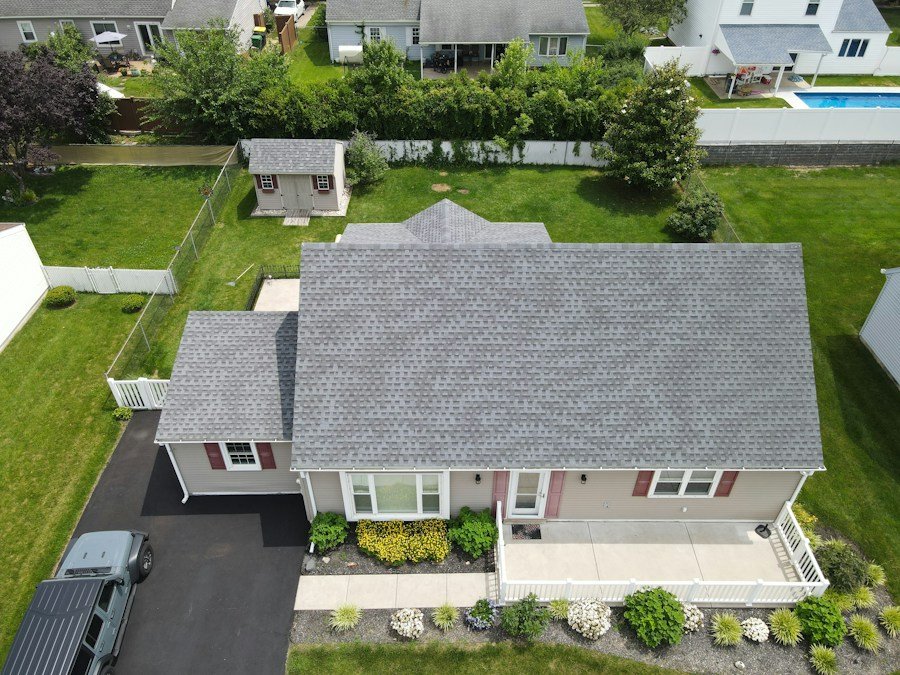
Paramus, River Edge, Oradell, New Milford, Dumont, Bergenfield and Fair Lawn are full of 1950s and 1960s split-levels and raised ranches. Their weak point is the step where a low roof meets a taller wall: step flashing and counter flashing along that wall, plus the short valley over the front entry, account for a large share of the leaks we trace. Many are on a second or third shingle roof, and some carry two layers already.
Capes with dormers in Teaneck, Bergenfield and Hasbrouck Heights
The Cape Cod is the other workhorse of Bergen streets. Shed and gable dormers added over the decades create cheek walls, low-pitch dormer roofs and tight valleys that collect leaves. Low-slope dormer roofs under about 3-in-12 pitch should not carry standard shingles at all, and on many capes we find exactly that, along with knee-wall attics with little or no ventilation and frost on the nails in January.
Prewar Tudors, Victorians and slate in Ridgewood, Glen Rock and Englewood
Ridgewood, Glen Rock, Englewood’s east hill, Tenafly, Leonia and Rutherford have blocks of 1900-1940 Tudors, Colonial Revivals and Victorians, some still under original slate or clay tile. These roofs are steep, cut up with gables, and often hide copper valleys and built-in gutters. The slate itself can last a century; the nails, flashing and patched valleys usually give out first, which is why careful slate roof repair beats tear-off on many of them.
Two-family houses in Garfield, Lodi, Wallington and Palisades Park
South Bergen towns such as Garfield, Lodi, Wallington, Elmwood Park, Palisades Park and Ridgefield carry dense blocks of two-family houses, many with a pitched front roof and a flat or low-slope rear section over kitchens and porches. That flat rear roof, often rolled roofing or old modified bitumen, is where the water gets in. Tight side yards, shared driveways and parked cars make ladder placement and debris removal part of the plan.
High-rise co-ops and condos on the Palisades
Fort Lee, Cliffside Park, Edgewater and Fairview hold towers and mid-rises on the Palisades cliffs and along the Hudson. Their flat membrane roofs take wind straight off the river, and leaks show up at parapet coping, rooftop mechanical curbs and drains. These buildings are not detached one- or two-family homes, so roof work runs through the board, the managing agent and a construction permit.
Estates and large custom homes in the northern boroughs
Saddle River, Alpine, Franklin Lakes, Upper Saddle River, Woodcliff Lake and parts of Mahwah have large custom homes, often 1980s and newer, with complex hips, turrets, cedar shake, natural slate or synthetic slate, and copper bays. Repairs here are about access and matching: tall ridges need staging, and a patch of the wrong slate color or shake profile shows from the driveway. Heavy tree cover also loads valleys and gutters every fall.
Warehouses and flex buildings in the Meadowlands
Carlstadt, Moonachie, East Rutherford, Teterboro, South Hackensack and Little Ferry carry acres of low-slope commercial roofs: TPO, EPDM, modified bitumen and older built-up tar and gravel. Ponding water, open seams, rusted drains and scuppers, and storm-damaged rooftop units are the common calls. Many sit in tidal flood zones, so owners also weigh roof work against flood-mitigation spending.
Bergen County weather
How Does Bergen County Weather Damage Roofs?
Bergen roofs take three kinds of punishment: extreme short-burst rain like Ida in 2021, nor’easter snow and ice that is heavier in the northern, higher towns, and wind with falling trees. The southern towns along the Passaic and Hackensack rivers and the Meadowlands also deal with flood and tidal surge, which changes how insurance and repairs are handled.
Ida, September 1-2, 2021: rain faster than gutters can move
Ida’s remnants dropped 9.02 inches on North Arlington, and Lyndhurst saw 3.58 inches in one hour, a 500-year rate. Gutters and downspouts sized for ordinary storms overflowed, water backed up under shingles at eaves and valleys, and flat rear roofs in Lodi, Garfield and Saddle Brook ponded past their flashings. Many homeowners who thought they had a roof leak actually had overflow at clogged or undersized drainage.
Sandy, October 29, 2012: wind, trees and Meadowlands surge
Sandy’s surge reached 8.5 to 9.5 feet in the Meadowlands and overtopped the berms protecting Moonachie, Little Ferry and Carlstadt at night. Across the rest of Bergen the damage was wind: lifted shingle tabs, peeled ridge caps, and mature oaks and maples on roofs in Teaneck, Ridgewood and the Pascack Valley. Many roofs patched in the weeks after Sandy are now due for a proper look.
Nor’easter snow loads in the northern towns
The Ramapo foothill towns sit higher and get more snow. Oakland measured 26.0 inches in the March 6-7, 2018 nor’easter and 38.0 inches for that month; Ramsey added 10.1 inches on March 20-22. Wet March snow is heavy on old rafters, splits gutters off fascia boards, and drags shingles loose as it slides off steep roofs in Mahwah, Ramsey and Franklin Lakes.
Ice dams on capes and split-levels
Ice dams form when attic heat melts snow that refreezes at the cold eave. Bergen’s capes with knee-wall attics and split-levels with poorly vented low sections are prime candidates. Meltwater backs up under the shingles and shows as stains on the ceiling near exterior walls. The repair is ice and water shield at the eaves plus better insulation and ventilation; heat cables only treat the symptom.
Mature tree canopy and wind
Bergen is a heavily treed county, and towns such as Ridgewood, Glen Rock, Tenafly, Cresskill and Haworth have large oaks over most roofs. During Ida a big tree fell onto a home on Woodside Avenue in Ridgewood. Even without a full strike, falling limbs puncture shingles, scrape granules and knock off ridge vents, and constant shade feeds moss and algae on north slopes.
Freeze-thaw cycles and summer heat
Eastern Bergen sits in the state’s urban Central climate zone, where winters swing above and below freezing many times. Each cycle works water into cracked pipe boots, open mortar joints on chimneys and loose flashing. Summer heat then bakes south-facing shingles on treeless split-level streets, and flat rear roofs in Garfield and Palisades Park blister and craze faster than pitched roofs on the same house.
Roofing services
Roof Repair Services We Provide in Bergen County
We handle every common roof problem in Bergen County, from a single cracked pipe boot in Fair Lawn to a full membrane roof on a Carlstadt warehouse. Here is how each service usually applies to Bergen homes and buildings. Most jobs start with a roof inspection in Bergen County so the quote matches what is actually wrong.
Roof Leak Repair in Bergen County
Bergen leaks usually trace to split-level wall flashing, cape dormer cheek walls, chimney flashing on prewar homes and flat rear roofs on two-family houses. We follow the water from the stain back to the entry point, often several feet uphill, before we quote a repair.
Emergency Roof Repair in Bergen County
After a tree strike in Teaneck or an Ida-style downpour in Lodi, the first job is to stop water. Send a request through the contact page at any hour and we schedule tarping, debris removal and photo documentation for your insurer as soon as crews can safely reach the roof.
Storm Damage Roof Repair in Bergen County
Bergen storm damage is mostly wind-lifted shingles, torn ridge caps, limb punctures and gutters ripped loose by snow. We photograph every damaged area, separate storm damage from old wear, and give you an itemized scope your adjuster can follow line by line.
Roof Replacement in Bergen County
Many Bergen split-levels and capes are on roofs from the 1990s or 2000s, sometimes over a second layer. When a replacement makes sense we tear off to the deck, replace rotted sheathing, add ice and water shield at eaves and valleys, and fix ventilation.
Roof Inspection in Bergen County
Our free inspection covers shingles, flashing, chimneys, skylights, gutters and attic ventilation, with photos of every issue. It is useful before buying in Ridgewood or Paramus, after a nor’easter, or when a 20-year-old roof starts dropping granules into the gutters.
Flat Roof Repair in Bergen County
Flat and low-slope roofs are everywhere in south Bergen: rear sections on Garfield and Wallington two-families, porch roofs in Rutherford, and dormer roofs on capes. We repair modified bitumen, EPDM and TPO seams, rebuild flashing at walls, and correct ponding where we can.
Metal Roof Repair in Bergen County
Metal in Bergen shows up as standing-seam porch roofs, copper bay roofs on Englewood and Saddle River homes, and steel panels on Meadowlands buildings. We reseal or replace seams, fasteners and flashing, and match copper with copper so dissimilar metals do not corrode each other.
Slate Roof Repair in Bergen County
Ridgewood, Glen Rock, Englewood, Tenafly and Leonia still have original slate on prewar homes. We replace broken slates with matching stone using copper slate hooks or nails, rebuild worn valleys, and tell you honestly when a slate roof is worth keeping.
Shingle Roof Repair in Bergen County
Architectural asphalt shingles cover most Bergen homes. We replace blown or cracked shingles with the closest available match, reseal lifted tabs, fix nail pops and replace failed ridge caps, and we note when the shingle line has been discontinued.
Roof Cleaning in Bergen County
Shade from Bergen’s oaks and maples feeds black algae streaks and green moss on north-facing slopes in Tenafly, Cresskill and the Pascack Valley. We use low-pressure soft washing that kills growth without stripping granules, then recommend zinc or copper strips where growth returns quickly.
Gutter Repair in Bergen County
Ida showed how fast Bergen gutters overflow. We repair the roof edge and gutters together: drip edge, rotted fascia, sagging hangers, pulled-off sections after snow, and undersized downspouts that dump water at foundations and back up under eave shingles.
Commercial Roofing in Bergen County
From Hackensack office buildings to Paramus retail strips and Carlstadt warehouses, we repair TPO, EPDM, modified bitumen and built-up roofs, including drains, scuppers, coping and rooftop unit curbs. We schedule around tenants and pull permits where commercial work requires them.
Bergen County rules
Bergen County Roofing Permits, Historic Rules and Insurance
Permits & local review
For a detached one- or two-family house in any Bergen town, replacing or repairing the existing roof covering is ordinary maintenance and needs no permit, as long as the roof stays at two layers or fewer. That rule comes from N.J.A.C. 5:23-2.7, in effect since March 5, 2018. A permit from the town’s construction office is needed when we replace sheathing or rafters, add a third layer, or work on anything that is not a detached one- or two-family home.
In Bergen that last point matters a lot. Townhomes in Mahwah and Montvale, condos in Edgewater and Hackensack, and co-op towers in Fort Lee and Cliffside Park all need permits and usually written approval from the board or managing agent before anyone goes on the roof. Many associations also have rules on shingle colors and approved contractors.
Several Bergen towns, including Teaneck, Ridgewood, Englewood, Tenafly and Rutherford, have local historic preservation bodies, and designated landmarks or districts may need review for visible material changes such as slate to asphalt. In flood zones in Moonachie, Little Ferry, Lodi and other low-lying towns, repairs after a flood are measured against FEMA’s substantial damage rule, so the construction office may ask for cost documentation. Ordinary maintenance still has to meet code.
Insurance claims
Homeowners insurance in Bergen usually covers sudden roof damage from wind, hail, falling trees and the weight of ice or snow, and usually excludes wear, age and neglect. Ida made the biggest Bergen insurance lesson clear: water that rises from outside, through basements or across floors, is flood damage, which standard homeowners policies do not cover. Only a separate flood policy pays for that. Rain that enters through a roof opening created by wind or a falling limb is a homeowners claim.
Tree claims are common here because of the canopy. If a neighbor’s healthy tree falls on your roof, your own policy usually responds; if the tree was visibly dead, liability questions can follow. Photograph the tree, the roof and the inside damage before cleanup, keep receipts for tarping, and get a written scope that separates storm damage from old wear. Bergen policies are less likely to carry the separate hurricane deductibles common at the Shore, but read your declarations page. Your policy and your agent have the final word.
Pricing · updated November 2026
How Much Does Roof Repair Cost in Bergen County?
As of November 2026, most Bergen County roof repairs fall between $350 and $1,800, with flat-roof work and emergency tarping on larger homes running higher. A full replacement on a typical Bergen split-level or cape usually lands in the statewide range of about $8,500 to $17,000. See our roof repair cost guide for how we build a quote.
Replace a few shingles
$350 – $800
Matching architectural shingles after wind or a limb strike on a split-level or cape, resealing nearby tabs and checking nail lines. Higher when the shingle line is discontinued or the roof is steep.
Pipe boot or vent flashing
$250 – $600
Replacing a cracked rubber pipe boot or rusted vent flashing, a very common leak on 1990s and 2000s Bergen reroofs where the original boots have dried out and split.
Single-source leak repair
$400 – $1,500
Tracing and fixing one leak, such as step flashing where a split-level’s lower roof meets the upper wall or a cape dormer cheek wall, including shingle removal and replacement around it.
Chimney re-flashing
$600 – $1,800
New step and counter flashing on brick chimneys typical of prewar Ridgewood and Englewood homes, cutting a reglet into the mortar joint and adding a cricket where a wide chimney traps water.
Flat-roof patch or seam
$400 – $2,500
Repairing modified bitumen or EPDM on the flat rear section of a Garfield, Lodi or Palisades Park two-family, including wall flashing and drainage edge. Larger areas move into partial replacement.
Emergency tarp
$300 – $1,200
Securing tarps after a tree strike or storm opening, with photos for the insurer. Large tree removal by an arborist is separate, and tall or steep roofs cost more to secure.
What moves the price in Bergen County
- Access on dense blocks. Shared driveways and narrow side yards in Garfield, Lodi, Cliffside Park and Palisades Park slow ladder setup and debris removal, and some jobs need a parking plan for the dumpster.
- Height and pitch. Steep Tudor and Victorian roofs in Ridgewood or Englewood, and three-story estates in Saddle River and Alpine, need staging and more labor per square.
- Material. Natural slate, cedar and copper in the northern and prewar towns cost far more to match than asphalt; installed slate runs about $31 to $40 per square foot.
- Hidden rot. Many split-levels and capes are on their second or third roof; deck rot found under old layers adds cost and turns the job into permitted work.
- Layers. A roof already carrying two layers cannot take a third under NJ code, so a repair area may need a tear-off.
- Association and building rules. Condo and co-op work in Fort Lee, Edgewater and Hackensack adds insurance certificates, board approvals and permits.
- Flood-zone paperwork. Post-flood work in Moonachie, Little Ferry and Lodi can require cost records for the substantial damage review.
- Season. After a nor’easter or a storm like Ida, demand spikes across all 70 towns and scheduling stretches.
These are planning ranges, not quotes, based on our site-wide repair ranges and the Roof Observations New Jersey cost guide (January 2026) and Fixr’s 2026 New Jersey replacement data. Your written quote after a free inspection is the number that counts.
Who does the work
Why Bergen County Homeowners Choose Roof Repair SNJ
- Repairing NJ roofs for 25+ years
- General liability + workers’ comp insurance
- Workmanship warranty: 2 years on repairs, 10 years on full replacements, in writing
- Photo report with every inspection
Check any roofer before you sign in Bergen County
Ask for the 13VH registration number and confirm it on the NJ license lookup. NJ law requires a signed written contract showing the registration number and total price, and gives you until midnight of the third business day to cancel (N.J.S.A. 56:8-151).
70 towns
Roof Repair Notes for Bergen County Towns
Bergen’s 70 towns range from Teterboro’s 61 residents to Hackensack’s 46,030, and the roofs change with them. Below are notes on the towns and areas we see most often. Neighbouring areas are covered on our Passaic County roof repair and Hudson County roof repair pages.
Hackensack
The county seat mixes older frame two- and three-family houses near Main Street and Prospect Avenue with garden apartments and mid-rise buildings on flat roofs. Pitched-roof homes often show tired chimney flashing and old built-in gutters, while the apartment roofs need drain, parapet and seam work. Low streets near the Hackensack River also make gutter capacity matter.
Teaneck
Teaneck has a deep stock of 1920s to 1950s Tudors, colonials and capes under a heavy tree canopy. Expect steep front gables, slate or older asphalt on some Tudors, dormer leaks on capes and frequent limb damage after wind. The township has a historic preservation body, so check landmark status before changing a visible roof material.
Fort Lee
Fort Lee is a town of high-rise and mid-rise co-ops and condos along the Palisades, with older one- and two-family homes on the side streets. Tower roofs take hard wind off the Hudson and fail at parapets, coping and mechanical curbs. All of that work needs board approval and a permit, and it runs on the building’s schedule.
Fair Lawn
Fair Lawn’s Radburn section, planned around 1929, and its later capes and split-levels give the borough a mix of prewar and postwar roofs. Capes with dormers and split-levels with wall-to-roof transitions are the usual leak points. Many homes have mature trees, so gutter guards and valley cleaning are part of routine upkeep.
Garfield and Lodi
These neighbouring towns along the Passaic and Saddle rivers have dense two-family houses with flat or low-slope rear roofs. Ida put whole sections of Lodi under several feet of water in 2021. Roof repairs here are mostly flat-roof seams, wall flashing and gutters, worked carefully around tight lots and shared driveways.
Ridgewood and Glen Rock
These villages hold some of Bergen’s best prewar housing: Tudors, Colonial Revivals and Victorians with slate, copper valleys and built-in gutters. Slate repair, chimney re-flashing and gutter relining are common. Ida also brought a large tree down on a Woodside Avenue home in Ridgewood, a reminder of how much canopy hangs over these roofs.
Paramus
Behind the Route 4 and Route 17 retail corridors, Paramus is mostly 1950s and 1960s split-levels, ranches and capes on wide lots. Many are on second roofs with original-style wall flashing that leaks where the low roof meets the upper level. The malls and strip centers add a large commercial flat-roof market.
Mahwah and Ramsey
These northern towns sit near the Ramapo Mountains and get more snow than the south of the county, like neighbouring Oakland’s 26.0 inches in March 2018. Expect ice dams, snow-damaged gutters and steep colonial roofs. Mahwah’s townhome and condo communities need association approval and permits for roof work.
Moonachie, Little Ferry and Carlstadt
Sandy’s surge flooded these Meadowlands towns in 2012, and many homes are modest one- and two-family houses on low ground next to warehouses and flex buildings. Roof work here often runs alongside flood repairs and elevation questions, and the commercial roofs are mostly TPO, EPDM and built-up systems with ponding issues.
Saddle River and Alpine
These small, wealthy boroughs have large custom homes on big wooded lots, often with slate, synthetic slate, cedar shake and copper details. Repairs are about careful matching, staging on tall roofs and protecting landscaping. Long driveways and steep grades are part of planning access for materials and debris.
All 70 municipalities we serve in Bergen County
Hackensack · Teaneck · Fort Lee · Fair Lawn · Garfield · Englewood · Bergenfield · Paramus · Lodi · Ridgewood · Cliffside Park · Mahwah · Lyndhurst · Elmwood Park · Palisades Park · Rutherford · Dumont · New Milford · Wyckoff · North Arlington · Tenafly · Fairview · Ramsey · Edgewater · Saddle Brook · Ridgefield Park · Oakland · Glen Rock · Hasbrouck Heights · River Edge · Wallington · Ridgefield · Westwood · Franklin Lakes · Little Ferry · Hillsdale · Wood-Ridge · Maywood · Waldwick · East Rutherford · River Vale · Leonia · Washington Township (Bergen County) · Cresskill · Park Ridge · Bogota · Closter · Montvale · Upper Saddle River · Oradell · Emerson · Midland Park · Allendale · Carlstadt · Woodcliff Lake · Old Tappan · Rochelle Park · Norwood · Englewood Cliffs · Demarest · Northvale · Harrington Park · Ho-Ho-Kus · Saddle River · Haworth · Moonachie · South Hackensack · Alpine · Rockleigh · Teterboro
Seasonal roof care
Bergen County Roof Maintenance Calendar
A Bergen roof needs attention four times a year: a spring check after snow and ice, summer storm prep, a fall gutter and leaf cleanup, and winter watch for ice dams. The timing below matches Bergen’s mix of heavy canopy, nor’easters and short, violent summer rain.
Spring is when winter damage shows. Once the last snow melts, usually by late March in Hackensack and a little later in Mahwah and Ramsey, walk the yard and look for shingles, ridge cap pieces or granules on the ground. Look at the roof from the street with binoculars: lifted tabs, slipped slates on Ridgewood and Glen Rock prewar homes, and bent gutters where snow slid off. Go into the attic on a sunny day and look for daylight around chimneys and vent pipes and for water stains on the underside of the deck, especially above split-level wall junctions and cape dormers. Check ceilings near outside walls for the brown rings ice dams leave. Spring rain then tests every repair, so it is a good time to book a free inspection before the summer storm season.
Summer in Bergen means thunderstorms that can drop inches of rain in an hour, as Ida did in Lyndhurst. Before July, clear gutters and downspouts and make sure every downspout discharges well away from the foundation. On flat rear roofs in Garfield, Lodi and Palisades Park, clear the drain or scupper, look for blisters and open seams, and check the flashing where the flat roof meets the main wall. Trim branches that hang over the roof, particularly the big oaks common in Teaneck, Tenafly and Cresskill; a limb that brushes shingles in summer is a puncture risk in the next storm. Heat also ages sealant fast, so check pipe boots for cracks and chimney counter flashing for gaps. Summer is a good time for planned replacements because adhesive strips seal well in warm weather.
Fall is gutter season in Bergen. The county’s tree cover fills gutters and valleys in October and November, and clogged gutters are the starting point for most ice dams in January. Clean gutters after most leaves have dropped, and again in late November if you have oaks, which drop late. Clear leaves out of valleys, especially the short valleys over split-level entries and cape dormers. Make sure attic vents are open and that bath fans vent outside, since warm moist air in the attic feeds both frost and ice dams. Have any slate, chimney or flashing work done before the first freeze, because mortar and some sealants need temperatures above about 40 degrees to cure properly. If your roof is near the end of its life, a fall inspection lets you plan before the snow season instead of during it.
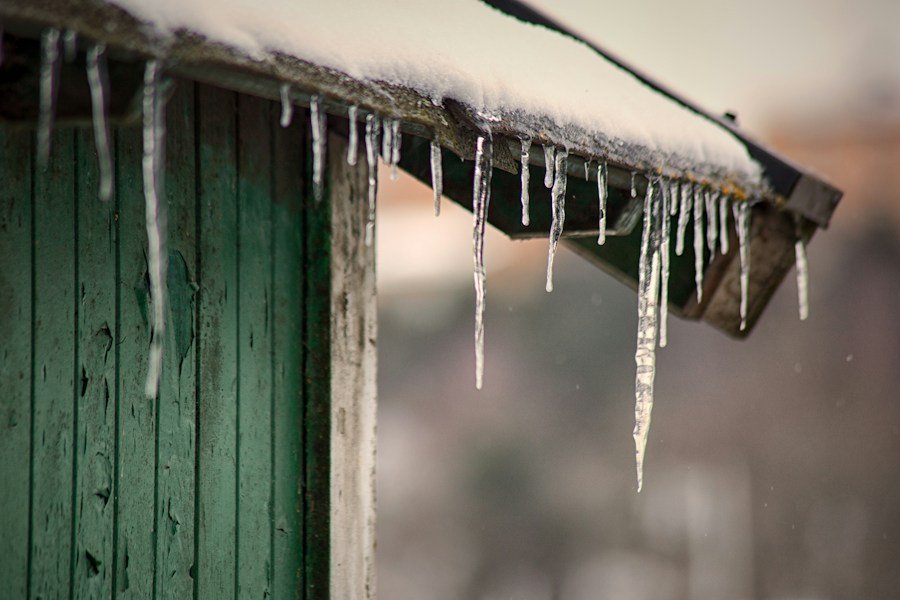
Winter is about snow load and ice dams, especially in the northern towns. After a big storm, watch the eaves for thick ice ridges and long icicles, which signal heat loss from the attic. Brown stains on ceilings near exterior walls during a thaw usually point to ice-dam backup rather than a hole in the roof. Use a roof rake from the ground to pull the bottom few feet of snow off low roofs on capes and split-levels, but never climb onto an icy roof or chip ice with tools, which breaks shingles and slate. Wet March snow like the 2018 nor’easters is heavy, so watch for sagging gutters and cracked fascia. If water is coming in during a storm, catch it inside, take photos, and send an emergency request through the contact page so we can schedule tarping when it is safe.
In depth
Bergen County Roofing Questions Most Contractors Skip
Repair or replace: what makes sense for a 1950s or 1960s Bergen split-level?
If the shingles are under about 18 years old and the leak is at one spot, repair almost always makes sense; if the roof is over 20, already has two layers, or is losing granules across every slope, plan a replacement. Bergen’s median home was built in 1959, so many split-levels and capes are now on their second or third roof. That history matters because NJ code allows only two layers. If your house already has two layers, any large repair may expose rotten deck boards under the old layer, and a third layer is not an option.
On split-levels the most common leak sits at the step flashing and counter flashing where the lower roof meets the taller wall of the upper level, often installed with the original siding and never replaced. A careful repair removes the siding or trim along that wall, installs new step flashing piece by piece with each shingle course, and adds counter flashing or a proper housewrap lap over it. Done well, that can add many years to an otherwise sound roof.
Cost-wise, a single-source leak repair in Bergen typically falls between $400 and $1,500, while a full replacement on a typical home lands around $8,500 to $17,000. If you are spending more than a few hundred dollars every year on new leaks, or your attic shows widespread dark staining and soft deck boards, the math tips toward replacement. Our inspection photos show you each slope so you can see the condition yourself before deciding.
Prewar slate, tile and Tudor roofs in Ridgewood, Glen Rock, Englewood and Tenafly
A good slate roof can outlast the house, so on Bergen’s prewar homes the right move is usually to repair the slate and replace the metal around it. Ridgewood, Glen Rock, Englewood’s east hill, Tenafly, Leonia and Rutherford have homes from about 1900 to 1940 with original slate, clay tile, copper valleys and built-in gutters. When those roofs leak, the slate itself is rarely the cause. More often it is rusted or worn valleys, failed chimney flashing, or built-in gutters whose lining has cracked and is rotting the fascia and rafter tails.
Proper slate repair means removing broken slates with a slate ripper, installing matching stone of the same size, thickness and color, and fastening it with copper nails or slate hooks. Roofing cement and face-nailing are shortcuts that fail. Walking on slate breaks it, so we work from ladders, hook ladders and staging. Copper valleys can be rebuilt one at a time without disturbing the whole roof.
When a slate roof has reached the end of its life, the slates turn soft, flaky or powdery, and many are cracked or missing. At that point the options are new natural slate, at roughly $31 to $40 per square foot installed, synthetic slate, or architectural asphalt. If the home is a designated landmark or sits in a district reviewed by a local preservation body, such as in Teaneck or Ridgewood, ask the construction office before you change the material. Our slate roof repair in Bergen County service starts with a stone-by-stone condition report.
Flat rear roofs on two-family homes in Garfield, Lodi, Wallington and Palisades Park
On a south Bergen two-family house, the flat rear roof over the kitchen or back porch is the most likely leak source, and it usually fails at its edges before its middle. These roofs are often rolled roofing or older modified bitumen, sometimes with a silver coating over many past patches. Water gets in where the flat roof meets the main wall, at the drip edge, around plumbing vents and at a single scupper or drain that clogs with leaves.
Ida showed how quickly these roofs overwhelm. With rain falling at more than 3 inches an hour in nearby Lyndhurst, a flat roof with one small scupper filled like a tray and poured over its flashing. A repair that lasts deals with drainage as well as membrane: a larger scupper or a second outlet, a properly sized leader, and tapered insulation or crickets where water sits more than 48 hours after rain.
We repair modified bitumen with torch-free or carefully controlled methods near siding, replace failed sections with EPDM or TPO where the deck allows, and rebuild wall flashing with a counter flashing above. On these homes, ladder access in a tight side yard and protection of a neighbor’s car are as much a part of the job as the membrane. If the building has three or more units, or the work includes deck replacement, a construction permit is required. Most patch and seam work runs $400 to $2,500 depending on size and condition.
After Ida: separating roof leaks, gutter overflow and flood claims
After a storm like Ida, figure out where the water came from before you call it a roof leak, because the answer decides which policy pays and what needs fixing. In Bergen on September 1-2, 2021, three different things happened in the same houses. Some roofs were opened by wind or falling trees. Many roofs were intact but their gutters overflowed and water ran behind fascia boards or backed under eave shingles. And in Lodi, Saddle Brook, Rochelle Park and other low areas, water rose from outside into basements and first floors.
Each has a different fix. A roof opening needs tarping and repair and is usually a homeowners claim. Gutter overflow points to clogged gutters, too few downspouts, or a missing drip edge and kick-out flashing; insurers often view that as maintenance. Rising water is flood damage, covered only by a flood policy, and in mapped flood zones a large repair can trigger the construction office’s substantial damage review.
Here is a practical sequence. First, stop water and stay safe; never go on a roof during a storm. Second, take photos and video of the ceiling, attic, gutters and the outside of the house before anything is moved. Third, request an inspection so a roofer can document the roof and gutter condition separately from any flood line. Fourth, give your adjuster an itemized scope that labels storm damage and pre-existing wear separately. Keep every receipt for tarping and drying. Clear documentation is what moves Bergen claims forward after a widespread event, when adjusters are handling thousands of files.
Condos, co-ops and townhomes in Fort Lee, Edgewater, Hackensack and Mahwah
If you own in a condo, co-op or townhome community, the roof is usually a common element, so the association usually decides on and pays for most roof work. Bergen has a lot of this housing: co-op and condo towers in Fort Lee, Cliffside Park and Edgewater, mid-rises in Hackensack, and townhome communities in Mahwah, Montvale and Ramsey. Start by reading your master deed and bylaws, which spell out who maintains the roof, skylights and gutters over your unit.
For the association, roof work on attached or multi-family buildings is not ordinary maintenance under N.J.A.C. 5:23-2.7, so a construction permit is required. Boards and managing agents typically want the contractor’s certificate of insurance naming the association, proof of New Jersey registration, a written scope, and a schedule that respects residents and parking. In towers, the work also involves rooftop access through the building, protecting elevators and lobbies, and coordinating with mechanical contractors when rooftop units sit on curbs that need re-flashing.
Townhome roofs bring their own issues: shared ridges and party-wall flashing between units, matching shingle colors across a building, and leaks that cross unit lines. A good repair on one unit can fail if the neighbor’s side is left open. If you are a unit owner with a leak, report it to management in writing with photos and dates, and ask that a roofer inspect both sides of the shared roof. We provide written reports that boards can use for budgets and reserve studies.
How to choose a roofer for your Bergen County home
Choose a Bergen roofer who is registered with New Jersey, carries real insurance, gives a written itemized contract, and can explain exactly what is wrong with your roof using photos. Every home improvement contractor in New Jersey must register with the Division of Consumer Affairs, and the registration number begins with 13VH. You can check it on the state lookup at newjersey.mylicense.com. Registration requires at least $500,000 in commercial general liability insurance, so ask for a certificate of insurance sent directly from the agent.
Under N.J.S.A. 56:8-151, your contract must be written and signed and must list the contractor’s legal name, business address and registration number, the total price, and a copy of the insurance certificate. You also have three business days to cancel. A roofer who wants cash, will not write things down, or knocks on doors after a storm in Teaneck or Paramus with a deal that expires today is a red flag.
Beyond paperwork, ask Bergen-specific questions. For a split-level, how will they flash the wall where the lower roof meets the upper level? For a Ridgewood slate roof, will they use copper fasteners and matching stone? For a two-family in Garfield, how will they deal with the flat rear roof’s drainage? Ask how many layers are on your roof now and whether a permit is needed. Ask what the workmanship warranty covers and for how long. Ours is 2 years on repairs and 10 years on full replacements, in writing.
FAQ
Roof Repair in Bergen County, NJ: Frequently Asked Questions
Do I need a permit to repair my roof in Bergen County?
Not for a detached one- or two-family house. Repairing or replacing the roof covering is ordinary maintenance under N.J.A.C. 5:23-2.7. You do need a permit from your town’s construction office for deck or rafter replacement, a third layer, or any townhome, condo, co-op or larger building.
How much does a typical roof repair cost in Bergen County?
Most Bergen repairs run between $350 and $1,800 as of November 2026. A few shingles cost about $350 to $800, a pipe boot $250 to $600, and a single leak $400 to $1,500. Flat rear roofs and chimney re-flashing can run higher. A free inspection gives you a written number.
Why does my Bergen split-level leak where the low roof meets the wall?
That joint relies on step flashing and counter flashing behind the siding of the upper level. On many 1950s and 1960s split-levels the original flashing was reused or never replaced, and it rusts or slips. The fix is new step flashing woven with each shingle course and a proper counter flashing above it.
Is Ida-type water damage covered by homeowners insurance in Bergen County?
Only part of it may be. Rain entering through a roof opened by wind or a falling tree is usually a homeowners claim. Water rising from outside into basements or living areas, as in Lodi and Saddle Brook in 2021, is flood damage and needs a separate flood policy.
Can a slate roof in Ridgewood or Englewood be repaired instead of replaced?
Usually yes. Most prewar slate in Bergen fails at valleys, chimney flashing and fasteners before the stone wears out. Broken slates can be replaced individually with matching stone and copper fasteners, and valleys rebuilt. Replacement is only needed when most slates have turned soft, flaky or cracked.
What causes ice dams on Bergen County capes?
Capes often have knee-wall attics with little insulation and ventilation, so heat melts roof snow that refreezes at the cold eave. The trapped meltwater backs up under shingles. The lasting fix is ice and water shield at the eaves plus better insulation, air sealing and ventilation in the attic.
Who fixes the roof on my Fort Lee or Edgewater condo?
In most condos and co-ops the roof is a common element, so the association or co-op board arranges and pays for repairs. Report leaks to management in writing with photos. Work on these buildings requires a construction permit and usually the contractor’s insurance certificate naming the association.
How do I check if a Bergen County roofer is registered?
Ask for their New Jersey home improvement contractor registration number, which starts with 13VH, and look it up on the state’s verification site at newjersey.mylicense.com. Registration requires at least $500,000 in general liability insurance. Also ask for a certificate of insurance sent by their agent.
Do the northern Bergen towns need different roof protection?
Yes. Mahwah, Ramsey, Oakland and the other Ramapo foothill towns sit higher and get more snow, with Oakland measuring 26.0 inches in one 2018 storm. Full ice and water shield at eaves and valleys, solid gutter hangers and good attic ventilation matter more there than in south Bergen.
How fast can you respond to a roof emergency in Bergen County?
Emergency requests can be sent through our contact page 24 hours a day. We schedule tarping and water control as soon as a crew can safely reach the roof, which depends on weather and how many storm calls are open. Meanwhile, catch water inside and photograph everything.
Reviewed by the Roof Repair SNJ team · Last updated November 2026
Nearby
Roof Repair Near Bergen County
We also work in the counties next to Bergen County. See every county we serve on our New Jersey service areas page, or start from our roof repair NJ homepage.
Free inspection
Get a Free Roof Inspection in Bergen County
Whether it is a split-level wall leak in Paramus, a slipped slate in Glen Rock, a flat rear roof in Garfield or a tree on the roof in Teaneck, start with a free inspection and photos of what we find. Book your Bergen County roof inspection and you will get a written, itemized quote. There is no obligation, and repairs carry a written 2-year workmanship warranty.
No pressure and no obligation. If a repair will do, we’ll tell you.
Roof Repair SNJ
- Serving all 70 Bergen County towns
- Request roof service in Bergen County
- Mon–Fri 5:00 AM–10:00 PM · Sat 5:00 AM–6:00 PM · Emergencies 24/7
Sources: N.J.A.C. 5:23-2.7 Ordinary maintenance (Cornell LII) · NJ Division of Consumer Affairs license and registration verification · N.J.S.A. 56:8-151 Home improvement contract requirements (Justia) · Stacker: Counties with the oldest homes in New Jersey (ACS 2023 5-year) · Office of the NJ State Climatologist: Ida remnants strike New Jersey · CBS New York: Ida in Bergen County, Lodi to Saddle Brook to Ridgewood · FEMA: New Jersey Remnants of Hurricane Ida disaster declaration · NJ DCA Strategic Recovery Planning Report, Moonachie (Sandy) · Office of the NJ State Climatologist: January 2016 recap · Office of the NJ State Climatologist: March 2018 summary · Office of the NJ State Climatologist: NJ climate overview · NJ Historic Preservation Office: directory of local preservation bodies · Roof Observations: New Jersey roof cost guide (Jan 2026) · Fixr: Roof replacement cost in New Jersey (2026). Prices are planning ranges, not quotes. Permit and insurance information is general guidance; your town, policy and agent have the final word.