
Roof Repair NJ › Gutter Repair
Gutters, fascia & drip edge · All 21 NJ counties
Gutter Repair in NJ: Seamless Gutters, Fascia and Roof-Edge Fixes
Roof Repair SNJ fixes and installs gutters across all 21 New Jersey counties. We rehang sagging runs, reseal leaking seams, correct pitch, replace rotted fascia, add drip edge and install seamless aluminum or copper gutters and guards. You get a free inspection with photos and a written, itemized quote.
- Roofers who treat gutters as roof edge
- Rotted fascia and drip edge fixed together
- Seamless 5- and 6-inch gutters formed on site
Free inspection, written quote
Photos of every problem we find and an itemized price before any work. 24/7 emergency service.
Roof Repair SNJ
Serving all 21 New Jersey counties
Free inspection
Roof, attic and gutters checked at no cost.
Insured
Liability and workers’ comp; certificate on request.
Written quotes
Itemized price in writing before any work.
Photo-documented
Every problem photographed, before and after.
What you’ll notice
What Are the Signs You Need Gutter Repair in NJ?
You need gutter repair when water goes anywhere other than into the gutter and out a downspout away from the house. Overflow, drips at seams, sagging runs, stains on siding, peeling paint on fascia and puddles along the foundation all mean the system is failing. Most of these signs show up during a heavy NJ downpour, so walk the house with an umbrella and look.
Water spilling over the front edge
Overflow in a normal rain usually means a clog, a downspout blocked at the elbow, or a gutter that is too small for the roof above it. On NJ homes with a steep upper roof dumping onto a lower one, a 5-inch gutter often cannot keep up in a summer thunderstorm.
Sagging or wavy runs
A gutter that dips between hangers is holding standing water, leaves or ice. Old spike-and-ferrule fasteners loosen as the wood shrinks and swells through NJ seasons. Once a run sags, water pools in the low spot, the weight grows, and the next hanger lets go.
Gutter pulling away from the fascia
A gap between the back of the gutter and the fascia board lets roof water run straight behind the gutter. That water soaks the fascia, the soffit and the top of the wall. It usually means fasteners have backed out of rotted wood, and the board needs attention before anything is rehung.
Drips at seams, corners and end caps
Sectional gutters leak where pieces overlap, and even seamless gutters have joints at miters, end caps and outlets. Old sealant dries out after a few NJ winters of freeze and thaw. A steady drip line on the ground or a rust streak on the siding below a corner points right to it.
Peeling paint or soft fascia
Blistered paint, dark stains or wood that dents under a screwdriver behind the gutter means water has been getting behind it for a while. This is common on older Colonials and Capes across Essex, Union, Bergen and Mercer counties, where original wood fascia was never wrapped in aluminum.
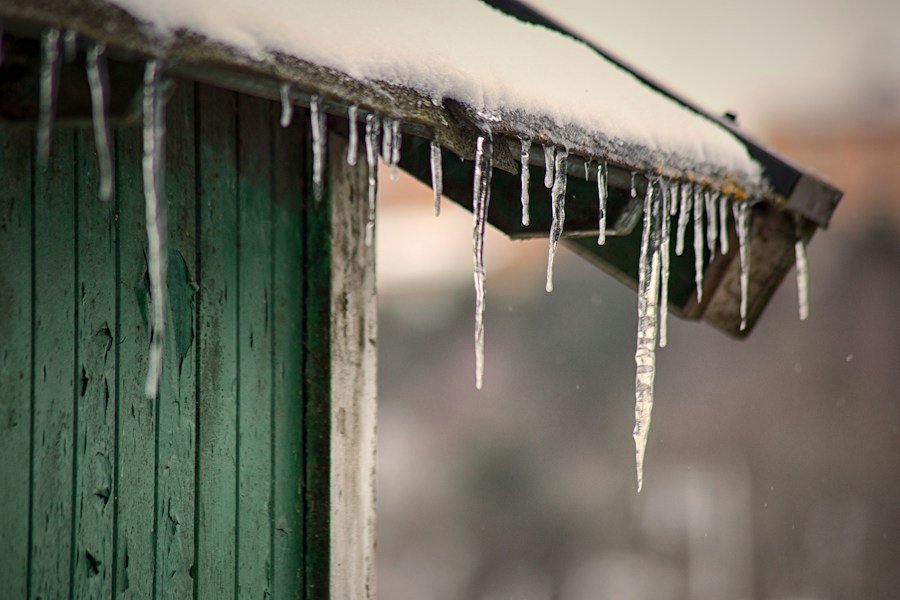
Icicles and ice ridges at the eave
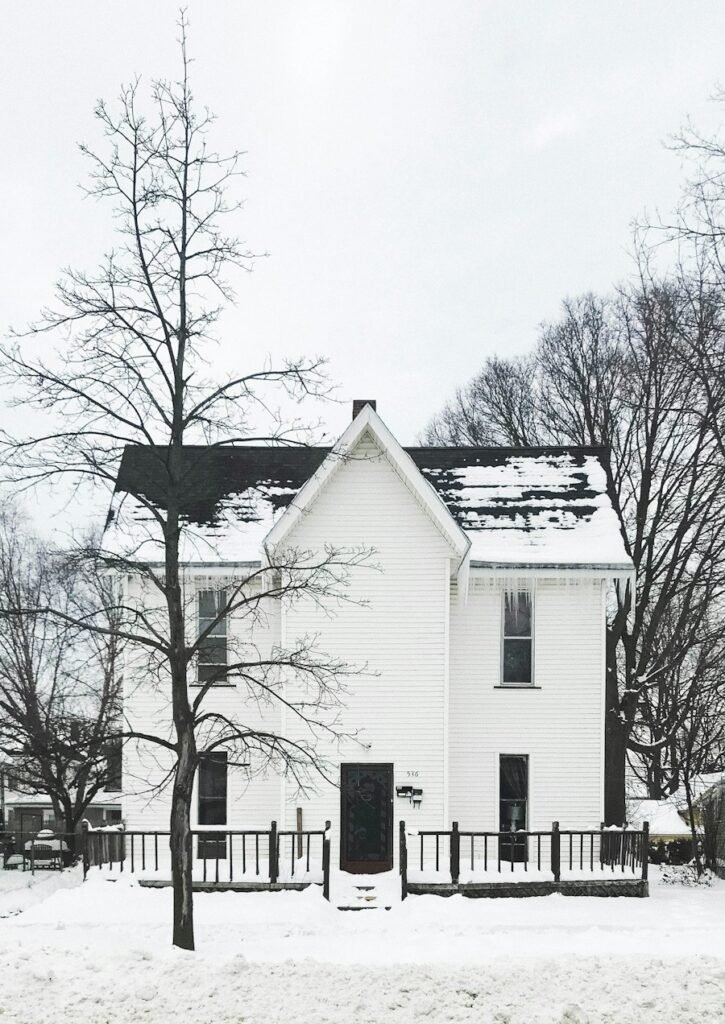
A row of thick icicles or a ridge of ice in the gutter after a snow means meltwater is refreezing at the cold roof edge. That is an ice dam forming. The ice can bend hangers, crack seams and push water back under the first shingle courses into the wall or ceiling.
Wet basement or eroded beds
Washed-out mulch, a trench in the lawn, or a damp basement wall under one corner of the house usually traces back to a downspout that dumps right at the foundation, a disconnected leader, or a missing extension. Gutters that work but discharge in the wrong place still cause damage.
Plants growing in the gutter
Seedlings, moss or a mat of wet leaves sitting in the trough mean the gutter has stayed clogged long enough to hold soil. That weight strains hangers, and the constant moisture rots the fascia and corrodes the gutter. On heavily wooded NJ lots, this can happen within a single season.
Why it happens in NJ
What Causes Gutter Problems on New Jersey Homes?
Most NJ gutter failures come from four things: heavy leaf load, freeze-thaw and ice, undersized or badly pitched systems, and wood fascia that rots behind the gutter. Age and cheap fasteners make every one of them worse. Coastal homes add salt corrosion and wind.
Heavy oak, maple and pine debris
New Jersey is heavily wooded, and mature oaks, maples, tulip poplars and pines overhang a lot of roofs. Maples drop winged seeds and flowers in spring, oaks drop catkins in spring and leaves late in fall, and many oaks hold leaves into December. Pine needles in the Pinelands and along the Shore weave into mats that slip past cheap screens. One missed cleaning can block a downspout for the winter.
Freeze-thaw cycles and ice dams
NJ winters swing above and below freezing over and over, worst in Sussex, Warren, Morris, Passaic and Hunterdon counties. Water trapped in a clogged gutter freezes, expands and pries seams apart. Snow melting over a warm attic refreezes at the cold eave and builds an ice dam. The weight bends hangers and the backed-up water can work under shingles at the roof edge.
Nor’easters and summer cloudbursts
Nor’easters from October to April and summer thunderstorms dump water faster than many older systems were built to handle. Remnant tropical storms, like Ida in 2021, showed how quickly overwhelmed gutters and leaders flood basements. A system that copes with a steady drizzle can still overflow at every corner during a short, intense downpour.
Undersized gutters and too few downspouts
Many NJ homes built from the 1950s through the 1990s got 5-inch gutters with 2×3 downspouts as standard, regardless of roof size or pitch. Additions, dormers and steeper replacement roofs add more water to the same eaves. When one downspout drains a 50-foot run, or a valley dumps onto one corner, overflow is guaranteed in heavy rain.
Wrong pitch from settling or a bad install
Gutters need a gentle, steady fall toward the outlet. Over the years, hangers loosen, houses settle and someone rehangs a section by eye. The result is a run that is flat or slopes away from the downspout, so water sits in it. Standing water breeds mosquitoes, adds weight, freezes in winter and speeds corrosion of the metal.
Rotted wood fascia and missing drip edge
Many older NJ homes have original pine fascia and no drip edge at the eave. Without drip edge, water running off the shingles can curl back behind the gutter and soak the fascia and the edge of the roof deck. Once that wood rots, hanger screws have nothing to bite into, and the gutter pulls away no matter how often it is reattached.
Salt air and wind on the Shore
In Monmouth, Ocean, Atlantic and Cape May counties, salt spray corrodes fasteners and thin-gauge metal faster, and coastal wind lifts loose gutters and downspouts. Steel gutters and plain steel screws rust out early near the water. Strong gusts can also rip off guards that were only snapped onto the front lip without a secure attachment.
Age, thin metal and spike fasteners
Builder-grade gutters are often thin aluminum hung with long spikes through a ferrule into the fascia. Spikes slowly work loose as the wood moves with temperature and humidity. Thin metal dents when a ladder leans on it and bends under ice. Vinyl sections can turn brittle after years of UV and cold, cracking at joints and hangers.
How we do it
How Does Roof Repair SNJ Repair and Install Gutters in NJ?
We inspect the whole roof edge first, fix the wood and flashing behind the gutter, then repair or replace the gutter itself and water-test it before we leave. Rehanging a gutter on rotten fascia or without drip edge just moves the problem a few months down the road.
1. Inspect the roof edge and drainage
We walk the perimeter and go up the ladder to check every run, seam, outlet and hanger. We probe the fascia for soft wood, look under the first shingle course for drip edge, check the deck edge for rot, and note where each downspout discharges. We also look at roof area, pitch and valleys feeding each gutter, because sizing problems start up there.
2. Photograph and explain what we found
You get photos of the problem areas: the clogged outlet, the sag, the rotted board, the missing drip edge. We explain which problems are gutter problems, which are roof-edge problems, and which are drainage problems at the ground. If a full replacement is not needed, we say so and price the repair.
3. Write an itemized quote
The written quote lists each item separately: linear feet of gutter, number of downspouts and elbows, hangers, feet of fascia to replace, drip edge, guards and haul-away. That lets you compare apples to apples and choose what to do now and what can wait. The contract meets New Jersey home improvement contract rules, including your three-day right to cancel.
4. Repair the wood and flashing first
We take down the affected gutter, cut out rotted fascia back to sound wood, and replace it. Where rafter tails or deck edges are damaged, we tell you before going further, because structural work may need a permit. We install or correct drip edge so roof water lands in the gutter, and we wrap new fascia in aluminum when you want it maintenance-free.
5. Rehang, reseal or install the gutter
For repairs, we clean the joint, reseal seams and end caps with gutter sealant, and rehang the run with hidden hangers screwed into solid wood. For new gutters, we roll seamless aluminum on site to the exact length of each run, snap a chalk line for pitch, and set hangers on close spacing for NJ snow and ice.
6. Set downspouts and discharge
We place outlets where the water collects, add downspouts on long runs, upsize to 3×4 where the roof calls for it, and route leaders around walkways. At the bottom, we add extensions, splash blocks or a connection to an existing drain line so water ends up well away from the foundation and the basement wall.
7. Water-test the whole system
We run a hose into the high end of each run and watch. Water should move steadily to the outlet with no standing puddles, no drips at seams or miters, and no overflow at the corners. Each downspout should flow freely to its discharge point. Anything that fails gets adjusted before we pack up.
8. Clean up and document the job
We clear old gutters, nails, sealant tubes and wood scraps, magnet-sweep the beds and driveway for fasteners, and haul everything away. You get final photos, a list of what was installed, and maintenance notes for your house: when to clean, which trees are the problem, and what to watch after the first big storm.
Pricing · updated November 2026
How Much Does Gutter Repair Cost in NJ?
As of November 2026, most NJ gutter repairs fall between about $100 and $700, and new seamless aluminum gutters typically run about $8 to $18 per linear foot installed. Copper, 6-inch systems, fascia replacement and guards add to that. These are planning ranges drawn from current cost guides, not quotes.
Spot repair: seam, end cap or downspout
$100 – $450
Cleaning and resealing a leaking seam, miter or end cap, reattaching a loose leader, clearing a clogged elbow, or replacing a short downspout section. One area, reachable from a ladder, no wood repair needed.
Rehang and re-pitch a sagging run
$150 – $700
Taking down one sagging or backward-pitched run, snapping a new pitch line, installing hidden hangers screwed into sound fascia, resealing joints and water-testing. Price rises with run length, height and the number of runs.
Seamless aluminum, 5-inch K-style
$8 – $18 per ft
New seamless aluminum formed on site, hidden hangers, end caps, outlets, 2×3 or 3×4 downspouts and elbows, and haul-away of old gutters. A typical 150-foot NJ home lands around $1,200 to $2,700.
Upgrade to 6-inch gutters
$3 – $5 more per ft
Larger 6-inch K-style gutters that hold about half again as much water, usually paired with 3×4 downspouts. Recommended for big or steep roofs, long runs, and lower gutters that catch an upper roof.
Copper or half-round gutters
$30 – $50 per ft
Copper half-round or K-style gutters with soldered joints, copper hangers and round or plain downspouts. Common on slate roofs, historic homes and higher-end projects in older NJ towns. Price depends on gauge, profile and height.
Gutter guards, professionally installed
$19 – $45 per ft
Brush and foam inserts at the low end; screens, micro-mesh and reverse-curve covers at the high end. Recent professional installs average close to $40 per foot. Gutters should be cleaned, repaired and pitched first.
What moves the price
- Height and access. A one-story ranch in Ocean County is a ladder job. A three-story Victorian in Montclair or Cape May needs taller ladders, standoffs or staging, which adds labor time and safety setup.
- Fascia condition. Rotted fascia must be replaced before anything is rehung. We probe every board and price wood repair per section after we see it, because the extent of rot only shows once the gutter is down.
- Drip edge. Adding drip edge to a roof that lacks it means lifting the first course of shingles carefully. On brittle older shingles, that adds time and can require replacing a few tabs.
- Size and profile. 6-inch K-style costs more than 5-inch, and half-round costs more than K-style because hangers and fittings are specialty parts.
- Material. Aluminum is the NJ standard. Copper costs several times more per foot and needs soldering skills. Steel and vinyl are less common here for good reasons.
- Number of corners and downspouts. Every miter, outlet and leader adds parts and labor. A house with many roof sections, dormers and bump-outs costs more per foot than a simple rectangle.
- Removal and disposal. Tearing off old gutters and hauling them away is usually a separate line item, often a few hundred dollars on a full replacement.
- Underground drains and extensions. Tying into an existing drain line, cleaning out a clogged one, or adding long extensions around a patio changes the scope at ground level.
Planning ranges, not quotes, current as of November 2026. Repair ranges reflect HomeGnome’s 2026 repair data (average repair about $217 to $698; sagging gutters about $77 to $367). Installation ranges reflect Inch Calculator (installed aluminum about $8 to $18 per foot, copper about $30 to $50) and Angi’s 2026 seamless gutter guide (6-inch adds $3 to $5 per foot; old gutter removal $150 to $300). Guard ranges reflect This Old House’s October 2026 guard cost data. NJ labor often runs toward the upper half. Your written quote after inspection is the number that counts.
Methods & materials
Gutter Repair, Installation and Materials for NJ Homes
Most NJ gutter problems are fixed by rehanging with hidden hangers, resealing joints, correcting pitch and replacing rotted fascia; full replacement with seamless aluminum makes sense when the system is old, undersized or failing in several places. The tabs below cover how we repair, how we install, how to decide, what to buy and how guards compare.
A good gutter repair fixes the cause, so we start with what is behind and above the gutter before touching the gutter itself.
- Rehanging with hidden hangers. Old spike-and-ferrule fasteners are pulled and replaced with hidden hangers. These clip inside the front lip of the gutter and fasten to the fascia with a long screw. A screw holds far better than a smooth spike as wood expands and shrinks. Where the fascia is solid, this alone fixes most sagging.
- Resealing seams, miters and end caps. We scrape out old sealant, clean the metal down to bare, dry aluminum, and apply a gutter-grade sealant made to stay flexible in cold. Smearing new caulk over old caulk fails fast. Badly corroded or split corners are cut out and replaced with a new miter.
- Re-pitching. We snap a fresh chalk line with a steady fall toward the outlet and reset every hanger to it. Installation guides commonly call for about 1/4 inch of drop for every 10 feet of gutter, and somewhat more in heavy rain areas. Long runs can be pitched from the middle down to a downspout at each end.
- Fascia replacement. Rotted boards are cut back to sound wood and replaced. We prime and paint new wood, or cover it with bent aluminum fascia wrap so it never needs paint again. If rafter tails behind the fascia are rotted, we stop and explain the options before going further.
- Drip edge installation. Drip edge is a bent metal flashing under the edge of the first shingle course. It throws roof water out into the gutter and protects the deck edge and fascia. On roofs without it, we slip new drip edge under the shingles and starter strip, then set the back of the gutter tight beneath it.
- Outlet and downspout fixes. We clear packed elbows, add a second outlet on overloaded runs, swap 2×3 leaders for 3×4, and reattach loose straps. At the ground we add extensions or splash blocks so water leaves the foundation zone.
Gutter repairs on the roof edge often reveal related roof damage. If shingles at the eave are curled, lifted or ice-damaged, we note it and can handle it under shingle roof repair in the same visit.
We install seamless aluminum gutters formed on site from a coil, cut to the exact length of each run, so the only joints are at corners, end caps and outlets.
Our install sequence on a typical NJ home:
- Tear-off and inspection. Old gutters come down. We inspect and repair fascia, add or correct drip edge, and seal any gaps at the roof edge.
- Layout. We decide where each outlet goes based on roof area, valleys and where water can safely discharge on the ground. Downspouts usually go at corners and at least every 30 to 40 feet of run. Runs longer than that get a second outlet or are pitched both ways from the middle.
- Chalk line for pitch. We snap a line with a fall of about 1/4 inch per 10 feet toward each outlet, enough to move water without looking crooked from the street.
- Forming and hanging. The machine rolls each run to length. We cut outlets, set end caps and miters, seal and rivet joints, and hang the gutter with hidden hangers. Most manufacturer guides space hangers about 24 inches apart and closer, about 18 inches, in heavy snow and ice areas. We use the closer spacing as our standard for NJ winters.
- Downspouts. Leaders are strapped to the wall with at least two straps per section, elbows are fastened, and the bottom discharges onto a splash block, an extension or a drain connection.
- Water test. Every run is hosed down from the high end and checked before we leave.
K-style vs half-round. K-style has a flat back and a decorative front that looks like crown molding. It holds more water than a half-round of the same width and is the standard on most NJ homes. Half-round is a semicircle, hung from brackets, and suits Victorian, colonial-era and slate-roofed homes, often in copper.
5-inch vs 6-inch. A 5-inch K-style handles most single-story and moderate two-story roofs. A 6-inch K-style holds roughly half again as much water and is the better choice for large, steep or metal roofs, long runs and gutters below an upper roof or valley. We size by roof area, pitch and what each run actually collects.
Repair when the problems are isolated and the gutters are sound; replace when the system is old, undersized, or failing in three or more places.
Repair usually makes sense when:
- The gutters are seamless aluminum in decent shape, with one or two leaking corners or one sagging run.
- The problem is fasteners or pitch, and the fascia behind is solid or needs only a short section replaced.
- Overflow happens at one spot that a second outlet or a larger downspout will solve.
- You plan to replace the roof in the next few years and want new gutters installed with the new drip edge then.
Replacement usually makes sense when:
- The gutters are sectional with leaking joints every 10 feet, or vinyl that has turned brittle and cracked.
- The metal is dented, split, rusted through or bent from ice in several places.
- The system is undersized for the roof: 5-inch gutters with 2×3 leaders overflowing on a large or steep roof in every heavy rain.
- Fascia needs replacing along most of the house anyway, so the gutters have to come down regardless.
- Repairs have been done more than once on the same runs and keep failing.
Timing with a roof job. If your roof is near the end of its life, it is usually smart to replace gutters at the same time or just after. Roofers replace drip edge during a reroof, and gutters often get removed and reset anyway. Installing new gutters first and then tearing off the roof risks dents and scratches. Our roof replacement page explains how we coordinate the two.
Cost logic. If repairs would cost more than about a third of a new seamless system for the same runs, replacement is usually the better value, because a new system resets the clock on every joint, hanger and seam at once.
Seamless aluminum is the right material for most New Jersey homes; copper is the long-life upgrade for slate, historic and high-end homes.
- Aluminum. Light, rust-free and available in dozens of baked-enamel colors. It handles NJ freeze-thaw and humidity well and is the most common choice statewide. We favor a heavier gauge coil, because thin builder-grade aluminum dents under ladders and bends under ice.
- Copper. Very long service life, no paint, and it weathers from bright penny to brown to green patina. Joints are soldered, which makes them stronger than sealant joints. Copper suits slate roofs and older homes in places like Princeton, Morristown, Haddonfield and Cape May. Do not mix copper with aluminum or galvanized parts, which corrode where they touch.
- Galvanized or Galvalume steel. Stronger than aluminum, but plain galvanized steel rusts at cut edges and scratches, especially near salt air. It is a niche choice in NJ, mostly on commercial buildings.
- Vinyl. Cheap and sold for DIY, but sectional, with many joints. It can turn brittle with UV and cold and is a poor match for NJ ice loads.
- Zinc. A premium metal with a matte gray patina. Rare in NJ, specialty installers only.
Downspouts. Standard sizes are 2×3 and 3×4 inches rectangular, plus 3- and 4-inch round. A 3×4 has twice the cross-section of a 2×3, and published flow figures show it carries more than twice the water. On most NJ two-story homes with 6-inch gutters, we use 3×4.
Hangers. Hidden hangers with screws for K-style; adjustable brackets or shanks for half-round. On copper, hangers are copper or brass.
Fascia. Pressure-treated or primed wood replaced in kind, PVC trim board, or wood wrapped in bent aluminum. PVC and wrapped wood stop the paint-and-rot cycle.
Drip edge. Aluminum or galvanized steel, in a profile that extends past the fascia and over the back of the gutter. On copper systems, we use copper drip edge.
Shore homes. Near salt water, stainless or coated fasteners and aluminum or copper gutters hold up far better than steel. See our metal roof repair page for more on corrosion and dissimilar metals.
Gutter guards cut cleaning, but no guard is maintenance-free; the right type depends on what your trees drop.
- Micro-mesh. A fine stainless or aluminum mesh on a rigid frame. It stops oak leaves, maple seeds and most pine needles. Cons: fine debris and pollen can film the surface, so it needs an occasional brushing from the roof edge, and in very heavy rain some water can sheet past. Best all-round choice under mixed NJ hardwoods and pines.
- Screens and perforated covers. Larger holes in plastic or aluminum. Cheap and easy, and they stop whole leaves. Cons: maple seeds, oak catkins and pine needles poke through and lodge in the holes. Plastic screens warp and blow out.
- Reverse-curve (surface tension) covers. A solid hood that water follows around a curved nose into the gutter, while leaves slide off. Cons: visible from the street, can overshoot in cloudbursts, and the narrow slot can collect seeds. Debris that slides off lands in your beds.
- Foam inserts. Porous foam fills the gutter. Cons: seeds sprout in it, it holds water against the metal, and it breaks down. We do not recommend it under NJ trees.
- Brush guards. A bottle-brush that sits in the trough. Cons: leaves tangle in the bristles, and you have to pull and clean them. Fine for light debris only.
NJ leaf load. Oaks drop catkins in spring and leaves late in the fall, often into December. Maples drop seeds and flowers in spring. Pines shed needles year-round, heaviest in fall. Under that mix, micro-mesh with a screw-down front attachment holds up best.
Winter. A guard does not stop ice dams. Snow can sit on top of a guard and freeze, so we fasten guards securely and keep the gutter pitched so meltwater drains.
Before guards. Gutters must be cleaned, repaired and correctly pitched first. A guard on a sagging, backward-pitched gutter just hides the standing water. For homes with moss or debris on the roof itself, pair guards with roof cleaning.
Heat cable can keep a drainage path open through ice, but it treats a symptom; ice dams are caused by heat escaping into the attic, and the lasting fix is air sealing, insulation and ventilation.
How ice damages gutters and the roof edge in NJ:
- Snow melts over a warm attic, runs down to the cold overhang, and refreezes in the gutter and at the eave.
- The ice grows into a ridge that bends hangers, pulls gutters off the fascia and cracks joints.
- Water ponds behind the ridge and can back up under the first rows of shingles, leaking into soffits, walls and ceilings. If that happens, see our roof leak repair page.
Heat cable cautions.
- Use only cable sold and listed for roof and gutter de-icing, and follow the manufacturer’s layout, which usually means a zigzag on the roof edge plus a run in the gutter and down each downspout.
- Most manufacturers require a GFCI-protected outdoor outlet. Adding a new outdoor circuit or receptacle is electrical work for a licensed electrician.
- Never staple through the cable, overlap it, or cover it with materials the maker does not approve, including some gutter guards.
- Turn it on before the storm and inspect it each fall. Damaged cable is a fire and shock risk.
What not to do. Do not chop or hammer ice out of gutters. You will dent the metal, tear hangers out and crack shingles. Do not throw rock salt on the roof; it corrodes metal and kills plantings below. A roof rake used from the ground to pull back the bottom few feet of snow is safer.
Roof-side protection. When we install drip edge or repair the eave, we check for ice and water shield, a self-adhering membrane under the first few feet of shingles that resists water backing up from ice dams. On reroofs in the colder NJ counties, it is standard practice.
NJ rules
Do You Need a Permit for Gutter Repair in NJ, and Does Insurance Cover It?
Permits
No. Repairing, replacing or installing exterior gutters and leaders is listed as ordinary maintenance under the NJ Uniform Construction Code, so no permit is needed. N.J.A.C. 5:23-2.7 names gutters and leaders, exterior trim, and repair or replacement of roof covering on detached one- and two-family homes as ordinary maintenance. A permit can be triggered by work around the gutters: replacing rotted rafter tails or roof sheathing at the eave, other structural repairs, adding a new circuit or outlet for heat cable, or any roofing work on townhomes, attached homes, larger multi-family or commercial buildings. Ordinary maintenance is not a code waiver, so the work must still be done correctly. Your town’s construction official has the final word. We flag any permit item in your quote before work starts.
Insurance
Homeowners insurance usually covers gutters damaged by a sudden event, such as a fallen tree, a wind storm or the weight of ice and snow, and usually excludes wear, clogs, rot and age. Gutters ripped off in a nor’easter or crushed by a limb are often part of a wider claim with the roof and siding. Sagging from years of loose spikes, rotted fascia or leaks from old sealant are maintenance items. Water damage inside caused by clogged gutters may be denied as neglect. Coastal policies often carry separate wind or hurricane deductibles, which may exceed a gutter repair. To document: photograph the damage, the debris and the date before cleanup, keep receipts for any emergency work, and call your agent. Our inspection photos and itemized quote can support the claim. Your policy and adjuster decide what is covered. For wider damage, see our storm damage roof repair page.
Who does the work
Why NJ Homeowners Choose Roof Repair SNJ for Gutter Repair
- Repairing NJ roofs for 25+ years
- General liability + workers’ comp insurance
- Workmanship warranty: 2 years on repairs, 10 years on full replacements, in writing
Check any NJ roofer before you sign
Ask for the 13VH registration number and confirm it on the NJ license lookup. NJ law requires a signed written contract showing the registration number and total price, and gives you until midnight of the third business day to cancel (N.J.S.A. 56:8-151).
In depth
Gutter Repair in NJ: Questions Most Contractors Skip
How gutters protect your roof, fascia, siding and foundation
Gutters are the last part of your roof’s drainage system; when they fail, damage shows up at the roof edge, the walls and the basement.
A 1,500 square foot roof sheds a large volume of water in a single inch of rain. Without working gutters, all of it falls along the drip line of the house. Here is what each part protects:
- Roof edge and deck. Drip edge throws water off the shingles into the gutter. When a gutter overflows or ice backs up, water sits at the first course of shingles and the edge of the plywood. Over time that rots the deck edge and leads to leaks at the eave.
- Fascia and soffit. The gutter hangs on the fascia. Water that gets behind the gutter rots the fascia, then the soffit and the rafter tails. Squirrels and birds use the soft spots to get into the attic.
- Siding and windows. Overflow sheets down the wall, stains siding, soaks window and door trim, and splashes mud onto the bottom courses. On stucco and older wood clapboard, that leads to rot and peeling.
- Foundation and basement. Water dumped at the foundation saturates the soil against the wall, and that pressure pushes water through cracks and joints. Many wet basements are fixed for the price of an extension.
- Walkways and driveways. Water dripping on steps and walks freezes into ice sheets in winter, which is a slip hazard and breaks up concrete and pavers.
Downspouts should discharge at least 3 to 5 feet from the foundation, with the ground sloping away. Treat the gutter, the roof edge and the ground discharge as one system. We inspect all three on every job, and when the shingles at the edge need work, our roof inspection covers the rest of the roof.
How to size gutters and downspouts for an NJ roof
Size gutters and downspouts by the roof area and pitch draining into each run, then add capacity for NJ’s intense summer storms and remnant tropical rain.
Professionals size gutters using the roof area that drains to each run, adjusted for pitch, because a steep roof catches more wind-driven rain and sheds it faster. Then they check against the local design rainfall intensity. In practice for NJ homes:
- 5-inch K-style with 2×3 downspouts works for small to moderate roofs with low to medium pitch, short runs and a downspout at each end.
- 6-inch K-style with 3×4 downspouts suits large two-story homes, steep roofs, metal roofs that shed water fast, long runs, and any gutter that catches water from an upper roof or a valley.
- Downspout spacing. Install guides commonly call for downspouts at corners and at least every 30 to 40 feet. A run longer than about 40 feet usually gets a downspout at each end, pitched from the middle.
- Downspout size. A 3×4 downspout has twice the cross-section of a 2×3. Published flow figures show a 3×4 carrying more than twice the water. Often the cheapest fix for overflow is upsizing the downspout or adding an outlet, while leaving the gutter in place.
- Valleys. Where a roof valley empties into a gutter, the water hits one spot hard and can overshoot the front. We add a diverter or splash guard at the corner, or place an outlet nearby.
Pitch matters as much as size. Most guides call for about 1/4 inch of fall per 10 feet, and some recommend more in heavy rain areas. Too little and water sits; too much and the gutter looks crooked and the high end sits too far below the drip edge. We measure each run and show you the layout before we form a single piece.
NJ gutter cleaning schedule by season and tree type
Clean gutters at least twice a year in New Jersey: once in late spring after seeds and flowers drop, and once in early winter after the last oak leaves fall. Wooded lots often need three or four cleanings.
- Late May to June. Maple seeds, oak catkins, pollen and flower debris pile up and pack into downspout elbows. Clear before summer thunderstorms.
- Late October to early November. On lots with maples, tulip poplars and birch, a mid-fall cleaning stops the first leaf drop from matting.
- Late November to mid-December. Oaks drop late, and many hold leaves into December. This is the most important cleaning, because a clog going into January freezes solid and sets up ice dams.
- After major storms. Nor’easters and summer windstorms dump twigs and leaves. Check the downspouts flow after any big blow.
Pine needles in the Pinelands, Ocean, Burlington and Atlantic counties fall heavily in autumn and through the year. They pass through coarse screens and form tight mats, so pine-heavy lots do best with micro-mesh guards plus an annual check.
How to tell it is time. Water spills over the front in moderate rain, downspouts trickle or go quiet in a storm, or you see plants growing in the trough.
How to clean safely. Use a stable extension ladder with a standoff so it rests on the wall or roof, never on the gutter. Scoop by hand into a bucket, flush with a hose from the high end and confirm each downspout runs. Do not walk on a wet or steep roof. Professional cleaning typically costs a few hundred dollars per visit for an average home, depending on height and debris. If moss or debris is building up on the roof itself, see roof cleaning.
Seamless vs sectional gutters: what NJ homeowners should know
Seamless gutters are formed in one piece per run on site, so they have far fewer joints to leak; sectional gutters come in 10- or 20-foot lengths joined every few feet.
Why it matters in NJ. Every joint is held by sealant and rivets. Each winter, freeze-thaw cycles open and close joints, and sealant ages under summer sun. A 40-foot sectional run might have three or four seams plus end caps and an outlet. A seamless run of the same length has only the end caps, the outlet and any corners. Fewer joints mean fewer leaks, fewer rust streaks and fewer places for debris to snag.
When sectional still makes sense. Short runs on sheds and porches, small repairs where matching an existing sectional profile is easier, and copper or half-round systems, which are usually built from lengths and soldered at the joints. Soldered copper joints are strong and long-lived, unlike sealant joints.
How seamless is made. The installer brings a roll-forming machine and a coil of pre-painted aluminum. Each run is measured, formed to length, and lifted into place. Corners are mitered from pieces of the same coil, riveted and sealed. This lets us match colors to trim and wrap new fascia in the same color.
Limits. Very long seamless runs expand and contract with temperature. On long commercial or large residential runs, installers sometimes add an expansion joint. Seamless also does not fix bad sizing, pitch or fascia, and a poorly hung seamless gutter fails just like any other.
For most NJ homes, seamless aluminum with hidden hangers, sound fascia and drip edge is the most reliable and cost-effective system. If your house has a slate roof or historic trim, copper half-round is the traditional match; see our slate roof repair page.
DIY gutter repair vs calling a pro
Homeowners can safely handle cleaning, a downspout extension and resealing a reachable corner on a one-story house; leave rehanging, pitch, fascia, drip edge and anything above one story to a pro.
Reasonable DIY tasks:
- Cleaning a ranch or single-story gutter from a stable ladder with a standoff.
- Adding downspout extensions or splash blocks to move water away from the foundation.
- Reattaching a loose downspout strap or elbow screw.
- Resealing a leaking end cap after cleaning the metal down to bare, dry aluminum, in mild weather so sealant cures.
Hire a pro when:
- The gutter is on a second story or higher. Ladder falls cause serious injuries every year.
- A run is sagging or pulling away. That usually means rotted fascia, which needs the gutter removed and wood replaced.
- Water overflows in every heavy rain. Sizing, outlets and pitch need measuring, and guessing wastes money.
- You see ice damage, bent hangers or leaks at the roof edge. The roof needs checking along with the gutter.
- Drip edge is missing. Installing it means lifting shingles without breaking them or the seal strips.
- The home is near power lines, on a slope, or has a steep or slate roof.
Common DIY mistakes we fix: caulk smeared over dirty seams, hangers screwed into rotted wood, gutters rehung with no pitch or the wrong direction, foam inserts that sprout weeds, and roofing nails driven through the back of the gutter. If you hire, confirm the contractor’s NJ registration number (it starts with 13VH) at the state lookup and get a written contract. You can also tell us what your gutters are doing and we will say whether it is a DIY fix.
How long gutters and repairs last in NJ
Well-installed seamless aluminum gutters commonly last about 20 years or more in NJ, copper can last for many decades, and a quality repair should last as long as the gutter around it.
What shortens gutter life in New Jersey:
- Clogs and standing water. Wet debris holds moisture against the metal year-round and adds weight. The fastest way to age a gutter is to skip cleanings.
- Ice. Repeated ice dams bend hangers and split seams. Homes with poor attic insulation in the colder north and west counties see this most.
- Thin metal. Builder-grade aluminum dents and deforms. Heavier coil resists ladders, ice and branches.
- Fastener type. Spikes loosen within years. Screwed hidden hangers hold much longer.
- Salt air. Shore homes see faster corrosion of steel parts and fasteners.
Repair life. A seam resealed over clean, dry metal with a quality gutter sealant typically lasts years. A seam caulked over dirt and oxidation can fail by the next winter. A rehang on solid or new fascia with hidden hangers usually holds for the life of the gutter; a rehang on soft wood does not.
Fascia life. Bare wood fascia needs paint every several years. Aluminum-wrapped or PVC fascia avoids the paint-and-rot cycle, so it outlasts the gutter.
Signs of end of life: repeated leaks at many joints, rust-through, splits, many dents, sagging in several runs, and paint that has chalked and faded badly. At that point, replacement usually costs less over time than continuing repairs.
Gutter work and roof warranties
Gutter installers must not nail through shingles or damage the roof edge, because that can affect your roof’s manufacturer and workmanship warranties.
Shingle manufacturers’ installation instructions spell out how the eave is built: drip edge, starter strip, underlayment and the first course. Gutter work touches all of these. Problems we see after gutter jobs by non-roofers:
- Gutter hangers or screws driven through shingles or the drip edge flange, which creates leak points.
- Guards slid under the first course of shingles, breaking the seal strip and lifting shingles so wind can catch them.
- Drip edge bent or removed to fit a gutter tight to the fascia.
- Guards fastened through the shingles with roofing nails.
Some guard products attach under the shingles. Read the shingle maker’s position on that before you sign, and ask the installer how the guard is attached. We prefer guards that fasten to the front lip and either sit flush under the drip edge or attach to the fascia, so the roof is not disturbed.
Your gutter warranty. Ask for two things in writing: the material warranty from the coil or guard maker, and the installer’s workmanship warranty, with what it covers (leaks at joints, sag, pitch) and for how long. Keep the contract, the invoice and photos together.
If you are planning a new roof. Coordinate gutters and roofing so the drip edge, ice and water shield and gutters go on in the right order. That is simpler with one contractor responsible for the whole edge. Our roof repair and replacement costs guide covers what a reroof includes.
Residential vs commercial gutters and choosing a contractor
Commercial buildings use larger box gutters, scuppers, conductor heads and bigger leaders, and often need permits; for homes, the key is hiring a registered contractor who understands the roof edge.
Commercial differences. Flat and low-slope roofs drain through internal drains or through scuppers, openings in the parapet wall that feed a conductor head and a large downspout. Gutters on commercial buildings are often 7-inch or larger box gutters in heavier metal. Because these buildings are not detached one- or two-family homes, roofing work there typically requires a permit. Our commercial roofing and flat roof repair pages cover scuppers and coping.
Choosing a gutter contractor in NJ:
- Registration. Confirm the 13VH registration number at the state lookup (newjersey.mylicense.com). Registration requires liability insurance.
- Written contract. NJ law requires a signed written contract with the contractor’s legal name, address, registration number, total price, insurance certificate and a notice of your three-day right to cancel.
- Itemized scope. Linear feet, gutter size and gauge, hanger type and spacing, downspout size and count, fascia and drip edge, guards and haul-away should each be listed.
- Roof-edge knowledge. Ask how they handle rotted fascia and missing drip edge. If the answer is just more caulk, keep looking.
- Pitch and testing. Ask whether they snap a pitch line and water-test before leaving.
- No big upfront deposits for small repairs, and no door-to-door storm chasers pressing you to sign today.
Ready to start? Get a written gutter repair quote after a free inspection.
Service areas
Gutter Repair Across New Jersey
We provide gutter repair in all 21 New Jersey counties. Find your county and town on our New Jersey service locations page for local roof types, permit notes and prices.
FAQ
Gutter Repair in NJ: Frequently Asked Questions
How much does gutter repair cost in NJ?
As of November 2026, most NJ gutter repairs cost about $100 to $700. Resealing a seam or fixing a downspout sits at the low end. Rehanging and re-pitching a sagging run sits higher. Fascia replacement and work on tall homes add cost. These are planning ranges; a written quote after inspection sets the real price.
How much do seamless gutters cost per foot in New Jersey?
Seamless aluminum gutters typically run about $8 to $18 per linear foot installed, including downspouts and hangers. A 6-inch system adds about $3 to $5 per foot, and copper runs roughly $30 to $50 per foot. A typical 150-foot NJ home lands around $1,200 to $2,700 in aluminum.
Do I need a permit to replace gutters in NJ?
No. N.J.A.C. 5:23-2.7 lists repair, replacement or installation of exterior gutters and leaders as ordinary maintenance, so no permit is needed. A permit may be needed for related work, such as replacing rafter tails or roof sheathing, adding a circuit for heat cable, or roofing on attached or commercial buildings.
Should I get 5-inch or 6-inch gutters?
Choose 5-inch for small to moderate roofs with short runs. Choose 6-inch for large or steep roofs, metal roofs, long runs, and gutters that catch water from an upper roof or valley. A 6-inch K-style holds about half again as much water and pairs well with 3×4 downspouts on many NJ two-story homes.
How often should gutters be cleaned in New Jersey?
Clean NJ gutters at least twice a year: late spring after maple seeds and oak catkins fall, and late November to mid-December after the last oak leaves drop. Homes under heavy tree cover or pines often need three or four cleanings. Always clean before winter so clogs do not freeze.
Why are my gutters pulling away from the house?
Gutters usually pull away because spike fasteners have loosened or the fascia board behind them has rotted. Heavy clogs and ice add weight that speeds it up. The fix is replacing soft fascia, then rehanging the gutter with hidden hangers screwed into solid wood and setting proper pitch.
What is the correct slope for a gutter?
Most installation guides call for about 1/4 inch of fall for every 10 feet of gutter toward the downspout, with somewhat more in heavy rain areas. Runs longer than about 40 feet usually slope from the middle down to a downspout at each end. Too little slope leaves standing water in the gutter.
Are gutter guards worth it in NJ?
Gutter guards are worth it on NJ homes under oaks, maples or pines, especially two-story homes where cleaning is risky. Micro-mesh performs best against mixed leaves, seeds and needles. No guard is maintenance-free, and guards should go only on gutters that are clean, sound and correctly pitched.
Does homeowners insurance cover gutter damage?
Homeowners insurance usually covers gutters damaged suddenly by a fallen tree, wind or the weight of ice and snow. It usually excludes sagging, rot, clogs and old age. Photograph the damage before cleanup, keep receipts and call your agent. Your policy and adjuster decide coverage and deductibles.
What is drip edge and do I need it with gutters?
Drip edge is bent metal flashing under the first row of shingles that directs roof water into the gutter and protects the fascia and deck edge. Without it, water can curl behind the gutter and rot the wood. Many older NJ homes lack it, and it can usually be added during gutter work.
Reviewed by the Roof Repair SNJ team · Last updated November 2026
Maintenance
Related maintenance services
Gutter Repair is part of our maintenance services. See every service on our roof repair NJ homepage.
Free inspection
Get Your Gutters Fixed: Free Roof-Edge Inspection in NJ
Book a free gutter and roof-edge inspection anywhere in New Jersey. We check the gutters, fascia, drip edge and downspout discharge, send photos, and give you a written, itemized quote with repair and replacement options. No pressure and no obligation: if a simple reseal or rehang will do, that is what we will recommend.
No pressure and no obligation. If a repair will do, we’ll tell you.
Roof Repair SNJ
- Serving all 21 NJ counties
- Send a gutter repair request
- Mon–Fri 5:00 AM–10:00 PM · Sat 5:00 AM–6:00 PM · Emergencies 24/7
Sources: N.J.A.C. 5:23-2.7, Ordinary maintenance (gutters and leaders, exterior trim, roof covering) · NJ Contractors’ Registration Act contract requirements, N.J.S.A. 56:8-151 · NJ Division of Consumer Affairs license and registration lookup · Lowe’s: How to Install and Replace Rain Gutters (slope, hanger and downspout spacing, discharge distance) · Angi: How Much Slope Does a Gutter Need · Gutter Helmet: Frequently Asked Questions About Gutters (hanger spacing in snow areas) · City of Detroit HDC gutter specification (downspout flow, hanger spacing, slope) · Spectra Pro Select metal gutter installation guide · Angi: Seamless Gutters Cost (2026) · Inch Calculator: Cost to Install Gutters · This Old House: Gutter Guard Installation Cost (updated Oct 2026) · HomeGnome: How Much Does Gutter Repair Cost in 2026. Prices are planning ranges, not quotes. Permit and insurance information is general guidance; your town, policy and agent have the final word.