
Roof Repair NJ › Roof Replacement
New roof installation · All 21 NJ counties
Roof Replacement in NJ: Full Tear-Off and New Roof Installation
Roof Repair SNJ replaces residential and small commercial roofs across all 21 New Jersey counties. We start with a free inspection with photos, then give you a written itemized quote covering tear-off, deck repair, underlayment, flashing, ventilation and cleanup. Most asphalt shingle replacements on a typical NJ house take one to three working days. Book a free roof replacement inspection to see where your roof stands.
- Full tear-off down to the deck
- Free inspection with photos of every slope
- Written itemized quote before any work
Free inspection, written quote
Photos of every problem we find and an itemized price before any work. 24/7 emergency service.
Roof Repair SNJ
Serving all 21 New Jersey counties
Free inspection
Roof, attic and gutters checked at no cost.
Insured
Liability and workers’ comp; certificate on request.
Written quotes
Itemized price in writing before any work.
Photo-documented
Every problem photographed, before and after.
What you’ll notice
When Is It Time for a Roof Replacement in NJ?
It is time to replace a New Jersey roof when the problems are spread across the whole surface instead of one spot: widespread granule loss, curling or cracked shingles, repeated leaks in different places, a soft or sagging deck, or a roof that has reached the end of its expected life. One leak usually means a repair. Several symptoms at once usually mean replacement is the better use of your money.
The roof is past its expected life
Most asphalt shingle roofs in New Jersey last roughly 20 to 30 years, depending on the shingle, ventilation and exposure. If your roof was installed before the house last sold, or you cannot remember when it was done, an inspection will tell you how much life is left before the next nor’easter tests it.
Shingles are curling, cupping or cracking
Edges that lift up (curling) or centers that dish down (cupping) mean the asphalt has dried out and lost flexibility. Cracked tabs and brittle shingles that snap when lifted can no longer be repaired cleanly, because sealing one area breaks the shingles around it. When this shows on several slopes, replacement is the honest answer.
Leaks keep coming back in new places
A single leak at a pipe boot or chimney is a repair. Stains appearing in different rooms, or a leak that returns after each storm even though it was patched, point to an underlayment and shingle system that has worn out. At that stage you pay for repair after repair without stopping the water.
Bald spots and heavy granule loss
Granules protect asphalt from the sun. When gutters and downspout splash blocks fill with dark, sand-like grit, or you see smooth black patches on the shingles, the UV shield is gone. Exposed asphalt ages quickly under New Jersey summer heat and starts to crack within a few seasons.
The roofline sags or the deck feels soft
A dip between rafters, a wavy ridge, or a spongy feel underfoot means the plywood or plank deck below the shingles has absorbed water. Rotted sheathing will not hold nails properly. Replacing it is structural work that needs a permit in New Jersey, and it is best done during a full tear-off.
Ice dams every winter
If icicles and ice ridges build along your eaves every January, water is backing up under the shingles. Older roofs in Sussex, Warren, Morris, Passaic and Hunterdon counties often have no ice and water shield at the eaves at all. A replacement lets us add it and fix the attic ventilation that causes the problem.
Moss, algae and rot on shaded slopes
Black streaks are usually algae and are mostly cosmetic. Thick moss is different: it holds moisture against the shingles, lifts the edges and speeds up rot on the north side of the house. On wooded lots in Bergen, Essex and Morris counties, heavy moss on an older roof often signals replacement.
Storm damage across large areas
After a nor’easter or a tropical system, missing shingles on several slopes, creased tabs that flapped in the wind, or hail bruising across the roof may be too widespread to patch. If the damage is sudden, your homeowners policy may help pay for a replacement, so document it before anything is removed.
Why it happens in NJ
Why New Jersey Roofs Wear Out and Need Replacement
New Jersey roofs wear out from a mix of freeze–thaw cycles, ice dams, nor’easter wind, coastal salt air, summer heat and humidity, and poor attic ventilation. Age is the main driver, but these local conditions decide whether a roof reaches 30 years or fails at 15.
Freeze–thaw cycles in the northwest counties
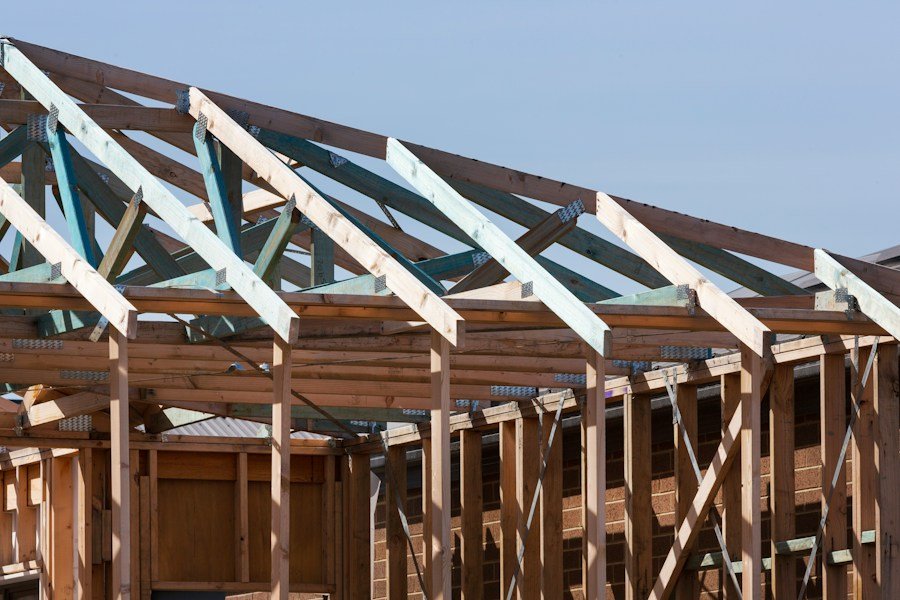
Sussex, Warren, Morris, Passaic and Hunterdon counties see many days each winter where temperatures swing above and below freezing. Water that seeps into small cracks freezes, expands and widens them. Over years, this breaks down shingle edges, loosens sealant strips and opens flashing joints. Roofs in these areas tend to age faster on the north and east slopes, where snow lingers longest.
Ice dams from warm attics
When heat escapes from the living space into the attic, it melts snow on the upper roof. The meltwater runs down to the cold overhang and refreezes, building a ridge of ice. Water then pools behind it and works under the shingles. Repeated ice dams rot the deck at the eaves and stain ceilings and walls. Fixing insulation and ventilation is part of a proper replacement.
Nor’easters and wind uplift
From October through April, nor’easters bring sustained wind and driving rain. Wind gets under shingle edges that have lost their seal and lifts them, breaking the nails or tearing the shingle. Once a few shingles go, the next storm finds the exposed underlayment. Roofs on open lots in Hunterdon farmland and along the Shore take the worst of it.
Salt air and wind at the Shore
In Monmouth, Ocean, Atlantic and Cape May counties, salt air corrodes standard steel flashing, nails and vents faster than inland. Constant coastal wind also keeps shingle edges working. Homes within a few miles of the ocean benefit from corrosion-resistant fasteners and flashing, and from shingles and installation patterns rated for higher wind.
Summer heat, humidity and algae
July and August heat bakes dark roofs, and a poorly vented attic can get far hotter than the outside air. That heat dries out asphalt and shortens shingle life. New Jersey humidity then feeds algae and moss, especially on shaded, wooded lots. A hot attic in summer and ice dams in winter often share the same cause: weak ventilation.
Tropical storms and hurricane remnants
From June through November, tropical systems can reach New Jersey. Sandy in 2012 and the remnants of Ida in 2021 showed how quickly wind and extreme rain can strip roofs and overwhelm older flashing. A roof that is already near the end of its life is far more likely to fail in one of these events.
Layered roofs on older NJ housing
Much of New Jersey’s housing stock dates from the 1920s through the 1970s. Many of these homes already have two layers of shingles, sometimes over original plank sheathing. Extra layers trap heat, add weight and hide rot. When the top layer fails, a code-compliant job means tearing everything off and inspecting the deck.
How we do it
How Our NJ Roof Replacement Process Works
Our roof replacement process runs from a free inspection and written quote, through tear-off, deck repair and installation of the complete roofing system, to cleanup, a final walkthrough and paperwork. You know the scope, the price and the schedule before we start.
1. Free inspection with photos
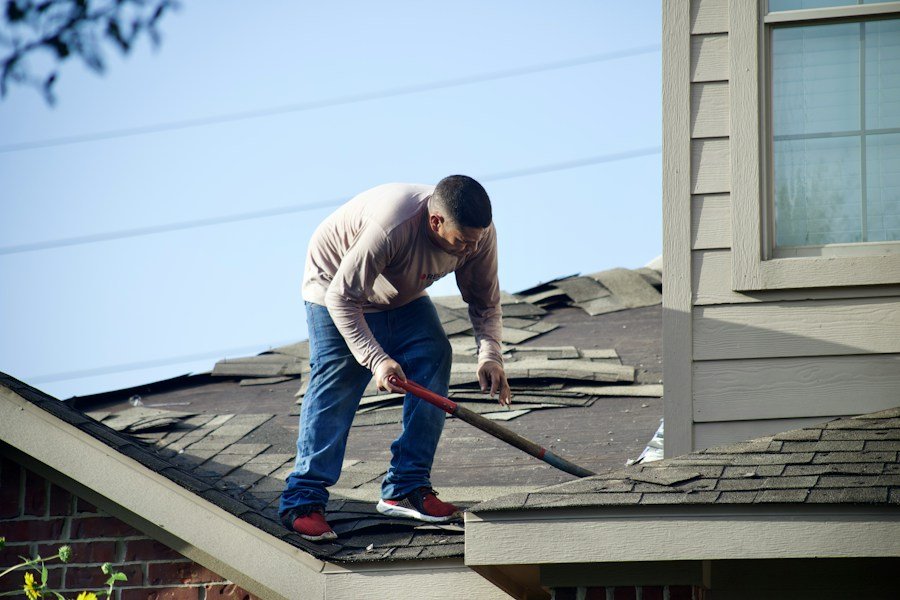
We walk every slope we can safely reach, check the attic for daylight, stains, mold and ventilation, and look at the gutters for granule loss. We photograph shingles, flashing, valleys, vents and any soft deck. You get the photos with a plain explanation of whether repair or replacement makes sense, and how many layers are on the roof now.
2. Written itemized quote
The quote lists each part of the job: tear-off of every layer, disposal, underlayment type, ice and water shield coverage, drip edge, flashing work, pipe boots, ventilation, shingle line and color, and the per-sheet price for any deck replacement. New Jersey law requires a written, signed contract with our registration number and your three-day right to cancel.
3. Scheduling, permits and delivery
We set a start date around the forecast. If the job needs a permit, such as planned sheathing replacement or an attached home, we file it with your local construction office. Materials and a dumpster arrive a day or two ahead. We tell you where they will go so your driveway, lawn and septic area are protected.
4. Property protection and tear-off
Before tear-off we cover shrubs, AC units and windows near the work area, and protect the driveway under the dumpster. Crews strip the roof one section at a time down to the bare deck, removing every layer, nail and old flashing. We only open as much roof as we can dry in the same day.
5. Deck inspection and sheathing repair
With the deck exposed, we walk it and mark rotted, delaminated or soft plywood and any plank boards with wide gaps. We show you the damage, replace it at the per-sheet price in your quote, and re-nail loose sheathing. Wide planks may need new plywood over them so nails hold. Sheathing replacement requires a permit under the NJ code.
6. Install the complete roofing system
We install drip edge, ice and water shield at eaves and valleys, synthetic underlayment, starter strip, shingle courses, valley work, step and counter flashing, new pipe boots, ridge vent with matching intake, and ridge cap. Each part is installed to the manufacturer’s instructions so the material warranty stays valid. Details are in the installation tab below.
7. Cleanup and magnetic sweep
We remove debris from the gutters, beds and lawn, and run magnetic sweepers across the driveway, walkways and grass to pick up nails. Tarps come off the plantings, the dumpster leaves, and the site should look the way it did before we arrived. We check the gutters and downspouts for shingle grit and clear them.
8. Final walkthrough and documentation
We walk the roof and the property with you, review photos of the deck and the work at each stage, and close out any permit with the inspection. You receive the final invoice, a record of the materials used, and the paperwork you need to register the manufacturer warranty and keep for insurance or a future home sale.
Pricing · updated November 2026
How Much Does Roof Replacement Cost in NJ?
As of November 2026, a typical New Jersey asphalt shingle roof replacement runs about $8,500 to $17,000, with an average near $13,500 for a roughly 1,700 sq ft roof. Installed cost per square foot ranges from about $7.20 for 3-tab shingles to $31 to $40 for natural slate. For the full breakdown, see our repair vs replacement cost guide for NJ.
3-tab asphalt shingles
$12,200 – $15,800
About $7.20 per sq ft installed, including tear-off, at a 6/12 pitch. Range shown is for 1,700 to 2,200 sq ft of roof surface. Budget option with a flatter look and lower wind ratings than architectural shingles.
Architectural asphalt shingles
$13,500 – $17,500
About $7.95 per sq ft installed with tear-off on 1,700 to 2,200 sq ft of roof. Thicker laminated shingles, the most common choice on NJ homes, with better wind resistance and a dimensional look.
Standing-seam steel metal roof
$28,000 – $45,000
About $16.45 to $20.50 per sq ft installed on 1,700 to 2,200 sq ft of roof. Concealed-fastener panels with long service life. Aluminum runs about $21.95 per sq ft and suits salt-air Shore homes.
Cedar shake or shingle
$29,500 – $44,500
About $17.35 to $20.20 per sq ft installed on 1,700 to 2,200 sq ft of roof. Natural wood look common on historic and colonial-style homes. Needs good airflow and more upkeep in humid NJ summers.
Natural slate
$52,700 – $88,800
About $31.00 to $40.35 per sq ft installed on 1,700 to 2,200 sq ft of roof. Heavy, very long-lived roofing found on older NJ homes. Framing must be checked, and copper flashing is common.
Rotted deck sections (add-on)
$500 – $2,000+
Typical NJ range for replacing rotted sheathing found during tear-off. Your quote lists a per-sheet price in advance so there are no surprises. Sheathing replacement needs a permit under the NJ Uniform Construction Code.
What moves the price
- Roof size in squares. Roofers price by the square (100 sq ft of roof surface). Roof area is larger than the house’s floor area because of pitch and overhangs, so a 1,500 sq ft colonial can easily have 2,000 sq ft of roof.
- Pitch and height. Steep roofs (8/12 and up) and three-story homes need more staging and safety equipment and go slower, which raises labor cost.
- Number of layers. Tearing off two layers takes longer and fills more dumpsters than one. Older NJ homes often have two layers.
- Deck condition. Rotted plywood or gapped plank sheathing adds material, labor and a permit.
- Complexity. Dormers, valleys, skylights, chimneys and wall intersections each need flashing work. A cut-up roof costs more per square than a simple gable.
- Material choice. Moving from architectural shingles to metal or slate can double or triple the installed price per sq ft.
- Ventilation and ice protection upgrades. Adding soffit intake, a ridge vent, or extra ice and water shield coverage in ice-dam areas adds modest cost and prevents bigger problems.
- Access and disposal. Tight lots, long carries from the driveway, and street dumpsters in towns that require a right-of-way permit add time and fees. Shore homes may also need corrosion-resistant flashing and fasteners.
Per-sq-ft figures are from the Roof Observations New Jersey roof cost guide (updated January 2026, residential, installed including tear-off, 6/12 pitch). Whole-job ranges are those per-sq-ft rates applied to 1,700 to 2,200 sq ft of roof surface. The statewide range and average are from Fixr (2026). These are planning ranges, not quotes. Your written quote from a free inspection is the only price that applies to your home.
Methods & materials
Roof Replacement Methods and Materials for New Jersey Homes
A durable NJ roof replacement is a complete system: full tear-off, a sound deck, ice and water shield where ice forms, synthetic underlayment, properly nailed shingles, new flashing at every wall and penetration, and balanced ventilation. The tabs below explain each choice, including when repair still makes more sense.
A full tear-off removes every layer down to the deck. An overlay (also called a recover or layover) installs new shingles over one existing layer. We recommend tear-off on almost every New Jersey job, and in many cases the code requires it.
The model residential code that New Jersey’s construction codes are based on does not allow a recover when the existing roof is water-soaked or deteriorated, when it is slate, clay, cement or asbestos-cement tile, or when there are already two or more layers. In practice that means a house can have at most two layers. Under N.J.A.C. 5:23-2.7, a third layer is outside ordinary maintenance and needs a permit, and in most cases the second-layer rule already blocks it.
Why we prefer tear-off:
- You see the deck. Rot hidden under old shingles gets found and fixed instead of being buried for another 25 years.
- Ice and water shield can be applied directly to the deck at the eaves and valleys, where it bonds properly. Over old shingles it cannot seal around nails the same way.
- All old flashing comes off. Overlays often reuse rusted step flashing and old pipe boots, which are the first places to leak.
- The new shingles lie flat. Overlays telegraph the bumps and curls of the old roof and run hotter, which can shorten shingle life.
- Some enhanced manufacturer warranties are tied to a full tear-off installation, so check the terms before choosing an overlay.
When an overlay might be considered: a single layer, flat and dry, with a solid deck, on a building you may not keep long. It saves the tear-off and disposal cost. We will tell you honestly if your roof qualifies, but we will also show you what you give up. On most NJ homes we inspect, the second layer is already there, so tear-off is the only legal option.
Overlays also complicate the next replacement: whoever does it will be removing two layers, which costs more in labor and disposal.
A roof is only as good as the layers under and around the shingles. Here is each component we install on an asphalt shingle replacement, in the order it goes on.
- Drip edge. Metal edging along the eaves and rakes. It directs water into the gutter, protects the deck edge from rot, and gives the shingles a straight line. At the eaves it goes under the ice barrier; at the rakes it goes over the underlayment.
- Ice and water shield. A self-adhering polymer-modified bitumen membrane. The code requires an ice barrier in areas with a history of ice at the eaves, running from the roof edge to at least 24 inches inside the exterior wall line. In New Jersey’s ice-dam counties we often extend it further on low-pitch or deep-overhang roofs. We also run it in every valley, around chimneys and skylights, and at other leak-prone areas.
- Synthetic underlayment. A tough woven sheet over the rest of the deck. It resists tearing, lies flat and gives a second line of defense behind the shingles.
- Starter strip. A row of adhesive starter shingles at the eaves and rakes. It seals the first course down so wind cannot catch the edge.
- Shingle courses. Shingles are laid with the manufacturer’s exposure and offset, and nailed in the nailing zone. Typical code practice is four nails per strip shingle and six in high-wind areas; we use six on Shore homes and open lots.
- Valleys. Open metal valleys or closed-cut valleys, both over ice and water shield. Valleys carry the most water, so they get the most attention.
- Step and counter flashing. Where a roof meets a wall or chimney, individual L-shaped step flashings are woven into each shingle course. Counter flashing then covers their top edge, cut into chimney mortar or tucked behind siding.
- Pipe boots. New boots on every plumbing vent. Old rubber collars crack in the sun and are a leading leak source.
- Ridge vent and intake. A continuous ridge vent paired with soffit or edge intake, sized to the attic (see the ventilation tab).
- Ridge cap. Purpose-made cap shingles over the ridge vent and hips, nailed with longer nails to reach the deck.
Balanced attic ventilation means fresh air enters low at the soffits and exits high at the ridge in roughly equal amounts. In New Jersey, it is the main defense against both winter ice dams and summer attic heat, and most shingle manufacturers require adequate ventilation for their warranty.
The model residential code sets the minimum net free vent area at 1/150 of the attic floor area. That can drop to 1/300 when at least 40 percent and no more than 50 percent of the vent area is in upper vents within 3 feet of the ridge, with the rest at the eaves or cornice. For a 1,500 sq ft attic, that is about 10 sq ft of net free area at 1/150, or 5 sq ft at 1/300, split between top and bottom.
What we check during a replacement:
- Intake. Many older NJ homes have solid soffits, painted-over vents or insulation stuffed into the eaves. A ridge vent with no intake does little. We add soffit vents, edge intake vents or baffles so air can reach the ridge.
- Exhaust. A continuous ridge vent usually works best on a gable or hip roof with enough ridge length. Box vents remain an option on short ridges.
- Mixing exhaust types. Most ventilation manufacturers advise against combining a ridge vent with gable fans, turbines or extra box vents on the same attic. The second exhaust can pull air in through the ridge, short-circuiting the system and drawing in rain or snow. We remove or seal the extras.
- Bath and kitchen fans. Fans that dump moist air into the attic cause frost and mold in winter. They should be ducted outside through a proper roof or wall cap.
- Air sealing. Gaps around recessed lights, attic hatches and chimneys let warm air into the attic. Ventilation works better when these are sealed.
Getting this right is why some roofs reach 30 years and others blister and curl at 15, and why ice dams often stop after a properly done replacement.
Architectural asphalt shingles are the right choice for most New Jersey homes, but metal, slate and cedar each fit specific houses and locations. Choose by the home’s style, roof pitch, structure, exposure and how long you plan to stay.
- Architectural (laminated) asphalt shingles. About $7.95 per sq ft installed in NJ. Two bonded layers give a dimensional look and better wind resistance than 3-tab. Look for algae-resistant granules on shaded or humid lots and high wind ratings at the Shore. Repairs are covered on our shingle roof repair page.
- 3-tab asphalt shingles. About $7.20 per sq ft. Flat, single-layer and lighter. Usually chosen for budget jobs, rentals or matching an existing roof.
- Standing-seam metal. Steel at about $16.45 to $20.50 per sq ft; aluminum about $21.95. Concealed fasteners, sheds snow well and handles wind when properly clipped. Aluminum resists corrosion near salt water in Ocean, Atlantic and Cape May counties. Copper ($43.90) and zinc ($29.65) suit high-end and historic work. See metal roof repair for upkeep.
- Natural slate. About $31.00 to $40.35 per sq ft. Found on many pre-war homes in Essex, Morris, Somerset and Hunterdon counties. Very long-lived when the slate is sound, so a failing slate roof often needs repair to its flashing and fasteners rather than full replacement. Our slate roof repair page covers that decision.
- Cedar shake and shingle. About $17.35 to $20.20 per sq ft. Natural look for historic and colonial homes. Needs airflow underneath and regular care in humid summers.
- Low-slope sections. Porch roofs and additions below 2/12 cannot take asphalt shingles under code. They need a membrane such as EPDM, TPO or modified bitumen, which we install as part of the same job.
All prices are typical NJ installed ranges from the Roof Observations NJ cost guide (January 2026), as planning figures only.
Repair when the problem is local and the rest of the roof has years left. Replace when damage is widespread, the roof is near the end of its life, or repair costs keep adding up. A free inspection with photos lets you see the evidence and decide.
Repair usually makes sense when:
- The roof is under about 15 years old and in good overall shape.
- The leak traces to one source: a pipe boot, a chimney flashing, a skylight, a valley, or a few blown-off shingles.
- Shingles still lie flat, hold their granules and bend without cracking.
- The deck is solid when walked.
Typical NJ repair ranges for those jobs run from about $250 to $600 for a pipe boot, $350 to $800 for a few shingles, and $600 to $1,800 for chimney re-flashing. Our roof inspection service will tell you which bucket you are in.
Replacement usually makes sense when:
- The roof is 20 or more years old with curling, cracking or bald shingles on more than one slope.
- You have had several leaks in different places, or one leak that keeps returning.
- The deck is soft in more than one area.
- There are already two layers, so any meaningful re-roofing means full tear-off anyway.
- Storm damage is spread across several slopes.
- You are selling soon and an inspector will flag an old roof, or your insurer is asking about roof age.
A simple rule of thumb. If the repairs quoted over the next few years add up to a large share of a replacement, or if a repair would mean disturbing brittle shingles that will crack, replacement is usually the better investment. Patching an old roof can also make it harder to show an insurer what was storm damage and what was wear.
We will tell you when a repair is enough, and we will put that in writing too.
Most asphalt shingle replacements on a typical New Jersey house take one to three working days on the roof, plus a few days before and after for delivery, permits if needed, and cleanup checks. Metal, slate and cedar take longer.
- Before start. Contract signed, three-day cancellation period passes, materials ordered. If sheathing replacement is planned or the building is attached, the permit is filed. We watch the forecast and confirm the date with you.
- Delivery day. Shingles are often boom-delivered onto the roof or staged in the driveway. The dumpster arrives on plywood or boards to protect the driveway. Move cars out, and take fragile items off walls inside, since hammering can shake them.
- Day 1: tear-off and dry-in. Crews protect plantings, strip one section at a time to the deck, replace any rotted sheathing, then install drip edge, ice and water shield and underlayment. Every opened area is watertight before the crew leaves.
- Day 2: shingles and flashing. Starter strip, shingle courses, valleys, step and counter flashing, pipe boots and vent work. On a simple ranch or cape, the whole roof may be finished on day 1 or 2.
- Day 3: ridge, details and cleanup. Ridge vent, ridge cap, final flashing checks, gutter cleanout, magnetic sweep and final walkthrough with you.
- After. Permit inspection if one was filed, final invoice, and warranty registration paperwork.
Weather holds. We do not tear off when rain is likely during the work window or when wind makes handling shingles unsafe. Shingle sealant strips need warmth to bond, so in cold months we may hand-seal edges or schedule around warmer days. Late spring and early fall are busiest, so booking early helps.
Larger jobs. Complex roofs, steep pitches and three-story homes can add days. Metal, slate and cedar roofs typically take one to three weeks depending on size and detail.
NJ rules
NJ Permits and Insurance for Roof Replacement
Permits
On a detached one- or two-family home in New Jersey, replacing the roof covering itself does not need a permit. Since March 5, 2018, repair or replacement of existing roof covering on these homes is ordinary maintenance under the NJ Uniform Construction Code, N.J.A.C. 5:23-2.7, so no permit, inspection or notice is required.
A permit is required when the replacement includes replacing roof sheathing or deck boards, rafter or truss repairs, or other structural work. It is also required on townhomes and other attached homes, larger multi-family buildings and commercial buildings, and for a third layer of roofing. Ordinary maintenance is not a waiver from the code: the new roof must still be installed to code and to the manufacturer’s instructions. Because rotted sheathing is common on older NJ roofs, we explain up front when a permit is likely and handle the filing with your municipal construction office.
Insurance
Homeowners insurance usually helps pay for a roof replacement only when sudden damage, such as wind, hail, a falling tree or the weight of ice and snow, made replacement necessary. Policies usually exclude roofs that failed from age, wear or neglect. Coastal policies in Shore counties often carry a separate wind or hurricane deductible, which can be a percentage of the home’s insured value.
If you think storm damage is involved, document before anything is removed. Take dated photos of the roof, the yard, any fallen shingles and every interior stain. Keep receipts for tarps and emergency repairs. Call your agent or carrier promptly; many policies set deadlines for reporting. Our free inspection includes photos of each slope, which you can share with the adjuster, so ask for a slope-by-slope photo report before the adjuster visits. For storm-specific guidance, see our storm damage roof repair page. Your policy and your agent always have the final word on coverage.
Who does the work
Why NJ Homeowners Choose Roof Repair SNJ for Roof Replacement
- Repairing NJ roofs for 25+ years
- General liability + workers’ comp insurance
- Workmanship warranty: 2 years on repairs, 10 years on full replacements, in writing
Check any NJ roofer before you sign
Ask for the 13VH registration number and confirm it on the NJ license lookup. NJ law requires a signed written contract showing the registration number and total price, and gives you until midnight of the third business day to cancel (N.J.S.A. 56:8-151).
In depth
Roof Replacement in NJ: Questions Homeowners Ask Before Signing
How to compare roof replacement quotes in New Jersey
Compare quotes line by line on scope, not just on the total price. Two quotes that differ by thousands of dollars often describe two very different roofs.
Check that each quote spells out:
- Tear-off. Removal of all existing layers to the deck, including disposal. An overlay quote is not comparable to a tear-off quote.
- Deck work. A per-sheet price for replacing rotted plywood and how it will be documented. A quote that says nothing about the deck leaves the cost open.
- Ice and water shield. Where it goes and how far up the eaves, plus valleys and penetrations.
- Underlayment, drip edge, starter strip and ridge cap. Named as separate items, not bundled into the word shingles.
- Flashing. New step flashing, new or reset counter flashing, chimney and skylight details. Reusing old flashing is a common way to cut price.
- Ventilation. The intake and exhaust plan, and what happens to existing box vents or gable fans.
- Shingle line, color and wind rating, plus the nailing pattern.
- Permits if required, cleanup, magnetic sweep and gutter cleanout.
- Warranty. Which manufacturer warranty will be registered, and the contractor’s workmanship terms in writing.
Then check the legal basics. Under New Jersey’s Contractors’ Registration Act (N.J.S.A. 56:8-151), a home improvement contract must be written and signed, list the contractor’s legal name, business address and registration number, show the total price, include a copy of the liability insurance certificate, and give you a Notice to Consumer of your right to cancel before midnight of the third business day after you receive a copy. The registration number starts with 13VH and can be checked at the state verification site. Registration requires at least $500,000 of commercial general liability insurance.
Finally, be cautious of door-to-door offers after a storm, large cash deposits, and quotes that will not name materials. A clear written scope protects both sides.
Manufacturer warranty vs workmanship warranty
A manufacturer warranty covers defects in the roofing materials. A workmanship warranty from the contractor covers mistakes in how the roof was installed. You need both, and they cover different failures.
Manufacturer material warranties. Shingle makers warrant their product against manufacturing defects for a stated period. Most of these warranties are limited and often prorated, meaning full coverage for an early period and then a declining share of the cost. Many manufacturers also offer enhanced system warranties when the roof is built with their matching components (underlayment, starter, ridge cap, ventilation) and installed by a contractor in their credentialed program. Those can extend coverage to labor and to the accessories, and may be transferable to a buyer.
What voids material warranties. Installation outside the manufacturer’s instructions, such as wrong nail placement, too few nails, missing starter strip, inadequate attic ventilation, or installing over a roof that does not meet requirements. Many warranties also require registration within a set time after installation. Keep your paperwork.
Workmanship warranties. Many leaks on newer roofs trace back to installation details such as flashing, valleys and pipe boots. A workmanship warranty is the contractor’s promise to fix those. Terms vary widely, so ask any contractor, including us, for the length, what is covered, whether it is transferable and how to file a claim, in writing.
What neither covers. Damage from storms, falling trees and other sudden events is usually an insurance matter, not a warranty claim. Damage from later work by others, such as satellite dishes, solar mounts or gutter guards screwed through shingles, can also void coverage. Tell your roofer before anyone drills into the new roof.
What happens when rotten deck is found mid-job
When tear-off exposes rotted or damaged sheathing, we stop, photograph it, show you, replace it at the per-sheet price written into your quote, and make sure the permit is handled. You should never get a surprise bill for unlisted deck work.
Deck damage is common on New Jersey roofs. Ice dams rot the first few feet above the eaves. Failed pipe boots and chimney flashing soak the plywood around them. Older homes built before plywood was standard have plank sheathing, boards with gaps between them, which can be too wide or too split to hold modern roofing nails.
Here is how we handle it:
- Inspection. Once a section is stripped, the crew walks it. Soft spots, delaminated plywood, dark stained areas and broken planks are marked.
- Documentation. We photograph every damaged area before replacement and count the sheets, so the invoice matches the evidence.
- Replacement. Damaged sheets are cut out to the rafters and replaced with new sheathing of matching thickness. Loose sheathing is re-nailed. Over plank decks with wide gaps, new plywood may be installed over the planks.
- Root cause. If the rot came from ventilation, a bathroom fan venting into the attic, or a missing kick-out flashing, we point it out and fix it in the new roof.
- Permit. Replacing sheathing falls outside ordinary maintenance under N.J.A.C. 5:23-2.7, so it needs a permit. When we expect deck work from the inspection, we file before the job starts. Typical NJ cost for rotted deck sections runs about $500 to $2,000 or more depending on how much is found.
If the attic inspection shows widespread rot or sagging rafters, we tell you before signing. Structural repairs may need a carpenter or engineer as well as a permit.
Best time of year to replace a roof in NJ
Late spring through early fall is the most comfortable window for roof replacement in New Jersey, but a roof can be replaced in any month when the weather cooperates. The right time is usually before the next storm season catches a failing roof.
Spring (April to June). Mild temperatures help shingles seal and keep crews efficient. Spring rain can delay start dates, and schedules fill quickly after winter damage shows up.
Summer (July to August). Long days allow fast installs. On very hot days, shingles get soft and can scuff, so crews often start early. Afternoon thunderstorms are watched closely, and we only open what can be dried in quickly.
Fall (September to November). Often the ideal season: moderate temperatures, lower humidity and steady weather. It is also when homeowners want the roof done before nor’easter season, so book early. Tropical systems through November can cause short delays.
Winter (December to March). Replacement is possible on dry days above freezing. Shingle sealant strips need warmth to activate, so in cold weather edges may need hand-sealing, and some manufacturers have specific cold-weather instructions. Ice and snow can delay work, particularly in Sussex, Warren and Morris counties. Winter scheduling can be easier, and an emergency replacement after major damage should not wait for spring. In the meantime our emergency roof repair team can tarp and stabilize a failing roof.
Plan ahead. If an inspection shows the roof has one or two seasons left, booking a replacement for the next good window avoids paying for emergency tarps and interior repairs after it fails.
How to prepare your home and protect your property
Clear the driveway, protect fragile items inside and out, and plan for noise; we handle covering plantings, shielding the house and cleaning up nails. A little preparation makes the work faster and safer.
What we ask you to do:
- Move cars out of the garage and driveway the evening before delivery, and keep them clear until cleanup.
- Take pictures, mirrors and shelf items off walls on the top floor. Hammering and nail guns vibrate the framing.
- Cover belongings in the attic with sheets. Some dust and debris fall through the deck seams during tear-off.
- Move patio furniture, grills, planters and children’s toys away from the house.
- Keep pets inside or away from the work area, and tell us about any invisible fence lines or septic and well areas we should keep the dumpster off.
- Tell us about solar panels, satellite dishes, security cameras or antennas on the roof so removal and reinstallation can be planned.
What we do to protect the property:
- Lay tarps over shrubs and flower beds, and lean plywood against windows and AC units close to the drop zone.
- Put boards under dumpster wheels to protect asphalt driveways.
- Use debris chutes or careful hand-down at gutters to avoid bending them.
- Dry in every opened area before leaving each day.
- Clean out gutters, rake beds and run magnetic sweepers over grass, driveway and walkways at the end of the job.
If you have gutters that are already loose or damaged, replacement day is a good time to fix them. See our gutter repair page.
How long a new roof lasts in New Jersey
A properly installed architectural shingle roof in New Jersey typically lasts about 25 to 30 years, while metal and slate roofs can last much longer. Ventilation, exposure and maintenance decide where in that range your roof lands.
Typical service life by material, based on general industry experience:
- 3-tab asphalt: roughly 15 to 25 years.
- Architectural asphalt: roughly 25 to 30 years.
- Cedar: roughly 25 to 40 years with good airflow and care.
- Standing-seam metal: often 40 years or more.
- Natural slate: many decades and often over a century for hard slate, with periodic flashing and fastener work.
What shortens roof life in NJ: hot, poorly vented attics; ice dams; shade and moss on wooded lots; salt air at the Shore; trees rubbing the roof; clogged gutters that back water under the edge; and later work that punctures shingles.
Simple maintenance plan for a new roof:
- Look over the roof from the ground each spring and after big storms. Note missing shingles, lifted edges or debris.
- Clean gutters at least twice a year, more often under oaks and maples.
- Trim branches so they do not touch the roof.
- Check the attic after heavy rain for stains or damp insulation.
- Have a professional inspection every few years, and after any major storm. Our roof inspection service documents condition with photos.
- Keep the warranty registration, invoice and photos in one folder.
A replacement done with the right ventilation and flashing details should need little more than this for many years.
Residential vs commercial roof replacement
Residential roof replacement in NJ usually means steep-slope shingles, metal or slate on homes, while commercial replacement usually means low-slope membrane systems with insulation, drainage and building-code permits. The two are planned and priced differently.
Residential. On detached one- and two-family homes, replacing the roof covering is ordinary maintenance under N.J.A.C. 5:23-2.7 with no permit required, unless the work includes sheathing replacement, structural work or a third layer. Jobs are priced by the square and usually finished in days.
Attached and multi-family. Townhomes, condominiums and larger multi-family buildings are outside the ordinary-maintenance exemption, so roof replacement needs a permit. Association rules on color, material and scheduling often apply, and shared walls need careful fire-separation and flashing work.
Commercial low-slope. Flat and low-slope roofs use single-ply membranes (EPDM, TPO, PVC) or modified bitumen. Typical NJ installed costs run about $5.85 to $7.85 per sq ft for single-ply without insulation and about $13.50 to $19.90 with R-30 insulation; modified bitumen runs about $11.80 to $12.45 without insulation and $21.60 to $26.15 with R-30, per the Roof Observations NJ guide. Insulation, tapered drainage, scuppers, drains, coping and rooftop units drive the scope. These buildings always need permits.
For flat sections on homes, see flat roof repair. For offices, retail and multi-unit buildings, see our commercial roofing page.
Paying for a new roof: financing and budgeting
Roof Repair SNJ offers payment plans for roof replacement, subject to credit approval. Terms depend on the lender’s review of your application, so ask for the specific rate, term and total cost in writing before you sign.
A roof replacement is one of the largest repairs a homeowner makes, and it often comes at an inconvenient time. Here are the common ways New Jersey homeowners pay for it:
- Savings or cash. Simplest and cheapest. Be wary of any contractor asking for most of the price up front. A reasonable deposit covers ordering materials.
- Contractor payment plans. Spread the cost over monthly payments, subject to credit approval. Compare the total paid over the term, not just the monthly figure. Promotional terms often have conditions that change the cost if they are not met.
- Home equity loans or lines of credit. Often lower interest rates, but secured by your home. Talk with your bank.
- Insurance proceeds. If sudden storm damage triggered the replacement, your claim may cover part of the cost, minus your deductible. Your policy and adjuster decide.
Budgeting tips. Get the itemized quote first so you know the true scope, including likely deck work. Ask whether a different shingle line or simpler ventilation option changes the price. Do not cut ice and water shield, flashing or ventilation to save money, since those details prevent the most expensive failures. Our NJ roof repair cost guide walks through budgeting in more detail.
Service areas
Roof Replacement Across New Jersey
We provide roof replacement in all 21 New Jersey counties. Find your county and town on our New Jersey service locations page for local roof types, permit notes and prices.
FAQ
Roof Replacement in NJ: Frequently Asked Questions
How much does a roof replacement cost in NJ?
A typical New Jersey asphalt shingle roof replacement runs about $8,500 to $17,000, averaging near $13,500 for roughly 1,700 sq ft of roof. Architectural shingles install at about $7.95 per sq ft including tear-off. Metal and slate cost two to five times more. These are planning ranges; a free inspection gives your real price.
Do I need a permit to replace my roof in New Jersey?
Not for a detached one- or two-family home when you only replace the roof covering. Since 2018 that is ordinary maintenance under N.J.A.C. 5:23-2.7. You do need a permit if sheathing or framing is replaced, if the home is attached or commercial, or if a third layer is added.
Can a new roof go over my old shingles in NJ?
Only if there is a single existing layer that is dry, flat and sound, and it is not slate or tile. The model code does not allow a recover over two or more layers, so most older NJ homes need a full tear-off. We recommend tear-off in nearly every case so the deck can be inspected.
How long does a roof replacement take?
Most asphalt shingle roof replacements on a typical New Jersey house take one to three working days on the roof. Steep, complex or three-story roofs can take longer. Metal, slate and cedar roofs typically take one to three weeks. Rain, high wind and cold can delay the start or pause work.
How do I know if I need a new roof or just a repair?
A repair fits a single leak source on a roof with years left. Replacement fits when shingles are curling, cracking or bald across several slopes, leaks appear in different places, the deck is soft, or the roof is 20 or more years old. A photo inspection shows which applies to your home.
What is ice and water shield and do I need it in NJ?
Ice and water shield is a self-adhering waterproof membrane installed under shingles. The code requires an ice barrier where ice dams are a known problem, from the roof edge to at least 24 inches inside the exterior wall. In New Jersey we install it at eaves, in valleys and around chimneys and skylights.
Will homeowners insurance pay for a new roof?
Usually only when sudden damage, such as wind, hail, a fallen tree or the weight of ice and snow, makes replacement necessary. Wear, age and neglect are normally excluded. Shore policies may have a separate wind deductible. Photograph damage before repairs and contact your agent, who has the final word.
Do I need to be home during the roof replacement?
You do not need to be home the whole time, but we ask to reach you during the day, especially if deck damage is found. You should be available for the final walkthrough. Move cars from the driveway, take fragile items off upper-floor walls, and keep pets away from the work area.
What should a roof replacement quote in NJ include?
It should list tear-off of all layers, disposal, a per-sheet deck price, ice and water shield coverage, underlayment, drip edge, flashing, pipe boots, ventilation, shingle line, cleanup and warranty terms. NJ law requires a signed written contract with the contractor’s 13VH registration number, insurance certificate and three-day cancellation notice.
Does Roof Repair SNJ offer financing for roof replacement?
Yes. We offer payment plans for roof replacement, subject to credit approval. Terms depend on the lender’s review, so ask for the rate, term and total cost in writing. Start with a free inspection and itemized quote so you know the full scope before choosing how to pay.
Reviewed by the Roof Repair SNJ team · Last updated November 2026
New roof
Related new roof services
Roof Replacement is part of our new roof services. See every service on our roof repair NJ homepage.
Free inspection
Get a Free Roof Replacement Inspection in NJ
Request a free new roof inspection and written quote online. We photograph every slope and the attic, tell you honestly whether repair or replacement is the better choice, and give you a written itemized quote. We work in all 21 New Jersey counties.
No pressure and no obligation. You will see the evidence before you decide.
No pressure and no obligation. If a repair will do, we’ll tell you.
Roof Repair SNJ
- Serving all 21 NJ counties
- Send a roof replacement request
- Mon–Fri 5:00 AM–10:00 PM · Sat 5:00 AM–6:00 PM · Emergencies 24/7
Sources: N.J.A.C. 5:23-2.7 Ordinary maintenance and minor work (Cornell LII) · N.J.S.A. 56:8-151 Contractors’ Registration Act contract requirements (Justia) · NJ Division of Consumer Affairs license verification · Roof Observations: New Jersey roof cost guide (updated January 2026) · Fixr: Cost to replace a roof in New Jersey (2026) · ICC: IRC Section R806 roof ventilation (1/150 and 1/300 net free area) · Prince William County: Roof replacement requirements citing IRC R905.1.2 ice barrier · City of East Point: 2018 IRC residential re-roof guide (R908 recover limits, slope, nailing). Prices are planning ranges, not quotes. Permit and insurance information is general guidance; your town, policy and agent have the final word.