
Roof Repair NJ › Emergency Roof Repair
24/7 emergency service · All 21 NJ counties
Emergency Roof Repair in NJ: 24/7 Tarping, Board-Up and Storm Response
Roof Repair SNJ handles emergency requests around the clock for New Jersey homes and businesses with active leaks, blown-off shingles or tree damage. Send us your emergency roof details at any hour. We stop the water with a battened tarp, shrink-wrap or board-up, photograph everything for your insurer and give you a written plan for the permanent repair.
- Emergency requests handled 24 hours, every day
- Tarps battened and fastened, never sandbagged
- Dated photos and invoices for your insurer
Free inspection, written quote
Photos of every problem we find and an itemized price before any work. 24/7 emergency service.
Roof Repair SNJ
Serving all 21 New Jersey counties
Free inspection
Roof, attic and gutters checked at no cost.
Insured
Liability and workers’ comp; certificate on request.
Written quotes
Itemized price in writing before any work.
Photo-documented
Every problem photographed, before and after.
What you’ll notice
What Counts as a Roofing Emergency in NJ?
A roofing emergency is any opening or failure that lets water, wind or debris into the house right now, or will the next time it rains. If you can see sky, hear water inside a wall, or have a tree on the roof, submit an emergency roof request now. A slow stain that appears only in heavy rain can usually wait for a scheduled visit through our roof leak repair service.
Water dripping from a ceiling or light
Active dripping during a storm means water has already passed the shingles, underlayment and deck. When it comes through a light fixture, smoke detector or fan, it is traveling along wiring, so treat it as an electrical hazard as well as a leak and keep people out of that room.
A tree or large limb on the roof
Even if no water is coming in yet, a trunk or heavy limb resting on the roof can crack rafters, split sheathing and puncture the deck. The weight often shifts as wind continues. Stay out of the rooms below and do not try to cut or drag it off yourself.
Shingles or a whole section blown off
After a nor’easter or a summer squall line you may find shingles in the yard or see bare black underlayment or plywood from the street. Underlayment alone is not built for long exposure, and the next rain will reach the deck and the attic insulation within hours.
A ceiling that is bulging or sagging
A ceiling that balloons downward is holding a pool of water on top of the drywall or plaster. It can let go without warning and bring wet insulation and debris with it. Clear the room, move valuables and do not stand underneath it to take photos.
Water running down inside a wall
Streaking paint, bubbling wallpaper or water at the base of an exterior wall often means a flashing failure at a chimney, dormer or roof-to-wall joint. Water inside a wall cavity soaks insulation and framing that you cannot see, which is why the clock on drying starts immediately.
Lightning strike or fire damage
A strike can blow a hole through the deck, scatter shingles and scorch rafters, and a small attic fire can leave the roof open after the fire department leaves. Both need a structural look before anyone walks on the roof, then a weather seal the same day if possible.
Ice dam water or a snow-loaded flat roof
In Sussex, Warren, Morris and Hunterdon winters, ice dams can push meltwater under shingles and into walls overnight. On flat and low-slope roofs, drifting snow and blocked drains add weight quickly. Creaking, sticking doors below or ponding near drains need prompt attention.
Flat roof membrane torn or peeled back
Wind can catch a loose TPO, EPDM or modified bitumen edge and peel it back like a sticker, often starting at the metal edge or a corner. Once the membrane is lifting, each gust tears more of it, and rain goes straight into the insulation board underneath.
Why it happens in NJ
What Causes Emergency Roof Damage in New Jersey?
Most New Jersey roofing emergencies come from a short list of events: nor’easters, summer thunderstorms, tropical system remnants, falling trees, ice dams and heavy snow. Roofs that were already weak from age or poor flashing fail first, which is why one storm can bring dozens of emergency requests from the same street.
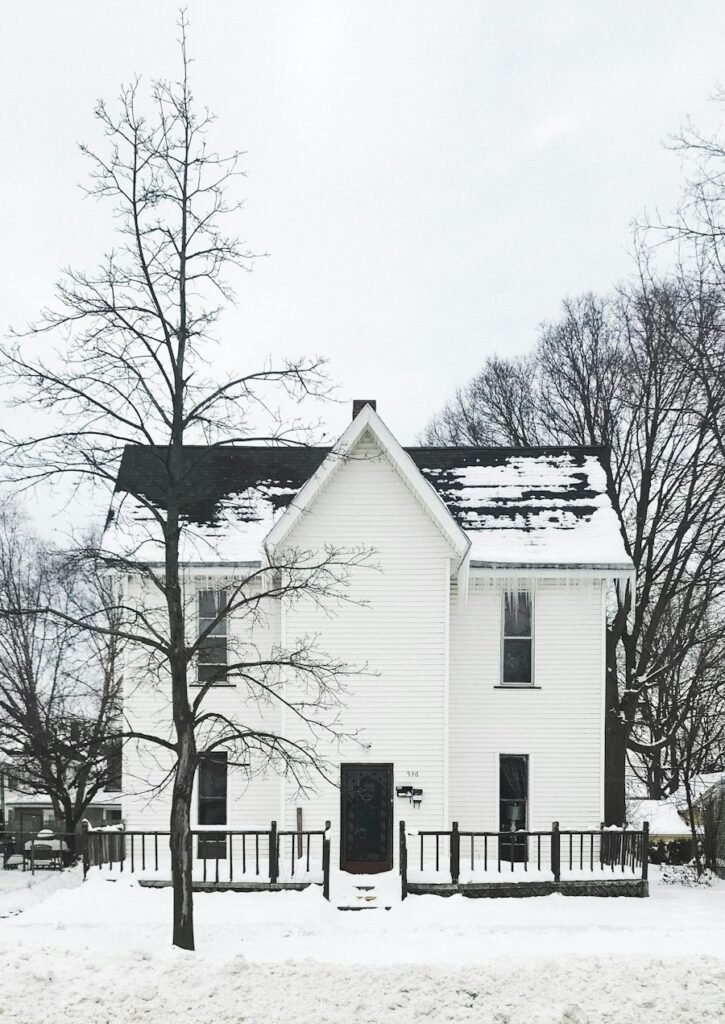
Nor’easters from October through April
A nor’easter brings hours of sustained wind from the northeast with heavy, sideways rain. On the Shore in Monmouth, Ocean, Atlantic and Cape May counties, gusts lift shingle tabs and drive water up under them. Inland, the long duration matters most: a small opening at a ridge cap or chimney leaks for a full day before the storm ends.
Summer thunderstorms and squall lines
Fast-moving thunderstorms produce short bursts of very strong straight-line wind across central and northern New Jersey. These events break limbs off mature oaks and maples, peel back flat roof edges in commercial strips, and throw debris into skylights. They also arrive without much warning, often in the late afternoon or evening when offices are closed.
Tropical storms and their remnants (June through November)
Sandy in 2012 and the remnants of Ida in 2021 showed how a single tropical system can damage roofs across all 21 counties at once. Remnant storms drop extreme rainfall that overwhelms gutters, valleys and flat roof drains. That volume finds every weak seam, so roofs that never leaked before can leak in several places.
Falling trees in wooded suburbs
Towns in Hunterdon, Somerset, Morris, Bergen and Essex counties have large, older trees standing close to houses. Saturated soil after days of rain lets roots pull loose, and wind does the rest. A trunk on a roof is a structural problem first and a roofing problem second, and it usually needs a tree crew, a roofer and sometimes the utility.
Ice dams and freeze-thaw cycles
Heat escaping from the living space melts snow on the upper roof, and the water refreezes at the cold overhang. The ridge of ice then backs water up under the shingles. Northwest New Jersey sees this most, especially on older Capes and colonials with little attic insulation or ventilation, or without ice and water shield at the eaves.
Heavy, wet snow on flat and low-slope roofs
Late-season snow in New Jersey is often wet and heavy. On flat roofs over additions, porches, garages and commercial buildings, drifting against parapets and blocked drains concentrates the load. Rain falling on existing snow adds more weight. Most emergencies here are leaks at overloaded drains, though sagging decks need structural attention.
Existing weak points that fail under stress
Storms find the weak spots first: cracked pipe boots, dried-out chimney counter flashing, exposed nails, worn valleys and shingles that lost their seal strip adhesion. A roof nearing the end of its life may lose large sections in a wind that a newer roof shrugs off, which is also why insurers ask about age and condition.
How we do it
How Our Emergency Roof Repair Works in NJ
We work in a fixed order: review your emergency request and triage it, make the site safe, stop the water, document the damage, then plan the permanent repair. Emergency requests are handled around the clock. Arrival time depends on your location and how many requests a storm has produced, and we tell you honestly where you are in the queue.
1. Your emergency request
Send your emergency request through our contact page at any hour. Include your address, what you see, whether water is reaching light fixtures, outlets or the electrical panel, whether a tree is on the house, and whether anyone is hurt or trapped. If anyone is hurt or trapped, call 911 first. Attach photos if it is safe to take them. Your answers decide priority: life safety and structural risk come first, then active water entry, then exposed areas. Any after-hours charge is stated in writing before we dispatch a crew.
2. Safety check on arrival
Before anyone climbs, the crew walks the property looking for downed or sagging service drops, unstable limbs, damaged chimneys and soft spots in the deck. Inside, we check ceilings under the wet area and confirm power to affected circuits is off if water has reached them. If conditions are too dangerous for a ladder, we tell you and do what can be done from inside.
3. Interior damage control
Inside the house we help move furniture and electronics away from the wet zone, set out containers, and if a ceiling is holding water we drain it in a controlled way. We point out wet insulation and drywall that will need drying. This is basic triage. Full extraction and drying is work for a water-damage restoration firm, which we can coordinate.
4. Stop the water
Depending on the damage, we install a battened tarp run over the ridge, a heat-shrink film over a large opening, peel-and-stick membrane on exposed deck, or a temporary patch on a flat roof seam. Small failures like a split pipe boot or a few missing shingles are often repaired permanently on the same visit when materials and weather allow.
5. Board-up after impact
Where a tree or debris has broken through, and after the tree crew has removed the weight, we cut away shattered sheathing, add temporary blocking where rafters are damaged, and close the hole with plywood fastened to framing. The plywood is then covered with membrane or a tarp so the opening is weathertight as well as closed.
6. Documentation for your insurer
We photograph the damage before we touch it, during the temporary work and after. You receive dated photos, a written description of what failed and what we did, and an itemized invoice for the emergency work. Those records support the policy requirement to protect the property and keep records of what you spent.
7. Inspection and permanent plan
Once the weather clears, we return for a full inspection with photos. We confirm what caused the failure, measure the affected areas, check the attic and decking, and give you a written, itemized quote for the permanent repair or replacement. If your claim is involved, we can meet the adjuster on the roof.
8. Permanent repair and tarp removal
After you approve the work, we schedule the permanent repair, remove the temporary materials, fill fastener holes left by battens, and restore the roof to a code-compliant, weathertight condition. We haul away tarps, battens and debris, check the gutters, and give you closing photos and paperwork for your records and your insurer.
Pricing · updated November 2026
How Much Does Emergency Roof Repair Cost in NJ?
As of November 2026, a typical New Jersey emergency tarp runs about $300 to $1,200, and small same-visit emergency repairs fall in the $250 to $1,500 range. Tree impact and structural work cost more. These are planning ranges based on site-wide NJ repair data, and we confirm any charge before work starts.
Emergency tarp, single area
$300 – $1,200
Reinforced tarp sized past the damage, run over the ridge where possible, wood battens screwed through to the deck and framing, interior check, and before-and-after photos for your insurer.
Emergency pipe boot or vent seal
$250 – $600
Replacement of a split or torn rubber pipe boot or failed vent flashing, often finished permanently on the first visit when weather allows, with the surrounding shingles resealed and photographed.
Wind blow-off shingle repair
$350 – $800
Replacing a small number of missing or creased shingles after a storm, with matching or closest available product, new nails, sealed tabs and a check of nearby shingles for lost adhesion.
Emergency flat roof patch or seam
$400 – $2,500
Temporary or permanent patch on a torn TPO, EPDM or modified bitumen membrane, re-securing a peeled edge, and clearing drains or scuppers that are causing ponding during the storm.
Deck section after tree impact
$500 – $2,000+
After the tree is removed: cutting out broken sheathing, replacing it with new plywood or OSB, adding ice and water shield and dry-in. Rafter or truss repair and permits are priced separately.
What moves the price
- Time of the request. Nights, weekends and holidays usually cost more than weekday work because crews are called in off schedule. We state any after-hours charge in writing before we dispatch, so you can decide whether the job can wait until morning.
- Size and number of openings. One damaged area takes one tarp. Several blown-off sections or a roof with many leaks may need multiple tarps or a full shrink-wrap, which costs more in material and labor.
- Roof pitch and height. A steep three-story roof needs more fall protection, longer ladders and sometimes a lift, which adds time and cost compared with a low ranch.
- Roof material. Slate, tile and old cedar break easily under foot traffic and need roof hooks, ladders and careful batten placement. Asphalt is the simplest to tarp.
- Tree impact. Structural damage means sheathing replacement, temporary blocking and possibly engineered rafter repair. Tree removal itself is a separate trade and a separate bill.
- Access and debris. Limbs on the driveway, downed fences and wet ground can slow the setup. Clearing minor debris is included; major tree debris is not.
- Storm volume. After a region-wide storm, materials and crews are stretched. We do not add surge pricing, though the order of service follows triage.
- Interior damage. Drying, drywall and insulation replacement are separate from the roof work and are often handled by a restoration firm.
Planning ranges, not quotes. Ranges come from the typical New Jersey repair figures used across this site (emergency tarp $300 to $1,200; pipe boot and vent flashing $250 to $600; a few shingles $350 to $800; flat-roof patch or seam $400 to $2,500; rotted deck section $500 to $2,000+). Your price depends on the inspection and is given in writing before work begins. For full replacement budgets see our roof replacement cost guide.
Methods & materials
Emergency Roof Repair Methods, Materials and Permanent Fixes for NJ Homes
A good emergency repair keeps water out until the permanent fix, without creating new damage when it comes off. That means fastened battens, the right sheeting for the size of the opening, structural closure after tree impact, and a clear path from the temporary work to a permanent repair or a roof replacement.
A tarp works when it starts above the damage, extends well past it on every side, and is clamped to the roof by wood battens fastened through to the deck and framing. Most tarps that fail in New Jersey fail because they were weighted with sandbags, tied with rope, or nailed through the sheet alone.
Here is how we install a sloped-roof tarp:
- Size it generously. Manufacturer guidance calls for extending the tarp at least four to five feet beyond the damaged area. We size up from there so wind-driven rain cannot reach the opening from the side.
- Go over the ridge. Whenever the damage is within reach of the peak, the upper edge of the tarp runs over the ridge and down the other side. Water that lands above the damage then flows over the tarp. A tarp that stops below the ridge lets water run under its top edge and straight into the hole.
- Batten the edges. We roll each edge of the tarp around a length of lumber, so the wood clamps the sheet, then screw the batten down. Long screws pass through the batten and roofing into the deck, and into rafters or trusses where we can find them. Battens running up the slope on the sides avoid damming water against the tarp.
- Protect the sheet. We keep fasteners in the battens, not loose in open tarp, so wind does not tear the grommets or the sheeting.
- Leave the drainage path open. The lower edge sits above the gutter line so water sheds into the gutter instead of pooling.
Why not sandbags? Sandbags slide on wet shingles, concentrate weight on a damaged deck, and let the tarp billow between them. On the Shore, the next gust can turn a sandbagged tarp into a sail. Rope tie-downs to gutters or railings pull those parts loose. Battens cost a little more labor and hold through the next storm.
Tarps are temporary. Industry guidance suggests a tarp should stay on no longer than about three months and be checked after the first month. We schedule a return check, re-tighten anything that has worked loose, and push to get the permanent work done before freeze-thaw season or the next tropical system.
When the opening is too large or too irregular for a tarp, we use heat-shrink film or a plywood board-up covered with membrane. Both are used most often after tree impact, partial roof loss and fire.
Shrink-wrap. Heat-shrink polyethylene film is draped over the damaged area, fastened to a perimeter strap or wood framing, and heated so it tightens like a drum. Seams are heat-welded into a single sheet, so there are fewer edges for wind to catch. It suits large sections of missing roof, irregular openings around a fallen trunk, commercial roofs and buildings that must stay closed for weeks while a claim is settled. Because it is installed with heat, we use flame-retardant film where appropriate and keep a fire watch during installation. It costs more than a tarp and takes longer, so we recommend it only when a tarp will not seal reliably.
Temporary membrane. When wind strips shingles but the deck is sound, the best temporary fix is often a self-adhering ice and water shield membrane rolled directly onto the plywood. It bonds to the deck, seals around nails and lies flat in wind. In many cases it stays in place as part of the permanent roof, which saves you paying for the same layer twice.
Board-up after tree impact. After the tree crew lifts the weight off, we:
- Cut broken sheathing back to the nearest rafters so the new panel lands on solid framing.
- Add temporary blocking or sistering only to stabilize, and flag any cracked rafter or truss for a permitted structural repair.
- Fasten new plywood to the framing, then cover it with membrane and a battened tarp over any adjoining disturbed shingles.
- Board damaged skylights, attic windows or gable vents from outside.
A board-up closes the hole and sheds water. It is not the permanent repair, which includes properly fastened sheathing, underlayment, drip edge and matching roofing.
Many emergency visits end with a permanent repair on the first visit, because the failure is small and the fix is quick once someone is on the roof. If weather allows a safe, dry repair, we do it; if not, we stop the water and come back.
Common same-visit repairs:
- Pipe boot replacement. The rubber collar around a plumbing vent splits from sun and cold. We remove the surrounding shingles, slide a new boot over the pipe, weave it back into the shingle courses and seal the nail heads.
- Shingle replacement. We break the seal on the courses above, pull the damaged nails, slide in new shingles and nail them in the manufacturer’s nailing zone. In cold weather, tabs may need hand sealing with roofing cement because the factory sealant strip will not activate until the sun warms it.
- Flashing reseal. At chimneys and walls, we refasten loose counter flashing and seal the reglet joint. A full re-flash usually waits for dry weather.
- Flat roof patching. On TPO and PVC we clean and hot-air weld a patch when the surface is dry; in rain we apply a temporary patch and return. EPDM uses primer and seam tape. Modified bitumen can take a patch set in cold-applied adhesive.
- Drain and scupper clearing. Leaves and debris in a flat roof drain cause ponding and leaks at the edges. Clearing them during a storm often stops the leak.
- Ice dam relief. We cut channels through the dam with hand tools or steam to let meltwater drain. We do not use hammers or chisels that crack shingles.
What we will not do in an emergency: smear tar over a leak and call it fixed, or nail through flashing in the rain. Those shortcuts trap water and complicate the permanent repair. Finding the true source of a hidden or intermittent leak is detailed work we handle through roof leak repair once the emergency is over.
The permanent repair rebuilds the damaged area to the same standard as a new roof: sound deck, underlayment, flashing and roofing, installed to code and manufacturer instructions. If the damage is widespread or the roof is old, that may mean a section replacement or a full replacement.
A typical permanent repair after wind or tree damage on a shingle roof follows this sequence:
- Remove temporary materials. Battens, tarp and screws come off. We fill or patch every fastener hole left in the shingles or deck.
- Inspect and replace deck. We check the plywood or plank sheathing for cracks, delamination and rot from the leak. Damaged panels are replaced and fastened to the rafters.
- Repair framing. Cracked rafters or trusses are repaired under a construction permit, which is required in New Jersey for structural and sheathing work.
- Underlayment and ice barrier. We install self-adhering ice and water shield at eaves, valleys and around penetrations, with synthetic underlayment on the rest of the repaired area.
- Drip edge, starter and flashing. Metal drip edge at eaves and rakes, starter strip at the eave, and new step and counter flashing wherever the repair meets a wall or chimney.
- Roofing. Shingles are woven into the existing courses with the correct nail pattern for the wind exposure. For slate or metal, we follow those systems’ methods, covered on our slate roof repair page.
- Final check. We check attic ventilation openings, clean gutters of debris and photograph the finished work.
For a full replacement after a storm, codes allow at most two layers of roofing, so many storm-damaged New Jersey roofs that already have two layers must be torn off to the deck. Replacing the roof covering on a detached one- or two-family home needs no permit, but deck and structural work does.
Repair is usually right when the damage is limited to one area of a roof with plenty of life left; replacement makes sense when the damage is widespread, the roof is near the end of its life, or matching materials no longer exist. The emergency visit does not commit you to either. We give you the facts after the inspection.
We lean toward a repair when:
- The damage is confined to one slope or one area, such as a single tree strike or a strip of blown-off shingles.
- The rest of the roof lies flat, holds its granules and has sealed tabs.
- Matching or compatible shingles are available.
- The deck around the damage is sound once the wet panels are replaced.
We lean toward replacement when:
- Multiple slopes lost shingles in a wind that a sound roof would have handled, which suggests the seal strips have failed across the roof.
- The roof is already near the end of its expected life, and leaks are appearing in several places.
- There are two layers already, so a proper repair means tearing off anyway.
- Your shingle has been discontinued and a patch would stand out or perform differently.
- Water has rotted significant areas of the deck.
Insurance also shapes the decision. A policy may pay to repair the damaged area, or more if matching or code issues come up; the policy and adjuster have the final word. We show you photos of each slope so you can see why we recommend what we do, and price both options when the call is close. You can compare costs on our NJ roof repair cost guide guide before you decide.
One caution: if a roof has needed emergency service twice in a short span, we will tell you plainly that more patching may cost more than replacement over the next few years.
Temporary materials need to survive New Jersey wind, UV and freeze-thaw for weeks, and permanent materials need to handle nor’easters, ice dams and humid summers for decades. Here is what we use and why.
Temporary materials
- Reinforced poly tarps. Heavy, woven, UV-treated tarps with reinforced edges. Light blue hardware-store tarps degrade in sunlight and tear at grommets within weeks. Federal temporary roofing programs use fiber-reinforced plastic sheeting for the same reason.
- Wood battens and long screws. Lumber battens clamp the tarp edges. We use screws instead of nails so the battens can be removed later with less damage to the shingles below.
- Heat-shrink film. For large openings and commercial buildings, used with flame-retardant film where appropriate.
- Self-adhering membrane. Ice and water shield applied to bare deck as a dry-in that can often remain under the permanent roofing.
- Plywood. For board-up over holes after tree impact, fastened to framing and covered with membrane.
Permanent materials suited to New Jersey
- Architectural asphalt shingles rated for high wind, installed with the manufacturer’s high-wind nailing pattern in Shore and exposed hilltop locations.
- Ice and water shield at eaves, valleys and penetrations, which matters most in the ice dam belt of Sussex, Warren, Morris, Passaic and Hunterdon counties.
- Synthetic underlayment, which resists tearing in wind better than felt during installation.
- Metal drip edge and new step flashing, aluminum or coated steel inland and corrosion-resistant metals near salt air.
- Flat roof membranes such as TPO, EPDM or modified bitumen, matched to what is already on the building; see our flat roof repair page.
Where a storm exposes an older roof, it is a good time to fix ventilation and add ice barrier that was never installed.
NJ rules
NJ Permits and Insurance for Emergency Roof Repair
Permits
Most emergency tarping and roof covering repairs on a detached one- or two-family home in New Jersey need no permit. Since March 5, 2018, repair or replacement of existing roof covering on these homes is ordinary maintenance under the Uniform Construction Code, N.J.A.C. 5:23-2.7, so no permit, inspection or notice is required. That covers tarps, shingle replacement and flashing work. Emergencies often go further, though. A permit is required when we replace roof sheathing or decking, repair rafters or trusses after a tree strike, or do other structural work. It is also required on townhomes and attached homes, larger multi-family buildings, commercial properties, and any job that would add a third layer of roofing. Ordinary maintenance is not a waiver from code: the work still has to meet code. For tree impact, we stabilize first so the house is safe, then pull the permit for the permanent structural repair through your municipal construction office.
Insurance
Homeowners policies usually cover sudden damage such as wind, hail, falling trees and the weight of ice or snow, and usually exclude wear, age and neglect. Most policies also require you to protect the property from further damage. Typical policy language says you must make reasonable and necessary repairs to protect the property and keep an accurate record of repair expenses, and a temporary tarp generally satisfies that duty (policy condition explained). Do not wait for an adjuster before stopping water; take photos, then let us tarp. Keep our dated photos and itemized invoice. Coastal policies often carry a separate wind or hurricane deductible. Your policy and agent have the final word on coverage. For the full claim process, from filing to the adjuster meeting, see our storm damage roof repair page.
Who does the work
Why NJ Homeowners Choose Roof Repair SNJ for Emergency Roof Repair
- Repairing NJ roofs for 25+ years
- General liability + workers’ comp insurance
- Workmanship warranty: 2 years on repairs, 10 years on full replacements, in writing
Check any NJ roofer before you sign
Ask for the 13VH registration number and confirm it on the NJ license lookup. NJ law requires a signed written contract showing the registration number and total price, and gives you until midnight of the third business day to cancel (N.J.S.A. 56:8-151).
In depth
Emergency Roof Repair in NJ: Questions Most Roofers Do Not Answer
What to do in the first hour, before the crew arrives
Your first hour is about safety, then limiting interior damage, then photos. Nothing you do inside should put you on a ladder or on the roof.
- Check for hazards. If a tree or wire is on the house, stay away from it and from the rooms below. If water is reaching outlets, fixtures or the electrical panel area, keep people out and do not touch switches with wet hands. If you can reach a dry panel safely, turn off the affected circuits. If you smell gas, leave and call 911 or your gas utility from outside.
- Contain the water. Move furniture, electronics and rugs. Put down towels and set out buckets or bins. A shower curtain or contractor bag under a drip protects a floor.
- Handle a bulging ceiling carefully. If a small bulge is forming and you can reach it without standing under it, a small hole at its lowest point lets water drain into a bucket in a controlled way. If the ceiling is sagging broadly or cracking, leave the room closed.
- Check the attic only if it is safe. With a flashlight, look for the entry point and place a bucket. Step only on joists, never between them.
- Take photos and video. Shoot the exterior from the ground, the ceiling, the attic and any damaged belongings. Note the time. These help your claim and help us plan materials before we arrive.
- Send us your request and call your insurer. Get your emergency tarp request in first so you are in the queue, then report the claim to your insurer. You do not need an adjuster’s approval to protect the property.
What not to do: climb onto a wet roof, drag limbs off the roof, use a chainsaw near wires, or let a door-knocker cut a deal while you are stressed.
How triage works when requests pour in statewide
After a region-wide storm, we serve requests in order of risk, with arrival order as the tiebreaker. That is the only fair way to handle a night when hundreds of roofs are damaged at once, and it is why we do not promise arrival times.
Our priority order:
- Life safety and structure. A tree through the roof of an occupied home, a ceiling collapse, a roof breach above electrical service. We coordinate with the fire department, tree crews and the utility where needed.
- Active water entry into living space. Water coming through ceilings or walls of rooms in use, especially near wiring.
- Large exposed areas. Bare deck or missing sections that will leak with the next band of rain.
- Contained leaks. Slow drips into an attic, small blow-offs, a single missing ridge cap. These are often handled the next morning or the following day.
Distance matters too. We serve all 21 counties, and on busy nights a Cape May or Sussex address may wait longer than a nearby one with similar damage. When you send a request, our reply gives you an honest picture of the queue. If another qualified, registered roofer can reach you sooner, getting the water stopped matters more than who does it.
To help us place you correctly, tell us exactly what you see, whether the water is in living space, and send photos if you safely can. A clear description helps your request reach the right crew at the right time.
Mold and drying timeline after a roof leak
Wet materials inside your house should be dried within 24 to 48 hours to prevent mold growth, according to EPA guidance. That timeline is why stopping the water and starting the drying the same day matters more than any other decision you make after a storm.
EPA’s water damage guidance for buildings gives material-specific advice (EPA mold remediation guide):
- Ceiling tiles that get wet should be discarded and replaced.
- Drywall may be dried in place if there is no obvious swelling and the seams are intact; otherwise it should be removed and replaced.
- Carpet should be extracted and dried within 24 to 48 hours with fans and dehumidifiers, and the subfloor under it cleaned and dried too.
- Materials wet for longer than 48 hours fall under the guide’s mold remediation tables.
New Jersey summers make this harder. When a summer storm or tropical remnant soaks an attic, warm humid air keeps insulation wet and lets mold start on roof sheathing. Fiberglass batts soaked by a roof leak often need to be pulled out to let the deck and framing dry. Blown cellulose holds water and usually has to be removed.
What we do: we stop the water, identify every wet area in the attic and rooms below, and tell you which materials are likely to need drying or removal. For more than a small wet area, we recommend a water-damage restoration firm with moisture meters and commercial dehumidifiers, and we coordinate with them so the roof and interior work proceed in the right order. Drying costs are usually part of the same insurance claim as the roof damage, so keep their reports with ours.
Tree on the roof: who to call and in what order
When a tree hits the house, the order is: safety and utilities first, tree removal second, roof board-up third, permanent repair last. Trying to tarp around a tree that is still resting on the roof wastes time and can make the damage worse.
- Check for wires. If any line is down, touching the tree or hanging over the yard, stay away. JCP&L tells customers never to go near a downed line, even one that seems dead, and to report it to the utility or police (JCP&L downed wire notice). The same applies to PSE&G, Atlantic City Electric and Orange and Rockland service areas. If the service line to your house is damaged, the utility must make it safe first, and an electrician may need to repair the mast or meter before power returns.
- Contact us and call your insurer. Request a tree damage roof assessment, and we can assess from the ground and inside, and help plan removal so the roof is not damaged further.
- Licensed tree removal. In New Jersey, any company hired to perform tree care must have at least one Licensed Tree Care Operator, register with the Board of Tree Experts and carry liability insurance (NJ Board of Tree Experts). Lifting a trunk off a roof often takes a crane, and lifting it the wrong way can tear open more of the roof.
- Board-up and dry-in. Once the weight is gone, we cut out broken sheathing, stabilize framing, close the hole with plywood and seal it.
- Permanent structural and roof repair. Rafter and sheathing work is permitted and inspected, then the roofing is rebuilt.
Keep each contractor’s invoice separate. Insurers often handle tree removal limits differently from roof repair, and clear paperwork makes the claim simpler.
Should you tarp the roof yourself?
For most homeowners, no. Tarping is two-person work on a wet, steep surface, often in wind, and falls from roofs cause serious injuries every storm season. Roofing manufacturers advise leaving tarping to professionals with fall protection and never tarping while it is still raining or before the sky has cleared.
If you decide to do it anyway on a low, walkable roof in calm, dry conditions, follow the basics:
- Work with a second person and a properly footed ladder that extends three feet above the eave.
- Use a heavy, reinforced tarp large enough to run over the ridge and extend several feet past the damage on every side.
- Roll the edges around lumber and screw the battens down; do not rely on sandbags, bricks or rope.
- Never go on the roof near wires, a tree that is still on the house, or a sagging deck.
Better options for most people:
- Work from inside. Contain the water in the rooms below and the attic until a crew arrives.
- Let a pro do it once. A poorly installed tarp can blow off, damage gutters and fascia, or hold water against the deck. It may also leave you arguing with your insurer about damage that happened after the storm.
Insurance angle: the duty to protect the property from further damage asks for reasonable steps. Policies do not expect you to climb a roof in a storm. Getting a roofer out promptly and keeping the invoice is what that duty usually looks like in practice.
Avoiding storm chasers after New Jersey storms
After big storms, unregistered contractors arrive quickly, so check the registration number before you sign or pay anything. After Superstorm Sandy, state investigators checked 628 home improvement contractors working on damaged Shore homes and found 124 unregistered (NJ Attorney General release).
Protect yourself:
- Verify the registration. New Jersey home improvement contractors must register with the Division of Consumer Affairs and carry a number starting with 13VH. Look it up at the state license verification site. Registration requires at least $500,000 in general liability insurance and a business address.
- Get it in writing. Under the Contractors’ Registration Act (N.J.S.A. 56:8-151), home improvement contracts must be written and signed, show the contractor’s legal name, address and registration number, the total price, and include a copy of the liability insurance certificate.
- Know your cancellation right. The contract must include a Notice to Consumer explaining that you may cancel for any reason before midnight of the third business day after you receive a copy.
- Watch the payment schedule. State consumer guidance suggests paying in stages rather than a large deposit up front.
- Be wary of pressure. Be careful with anyone who asks you to sign over insurance proceeds on your doorstep, offers to cover your deductible, or will not give a local address.
An emergency tarp is a small, defined job. You should be able to approve a written price before work starts and receive an itemized invoice. The permanent repair is a separate written contract you sign after the inspection, with time to read it and compare.
Commercial and flat roof emergencies
Commercial and flat roof emergencies are usually about drainage, edges and membrane tears, and they often involve tenants, inventory and business interruption. The methods differ from a sloped shingle roof, and so does the paperwork.
Common commercial roof emergencies in New Jersey:
- Peeled perimeter. Wind gets under a loose metal edge or coping and lifts the membrane. We re-secure the edge, fasten down the loose membrane and patch tears so the peel does not spread.
- Clogged drains and scuppers. Leaves and debris after a storm block drains, and ponding water finds every seam. Clearing drains during the storm is often the fastest way to stop the leak.
- Punctures. Falling limbs, HVAC service traffic and hail can puncture TPO, PVC or EPDM. A temporary patch keeps water out until a dry day allows a welded or taped repair.
- Snow load. Heavy wet snow and drifting against parapets and rooftop units add weight. We clear drains and watch for deflection. Any sign of structural movement calls for an engineer.
- Rooftop equipment. Wind can shift HVAC curbs and tear flashing at the base. We seal the opening and recommend the mechanical contractor check the unit.
For property managers: give us the roof access details, the tenant contact and any warranty information in your request. Many commercial roofs carry a manufacturer warranty that requires authorized repair methods, so we document everything for the warranty holder as well as the insurer. Attached buildings, larger multi-family and commercial properties require permits for roofing work in New Jersey, which we handle for the permanent repair. More on our commercial roofing page.
Service areas
Emergency Roof Repair Across New Jersey
We provide emergency roof repair in all 21 New Jersey counties. Find your county and town on our New Jersey service locations page for local roof types, permit notes and prices.
FAQ
Emergency Roof Repair in NJ: Frequently Asked Questions
Do you handle emergency roof requests 24 hours a day in NJ?
Yes. Roof Repair SNJ provides 24/7 emergency service, and you can send an emergency request any time through our contact page. Arrival depends on your location and how many storm requests are in the queue, so we give you an honest estimate in our reply instead of a guaranteed time.
How much does an emergency roof tarp cost in New Jersey?
A typical New Jersey emergency tarp costs about $300 to $1,200 as of November 2026, depending on the size of the damage, roof height and pitch, roof material and the time of the request. That is a planning range. We confirm any charge, including after-hours charges, before we start the work.
Will my homeowners insurance pay for emergency roof tarping?
Usually, when the damage comes from a covered sudden event like wind, a falling tree or the weight of ice or snow. Most policies require you to protect the property from further damage and keep records of repair costs. Keep the tarp invoice and photos. Your policy and agent decide coverage.
Should I wait for the insurance adjuster before tarping my roof?
No. Take photos of the damage, then have the roof tarped. Standard policies expect you to make reasonable repairs to prevent further damage, and waiting can lead to more interior damage that may not be covered. The adjuster can still see the damage through our photos and under the tarp.
How long can a tarp stay on a roof?
A properly battened tarp is a temporary fix meant to last until the permanent repair, and roofing guidance suggests no more than about three months. Have it checked after the first month, after high winds and before winter. Sunlight, wind and freeze-thaw cycles in New Jersey wear tarps out quickly.
What should I include in an emergency roof request?
Give your address, what you see, and whether water is in living space or near electrical fixtures. Say whether a tree or wire is involved, whether anyone is hurt, the roof type and the number of stories. Attach photos if it is safe. These details decide triage priority and the materials the crew brings. Any after-hours charge is stated in writing before dispatch.
Is a sagging, water-filled ceiling an emergency?
Yes. A bulging ceiling is holding water and can collapse without warning. Clear the room, move valuables, and keep people from standing underneath. If water is near light fixtures, turn off that circuit at a dry panel if you can do so safely. Then send us an emergency request online.
Can you tarp a roof while it is still raining?
Crews can sometimes install a tarp in light rain if the roof is safe to walk, but wind, lightning, ice or heavy rain can make the roof too dangerous. In that case we control water from inside, set containers and drain ceilings, then tarp as soon as conditions allow it safely.
Do I need a permit for emergency roof repair in NJ?
Usually not for tarping or replacing roof covering on a detached one- or two-family home, which is ordinary maintenance under N.J.A.C. 5:23-2.7. A permit is needed for sheathing replacement, rafter or truss repair after a tree strike, attached or commercial buildings, or adding a third layer of roofing.
What happens after the emergency repair is done?
Once the weather clears we return for a full inspection with photos, find the cause and give you a written, itemized quote for the permanent repair or replacement. If you have a claim, we can meet the adjuster. After you approve the work, we remove the temporary materials and complete the permanent fix.
Reviewed by the Roof Repair SNJ team · Last updated November 2026
Storm & emergency
Related storm & emergency services
Emergency Roof Repair is part of our storm & emergency services. See every service on our roof repair NJ homepage.
Free inspection
Roof Open to the Weather? Send a 24/7 NJ Emergency Request
Tell us what is happening with your roof any time, day or night. Include your address and what you see, and attach photos if it is safe. We place you in the queue by risk and give you an honest estimate of arrival, with any after-hours charge stated in writing before dispatch. You get a battened tarp or board-up, dated photos and an itemized invoice. The permanent repair is quoted separately, in writing, after a free inspection.
No pressure and no obligation. If a repair will do, we’ll tell you.
Roof Repair SNJ
- Serving all 21 NJ counties
- Send a emergency roof repair request
- Mon–Fri 5:00 AM–10:00 PM · Sat 5:00 AM–6:00 PM · Emergencies 24/7
Sources: N.J.A.C. 5:23-2.7, Ordinary maintenance (Uniform Construction Code) · N.J.S.A. 56:8-151, Contractors’ Registration Act contract requirements · NJ Division of Consumer Affairs license verification · NJ Attorney General: post-Sandy unregistered contractor checks (2013) · Duties after loss: duty to make reasonable repairs to protect the property · EPA, Mold Remediation in Schools and Commercial Buildings, Chapter 4 · JCP&L downed wires safety notice (Clinton Township) · NJ Board of Tree Experts, licensing requirements · GAF: What to know about tarping a roof · USACE Temporary Roofing (archived). Prices are planning ranges, not quotes. Permit and insurance information is general guidance; your town, policy and agent have the final word.