
Roof Repair NJ › Slate Roof Repair
Slate & copper repair · All 21 NJ counties
Slate Roof Repair in NJ: Restoration, Copper Flashing and Matched Slate
Roof Repair SNJ repairs and restores natural slate roofs across all 21 New Jersey counties. We replace broken and slipped slates with matched stone, rebuild worn copper flashing and valleys, undo old tar patches, and tell you in writing whether your roof needs repair, restoration or replacement. Inspections are free and come with photos.
- Matched new or salvaged slate, sized right
- Copper flashing, valleys and nail-and-bib repairs
- Free inspection with photos of every slope
Free inspection, written quote
Photos of every problem we find and an itemized price before any work. 24/7 emergency service.
Roof Repair SNJ
Serving all 21 New Jersey counties
Free inspection
Roof, attic and gutters checked at no cost.
Insured
Liability and workers’ comp; certificate on request.
Written quotes
Itemized price in writing before any work.
Photo-documented
Every problem photographed, before and after.
What you’ll notice
Signs Your Slate Roof Needs Repair in NJ
The most common signs are slates that are cracked, missing or sliding down the roof, rusty streaks below flashing, and water stains under chimneys or valleys. A slate roof rarely fails all at once. It usually loses individual slates and flashing first, and those small failures are cheap to fix if you catch them early.
Slates sliding out of their course
A slate hanging lower than its neighbors, or a gap where one used to sit, usually means its nails rusted through. The stone is often still good. This is the classic sign of nail sickness on older New Jersey homes, and one slipped slate is often the first of many on that slope.
Cracked or broken slates
Hairline cracks, missing corners and slates broken in half show up after falling limbs, hail, ice, or someone walking on the roof. A single broken slate can let water reach the felt and deck below. Look from the ground with binoculars after every nor’easter, especially on slopes facing trees.
Flaking, soft or delaminating stone
When the surface of a slate peels in thin layers, turns chalky, or crumbles at the edges, the stone itself is wearing out. This is common on soft slates near the end of their life. Unlike a slipped slate, delaminating stone tells you the roof may be closer to restoration or replacement.
Water stains under chimneys or valleys
Brown rings on an attic rafter, a damp ceiling corner under a chimney, or plaster bubbling near a dormer usually point to failed metal flashing. On slate roofs, the stone often outlasts the flashing by decades, so leaks commonly start at chimneys, valleys and other metal details.
Black tar or roofing cement patches
Shiny black smears around chimneys, along valleys or over slates are a sign a previous repair used tar or roofing cement. These patches harden, crack and trap water against the metal, and they make proper repair harder later. We see them on a large share of older NJ slate roofs we inspect.
Rust streaks or holes in valley metal
Orange streaks running down from a valley, or pinholes you can see in the metal, mean steel or terne valleys are rusting through. Valleys carry the most water on any roof. Once the metal is perforated, water runs under the slates and into the deck, framing and walls below.
Ice dams and leaks only in winter
If a ceiling stains only during snow melt, ice is likely backing water up under the slates near the eaves. Slate sheds rain well but is not watertight against standing water. This pattern is common in Sussex, Warren, Morris and Hunterdon County homes with heat loss into the attic.
Exposed nails, hooks or face-nailed slates
Nail heads driven straight through the face of slates, often smeared with caulk, or rows of mismatched hooks, mean earlier repairs were done the quick way. Face nails leak as the sealant ages. These spots are worth redoing properly before they rot the wood decking under them.
Why it happens in NJ
What Causes Slate Roof Damage in New Jersey?
In New Jersey, most slate roof problems come from rusted nails, worn-out flashing, freeze-thaw cycles, ice dams, falling limbs and bad earlier repairs, far more often than from the slate itself wearing out. Good slate can last a century or more. The parts around it usually fail first.
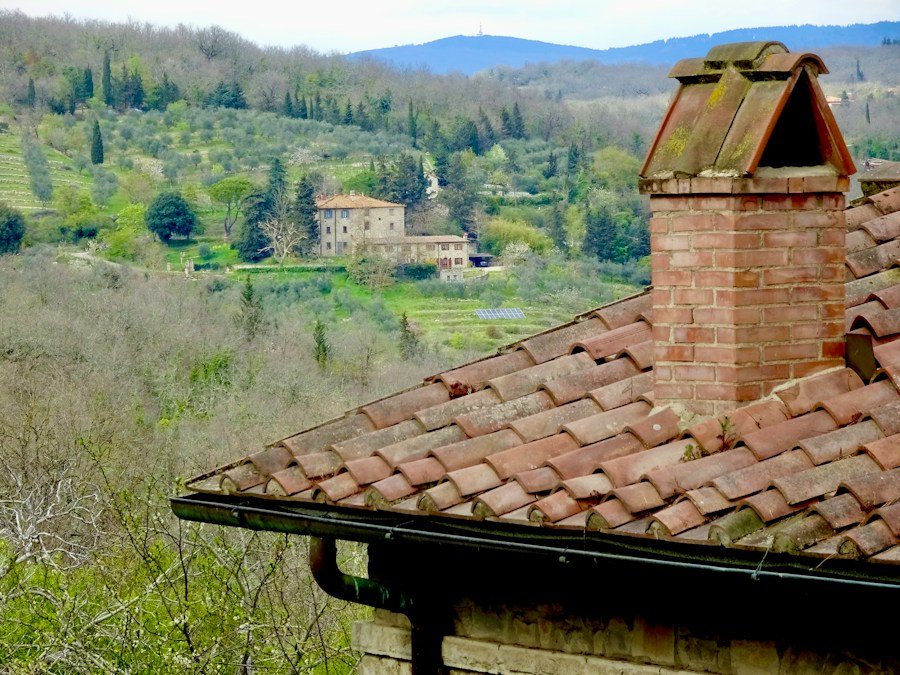
Rusted nails (nail sickness)
Many New Jersey slate roofs from the late 1800s through the 1930s were hung with iron or steel nails. The National Park Service notes that plain steel and galvanized nails usually rust out long before the slate wears. When the nail head corrodes, the slate slides out of place even though the stone is sound. On a roof with widespread nail failure, the right fix is often stripping and re-laying the same slate on copper nails.
Flashing that has outlived its life
Chimney, valley, dormer and wall flashing was often terne (coated steel) or thin copper. Terne needs repainting to survive, and most never got it. Even good copper eventually thins and cracks at bends. Because slate outlasts most metals, the flashing on a 90-year-old Montclair or Maplewood roof may be on its second or third life, or still original and failing.
Freeze-thaw cycles
North and Central Jersey see many freeze-thaw swings each winter. Water absorbed into softer or lower-grade slate expands when it freezes, opening layers in the stone. InterNACHI notes that some imported slate performs poorly in northern snow-and-ice climates for exactly this reason. The damage shows up as flaking and delamination over years, worst on north-facing slopes that stay damp.
Ice dams at the eaves
Heat escaping into the attic melts snow higher up, and it refreezes at the cold eave. The ice ridge backs water up under the slates, which are designed to shed water downhill, not hold back a pool. Older slate roofs in Sussex, Warren, Morris, Passaic and Hunterdon counties often have no ice and water shield at the eaves at all, so these leaks go straight to the wall.
Falling limbs, wind and nor’easters
Mature oaks and maples line the streets of older NJ towns, and the same streets have the most slate. A limb dropping during a nor’easter or tropical remnant can snap a row of slates in seconds. High wind rarely lifts properly nailed slate, but it does finish off slates already loose from rusted nails, which is why storm damage clusters on neglected slopes.
Foot traffic from other trades
Cable installers, chimney sweeps, gutter crews, solar salespeople and painters walk on slate roofs more than most owners realize. Slate is strong in compression along the roof but brittle under a heel at the wrong spot. A single visit can leave a trail of cracked slates that only shows up as leaks the next time it rains hard.
Tar, cement and caulk repairs
The National Park Service says roofing mastic should not be considered a viable slate repair. It hardens, cracks, lets water in and speeds corrosion of the flashing it covers. Yet tar is the most common past repair we find on slate roofs in Essex, Union and Morris counties. Each coat makes the eventual proper repair larger, because cemented slates cannot be reused.
Coastal salt air and summer heat
Along the Shore in Monmouth, Ocean, Atlantic and Cape May counties, salt air speeds corrosion of steel nails and non-copper flashing. Summer heat and humidity also keep north slopes damp, which encourages moss and lichen in shaded spots. Salt and moisture rarely hurt good slate directly, but they shorten the life of every fastener and metal detail around it.
How we do it
How We Repair a Slate Roof in NJ, Step by Step
We inspect from ladders and hooks without walking the slate, document every slope with photos, match the stone, then repair using a slate ripper, copper nails and copper bibs or hooks, and rebuild flashing in copper. You get a written itemized quote before work and a photo report after.
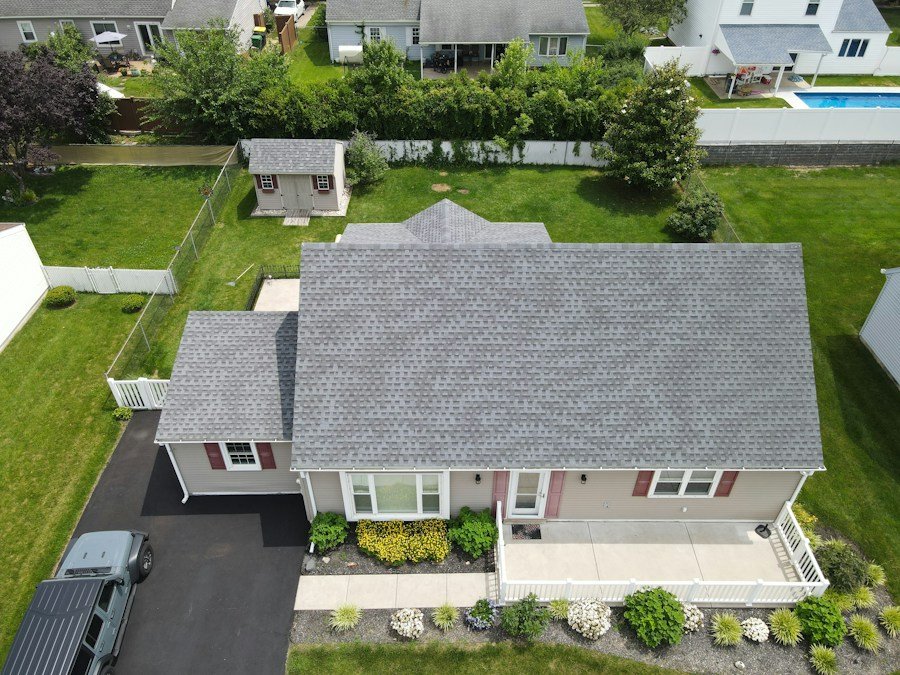
1. Ground and attic inspection
We start with binoculars from the yard and drone or ladder photos of each slope, then go into the attic to look for daylight, wet sheathing, stained rafters and rusted nail tips. The attic tells us whether leaks are coming from the open slate field, the flashing or ice backup. This free inspection keeps anyone off the slate until we know where to go.
2. Sound and grade the slate
Where we can reach slates safely from a ladder or hook ladder, we tap them. Sound slate rings. Worn slate thuds or flakes. We note the slate type, thickness, color, size and exposure, and estimate what share of each slope is broken, slipped or soft. That number drives the repair, restoration or replacement call more than the age of the house does.
3. Written itemized quote and options
You get a written quote listing each repair: number of slates, flashing locations, valley lengths, and the source of the replacement slate. Where a choice exists, such as hooks versus copper bibs or patching versus re-flashing a chimney, we explain the trade-off. The contract follows New Jersey’s Contractors’ Registration Act, including your three-business-day right to cancel.
4. Source matching slate
We match slate by color family, thickness, length, width and surface texture. Some colors still come from active quarries. Others, such as several discontinued Pennsylvania types, are only available as salvage. We check salvaged slates for cracks and soft layers before they go on your roof. Wherever possible we hold back sound slates from your own roof for the most visible spots.
5. Set up without walking the slate
We hang hook ladders over the ridge, use roof brackets and planks where needed, and place padding so tools and boots never rest on bare slate. On steep or high roofs, we may use a lift. This setup takes time, but it prevents the most common way slate repairs cause new damage: a crew cracking ten slates to replace two.
6. Remove and replace slates
A slate ripper slides under the broken slate to cut or pull its nails. The new slate goes in, held either by a copper nail through the joint above with a copper bib slipped over it, or by a copper or stainless slate hook. Nails are set so the slate hangs on the shank, never driven tight, because over-driven nails crack slate.
7. Rebuild flashing and valleys
Failed chimney, wall, dormer and valley metal is removed and replaced, usually in 16 oz or heavier copper. Chimney work includes new step flashing woven with the slate and counter flashing let into the mortar joints. Old tar and cement are removed, and slates that were cemented are replaced. We do not add new roofing cement to slate.
8. Water test, cleanup and photo report
Where a leak was the reason for the visit, we water-test the repaired area with a hose while someone watches in the attic. Broken slate, old nails and metal scraps are picked up from the gutters, beds and lawn with magnets and by hand. You get before and after photos of each repair and a short note on the roof’s condition for your records.
Pricing · updated November 2026
How Much Does Slate Roof Repair Cost in NJ?
As of November 2026, most slate roof repairs in New Jersey fall between $500 and $2,500, with larger flashing and valley work above that, and full natural slate replacement around $31 to $40 per square foot. These are planning ranges from published cost data and typical NJ jobs. Your written quote follows a free inspection.
A few slates replaced
$500 – $1,200
Replacing roughly one to ten broken or slipped slates on an accessible slope, with matched slate, copper nails and bibs or hooks, hook-ladder setup, cleanup and photos. Per-slate costs in national data run about $50 to $200 each.
Larger slate repair
$1,200 – $2,500+
Multiple areas or a full slope of scattered repairs, ridge or hip slate reset, removal of old tar patches and the cemented slates under them, or work on a steep, high or hard-to-reach roof that needs extra staging.
Flashing repair or replacement
$200 – $1,000+
Re-flashing a single dormer cheek, plumbing vent, wall section or small skylight in copper, with slates removed and re-laid around it. Published flashing repair costs run $200 to $1,000. Copper and slate removal usually land toward the upper end.
Chimney re-flashing in copper
$600 – $1,800+
New copper step flashing woven into the slate, counter flashing cut into the mortar joints, a back pan or cricket where needed, and replacement of slates broken or cemented around the chimney. Large or multiple chimneys cost more.
Full natural slate replacement
$31 – $40.35 per sq ft
Tear-off, new underlayment, new natural slate, copper flashing and valleys, installed. On 2,000 square feet of roof surface, that works out to roughly $62,000 to $80,700. Thicker or premium slate and complex roofs cost more.
Synthetic slate replacement
about $12.60 per sq ft
National average for composite synthetic slate tiles, installed, before New Jersey labor differences, tear-off and copper details. Useful as a comparison when natural slate replacement is out of budget or the framing cannot carry stone.
What moves the price
- Access and pitch. Slate roofs on older NJ homes are often steep and three stories up. Hook ladders, brackets, planks or a lift add setup time, and steep roofs can cost up to 50% more on full replacement.
- Slate type and availability. Common grays and blacks from active quarries are easier to source than discontinued colors that only exist as salvage. Rare reds and purples cost more and take longer to find.
- Number and location of slates. Ten slates spread across four slopes take longer than ten in one spot. Slates near the ridge or under a dormer are slower to reach.
- Old tar and cement. Every slate that was cemented must be replaced, and the cement must be scraped off the metal. A heavily tarred chimney can double the slate count.
- Flashing material. Copper costs more than aluminum or painted steel, and heavier copper (20 or 24 oz) for valleys costs more again. It also lasts closer to the life of the slate.
- Deck and framing condition. Rotted boards under a long-term leak must be replaced before slate goes back. Deck replacement triggers a permit under the NJ code.
- Historic district review. If your town reviews exterior work in a historic district, the time spent on applications, samples or meeting attendance can add to the cost and schedule.
- Season and urgency. Emergency tarping after a storm and winter work on icy slate cost more than scheduled spring or fall repairs.
Ranges are planning ranges, not quotes. Sources: site-wide NJ slate repair range ($500 to $2,500+) and chimney re-flashing ($600 to $1,800); per-slate ($50 to $200) and flashing ($200 to $1,000) costs from Fixr’s slate roof repair guide; NJ natural slate installed cost ($31.00 to $40.35 per sq ft) from the Roof Observations New Jersey Roof Cost Guide, January 2026; synthetic slate national average ($12.60 per sq ft) and steep-pitch premium from the Roof Observations Slate Roof Cost Guide, January 2026. Your price comes from a written, itemized quote after a free inspection.
Methods & materials
Slate Roof Repair, Restoration and Installation Methods for NJ Homes
Proper slate repair uses a slate ripper to remove broken slates, copper nails with copper bibs or slate hooks to set new ones, and copper flashing that will last as long as the stone. The tabs below explain each method, how to choose between repair and replacement, and which materials stand up to New Jersey weather.
Every good slate repair follows the same rule: replace the slate without disturbing the ones around it, and leave no exposed nail or sealant that will leak later.
Removing the broken slate. A slate ripper is a long flat steel blade with a hooked, notched end. The roofer slides it up under the broken slate, hooks the nail shank and strikes the handle to cut or pull the nail. The National Park Service describes this as the standard method. If a slate is wedged, the pointed end of a slate hammer can be punched through it and the pieces dragged out. Either way, the slates above stay in place.
Copper nail-and-bib. The replacement slate slides up into position. A copper nail goes through the narrow joint between the two slates in the course above, into the deck, just above the head of the new slate. A copper bib, a strip roughly 3 inches wide and 8 inches long, slides up under the slate above so it covers the nail head. The bib holds by friction and sheds water over the nail. This method is invisible from the ground and is the preferred fix on most historic roofs.
Slate hooks. A copper or stainless steel hook is nailed into the deck in the joint below the slot, and the new slate slides down until its tail rests in the hook. Hooks are fast and do not need a nail through the slate, but the hook end shows. On a front slope in a historic district, the visible hooks may matter. On a rear slope, hooks are a sound, practical choice. Hooks must be non-ferrous; steel hooks rust like steel nails.
Pyramid repairs. When several neighboring slates are broken, the roofer removes a pyramid shape of slates, fewer in each higher course, and re-lays them, nailing all but the last with normal nails.
What not to do. Face nailing a slate and covering the nail with caulk, gluing slates in with roofing cement, or covering a valley in tar all buy a season at most. They also ruin slates that could have been reused. If your roof has these, we budget to undo them.
For natural slate in New Jersey, copper is usually the right flashing because it lasts on the same time scale as the stone and works with copper nails.
The National Park Service recommends 16 ounce copper sheet as the minimum weight for slate roof flashings, and 20 or 24 ounce copper for gutters, valleys and hard-to-reach areas. The heavier sheet costs more but resists thinning and cracking at bends over decades. Lead-coated copper is also used in restoration work. It weathers to a gray tone and is very durable.
Where flashing goes on a slate roof. Step flashing is a series of small L-shaped copper pieces woven between each course of slate where the roof meets a chimney, dormer or wall. Counter flashing is cut into the mortar joints of the chimney and folds down over the step flashing so water cannot run behind it. A chimney back pan or cricket, a small peaked saddle on the uphill side, diverts water around wide chimneys. Valleys are lined with full sheets of copper where two slopes meet. Ridges and hips are often finished with slate saddle courses or copper ridge caps.
Other metals. Terne, a steel sheet coated with a lead-tin alloy, was common on older NJ roofs. It lasts only if painted on schedule, and most were not. Terne-coated stainless steel is a modern option that does not need paint. Aluminum and painted steel are cheaper and work on asphalt roofs, but they will usually need replacing long before good slate wears out. Galvanized steel flashing touching copper also corrodes faster, so mixed metals should be avoided.
Re-flashing a chimney on slate. We remove the slates around the chimney, pull the old metal and any cement, install new copper step flashing course by course, set copper counter flashing into freshly ground mortar joints, and re-lay the slates. If the chimney mortar is soft or the crown is cracked, those problems are flagged on your report, because new flashing set into failing masonry will not stay tight. For general leak tracing beyond slate, see our roof leak repair page.
A good slate match lines up five things: color, thickness, length and width, surface texture, and how the color weathers over time.
Color and weathering. Slate colors are grouped as unfading or weathering. Unfading slate holds its color for decades. Weathering slate shifts toward buff, brown or rust tones as minerals in it oxidize. A fresh weathering slate set into an 80-year-old roof will look different for years, so we often look for salvaged slate that has already weathered. Common NJ colors include blacks and blue-grays from Pennsylvania, greens, grays and purples from Vermont and New York, and occasional reds from New York.
Thickness. Most residential slate in New Jersey is roughly 3/16 to 1/4 inch thick. A thicker replacement will sit proud and stress the slates above it. A thinner one may rattle in the wind. We measure thickness at the exposed butt of existing slates and match it.
Size and exposure. Slates come in many lengths and widths. Exposure, the part of each slate visible to the weather, depends on slate length and head lap, the overlap over the second course below. The National Park Service bases coverage on a standard 3 inch head lap. A replacement must match the length so the head lap and exposure stay the same.
Texture and edges. Some roofs use smooth, machine-trimmed slate. Others have rough, hand-dressed edges or graduated courses that get smaller toward the ridge. Patterns such as fishscale or bands of two colors need careful matching.
Salvaged slate. Salvage yards and slate dealers stock slate stripped from demolished buildings. It is often the only way to match discontinued colors. Every salvaged slate should be sounded for cracks and checked for soft layers before use, as the NPS advises. We also save sound slates during any flashing job on your own roof and use them on the most visible slopes.
Repair or restore when the stone is sound and the failures are fasteners and flashing. Replace when the stone itself is worn out across a large share of the roof.
The National Park Service gives a practical guideline: when 20% or more of the slates on a roof or roof slope are broken, cracked, missing or sliding, replacement is usually less expensive than continued repair. It also asks whether the wear is uniform, because one slope may need replacing while others only need repair.
Restoration beats replacement when:
- Slates ring when tapped and show little flaking.
- Most slipped slates are whole, which points to rusted nails.
- Leaks trace to chimneys, valleys and walls.
- The slate is a long-lived hard type, such as Vermont, New York or Buckingham Virginia slate.
In those cases we can re-flash in copper, replace broken slates, and where nail sickness is widespread, strip the slope, replace the felt and damaged boards, and re-lay the same slate on copper nails. That keeps the original stone and the look of the house at a fraction of new slate cost.
Replacement makes more sense when:
- Slates flake, crumble or feel soft across whole slopes.
- Many slates crack when handled during repair.
- The deck has rotted widely under years of leaks.
- Repairs keep piling up year after year on the same slopes.
A middle path. Some homeowners replace worn rear slopes and keep the sound front slope, or reuse the best original slate on the front and use new slate on the back. On a typical older NJ home, this can control cost while protecting street appeal.
We give you this call in writing with photos and the percentage of failed slates by slope. If you are weighing a full tear-off, our roof replacement page covers the broader decision.
A new natural slate roof goes on a solid wood deck over underlayment, with each slate hung on two copper nails, laid in overlapping courses with a set head lap, and finished with copper flashing at every joint.
Structure first. Roof Observations puts standard slate at about 10 pounds per square foot, several times the weight of asphalt shingles. A house that already had slate was framed for it, though rafters weakened by past leaks may need repair. A house switching from asphalt to slate needs an engineer or experienced framer to confirm the rafters and deck can carry the load. Reinforcing framing is structural work and needs a permit in New Jersey.
Deck and underlayment. Slate is usually laid on solid board or plywood sheathing. A heavy felt underlayment goes over the deck, with ice and water shield, a self-adhering waterproof membrane, at eaves, valleys and around chimneys. In NJ’s ice-dam counties, eave protection deserves extra width.
Laying slate. A cant strip at the eave lifts the starter course so the first row of slates lies at the right angle. A starter course goes on first, then each course is laid so its joints offset the course below. Each slate gets two non-ferrous nails, copper or stainless, set so the slate hangs on the nail shank. Head lap is typically 3 inches on normal pitches, more on low pitches.
Details. Valleys are lined with copper. Step and counter flashing go in at chimneys and walls. Ridges and hips are finished with slate saddle or copper caps. Snow guards are worth installing over doors, walkways and lower roofs, because slate can shed snow in one heavy slide.
Choosing the slate. ASTM C406 grades roofing slate S1 (the longest-lasting, over 75 years), S2 (about 40 to 75 years) and S3 (about 20 to 40 years). For a roof meant to last generations in NJ’s freeze-thaw climate, an S1 slate from a proven quarry is the usual choice.
For New Jersey’s freeze-thaw winters and humid summers, the best pairing is a hard, S1-grade slate with copper or stainless fasteners and copper flashing.
Hard vs soft slate. Slate is often described as hard or soft, mainly as a shorthand for how well it resists weathering. The National Park Service gives these general lifespans by source:
- Vermont and New York slate: about 125 years.
- Buckingham, Virginia slate: 175 years or more.
- Pennsylvania Hard-Vein slate: roughly 100 years (no longer quarried).
- Pennsylvania Soft-Vein slate: in excess of 60 years.
- Peach Bottom, Pennsylvania slate: at least 200 years (no longer quarried).
The NPS calls these a general guide. Quality varies by quarry and even by layer within a quarry. The Pennsylvania slate belt sits just across the Delaware River from Warren County, which is one reason Pennsylvania slate is so common on New Jersey homes. A 1920s soft slate roof in Union or Essex County may be near the end of its stone life, while a Vermont slate roof of the same age may have decades left.
Imported slate. Slate from Spain, Wales, Brazil and China is sold in NJ. Quality ranges widely. InterNACHI notes that some imported slate has performed poorly in northern snow and ice, where freeze-thaw can cause delamination. Ask for the ASTM C406 grade and the quarry.
Fasteners. Copper slating nails or stainless steel nails. Never plain steel or standard galvanized, which rust out long before the stone, as the NPS warns.
Underlayment. Heavy felt or a synthetic slate-rated underlayment, with ice and water shield at eaves and valleys.
Flashing. Copper, 16 oz minimum, heavier in valleys. Lead-coated copper or terne-coated stainless are alternatives.
Accessories. Copper snow guards, copper ridge caps, and copper or stainless slate hooks for future repairs. If your roof also has copper bays or standing-seam sections, see our metal roof repair page.
NJ rules
NJ Permits, Historic Districts and Insurance for Slate Roof Repair
Permits
On a detached one- or two-family home, replacing or repairing slate with slate is ordinary maintenance under the NJ Uniform Construction Code, so no permit is needed. Since March 5, 2018, N.J.A.C. 5:23-2.7 treats repair or replacement of existing roof covering on these homes as ordinary maintenance. A permit is needed for replacing roof sheathing or decking, rafter or truss work such as reinforcing framing to carry new slate, any other structural work, attached homes, townhomes, larger multi-family and commercial buildings, or adding a third roof layer. Ordinary maintenance does not excuse the work from code compliance. Separately, many towns with historic districts may require review of exterior changes, such as changing roof material or color. That is a local zoning or historic preservation matter, separate from the construction permit. If you live in or near a historic district in towns like Montclair, Maplewood, South Orange, Summit, Princeton, Morristown, Westfield or Haddonfield, check with your town before you change materials.
Insurance
Homeowners policies usually cover sudden slate damage from wind, hail, falling trees or the weight of ice and snow, and usually exclude slates lost to rusted nails, age or wear. That split matters on slate. A limb that breaks twenty sound slates in a nor’easter is a typical covered loss. Slates sliding out one by one over years because their nails rusted is usually treated as wear. Shore homeowners should also know that coastal policies often carry a separate wind or hurricane deductible. To document a claim, photograph broken slates and debris on the ground the same day, keep the limb or pieces if you can, photograph interior stains, and note the storm date. Ask your adjuster about matching: replacement slate needs to match your roof, and matching discontinued slate may cost more than a standard repair. We provide a photo report with slate type, size and count. Your policy and agent have the final word on coverage. After a storm, see our storm damage roof repair page.
Who does the work
Why NJ Homeowners Choose Roof Repair SNJ for Slate Roof Repair
- Repairing NJ roofs for 25+ years
- General liability + workers’ comp insurance
- Workmanship warranty: 2 years on repairs, 10 years on full replacements, in writing
Check any NJ roofer before you sign
Ask for the 13VH registration number and confirm it on the NJ license lookup. NJ law requires a signed written contract showing the registration number and total price, and gives you until midnight of the third business day to cancel (N.J.S.A. 56:8-151).
In depth
Slate Roof Repair in NJ: Detailed Answers Homeowners Ask
Why walking on a slate roof breaks it, and how pros work safely
Slate is strong when its weight is spread across the courses below, but a heel landing on the unsupported part of a slate can snap it, so anyone who walks across slate usually leaves broken slates behind.
Each slate overlaps the two courses below it. Where those overlaps line up, the slate is supported. Where a slate spans a joint, or where it sits slightly off the deck because of old nails or uneven boards, it is bridging a gap. Weight on that spot puts the stone in bending, and slate is brittle in bending. Cracks may not show right away. They show the next time water finds them.
The National Park Service advises avoiding walking on slate if at all possible. When access is needed, it recommends hook ladders hung over the ridge, so workers stand on the ladder and not on the stone. If walking cannot be avoided, soft-soled shoes and stepping on the lower middle of the exposed slate reduce the risk.
On our jobs, that means:
- Hook ladders and roof brackets with planks, padded where they touch slate.
- No tools or bundles set directly on slate.
- Work planned from the top of a slope down, so finished areas are not walked on.
- A lift or boom on very tall or steep roofs where ladders are not safe.
This matters for other trades too. Before a satellite installer, chimney sweep, painter or solar crew goes on your slate roof, ask how they plan to access it. Many homeowners first tell us about cracked slate after a contractor visit like that. Walking slate is also a fall risk for homeowners: slate is slick when damp or covered with lichen, and older NJ slate roofs are often steep and high. Inspect from the ground with binoculars and leave the roof to a crew set up for it. Our roof inspection service is free and keeps everyone off the slate until there is a plan.
How long does a slate roof last in New Jersey?
The stone on a good slate roof can last 60 to 200 years depending on its source, but the nails and flashing usually need attention much sooner, often in the 50 to 100 year range.
The National Park Service lists general lifespans of about 125 years for Vermont and New York slate, 175 years or more for Buckingham Virginia slate, roughly 100 years for Pennsylvania Hard-Vein, more than 60 years for Pennsylvania Soft-Vein, and at least 200 years for Peach Bottom slate. ASTM C406 grades new slate as S1 (over 75 years), S2 (about 40 to 75) and S3 (about 20 to 40).
New Jersey’s climate tests slate harder than milder regions. Freeze-thaw cycles in the north and west of the state pull at softer stone, and damp north slopes wear faster than sunny south slopes. A soft slate roof in Union or Essex County from the 1920s may now be showing flaking on its north side while the south side is still fine.
The parts around the stone set the real schedule:
- Nails: steel and iron nails from the early 1900s are often failing now. Copper nails last much longer.
- Flashing: unpainted terne may last decades less than slate. Heavy copper can last a very long time.
- Underlayment: old felt dries out, but on a steep, well-laid slate roof the slate does most of the work.
So the right question is less “how old is my roof” and more “what condition are the stone, the nails and the metal in.” A roof that has had its flashing redone in copper and its slipped slates reset can run for many more decades. A roof with sound stone and widespread nail failure can often be stripped and re-laid with the same slate. Only when the stone itself is failing across large areas is full replacement the better value.
Slate restoration explained: what it includes and when it pays
Slate restoration means bringing an existing slate roof back to sound condition by replacing broken slates, resetting slipped ones, re-flashing in copper, and where needed re-laying whole slopes on new nails, while keeping the original stone.
Restoration sits between a small repair and full replacement. It usually happens in one planned project, and it often includes:
- Replacing all broken, cracked and cemented slates with matched slate.
- Resetting slipped slates with copper nail-and-bib or hooks.
- New copper chimney, wall and dormer flashing, with counter flashing reset in the masonry.
- New copper valleys, which means removing and re-laying the slates on both sides.
- Ridge and hip re-setting.
- Removing tar and cement from past repairs.
- Where nail sickness is widespread on a slope: stripping the slate, sorting it, replacing rotted boards and underlayment, and re-laying sound slate on copper nails, with matched slate making up the losses.
When it pays. Restoration is the better value when the stone is sound, because good slate is the most expensive part of a new slate roof. Using the Roof Observations New Jersey figure of $31 to $40 per square foot for new natural slate, replacement on a large older home quickly reaches tens of thousands of dollars. Restoring a sound roof often costs a fraction of that, though it depends on how many slopes need stripping and how much metal needs replacing.
When it does not. If more than about 20% of a slope is failing, as the NPS guideline suggests, and especially if the slates themselves are soft and flaking, restoration money may be better put toward replacing that slope.
We price restoration slope by slope, so you can phase it. A common plan in NJ is copper flashing and valleys first, since those cause most leaks, and slope re-laying later.
Synthetic slate as an alternative: honest pros and cons
Synthetic slate is a lighter, lower-cost roof that looks like slate from the street, but it is a full replacement material and cannot be used to patch a natural slate roof.
Synthetic slates are molded from plastics, rubber or composite resins, often with UV stabilizers. Roof Observations lists composite synthetic slate at about $12.60 per square foot as a national average installed, well under natural slate.
Pros:
- Weight. Far lighter than stone, so homes not framed for slate can usually take it without reinforcement.
- Cost. Much less than natural slate, closer to premium metal.
- Impact and fire ratings. Some brands advertise Class 4 impact and Class A fire ratings. For example, DaVinci Roofscapes advertises Class 4 impact, Class A fire and 110 mph wind ratings for its composite products. Ratings are product-specific and may depend on the installation system, so check the exact product.
- Easier to walk and cut. Crews can work on it with less risk of breakage.
Cons:
- Lifespan. Warranties for synthetics are measured in decades, while good natural slate is measured in generations. Read the warranty terms, including what is prorated and what is labor.
- Look up close. Good products look convincing from the street. Up close, and as they age, many differ from stone in texture and color shift.
- No patching natural slate. Synthetic pieces do not match natural slate thickness, color or weathering, so mixing them into a slate roof looks like a patch.
- Historic review. Many towns with historic districts may require review before changing roof material. Check with your town.
- Track record. The category is young compared with slate, and products vary widely between manufacturers.
Synthetic slate is a reasonable choice when the existing slate is worn out, the budget will not stretch to natural stone, or the framing cannot carry stone. If your slate is sound, restoring it usually beats replacing it with anything.
Historic slate roofs in Montclair, Maplewood, Summit, Princeton and beyond
Many of New Jersey’s older suburbs built in the late 1800s and early 1900s have large numbers of slate roofs, and many towns with historic districts may require review of exterior roof changes, so check with your town before changing material or color.
Slate is common in neighborhoods built when railroads brought commuters to Essex, Union, Morris, Mercer and Camden counties. Towns where slate is a frequent sight include:
- Montclair, Maplewood and South Orange in Essex County, with large Victorian, Tudor and Colonial Revival homes.
- Summit and Westfield in Union County, with many early 1900s homes.
- Morristown in Morris County, with older estates and in-town historic blocks.
- Princeton in Mercer County, with campus-era homes and older neighborhoods.
- Haddonfield in Camden County, one of South Jersey’s best-known historic towns.
What review may involve. In many towns with historic districts, exterior changes visible from the street may need review by a local historic preservation commission or similar body. Like-for-like repair, slate for slate in the same color, is often treated differently from a change of material, such as slate to asphalt or synthetic. Rules, thresholds and timelines vary town by town and change over time, so call your town’s zoning or historic preservation office before you sign a contract that changes your roof’s material or look.
How we help. We document the existing slate type, color, size and pattern with photos and measurements, provide material samples or product data when a change is being considered, and plan schedules that allow for review. We keep repairs like-for-like by default: matched slate, copper flashing, and nail-and-bib on visible slopes where hooks would show.
Historic homes also tend to have built-in gutters, copper bays and decorative ridges. Built-in gutters on slate homes need the same copper-grade care as the roof itself.
Slate roof maintenance schedule for New Jersey
A slate roof needs little maintenance, but a yearly ground check, a professional inspection every few years, and prompt flashing and slate repairs keep small problems from becoming rotted decks.
Every spring and fall (homeowner, from the ground):
- Scan each slope with binoculars for slipped, cracked or missing slates.
- Look for slate pieces in gutters, beds and on the lawn.
- Check the attic after heavy rain for damp boards or stains.
- Clean gutters and downspouts so water does not back up under the eave slates.
After every nor’easter or tropical storm:
- Walk the yard for fallen slate and limbs.
- Photograph damage before anything is moved, for insurance.
- Send an emergency request for a tarp or temporary slate repair if a slate is missing over living space. See emergency roof repair.
Every three to five years (professional):
- A close inspection of flashing, valleys, ridges and the slate field from hook ladders or a lift.
- Replacement of any broken slates found.
- Checks on chimney mortar and counter flashing.
Each winter:
- Watch for icicles and ice ridges at the eaves. Ice dams point to attic heat loss, which an insulation and ventilation fix solves better than roof work.
- Do not chip ice off slate. You will break the slate.
Things to avoid: pressure washing slate, which can damage softer stone; letting other trades walk on the roof without a plan; and tar or caulk patches. For gentle moss and lichen removal on shaded slopes, ask about slate-safe roof cleaning, which uses low pressure and gentle treatments.
The cost of this schedule is small compared with a valley leak that runs for two winters into the framing.
How to choose a slate roofer in New Jersey
Choose a slate roofer who can explain how they will remove and fasten replacement slates, what metal they will use, where the replacement slate comes from, and how they will avoid walking on your roof.
Many general roofing companies list slate as a service. Fewer do it every week. Questions that separate the two:
- How will you fasten the new slates? Look for copper nail-and-bib or non-ferrous hooks. Face nailing with caulk is a red flag.
- What flashing metal? Copper, 16 oz or heavier, is the usual answer for slate. Aluminum on a slate roof is a warning sign.
- Will you use roofing cement? The right answer is no, except possibly as a temporary emergency measure.
- Where will the slate come from? Ask about color, thickness and size matching, and whether they stock salvaged slate.
- How will you access the roof? Hook ladders, brackets, planks or a lift keep boots off the stone.
- Do you recommend repair or replacement, and why? A slate roofer who suggests full replacement for a few slipped slates without photos of soft or flaking stone is worth a second opinion.
NJ paperwork to check. Home improvement contractors in New Jersey must be registered with the Division of Consumer Affairs, with a number starting 13VH, and carry at least $500,000 in commercial general liability insurance. Look up the registration at newjersey.mylicense.com. Under the Contractors’ Registration Act, the contract must be written and signed, show the contractor’s legal name, address and registration number, the total price, and include the insurance certificate and a notice of your right to cancel before midnight of the third business day.
Also ask for photos of their own slate work and a written, itemized scope listing slate count, flashing locations and metals. Clear scopes are easier to compare.
Service areas
Slate Roof Repair Across New Jersey
We provide slate roof repair in all 21 New Jersey counties. Find your county and town on our New Jersey service locations page for local roof types, permit notes and prices.
FAQ
Slate Roof Repair in NJ: Frequently Asked Questions
How much does it cost to replace a single slate in NJ?
National cost data puts replacement at about $50 to $200 per slate, but most NJ contractors have a minimum charge because setup with hook ladders takes time. A small repair of one to ten slates typically runs $500 to $1,200 in New Jersey, depending on access, pitch and how hard the slate is to match.
Can a slate roof be repaired, or does it need to be replaced?
Most slate roofs can be repaired. If the slates ring when tapped and the problems are rusted nails, worn flashing or a few broken slates, repair or restoration is usually the better value. The National Park Service suggests replacement becomes cheaper once about 20% or more of a slope is broken, missing or sliding.
What is the difference between hard and soft slate?
Hard slate resists weathering longer than soft slate. The National Park Service gives general lifespans of about 125 years for Vermont and New York slate and 175 years or more for Buckingham Virginia slate, compared with more than 60 years for Pennsylvania Soft-Vein slate, which is common on older New Jersey homes.
What is nail sickness on a slate roof?
Nail sickness is when the nails holding slates rust through, so slates slide out of place even though the stone is still good. It is common on New Jersey roofs from the early 1900s that were hung with iron or steel nails. The fix is resetting slates on copper fasteners, or re-laying whole slopes.
Is copper flashing worth it on a slate roof?
Usually yes. Copper flashing lasts on a time scale closer to good slate, so you avoid tearing slates off again in a few decades to replace cheaper metal. The National Park Service recommends 16 ounce copper as the minimum for slate flashings and 20 or 24 ounce copper for valleys.
Why shouldn’t roofing cement or tar be used on slate?
Roofing cement hardens and cracks, lets water in, traps moisture against flashing and speeds corrosion. The National Park Service says mastic should not be considered a viable slate repair. Cemented slates also cannot be reused, so every tar patch makes the eventual proper repair larger and more expensive.
Do I need a permit to repair a slate roof in New Jersey?
Not for slate repair or replacement on a detached one- or two-family home, which is ordinary maintenance under N.J.A.C. 5:23-2.7. A permit is needed for deck replacement, rafter or structural work, attached or commercial buildings, or a third roof layer. Towns with historic districts may also require review, so check locally.
Can synthetic slate be mixed into a natural slate roof?
It is not a good idea. Synthetic slates differ from natural stone in thickness, texture, color and how they weather, so they show as patches. Repairs on a natural slate roof should use matched natural slate, new or salvaged. Synthetic slate works as a full replacement roof, not a patch material.
Is it safe to walk on a slate roof?
No. Walking on slate often cracks slates, and wet or mossy slate is slippery and dangerous. The National Park Service advises avoiding walking on slate whenever possible and using hook ladders hung over the ridge instead. Homeowners should inspect from the ground with binoculars and leave roof access to a prepared crew.
How long does a slate roof repair take?
A small repair of a few slates is usually done in a few hours to a day once matching slate is in hand. Chimney re-flashing usually takes one to two days. Valley rebuilds and slope re-laying take longer. Finding salvaged slate for a discontinued color can add time before work starts.
Reviewed by the Roof Repair SNJ team · Last updated November 2026
Roof repair
Related roof repair services
Slate Roof Repair is part of our roof repair services. See every service on our roof repair NJ homepage.
Free inspection
Get Your Slate Roof Repaired Right: Free Inspection in NJ
Book a free slate roof assessment anywhere in New Jersey. We photograph every slope, sound the slate, check the flashing and tell you in writing whether your roof needs repair, restoration or replacement, with an itemized quote. Leaking now? Our 24/7 emergency service can arrange temporary protection, and emergency requests are handled around the clock. No pressure, no walking on your slate, and no tar patches.
No pressure and no obligation. If a repair will do, we’ll tell you.
Roof Repair SNJ
- Serving all 21 NJ counties
- Send a slate roof repair request
- Mon–Fri 5:00 AM–10:00 PM · Sat 5:00 AM–6:00 PM · Emergencies 24/7
Sources: National Park Service, Preservation Brief 29: The Repair, Replacement, and Maintenance of Historic Slate Roofs · InterNACHI, Mastering Roof Inspections: Slate Roofs, Part 2 (ASTM C406 grades) · Roof Observations, Slate Roof Cost Guide (updated January 2026) · Roof Observations, New Jersey Roof Cost Guide (updated January 2026) · Fixr, How Much Does It Cost to Repair a Slate Roof? · DaVinci Roofscapes, composite slate product ratings · Stortz, Copper Slate Hook · N.J.A.C. 5:23-2.7, Ordinary maintenance and minor work · N.J.S.A. 56:8-151, Contractors’ Registration Act contract requirements · NJ Division of Consumer Affairs license verification. Prices are planning ranges, not quotes. Permit and insurance information is general guidance; your town, policy and agent have the final word.