Roof Repair NJ › Roof Cleaning
Soft wash roof cleaning · All 21 NJ counties
Roof Cleaning in NJ: Soft Wash Removal of Black Streaks, Moss and Algae
Roof Repair SNJ cleans New Jersey roofs with a low-pressure soft wash built for asphalt shingles. We kill the algae behind black streaks, loosen moss and lichen, clear valleys and gutters, and photograph the roof while we are up there. You get a free inspection, a written itemized quote and a roofer who can fix what the cleaning uncovers.
- Low-pressure soft wash, never high-pressure blasting
- Free roof inspection with photos included
- Roofers on site to fix small problems
Free inspection, written quote
Photos of every problem we find and an itemized price before any work. 24/7 emergency service.
Roof Repair SNJ
Serving all 21 New Jersey counties
Free inspection
Roof, attic and gutters checked at no cost.
Insured
Liability and workers’ comp; certificate on request.
Written quotes
Itemized price in writing before any work.
Photo-documented
Every problem photographed, before and after.
What you’ll notice
Signs Your NJ Roof Needs Cleaning
Your roof needs cleaning when you see dark streaks, green or gray growth, debris piling in valleys, or granules in the gutters. Most of these start on the north and shaded sides of the house, so walk around the whole home and look at every slope from the yard.
Black or dark streaks running down the slope
Long dark stripes that start near the ridge and widen toward the gutter are the classic sign of roof algae. They often look like dirt or soot. They are living colonies, so they keep spreading across the roof each humid summer until they are treated.
Green, fuzzy moss in the shingle joints
Moss shows up first in the keyways between shingle tabs, along the bottom edges, and wherever branches shade the roof. Clumps that look soft and spongy are holding water against the shingles and can start to push the tabs upward as they grow thicker.
Gray-green or white crusty spots
Round, flat, crusty patches that look like dried paint or old gum are usually lichen. Lichen grips the surface tightly and grows slowly, so a roof covered in it has been neglected for years. Pulling it off by hand tears granules away with it.
Leaves and needles packed into valleys
Valleys are the channels where two roof slopes meet, and they carry more water than any other part of the roof. When oak leaves, pine needles or seed pods pile up there, water backs up under the shingle edges and the debris becomes a seedbed for moss.
Gutters overflowing or full of granules
Gutters that spill over in a normal rain are usually clogged with roof debris. Sand-like granules collecting in the gutter or at the downspout outlet mean the shingles are shedding their protective layer. Some granule loss is normal on a new roof; steady loss on an older roof is not.
Branches touching or shading the roof
Branches that rub the roof scrape off granules, and dense shade keeps the shingles damp long after a storm. On wooded lots in Morris, Sussex and Hunterdon counties, the shaded slope is almost always the one with the heaviest growth and the first one to need cleaning.
One side of the house looks years older
If the front slope looks fine and the back or north slope looks dark and blotchy, the shingles are probably the same age and the difference is biological growth. A cleaning usually brings the two sides back much closer in color, which also helps when you are listing the home.
Stains returning after a past cleaning
Streaks that come back two or three years after a wash are normal, because algae spores travel on the air and land again. If they come back within months, the earlier cleaning probably rinsed the surface without killing the growth, or debris and shade conditions were never fixed.
Why it happens in NJ
Why Roofs in North and Central NJ Grow Algae, Moss and Lichen
Shade, humidity and airborne spores cause most roof growth in New Jersey. The asphalt roofing industry says algae discoloration is most widespread along the Eastern Seaboard, and New Jersey’s humid summers, wooded lots and north-facing slopes give it exactly the damp surface it needs.
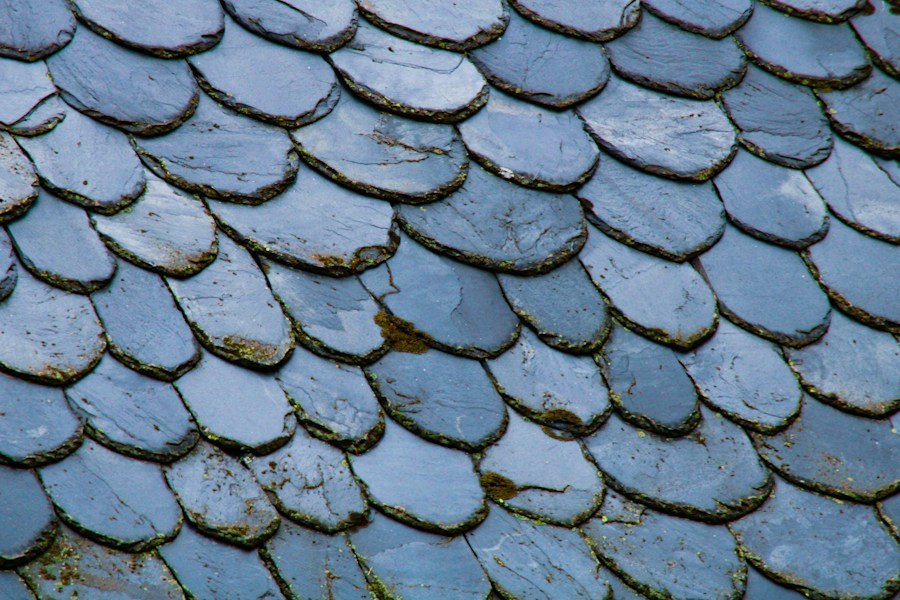
Gloeocapsa magma, the algae behind black streaks
The Asphalt Roofing Manufacturers Association names Gloeocapsa magma as the most common of several algae species that discolor roofs, and GAF and Owens Corning describe it as a cyanobacteria, often called blue-green algae. Spores ride the wind from roof to roof. Once they settle on a damp shingle they form colonies that read as black or dark green streaks from the street.
Humid New Jersey summers
Algae needs moisture and warmth. July and August in New Jersey bring long stretches of humid air, heavy dew and thunderstorms, so shingles stay wet for hours at a time. Every humid summer is another growing season. That is why a roof that looked clean when you bought the house can be streaked five or six years later without anything else changing.
Shaded, wooded lots in North and Central NJ
Towns across Sussex, Morris, Passaic, Warren, Hunterdon and Somerset counties are full of mature oaks, maples and pines planted close to houses. Shade stops the sun from drying the roof after rain, and falling leaves feed moss. Homes on wooded lots in places like Sparta, Kinnelon, Mendham or Tewksbury often need cleaning far more often than a sunny lot in the same town.
North-facing slopes
Owens Corning notes that streaking is commonly found on roofs with northern exposure. A north slope gets little direct winter sun, so frost, dew and rain linger there longest. On a typical New Jersey center-hall colonial, the rear north slope is often streaked while the south slope stays clean, even though both were installed the same day.
Debris left in valleys and gutters
Leaves, twigs and pine needles hold water and break down into a thin layer of organic soil. Moss loves it. Once debris sits in a valley or against a chimney or skylight for a season, moss takes root and starts spreading uphill. Clogged gutters keep the bottom course of shingles damp, which is why growth often starts at the eaves.
Older shingles without algae-resistant granules
Many New Jersey roofs installed in the 1990s and early 2000s used shingles with no algae-resistant granules. Manufacturers now add copper-coated granules to many lines to slow algae. Owens Corning says engineers noticed less staining below metal flashing and vents, which led to the idea. Older shingles have nothing to slow the growth down.
Shore humidity and salt air
Homes in Monmouth, Ocean, Atlantic and Cape May counties deal with constant humidity, morning fog and salt air. Algae grows well there even on sunny lots, and salt residue and sand add to the grime. Shore roofs also face strong wind, so loose moss and lifted shingles found during a cleaning matter more before nor’easter and hurricane season.
How we do it
How Our NJ Roof Cleaning Process Works
We inspect first, protect your landscaping, apply a low-pressure soft wash, rinse gently, clear valleys and gutters, then give you photos and notes. Because we are roofers, any loose shingle, cracked pipe boot or open flashing we find is noted and quoted before we leave.
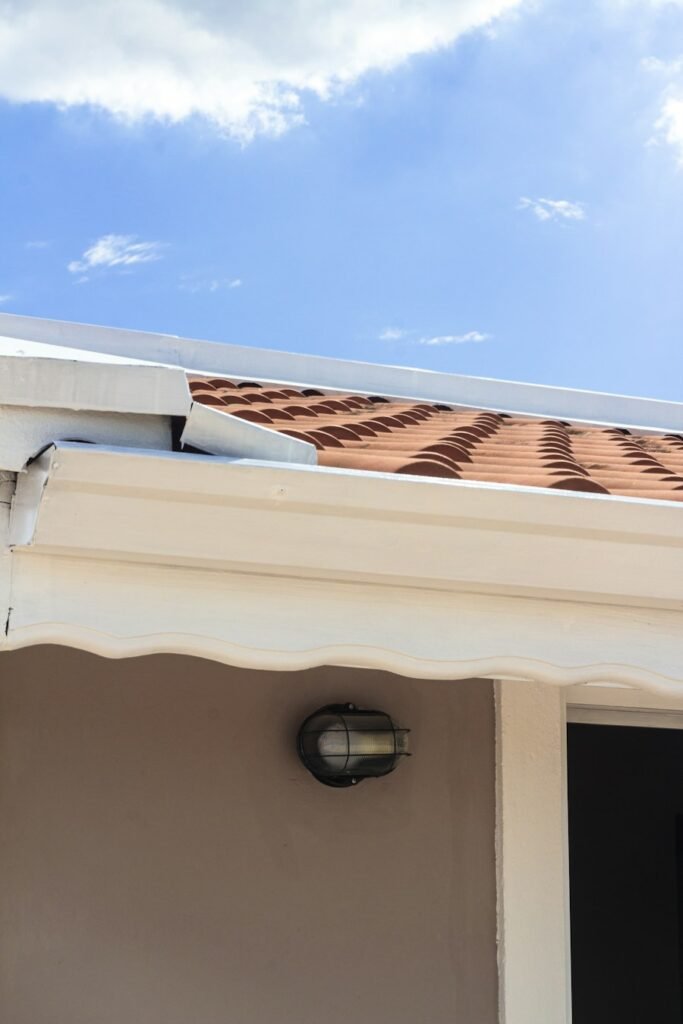
1. Inspect and photograph the roof
Before anything gets wet, we look at every slope, the flashing, pipe boots, chimney, skylights, valleys and gutters. We photograph the growth and any damage. If a shingle is cracked, lifted or missing, we tell you before cleaning so you know what was there already. This is the same free inspection we offer on every roof job.
2. Identify the growth and the roofing material
Algae, moss and lichen each respond differently, and asphalt, slate, cedar, metal and flat membranes each need a different approach. We confirm what the roof is made of, how old it is and whether the shingles have algae-resistant granules. Then we choose the solution strength, dwell time and access method, such as working from ladders or hooked roof ladders on slate.
3. Protect plants, people and property
We pre-wet shrubs, flower beds and lawn below the drip line, because hydrated plants absorb less cleaning solution. Downspouts can be bagged or redirected so concentrated runoff does not dump into a bed. We cover sensitive plants, close windows, move patio furniture, and ask that kids and pets stay inside during the wash and rinse.
4. Apply a low-pressure soft wash
We apply a diluted sodium hypochlorite cleaning mix with a surfactant through a low-pressure system, roughly the force of a garden hose. The solution does the work: it kills the algae and softens moss and lichen. We work from the bottom up for even coverage and avoid scrubbing, since manufacturers warn that friction loosens granules.
5. Let it dwell, then rinse gently
The mix sits on the roof for a set dwell time based on the growth and the manufacturer guidance, which for asphalt shingles is typically in the 10 to 20 minute range. We then rinse the roof with low-pressure water and rinse the landscaping again. Heavy algae often looks clean the same day; moss and lichen release over the following weeks.
6. Clear valleys, gutters and downspouts
We hand-clear leaves and loosened moss from valleys, around chimneys and behind skylights, working from the top down so we never push debris under a shingle edge. Then we clean out the gutters and flush the downspouts. If a gutter is pulling away, sagging or leaking at a seam, we note it for repair.
7. Make small repairs and seal what we found
With the roof clean, small problems are easy to see. With your approval, we can replace a few shingles, reseal a lifted tab, swap a cracked pipe boot or re-secure loose flashing on the same visit. Anything larger goes into a written itemized quote so you can decide later without pressure.
8. Deliver photos, notes and a prevention plan
You get before and after photos, a short written summary of the roof’s condition, and our recommendations on prevention: trimming branches, zinc strips, gutter guards or algae-resistant shingles at the next replacement. We also tell you roughly when the shaded slopes are likely to need cleaning again based on what we saw.
Pricing · updated November 2026
How Much Does Roof Cleaning Cost in NJ?
As of November 2026, most soft wash roof cleanings fall between about $300 and $1,900, depending mostly on roof size, height and how heavy the moss is. National 2026 data puts the average professional roof cleaning near $460, with soft washing at roughly $0.30 to $0.75 per square foot. We found no New Jersey-specific survey, so the ranges below are planning numbers built from national data.
Small roof soft wash
$300 – $900
Ranch, Cape Cod or small split-level up to about 1,500 sq ft of roof. Algae treatment, low-pressure rinse, landscaping protection and a photo inspection. Light moss included.
Two-story home soft wash
$500 – $1,900
Typical NJ colonial or bi-level with 2,000 to 2,500 sq ft of roof. Higher eaves and steeper pitch need more setup, ladders and safety gear, which pushes cost toward the upper end.
Heavy moss and lichen treatment
$400 – $1,400
Added treatment for thick moss or widespread lichen on about 2,000 sq ft of roof, based on national moss removal pricing of $0.20 to $0.70 per sq ft. May include a second application.
Slate or cedar low-pressure cleaning
$600 – $1,100
Careful cleaning of natural slate or cedar on about 1,600 sq ft of roof, working from ladders or hooked roof ladders, with gentler solution strength and more hand work around flashing.
Flat or low-slope roof cleaning
$450 – $840
Cleaning an EPDM, TPO or modified bitumen roof of about 1,600 sq ft. Debris removal, drain and scupper clearing, membrane-safe cleaner and a seam inspection.
Add-ons: gutters and prevention
$100 – $250
Gutter cleaning bundled with a roof wash usually runs about $100 to $150. A preventive moss treatment or zinc strip application usually runs about $150 to $250 on a typical home.
What moves the price
- Roof size. Most pricing is per square foot of roof surface, not floor area. A 2,000 sq ft house with a steep roof can have 2,600 sq ft or more of roof.
- Height and stories. Two- and three-story homes need taller ladders, more setup and fall protection. Fixr adds roughly $0.10 per sq ft for multi-story homes.
- Pitch. Steep roofs, common on NJ colonials and Victorians, cannot be walked safely when wet, so the crew works from ladders, harnesses or roof jacks, which takes longer.
- Type and amount of growth. Light algae comes off with one application. Thick moss and lichen need stronger treatment, more dwell time and sometimes a second visit.
- Roofing material. Asphalt shingles are the most straightforward. Slate, cedar and older copper details need gentler methods and more hand work, which adds labor.
- Access and landscaping. Dense beds, koi ponds, decks, pools and tight side yards take more protection and rinsing. Easy access keeps the price down.
- Debris and gutters. Valleys full of leaves and packed gutters add time. Bundling gutter cleaning with the roof wash is usually cheaper than booking it separately.
- Repairs found during cleaning. Small fixes like a few shingles ($350 to $800) or a pipe boot ($250 to $600) are quoted separately so you can approve them on the spot.
Planning ranges, not quotes. Cleaning figures are based on national data from Angi’s roof cleaning cost guide (2026 data) and Fixr’s roof cleaning cost guide (updated January 2025); no New Jersey-specific roof cleaning survey was available. Repair add-on ranges are our typical NJ planning ranges. Your price comes from a free inspection and a written itemized quote, which you can request for your roof cleaning.
Methods & materials
Roof Cleaning Methods, Solutions and Products for NJ Homes
For asphalt shingles, the right method is a low-pressure soft wash with a diluted bleach-based solution, followed by a gentle rinse. GAF, Owens Corning and the asphalt roofing trade association all warn against high-pressure washing. Slate, cedar, metal and flat roofs each need their own adjustments.
Soft washing kills the growth with a cleaning solution at low pressure. Pressure washing blasts the surface with water, and on asphalt shingles that strips the granules that protect the roof.
Asphalt shingles are covered in ceramic-coated mineral granules. Those granules block UV light, add color and protect the asphalt underneath. When a pressure washer hits them at high pressure, it knocks granules loose, can lift tabs and break the adhesive seal strips, and can drive water up under the shingle laps. The roof looks clean for a day and ages years in an afternoon.
The manufacturers are clear about this. GAF’s technical bulletin TAB-R-102 says not to power wash shingles because it may dislodge granules and lead to premature shingle failure. Owens Corning’s algae bulletin says not to scrub or use high-pressure power washing equipment. The Asphalt Roofing Manufacturers Association says high-pressure washing systems are likely to damage asphalt roofing and should not be used for removing algae or for any other purpose.
Can pressure washing void a shingle warranty? Manufacturer warranties generally exclude damage caused by improper maintenance, and since the manufacturers themselves tell you not to power wash, granule loss from pressure washing is the kind of damage a warranty claim can be denied for. Read your own warranty for the exact wording.
Soft washing works the opposite way. The pressure at the roof is about what a garden hose delivers. A diluted sodium hypochlorite mix with a surfactant clings to the surface, kills the algae at the root and loosens moss and lichen. A gentle rinse carries it away. Granules stay put.
Our method is a low-pressure soft wash suited to asphalt shingles. We do not use high-pressure washing on shingle roofs. On a metal roof or a flat membrane we adjust the solution and rinse to that material’s care guide. If a contractor shows up with a surface cleaner or a pressure wand for your shingles, send them home.
Most roof cleaning solutions are based on sodium hypochlorite, the active ingredient in household bleach, diluted with water and mixed with a surfactant so it clings to the roof.
The shingle makers publish their own recipes for homeowners. Owens Corning suggests a 1:1 mix of chlorine bleach and water, left on for about 10 to 20 minutes and then rinsed. The Asphalt Roofing Manufacturers Association suggests the same 1:1 ratio, left on at least 15 and no more than 20 minutes. GAF’s bulletin calls for 4 gallons of water, 1 gallon of bleach and 1 cup of trisodium phosphate (or a phosphate-free substitute), applied with a garden sprayer, left up to 20 minutes and rinsed with low-pressure water. ARMA adds that other chemicals should not be used without the shingle manufacturer’s approval.
Professional soft wash crews use the same chemistry in a more controlled way. A surfactant helps the mix stick, which means less runoff and allows a lower concentration for the same result. Dwell time is matched to the growth.
Bleach is hard on plants. Oregon State University’s moss research notes that bleach at recommended strengths harms plants if left on for more than about ten minutes, so plant protection matters as much as the mix. Good practice includes:
- Pre-wetting all plants and lawn below the roof edge before applying anything.
- Covering delicate plants and koi ponds, and keeping runoff out of streams and storm drains.
- Bagging or redirecting downspouts so concentrated runoff does not land in a bed.
- Rinsing plants again after the job, including the soil at the roots.
- Eye protection and gloves for anyone handling the mix, and keeping kids and pets inside.
Some companies sell bleach-free or so-called eco cleaners. These can work on light growth but often take weeks of weathering to show results. Either way, ask what product is being used and whether it fits your shingle maker’s guidance.
Asphalt gets a soft wash, slate gets a gentle wash with almost no foot traffic, cedar gets low pressure and wood-safe treatment, and metal and flat roofs follow their manufacturer’s care guide.
Asphalt shingles. The large majority of NJ homes. Soft wash, no scrubbing, low-pressure rinse, and work from ladders or walkboards where possible, as ARMA recommends, because a treated roof is slippery.
Natural slate. Common on older homes in Montclair, Maplewood, Princeton, Westfield and Morristown. The National Park Service’s guidance on slate roofs says slate should not be walked on if at all possible; when access is needed, ladders should be hooked over the ridge so weight is spread out. We clean slate with a mild solution and low pressure, and we use the visit to check for slipped or cracked slates and the condition of the copper flashing. Lichen on slate can leave faint marks after it dies. For repairs, see our slate roof repair page.
Cedar shakes and shingles. The NPS guidance on wood shingle roofs says moss and lichen trap moisture and rot shingles, recommends diluted chlorine bleach solutions for residue, and warns that high pressure can crack wood. The Cedar Shake and Shingle Bureau warns that high-pressure washing by inexperienced people causes significant damage and that spray should never be aimed up the roof. Cedar usually needs a preservative or treatment afterward, re-coated every few years.
Metal roofs. Standing-seam and exposed-fastener metal roofs shed growth better than shingles but collect pollen, mildew and tree sap. They are cleaned with a mild cleaner and soft rinse; harsh abrasives and wire brushes scratch the paint finish. Check your panel maker’s care guide. More on metal roof repair.
Flat and low-slope roofs. EPDM, TPO and modified bitumen roofs on additions, porches and commercial buildings collect debris and ponding water. Cleaning focuses on clearing drains and scuppers, removing debris and using a membrane-safe cleaner, then checking seams. See flat roof repair.
A clean roof shows its problems clearly, and most of what we find on a cleaning visit is small and fixable the same day: a lifted tab, a cracked pipe boot, a few damaged shingles or a loose piece of flashing.
Moss and debris hide damage. A thick mat of moss can hide a shingle that was lifted by wind years ago. Leaves in a valley can hide a worn spot where water has been running under the shingles. Once the roof is clean and dry, these are easy to see and photograph.
The repairs we most often make after cleaning a New Jersey roof include:
- Resealing lifted tabs. Moss roots and wind can break the factory adhesive strip. We hand-seal tabs with roofing cement so they lie flat again.
- Replacing damaged shingles. Shingles cracked by moss growth, branches or old storm damage are slid out and replaced, with the nails in the course above carefully released and re-set. Our shingle roof repair page explains the method.
- Pipe boot replacement. The rubber collar around plumbing vents cracks in the sun. A boot with a split collar is a leak waiting to happen.
- Flashing touch-ups. Step flashing along walls and counter flashing at chimneys sometimes pulls loose. We re-secure and reseal it.
- Valley repair. Valleys that held debris for years can wear thin and may need new shingles or a metal valley liner.
- Gutter fixes. Sagging sections, loose hangers and leaking seams found while clearing gutters can be handled through gutter repair.
We always show you the photo and the price first. If we find something bigger, such as soft decking under the shingles near a valley or widespread granule loss, we write it into an itemized quote and explain your options. You never have to decide while we are standing on the ladder.
The products that keep New Jersey roofs clean longest are algae-resistant shingles installed at replacement time and zinc strips installed near the ridge on existing roofs.
Algae-resistant shingles. Most major shingle lines now include granules treated with copper to slow algae growth. GAF offers a 10-year StainGuard Algae Protection Limited Warranty against blue-green algae discoloration, available only on products sold in packages bearing the StainGuard logo. Owens Corning offers a 25-year Algae Resistance Limited Warranty on lines including Oakridge and Duration, with the condition that an approved Owens Corning hip and ridge shingle is installed. If you are planning a roof replacement on a shaded NJ lot, choose an algae-resistant line and keep the paperwork. One limit: Owens Corning notes these products target the cyanobacteria behind black streaks and do not address green algae or moss.
Zinc strips. Rain washes small amounts of zinc down the roof, which discourages moss and algae below the strip. Oregon State University’s moss research calls zinc strips the usual long-term solution and says the effect can reach up to about 15 feet below the strip. This Old House recommends one row near the ridge on most roofs, plus a second row halfway down on large slopes. Installation method:
- Clean the roof first; strips prevent growth better than they remove it.
- Slip the strip under the course of shingles just below the ridge cap, leaving a narrow exposed band.
- Fasten with roofing nails or screws under the overlapping shingle so no fastener is exposed to weather, then seal.
- Leave about 1/8 inch between strip ends for expansion.
Copper. Copper also inhibits growth, but copper should not be paired with red cedar, which it stains, per National Park Service guidance. Zinc runoff can also affect ponds and streams, so we avoid strips where the roof drains straight into water.
Gutter guards and tree trimming. Keeping debris off the roof and out of gutters removes the moss seedbed. Trimming branches back gives the roof sun and air, which may do more than any product.
Clean and repair when the shingles are flexible, the granules are mostly intact and the deck is solid. Plan a replacement when the cleaning reveals widespread granule loss, curling, brittle shingles or soft decking.
Cleaning is the right call when the roof is structurally fine and the problem is appearance and growth. Most asphalt roofs under about 15 years old in New Jersey fall into this category. After a soft wash, the color comes back, moss stops working into the joints, and a few small repairs handle what the growth damaged.
Replacement starts to make more sense when you see any of these during or after a cleaning:
- Bald shingles. Large areas where the granules are gone and the black asphalt mat shows. Cleaning cannot put granules back.
- Curling or cupping. Edges turned up or centers dished down across a whole slope.
- Brittle shingles. Shingles that crack when lifted for a repair, which makes small fixes unreliable.
- Moss damage across the roof. Many lifted tabs and broken seal strips on multiple slopes.
- Soft or spongy decking. Usually near valleys, eaves and chimneys where water sat under debris for years.
- Repeated leaks. If you have already paid for several leak repairs, the cleaning may only be revealing more.
Many owners who are selling choose cleaning on an older roof to improve curb appeal and buyer inspections, then let the next owner plan the replacement. That is a reasonable choice when the roof still sheds water. If you are staying ten years or more and the roof is near the end of its life, putting the cleaning money toward a new algae-resistant roof can make more sense. Our New Jersey roof repair cost guide guide covers NJ pricing. We will tell you honestly which side of the line your roof is on, with photos to back it up. Ask whether your roof should be cleaned or replaced.
NJ rules
NJ Permits and Insurance for Roof Cleaning
Permits
You do not need a permit to clean a roof in New Jersey. Washing a roof and clearing debris count as routine maintenance. The small repairs that often follow a cleaning are also covered: under the NJ Uniform Construction Code, N.J.A.C. 5:23-2.7, repair or replacement of existing roof covering on a detached one- or two-family home has been ordinary maintenance since March 5, 2018, with no permit, inspection or notice required.
A permit is needed if the cleaning uncovers damage that calls for replacing roof sheathing or decking, rafter or truss repairs or other structural work, or if the building is a townhome, attached home, larger multi-family or commercial building. A third layer of roofing also requires a permit, since code allows no more than two layers. Ordinary maintenance is not a waiver from code compliance, so repairs still have to meet code. Condo and HOA communities may also have their own rules about roof work and contractors, so check those before booking.
Insurance
Homeowners insurance does not pay for roof cleaning, and it usually excludes damage caused by moss, algae or debris left in place. Insurers treat growth and the slow damage it causes as wear, age or neglect, which standard policies usually exclude.
Insurance usually covers sudden damage: a tree limb through the roof, shingles torn off in a nor’easter, hail, or the weight of ice and snow. If we find storm damage during a cleaning, we stop and photograph it before anything else, because a clean roof can make storm damage easier to document. Our storm damage roof repair page explains the claim steps.
To protect yourself, keep the dated photos and written notes from each cleaning. They show the roof was maintained, which helps if a later claim raises questions about upkeep. Shore homeowners should know that coastal policies often carry separate wind or hurricane deductibles. Your policy and your agent have the final word on coverage.
Who does the work
Why NJ Homeowners Choose Roof Repair SNJ for Roof Cleaning
- Repairing NJ roofs for 25+ years
- General liability + workers’ comp insurance
- Workmanship warranty: 2 years on repairs, 10 years on full replacements, in writing
Check any NJ roofer before you sign
Ask for the 13VH registration number and confirm it on the NJ license lookup. NJ law requires a signed written contract showing the registration number and total price, and gives you until midnight of the third business day to cancel (N.J.S.A. 56:8-151).
In depth
Roof Cleaning in New Jersey: Detailed Answers
Algae, moss or lichen: what is actually on my roof?
Black or dark streaks are algae, green fuzzy clumps are moss, and flat gray-green or white crusty circles are lichen. Each one does different harm and needs a slightly different approach.
Algae. The streaks are mostly Gloeocapsa magma, which GAF and Owens Corning describe as a cyanobacteria often called blue-green algae. It travels on the air and settles on damp shingles. Algae is mainly an appearance problem. It does not lift shingles. The streaks make a roof look old, can make a home harder to sell, and spread to neighboring slopes. It responds quickly to a soft wash and usually looks clean the same day.
Moss. Moss is a small plant that grows in the shaded, damp gaps between shingles. It is the most damaging of the three. As This Old House explains, moss can lift and separate shingles as it grows, opening a path for water, and it holds moisture against the roof. In winter, wet moss can freeze and thaw repeatedly, which is hard on shingle edges. Moss treated with a soft wash dies and loosens; the remaining dead material either rinses off or releases over the following weeks of rain.
Lichen. Lichen is a partnership between a fungus and an alga. It grows slowly and grips the surface hard. Ripping it off pulls granules with it, so it should be killed in place and allowed to weather away. Lichen can leave faint ghost marks, especially on slate and older shingles.
Many New Jersey roofs have all three: algae streaks on the open slopes, moss in the shaded valley, and lichen on the oldest section near a tree. The inspection at the start of our cleaning tells you what is there and how heavy it is, which also drives the price.
Does algae or moss actually damage a roof?
Algae is mostly cosmetic, but moss and lichen cause real physical damage: lifted shingles, trapped moisture and granule loss that shortens roof life.
Manufacturers refer to algae as discoloration, and their bulletins focus on appearance. That matches what we see. Algae streaks on an otherwise sound roof rarely cause leaks by themselves. The practical costs are curb appeal, resale value and the fact that algae on a roof usually means conditions are right for moss too.
Moss is different. It roots into the keyways and under shingle edges. As it thickens, it lifts the tabs and can break the adhesive seal strip that holds them down in wind. Once tabs are unsealed, a strong nor’easter can fold them back or tear them off. Moss also acts like a sponge. It keeps the shingle surface wet for days, which speeds up the breakdown of the asphalt and can let water wick under the laps. In freeze and thaw cycles, common in Sussex, Warren, Morris, Passaic and Hunterdon counties, that trapped water freezes and expands at the shingle edges.
Lichen bonds to the granules. Over years it loosens them, and when it finally falls off it takes granules with it. Bare spots age quickly under the sun.
The National Park Service’s guidance on wood shingle roofs puts it plainly: moss and lichen trap moisture, rot the shingles and shorten the life of the roof. On cedar, the damage is faster than on asphalt.
Debris adds to all of it. Leaves in valleys hold water against the most water-loaded part of the roof, and clogged gutters keep the bottom courses damp. That is why we clear valleys and gutters on every cleaning, and why a roof that has been mossy for years should be inspected, not just washed.
How often should a New Jersey roof be cleaned?
Most New Jersey roofs need cleaning every three to five years, while heavily shaded roofs on wooded lots may need it every two to three years.
There is no single schedule because growth depends on shade, humidity, trees and the shingle itself. ARMA’s bulletin notes that cleaning is temporary and discoloration will likely return, and Owens Corning says the same. The goal is to clean before moss gets a foothold.
Here is a practical way to plan:
- Sunny lot, algae-resistant shingles. You may go many years without needing a cleaning. Watch the north slope.
- Typical suburban lot with some trees. Plan on every three to five years, more often if streaks reappear quickly.
- Wooded lot in North or Central NJ. Homes under heavy canopy in places like West Milford, Ringwood, Vernon, Sparta, Kinnelon and the Hunterdon hills often need attention every two to three years, plus yearly debris clearing.
- Shore homes. Humidity and fog keep algae active even in sun. Check every couple of years.
Between cleanings, a few habits stretch the interval. Keep gutters and valleys clear, ideally after the fall leaf drop and again in spring. Trim branches back so the roof gets sun and the canopy does not touch the shingles. Consider zinc strips near the ridge on shaded slopes.
Pair each cleaning with a roof inspection. The cleaning visit is the best time to see the roof clearly, and the photos give you a record of its condition over time. That record is useful when you sell, when you talk with your insurer and when you plan a replacement.
When is the best season to clean a roof in NJ?
Late spring through early fall is the best time to clean a roof in New Jersey, on a dry, mild day with no rain expected for several hours.
Soft wash solutions work best when the roof is dry before application and temperatures are moderate. Very hot afternoons in July and August can dry the solution too fast on a dark roof, so crews often start early in the day. Cold weather slows the treatment, and freezing temperatures make a wet roof dangerous to work on.
Rain right after a treatment can dilute it before it finishes working, so we schedule around the forecast. A day or two of dry weather afterward is ideal, then normal rain helps rinse loosened moss in the following weeks.
Seasonal considerations for New Jersey:
- Spring (April to June). Good for cleaning and checking what winter did. Ice dams, freeze and thaw, and nor’easters can loosen shingles and flashing, and spring is the time to find it. Plants are budding, so careful protection matters.
- Summer (June to August). Reliable weather, but heat and humidity mean early starts. Summer is also when algae grows fastest.
- Early fall (September to October). A strong choice. Many plants are going dormant, temperatures are mild, and the roof will be clean and inspected before nor’easter season. Plan a gutter clearing after the leaves finish falling.
- Late fall and winter. Usually not a good time for chemical cleaning. Debris clearing and gutter cleaning can still be done on dry days.
If you are selling in spring, book the cleaning a few weeks before listing photos so moss has time to release and the roof looks its best.
Can I clean my own roof safely?
You can clear light debris from a low, single-story roof with care, but chemical cleaning on a steep or two-story roof is a job for a crew with fall protection.
The manufacturers do publish homeowner recipes, which tells you the chemistry is not complicated. The risk is everything around it. A treated roof is slippery; ARMA, GAF and Owens Corning all warn about it, and Owens Corning advises fall protection. Falls from ladders and roofs are a common cause of serious home injuries, and a wet, steep New Jersey colonial roof is one of the worst places to work.
If you do it yourself on a low roof, follow the safety basics:
- Use the shingle maker’s recipe and nothing stronger. Never mix bleach with ammonia or acid cleaners.
- Work from a ladder at the eave where possible, and use a proper harness and anchor if you must go on the roof.
- Wear eye protection, gloves and soft-soled shoes.
- Pre-wet and cover plants, and rinse them afterward.
- Never use a pressure washer on shingles and never scrub.
- Brush moss gently from the top down so you never push debris under a shingle edge.
Do not do it yourself if the roof is steep, two stories or higher, slate, or near power lines, or if you are not comfortable on a ladder. Slate cracks under careless footsteps, and the National Park Service says slate should not be walked on if at all possible.
The other thing a DIY wash misses is the inspection. A roofer cleaning the roof sees the lifted tab, the cracked pipe boot and the worn valley. A homeowner with a sprayer usually does not. That is a large part of the value of having a roofing contractor do the cleaning.
Residential vs commercial roof cleaning in NJ
Residential cleaning is mostly about algae and moss on steep shingle roofs, while commercial cleaning is mostly about debris, drains and membrane condition on flat roofs.
On homes, the work is steep-slope: soft washing asphalt shingles, slate or cedar, protecting landscaping, and clearing valleys and gutters. Appearance matters to the owner, and the cleaning visit doubles as a roof check.
On commercial and multi-family buildings across New Jersey, from office buildings in Parsippany to warehouses in Middlesex County and retail strips along Route 22, most roofs are low-slope EPDM, TPO, PVC or modified bitumen. The priorities shift:
- Drains and scuppers. Blocked drains cause ponding water, which stresses the membrane and adds weight to the structure. Clearing them is the most important part of the visit.
- Debris. Leaves, windblown trash and gravel collect around rooftop units and against parapets.
- Membrane-safe cleaning. Reflective white TPO and PVC roofs lose reflectivity when dirty. They are cleaned with a membrane-safe product and low pressure. Follow the membrane manufacturer’s care guide, because the wrong chemical can void a commercial warranty.
- Seams and penetrations. With the roof clean, seams, flashings at rooftop units, pitch pans and coping are easier to inspect.
- Documentation. Many commercial roof warranties require periodic maintenance. Dated photos and reports help keep coverage in place.
Commercial work also involves access planning, tenant notice and sometimes after-hours scheduling. For maintenance programs and repairs on larger buildings, see commercial roofing.
How to choose a roof cleaning contractor in NJ
Choose a contractor who uses low pressure on shingles, can name the cleaning product, carries liability insurance, is registered with the NJ Division of Consumer Affairs, and puts the price in a written contract.
Ask these questions before anyone climbs a ladder:
- What pressure and method will you use on my shingles? The answer should be a soft wash at low pressure. Any mention of pressure washing or surface cleaners on asphalt shingles is a red flag, since GAF, Owens Corning and ARMA all advise against it.
- What product are you using, and how do you protect plants? A good contractor names the active ingredient and explains pre-wetting, covering and rinsing.
- Are you registered and insured? New Jersey home improvement contractors must register with the Division of Consumer Affairs and receive a registration number beginning with 13VH, which requires at least $500,000 in commercial general liability insurance. Look up the number at newjersey.mylicense.com.
- Will I get a written contract? Under the Contractors’ Registration Act, N.J.S.A. 56:8-151, home improvement contracts must be written and signed, show the contractor’s legal name, address and registration number, list the total price, include a copy of the insurance certificate, and give you a Notice to Consumer of your right to cancel before midnight of the third business day.
- Who checks the roof itself? A washing company can make a roof look clean. A roofing contractor can also tell you whether the shingles, flashing and deck are sound and fix small problems on the spot.
- What does any guarantee actually cover? If a company offers a no-streaks guarantee, ask for the written terms, the length and what voids it.
Be wary of door-knockers after storms offering cheap roof washes, prices that seem far below the national ranges above, and anyone who wants full payment up front. Ask for before photos taken from the roof, not just the street.
Service areas
Roof Cleaning Across New Jersey
We provide roof cleaning in all 21 New Jersey counties. Find your county and town on our New Jersey service locations page for local roof types, permit notes and prices.
FAQ
Roof Cleaning in NJ: Frequently Asked Questions
What causes black streaks on roofs in NJ?
Black streaks are mostly Gloeocapsa magma, a cyanobacteria often called blue-green algae. The spores travel on the wind and grow on damp shingles. New Jersey’s humid summers, shaded wooded lots and north-facing slopes keep roofs wet long enough for colonies to spread, which is why streaks are so common here.
Is it safe to pressure wash an asphalt shingle roof?
No. GAF, Owens Corning and the Asphalt Roofing Manufacturers Association all advise against high-pressure washing on asphalt shingles. High pressure strips the protective granules, can lift tabs and drive water under the shingles. A low-pressure soft wash with a cleaning solution removes the growth without that damage.
How much does roof cleaning cost in New Jersey?
Most soft wash roof cleanings fall between about $300 and $1,900 as of November 2026, depending on roof size, height, pitch and how much moss is present. National data puts the average near $460. Heavy moss, slate or cedar, and gutter cleaning add cost. A free inspection gives you an exact written quote.
How often should I clean my roof in NJ?
Most New Jersey roofs need cleaning every three to five years. Roofs on heavily wooded lots in North and Central NJ may need it every two to three years, while sunny roofs with algae-resistant shingles can go much longer. Clean before moss takes hold, and clear gutters and valleys every year.
Will soft washing hurt my plants?
Soft wash solutions contain diluted bleach, which can harm plants if it sits on them. Careful crews pre-wet plants and lawn, cover delicate plantings, redirect downspouts, and rinse everything again after the job. With that protection, most landscaping comes through without harm. Tell us about ponds, vegetable beds and prized plantings before we start.
How long does it take for moss to come off after treatment?
Algae streaks usually look clean the same day. Moss and lichen die quickly after treatment but can take a few weeks of rain to release fully, especially thick clumps. Some loosened moss is rinsed or cleared during the visit. Pulling stubborn lichen off by force tears granules away, so it is left to weather off.
Does cleaning my roof void the shingle warranty?
A low-pressure soft wash that follows the manufacturer’s guidance is the method the shingle makers themselves describe. High-pressure washing is the method they warn against, and damage from improper maintenance is typically excluded from warranties. Read your warranty’s maintenance section and keep records of how and when the roof was cleaned.
Do zinc strips really stop moss on NJ roofs?
Zinc strips help. Rain carries small amounts of zinc down the roof, discouraging moss and algae below the strip. Oregon State University research says the effect can reach about 15 feet below. They work best on a freshly cleaned roof, installed near the ridge, with a second row on long slopes.
Can you clean a slate or cedar roof?
Yes, with gentler methods. Slate is cleaned with low pressure and mild solution while avoiding foot traffic, using ladders hooked over the ridge as National Park Service guidance recommends. Cedar is cleaned at low pressure, never sprayed up the roof, and usually treated with a preservative afterward to slow regrowth.
Do I need a permit to clean my roof in NJ?
No. Cleaning a roof is routine maintenance and needs no permit. Small repairs to the roof covering on detached one- and two-family homes are also ordinary maintenance under N.J.A.C. 5:23-2.7. A permit is needed only if the work grows into deck replacement, structural repairs, or roofing on attached or commercial buildings.
Reviewed by the Roof Repair SNJ team · Last updated November 2026
Maintenance
Related maintenance services
Roof Cleaning is part of our maintenance services. See every service on our roof repair NJ homepage.
Free inspection
Get Your NJ Roof Cleaned the Right Way: Free Inspection
Black streaks, moss or a valley full of leaves? Request a free soft wash inspection online. We photograph the roof, explain what is growing and why, and give you a written itemized quote for a low-pressure soft wash and any small repairs. No high-pressure washing on your shingles, and no pressure to book on the spot.
No pressure and no obligation. If a repair will do, we’ll tell you.
Roof Repair SNJ
- Serving all 21 NJ counties
- Send a roof cleaning request
- Mon–Fri 5:00 AM–10:00 PM · Sat 5:00 AM–6:00 PM · Emergencies 24/7
Sources: ARMA, Algae Discoloration of Roofs (technical bulletin) · GAF TAB-R-102, Blue-Green Algae Staining on Shingled Roof Surfaces (2024) · Owens Corning TB-10022493-A, Algae Growth on Asphalt Shingles · Owens Corning, Algae resistance and roof streaks · This Old House, How to Remove Roof Moss · Oregon State University, Chemical Moss Control for Roofs, Decks, and Sidewalks · National Park Service, Preservation Brief 29: Slate Roofs · National Park Service, Preservation Brief 19: Wood Shingle Roofs · Cedar Shake & Shingle Bureau, Cedar Roof Care & Maintenance · J. Racenstein, How to Protect Plants When Soft Washing · Angi, How Much Does Roof Cleaning Cost? (2026 data) · Fixr, Roof Cleaning Cost · N.J.A.C. 5:23-2.7, Ordinary maintenance · NJ Division of Consumer Affairs license verification · N.J.S.A. 56:8-151, Contractors’ Registration Act contract requirements. Prices are planning ranges, not quotes. Permit and insurance information is general guidance; your town, policy and agent have the final word.