
Roof Repair NJ › NJ Locations › Ocean County
Toms River · Lakewood · Brick · LBI · 33 towns
Roof Repair in Ocean County, NJ: Toms River, Lakewood, Brick and LBI
Roof Repair SNJ repairs and replaces roofs in all 33 Ocean County municipalities, from Lakewood’s new townhomes and Toms River’s 1960s ranches to adult communities in Whiting and elevated beach houses on Long Beach Island. You get a free inspection with dated photos and a written, itemized quote, plus clear guidance on HOA approvals and flood-zone rules before work starts.
- Free inspection with dated roof photos
- HOA and adult community roofs handled
- Barrier island, bayside and Pinelands homes
Free roof inspection in Ocean County
Photos of every problem we find and an itemized written price before any work. Emergency requests handled 24/7.
Roof Repair SNJ
33 Ocean County towns · all 21 NJ counties
Free inspection
Roof, attic and gutters checked at no cost.
Insured
Liability and workers’ comp; certificate on request.
Written quotes
Itemized price in writing before any work.
Photo-documented
Every problem photographed, before and after.
Ocean County at a glance
Ocean County Roofs at a Glance
Ocean County’s housing is young by New Jersey standards, with a median build year of 1981, but much of it went up in one burst during the 1970s and 1980s, so huge numbers of roofs age together. The county runs from barrier islands and lagoon neighbourhoods on Barnegat Bay to Pinelands towns in the west, and each zone wears roofs differently.
County seat
Toms River
Toms River is the county seat and second-largest town, with 95,438 residents in 2020, stretching from Ortley Beach on the barrier island to inland subdivisions near the Parkway.
Largest town
Lakewood
Lakewood had 135,158 residents in 2020 and built more homes in the 2010s than any other Ocean County municipality, about 5,700 units by the county’s count.
Median year built
1981
Census ACS 2023 five-year data puts Ocean County’s median year built at 1981, the second newest in New Jersey after Somerset County.
Biggest building decade
1970s
Ocean County Planning counts about 58,000 homes built from 1970 to 1979 and 49,000 in the 1980s, so many original decks and roof framing are now forty to fifty years old.
Pinelands towns
14
The NJ Pinelands Commission lists 14 Ocean County municipalities wholly or partly in the Pinelands, including Jackson, Manchester, Lakehurst, Berkeley, Stafford and Toms River.
Sandy impact
Brunt of NJ damage
The National Hurricane Center says Sandy’s catastrophic New Jersey damage fell mostly on Monmouth and Ocean counties, naming Mantoloking, Seaside Heights and Long Beach Island.
Homes & roofs
What Homes and Roofs Are Typical in Ocean County?
Ocean County roofs sit on six very different kinds of housing: barrier island beach homes, lagoon and bayside houses, 1950s to 1970s ranches, adult community units, large new subdivisions and Pinelands homes on sandy lots. Which group your home falls in shapes everything from fastener choice to who has to approve the work.

Barrier island beach homes
From Bay Head and Mantoloking through Lavallette, Seaside Heights and Seaside Park, and down Long Beach Island from Barnegat Light to Beach Haven, homes range from small pre-war cottages to large elevated rebuilds. Salt spray, high wind and full sun hit every roof. Many houses were raised or replaced after Sandy, so roofs are higher, more exposed and often have complex hips, decks and rooftop mechanicals.
Lagoon and bayside neighbourhoods
Brick’s lagoon streets, Toms River’s bayfront sections, Berkeley’s Bayville and Pelican Island, Lacey’s Forked River, Stafford’s Beach Haven West and Little Egg Harbor’s Mystic Island hold single-story ranches and capes built along dredged lagoons. Many sit in FEMA flood zones and have been lifted since 2012. Low-slope additions and old roll roofing on porches are common leak sources.
Mid-century ranches and capes
Toms River built about 8,500 homes in the 1960s and Brick about 4,700 in the 1950s, by the county’s count. These neighbourhoods are full of ranches, capes and split-levels with simple gable roofs, many with two shingle layers already. Typical repairs are rotted plywood at eaves, old metal vent pipes, and chimney flashing on homes that have changed heating systems.
Adult communities
Manchester’s Whiting section alone holds Crestwood Village, Leisure Village West, Leisure Knoll and Pine Ridge at Crestwood, and similar age-restricted communities spread across Berkeley, Toms River, Jackson, Lakewood and Barnegat. Most are one-story ranches or attached units from the 1970s onward. Roof responsibility is set by the association, and attached units need permits for reroofing.
Lakewood’s new multi-family housing
Lakewood has added more housing since 2010 than anywhere else in the county, much of it duplexes, townhomes and multi-family buildings on tight lots, alongside older ranches and cottages near Lake Carasaljo. New roofs here fail early mostly from installation details: missing kickout flashing, poor valley work and crowded rooflines where snow and water collect between buildings.
Jackson and Stafford subdivisions
Jackson added around 5,200 homes in the 2000s and Stafford and Barnegat grew fast in the same years. These are colonials and large ranches with architectural shingles, skylights and ridge vents, now about twenty years old. Pipe boots, skylight flashing and builder-grade ridge vent are failing on schedule, and many homeowners are deciding between repair and a first replacement.
Pinelands homes on sandy lots
In Plumsted, Lakehurst, western Jackson and Manchester, and Barnegat’s and Lacey’s inland sections, homes sit among pitch pines on sandy soil. Pine needles pack valleys and gutters, and pine sap and shade grow moss on north slopes. Sandy soils give cold, clear nights, so frost and condensation in attics can be worse here than closer to the bay.
Ocean County weather
How Does Ocean County Weather Affect Roofs?
Ocean County roofs face hurricanes and nor’easters from the ocean, flooding around Barnegat Bay, damaging thunderstorm winds and cold Pine Barrens nights inland. These are the events and patterns that explain most of the damage we see, from Mantoloking to Tuckerton to Jackson.
Superstorm Sandy, October 29, 2012
Sandy came ashore near Brigantine, just south of the county, and the National Hurricane Center says the brunt of New Jersey’s catastrophic damage was in Monmouth and Ocean counties. In Mantoloking most structures were flooded, badly damaged or destroyed, Seaside Heights lost its Casino Pier and Funtown Pier, and on Long Beach Island nearly every oceanside house was extensively damaged. Thousands of roofs were replaced afterward.
June 2012 derecho
On the night of June 29 into June 30, 2012, a derecho crossed southern New Jersey and was still producing gusts as high as 81 mph at Tuckerton as it reached the coast. Straight-line wind like this tears shingles off whole slopes, drops pines onto roofs, and pulls gutters loose. Damage often runs in a band, so neighbours on the same street compare notes.
Tropical Storm Irene, August 28, 2011
Irene made New Jersey landfall at Brigantine Island as a 60 knot tropical storm, with a 3 to 5 foot surge causing moderate to severe tidal flooding along the shore. Ocean County barrier towns were evacuated. For roofs, the long hours of wind-driven rain exposed weak flashing at chimneys, skylights and sidewalls across the mainland.
January 2016 blizzard
The January 23 and 24, 2016 storm combined heavy snow with coastal flooding at high tide. Barnegat Township was ordered to evacuate, and Long Beach Island beaches were cut into cliffs about 15 feet high. On roofs, wet snow loaded low-slope porches and additions, and melting snow refroze at gutters, causing ice dams on ranches with poorly ventilated attics.
Nor’easters and bay wind
The state climatologist notes that coastal nor’easters are most frequent from October to April. In Ocean County they push water into Barnegat Bay and blow for many hours from the northeast over open water, lifting tabs and ridge caps on homes in Brick, Toms River, Berkeley, Lacey and Stafford. Rain driven sideways gets under shingles that look fine from the street.
Pine Barrens cold nights and summer storms
The Rutgers climate office describes the Pine Barrens’ sandy soils as producing unusually low nighttime temperatures. Inland towns like Jackson, Lakehurst, Manchester and Plumsted see more frost, attic condensation and freeze-thaw cycles than the shore. Summer thunderstorms build over the pines, and tall pitch pines and oaks bring limbs down on roofs during gusts, often onto the back slope nobody sees.
Roofing services
How Do Our Roof Services Apply in Ocean County?
In Ocean County most work is wind and storm damage, aging shingles on 1970s and 1980s ranches, flat-roof additions on bayside homes, and roofs controlled by HOAs. Here is how each of our twelve services fits homes and buildings from Point Pleasant to Little Egg Harbor.
Roof Leak Repair in Ocean County
Leaks in Ocean County often start at old metal vent stacks on Toms River ranches, skylights in Jackson colonials, or where a lifted home’s new roof joins an older porch. We trace the path from the stain to the entry point and photograph both before we quote.
Emergency Roof Repair in Ocean County
When a nor’easter strips shingles in Brick or a pine limb comes through a Manchester roof, send an emergency request through our contact page. We tarp and secure the roof, clear debris and take dated photos for the insurance claim.
Storm Damage Roof Repair in Ocean County
Storm damage here means wind across Barnegat Bay, derecho-style straight-line gusts and falling pines inland. We inspect every slope, mark creased and missing shingles, check gutters and vents, and tie the report to the storm date.
Roof Replacement in Ocean County
With tens of thousands of homes built in the 1970s and 1980s, many Ocean County roofs are on their last layer. Replacement includes tear-off, deck repair, ice and water shield, new drip edge and fasteners matched to your distance from salt water.
Roof Inspection in Ocean County
Buying on LBI or in an adult community in Whiting, an inspection with photos shows deck condition, layer count, flashing, ventilation and remaining shingle life. We also note anything that affects HOA responsibility or a flood-zone home’s paperwork.
Flat Roof Repair in Ocean County
Flat roofs are common on lagoon-house additions, carports and Florida rooms in Brick, Toms River and Mystic Island, and on elevated beach houses with rooftop decks. We repair EPDM, TPO and modified bitumen seams, drains and edge metal.
Metal Roof Repair in Ocean County
Metal roofs show up on new beach houses in Lavallette and Surf City, barns in Plumsted and porches across the county. Near salt water we use compatible metals and sealants so new flashings and screws do not corrode the existing panels.
Slate Roof Repair in Ocean County
Slate is uncommon in Ocean County but survives on older homes in Bay Head, Island Heights, Point Pleasant Beach and Lakewood’s older streets. We replace broken slates with matching stone and repair copper valleys without walking and cracking the field.
Shingle Roof Repair in Ocean County
Asphalt shingles cover most Ocean County homes. We replace wind-lifted and missing shingles, reseal ridge caps, and fix nail pops on ranches, colonials and attached units, matching color as closely as the current line allows.
Roof Cleaning in Ocean County
Shade from pitch pines in Jackson and Manchester and humid bay air in Lacey and Stafford grow algae and moss on north slopes. We use low-pressure, shingle-safe cleaning and can add zinc or copper strips to slow regrowth.
Gutter Repair in Ocean County
Pine needles clog gutters fast in western Ocean County, and salt pits aluminum gutters on the islands. We repair the roof edge, fascia, drip edge and gutter pitch together, so water clears the house instead of backing up under shingles.
Commercial Roofing in Ocean County
From strip centers along Route 37 and Route 9 to marinas, churches and multi-family buildings in Lakewood, we repair low-slope commercial roofs, parapets and rooftop unit curbs, and we plan permit timing into the schedule.
Ocean County rules
Ocean County Roof Permits, Flood Rules, Pinelands and HOAs
Permits & local review
Reroofing a detached one- or two-family home in Ocean County usually needs no permit, but attached units, structural work, flood-zone rebuilding and HOA rules can all add steps. Since March 5, 2018, replacing roof covering on a detached one- or two-family home is ordinary maintenance under N.J.A.C. 5:23-2.7. You still need a permit from the municipal construction office for deck sheathing, rafters or trusses, a third layer, and any townhome, condo, adult community attached unit or commercial building.
Flood zones matter on the islands and around Barnegat Bay. Under FEMA flood rules, if a home in a mapped flood zone suffers damage, or gets improvements, worth 50 percent or more of its market value, the whole building may have to meet current flood standards, which often means elevation. After Sandy many Ocean County owners went through this. Roofing alone rarely reaches 50 percent, but combined storm repairs can, and the town’s floodplain administrator decides.
Fourteen Ocean County towns are wholly or partly in the Pinelands. Like-for-like roof repair on an existing house generally does not need Pinelands review, while additions and new structures may; the Pinelands Commission publishes exemption guidance. HOAs and adult communities usually require written approval and may set colors and materials.
Insurance claims
Ocean County insurance claims usually split into wind damage, covered by homeowners policies, and flood water, covered only by flood insurance, and the difference matters on every barrier island and lagoon street. Sandy taught many owners in Mantoloking, Ortley Beach and Long Beach Island that surge through the first floor is a flood claim, while shingles torn off by wind is a homeowners claim.
Policies near the water often carry a separate hurricane or wind deductible, usually a percentage of the dwelling limit, which can be several thousand dollars. Inland, the common claim is a pine or oak landing on the roof after a thunderstorm or derecho. Policies usually exclude wear, age, rotted decking and rusted flashing. In adult communities and condos, the association’s master policy may cover the roof while your own policy covers interior damage. We give you dated photos showing the damage and where it is. Your policy and your agent have the final word.
Pricing · updated November 2026
How Much Does Roof Repair Cost in Ocean County?
As of November 2026, typical Ocean County roof repairs run about $350 to $2,500, and a full replacement on an average home falls around $8,500 to $17,000. Simple one-story ranches in Toms River and Brick sit at the low end; elevated beach houses, salt-zone materials and attached units with HOA requirements cost more.
Shingle and vent repairs
$350 – $800
Replacing wind-lifted shingles on a Brick ranch or a cracked pipe boot on a Jackson colonial, with matching shingles, sealant and photos showing the finished repair.
Single-source leak repair
$400 – $1,500
Finding and fixing one leak, such as a skylight in Stafford, an old vent stack in Toms River, or the joint where a lifted home’s roof meets a porch, with new flashing and underlayment.
Flat roof patch or seam
$400 – $2,500
Repairs to EPDM, TPO or modified bitumen on Florida rooms, carports and lagoon-house additions in Brick, Berkeley and Mystic Island, including drains and edge metal.
Emergency tarp
$300 – $1,200
Tarping after a nor’easter on Long Beach Island or a pine through a Manchester roof, with battens, debris cleanup and photos for your insurer.
Chimney re-flashing
$600 – $1,800
New step and counter flashing on brick chimneys of older ranches and capes in Toms River, Point Pleasant and Lakewood, with corrosion-resistant metal near the bay.
Rotted deck section
$500 – $2,000+
Replacing soft plywood at eaves on 1970s ranches and adult community units where years of ice dams and old leaks have rotted the deck. This work needs a permit.
What moves the price in Ocean County
- Elevated beach houses. Homes lifted after Sandy in Ortley Beach, Lavallette and on LBI need taller ladders, lifts or scaffolding, and roof decks complicate the work.
- Salt-zone materials. On the barrier islands and bayfront streets we use stainless or hot-dipped fasteners and aluminum or copper flashing, which cost more.
- HOA requirements. Adult communities and condos may specify shingle brands and colors, require proof of insurance and limit work hours.
- Attached-unit permits. Townhomes and condo buildings need a construction permit, adding fees and inspection timing.
- Layer count on older ranches. Many 1960s and 1970s homes in Toms River, Brick and Berkeley already have two layers, so the next roof needs a full tear-off.
- Summer island access. Seasonal traffic, parking rules and limited dumpster space in Seaside Heights, Beach Haven and Point Pleasant Beach slow setup in July and August.
- Pine debris and deck rot. Packed pine needles in western towns hold water at valleys and eaves, which often means replacing deck boards along with shingles.
- Low-slope additions. Bayside homes often mix shingle roofs with flat additions, requiring two systems and careful transitions.
Planning ranges, not quotes. Repair ranges are Roof Repair SNJ’s site-wide figures; replacement ranges come from Fixr’s 2026 New Jersey data and the Roof Observations New Jersey cost guide (January 2026). Your price follows a free inspection with photos. Read the full roof repair cost guide for New Jersey.
Who does the work
Why Ocean County Homeowners Choose Roof Repair SNJ
- Repairing NJ roofs for 25+ years
- General liability + workers’ comp insurance
- Workmanship warranty: 2 years on repairs, 10 years on full replacements, in writing
- Photo report with every inspection
Check any roofer before you sign in Ocean County
Ask for the 13VH registration number and confirm it on the NJ license lookup. NJ law requires a signed written contract showing the registration number and total price, and gives you until midnight of the third business day to cancel (N.J.S.A. 56:8-151).
33 towns
Roof Repair Notes for Ocean County Towns
Every Ocean County town has its own mix of roofs, from Lakewood’s new duplexes to Mantoloking’s rebuilt beach homes. These notes cover the largest and most distinctive places we work, and we serve all 33 municipalities in the county.
Lakewood
Ocean County’s largest town has older ranches and cottages near Lake Carasaljo and downtown, plus a large and growing stock of duplexes, townhomes and multi-family buildings built since 2010. Newer roofs here often need early repairs at valleys, kickout flashings and tight roof-to-wall joints, and attached buildings need permits for reroofing.
Toms River
The county seat runs from Ortley Beach on the barrier island, rebuilt after Sandy, to bayfront neighbourhoods and large inland subdivisions. Toms River built more homes in the 1960s and 1970s than any other Ocean County town, so many ranches and split-levels have tired second layers, old vent pipes and soft eaves.
Brick
Brick has lagoon neighbourhoods along the Metedeconk River and Barnegat Bay, and mid-century ranches and capes inland, with almost 4,700 homes from the 1950s. Lagoon homes flood and many were elevated. Expect flat-roof additions, aging shingles and corrosion on vents and flashing closest to the water, plus wind damage on bay-facing slopes.
Jackson
Jackson grew quickly from the 1990s through the 2000s, with large colonials and ranches on wooded lots, and it sits partly in the Pinelands. Twenty-year-old architectural shingles, skylight leaks and pine-needle-packed gutters are the most common problems, along with limbs falling from tall oaks and pines during summer thunderstorms and winter wind.
Manchester and Whiting
Manchester’s Whiting section holds adult communities such as Crestwood Village, Leisure Village West and Leisure Knoll, mostly one-story homes from the 1970s. Roofs are low-pitch and often association-controlled, and many are reaching their second replacement. Lakehurst Naval Air Station borders the township. Common repairs are rotted eaves, pipe boots, ventilation fixes and pine-needle cleanouts.
Berkeley
Berkeley covers Bayville, adult communities on the mainland and the bayfront and island sections near Pelican Island and South Seaside Park. The 1970s and 1980s were its biggest building decades. Roofs face bay wind on the east side and pine debris on the west, and HOA rules cover many neighbourhoods.
Point Pleasant and Point Pleasant Beach
These towns mix 1950s and 1960s capes and ranches with older shore homes near the inlet and the Manasquan River. Point Pleasant Beach has many pre-war houses. Salt air near the beach and river, wind off the inlet and steeper older roofs keep flashing and fastener repairs busy year round.
Long Beach Island
Barnegat Light, Harvey Cedars, Long Beach Township, Surf City, Ship Bottom and Beach Haven took catastrophic Sandy damage, and many homes were rebuilt and raised. Roofs are high, exposed to wind from every direction, and full of decks, hips and rooftop equipment. Corrosion-resistant fasteners and secure edge metal are essential.
Stafford and Manahawkin
Stafford grew rapidly with subdivisions around Manahawkin and the lagoon community of Beach Haven West on the bay. Inland homes have architectural shingles around twenty years old; lagoon homes face flood rules and salt wind. Skylights and ridge vents are frequent leak points on newer homes, especially after nor’easters.
Lacey, Barnegat and Little Egg Harbor
These southern mainland townships combine Pinelands neighbourhoods inland with lagoon communities such as Forked River and Mystic Island on the bay. Many lagoon houses were raised after Sandy. Flat-roof additions, mixed old and new roof sections, and pine debris on western lots are the usual repair items, along with salt-pitted vents near the bay.
All 33 municipalities we serve in Ocean County
Lakewood · Toms River · Brick · Jackson · Manchester · Berkeley · Lacey · Stafford · Barnegat · Little Egg Harbor · Point Pleasant · Beachwood · Ocean Township (Ocean County) · Plumsted · Point Pleasant Beach · South Toms River · Tuckerton · Long Beach · Lakehurst · Seaside Heights · Pine Beach · Ocean Gate · Lavallette · Eagleswood · Island Heights · Seaside Park · Surf City · Ship Bottom · Beach Haven · Bay Head · Barnegat Light · Harvey Cedars · Mantoloking
Seasonal roof care
Ocean County Roof Maintenance Calendar
Inspect an Ocean County roof in spring and fall, and again after any nor’easter, tropical storm or strong thunderstorm. Island, bayside and Pinelands homes need slightly different routines through the year.
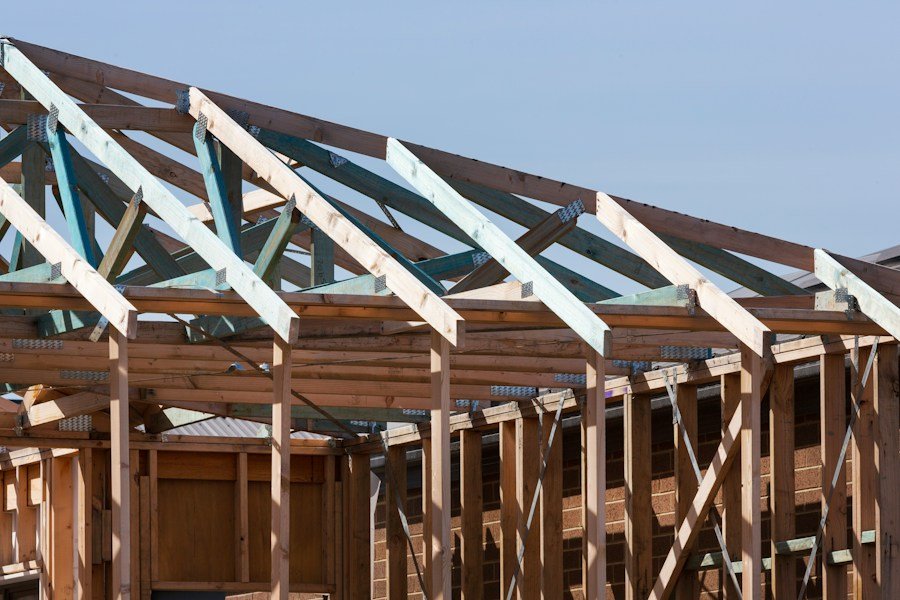
Spring is when winter damage becomes visible. After the last nor’easters, look for missing or lifted shingles and loose ridge caps on bay-facing slopes in Brick, Toms River, Berkeley and Lacey. On the islands, check drip edge and vent caps for rust and looseness before the summer season. In Jackson, Manchester and Plumsted, clear pine needles from valleys and gutters, since they pack down over winter and hold water against the roof. Adult community residents should report any interior stains to the association in writing, with photos, so repairs can be scheduled before summer storms. If you own a shore rental, spring is the time to book repairs, because summer traffic and parking make island work slower. Book an inspection if your roof is fifteen years or older, before the busy summer schedule fills up.
Summer brings heat, humidity, thunderstorms and the start of hurricane season. Attics in one-story ranches and adult community homes get very hot, which shortens shingle life if soffit and ridge vents are blocked, so check that insulation is clear of the vents. Summer thunderstorms over the Pine Barrens can produce strong gusts and falling limbs, as the June 2012 derecho showed, so trim branches hanging over the roof. On Long Beach Island and the northern barrier island, salt and sun are hard on sealants and flashing; look for cracked caulk at roof penetrations. Many island towns limit construction noise and hours in summer, so non-urgent work is easier in June or after Labor Day. Keep a tarp plan in mind in case a tropical storm approaches, and photograph your roof now so you have a before picture.
Fall preparation is the most important roof work of the year in Ocean County. Nor’easter season usually begins in October, and oak leaves and pine needles fill gutters by November in Jackson, Toms River, Lakewood and Manchester. Clean gutters after the leaves drop and make sure downspouts direct water away from foundations, especially on slab ranches. Check pipe boots, skylights and chimney flashing, which are the most common winter leak points. On bayside and lagoon homes, secure loose flashing and edge metal before the first coastal storm. Fall is also a good time to replace a failing roof, since mild temperatures help new shingles seal. If you live in an HOA, submit requests early, because boards may meet only monthly and approval can take several weeks, which pushes work into colder weather.
Winter in Ocean County means coastal storms at the shore and colder, frostier nights inland. After a nor’easter, look for shingles in the yard and check the attic for wet spots, especially in island and bayfront homes in Seaside Park, Lavallette, Brick and Stafford. Inland in Jackson, Lakehurst and Plumsted, cold Pine Barrens nights cause attic frost and condensation, which can drip and look like a leak; good ventilation and sealed attic bypasses help. Heavy, wet snow like the January 2016 storm loads low-slope porches and additions and creates ice dams at the eaves. Use a roof rake from the ground and never chip ice. If water comes in, place a bucket, take photos and send an emergency request through our contact page, and keep receipts for any temporary protection.
In depth
Ocean County Roofing Questions Most Contractors Skip
Roofs in adult communities and HOAs
In Ocean County’s adult communities and HOAs, the association usually decides who repairs the roof, which materials are allowed, and when the work can happen, so check the documents before hiring anyone. Manchester’s Whiting section alone holds Crestwood Village, Leisure Village West, Leisure Knoll and Pine Ridge at Crestwood, and similar communities fill parts of Berkeley, Toms River, Jackson, Lakewood and Barnegat.
Many of these homes are one-story ranches or attached units from the 1970s and 1980s. Their roofs are often low-pitch, which means water drains slowly and leaks spread before they show inside. Common problems are rotted plywood at the eaves, cracked pipe boots, failed vent flashing and poor attic ventilation.
Responsibility varies. Some associations handle the entire roof as a common element; others leave it to each owner but require approval of color and brand. Some have approved contractor lists. Attached units also need a building permit for reroofing, because New Jersey’s ordinary maintenance exemption covers only detached one- and two-family homes.
Practical steps for residents: report leaks in writing with photos, keep copies, ask whether the master insurance policy covers the roof, and ask what approvals are needed before any repair. When the owner is responsible, we provide a written quote and photo report that the board can review. Our workmanship warranty is 2 years on repairs and 10 years on replacements, in writing, which boards often ask to see. Managers of multi-building communities can ask for one inspection covering every building.
Flood zones, elevation and the 50 percent rule
If your Ocean County home is in a FEMA flood zone, storm repairs and improvements worth 50 percent or more of the building’s market value can require the whole house to be brought up to flood standards, usually by elevation. Thousands of owners on the barrier island, Long Beach Island and lagoon neighbourhoods went through this after Sandy, which the National Hurricane Center describes as catastrophic for Mantoloking, Seaside Heights and LBI.
Roofing work by itself rarely reaches the 50 percent threshold. But after a major storm, roof repair is often combined with interior, electrical and mechanical work, and the total can cross the line. The municipal floodplain administrator, working with the construction official, decides whether a building is substantially damaged. Keep separate, itemized estimates for roof work and for flood-related work, because the roof portion is often a homeowners insurance claim while the flood portion falls under flood insurance.
Elevated homes also change roof work. Lifting a house puts the roof higher into the wind, and decks, rooftop HVAC and solar on raised homes add penetrations. We pay special attention to edge metal, starter course and ridge vent fastening, and we use corrosion-resistant fasteners and flashing for salt exposure.
If you are buying a raised home in Ortley Beach, Brick’s lagoons, Beach Haven West or Mystic Island, an inspection with photos can show whether the roof was replaced when the house was lifted or kept from before. For storm-related work, see storm damage roof repair in Ocean County.
Repair or replace an Ocean County ranch roof?
For the thousands of Ocean County ranches, capes and split-levels built in the 1960s and 1970s, the repair-or-replace choice usually comes down to layer count, deck condition and the age of the current shingles. Ocean County Planning counts about 58,000 homes from the 1970s and about 38,000 from the 1960s, many in Toms River, Brick, Berkeley, Manchester and Lacey.
Start by counting layers at the eave. New Jersey permits a maximum of two roof layers. Many of these homes already have two, so the next roof must be a full tear-off. That makes targeted repairs attractive if the top layer still has years left.
Repair makes sense when the leak has a single source, such as an old metal vent stack, a pipe boot or chimney flashing, and the shingles are not curling or shedding granules across the roof. Replacement makes sense when shingles are failing across whole slopes, when the deck is soft at the eaves, or when you have several leaks at once.
Low-slope roofs need special care. Many ranches and adult community homes have pitches close to the minimum for shingles, and some rear additions are below it, where shingles should not be used at all. A good replacement here adds ice and water shield over more of the roof and proper low-slope material on the additions.
We give you both options in writing with photos. Start with a roof inspection in Ocean County; owners just north in Wall or Manasquan can see our Monmouth County roof repair page.
Barrier island and LBI roofs
Roofs on Long Beach Island and the northern barrier island from Bay Head to Seaside Park need corrosion-resistant materials, strong edge details and careful scheduling around the summer season. These homes take salt spray, full sun and wind from the ocean and the bay, and many were rebuilt or raised after Sandy.
Fasteners and flashing come first. Standard electro-galvanized nails and steel flashing rust quickly in salt air. We use stainless or hot-dipped galvanized fasteners and aluminum or copper flashing, and avoid mixing metals that cause galvanic corrosion. Ridge vents, plumbing vents and exhaust caps should be corrosion-resistant too.
Wind is the second factor. Raised homes put roofs higher into the wind. Eaves, rakes and ridges take the most uplift, so starter strips, sealed rake edges and well-fastened drip edge matter. Many island homes have hip roofs, which handle wind well, but also roof decks and rooftop condensers that add penetrations and leak risk.
Access is the third. Summer traffic, limited parking, beach-block lots and town rules on summer construction can slow work. We plan island repairs for spring and fall where possible, while emergency repairs happen whenever they are needed.
For owners who rent their homes, scheduling an inspection before Memorial Day and after Labor Day catches problems before guests or storms find them. Shore homeowners further south can read our Atlantic County roof repair page for Brigantine and Absecon Island conditions.
Pinelands homes: pines, sandy soil and attic moisture
Homes in Ocean County’s Pinelands towns, such as Jackson, Manchester, Lakehurst, Plumsted and the inland parts of Lacey, Barnegat and Stafford, face roof problems driven by trees, sandy soil and cold nights. The NJ Pinelands Commission lists 14 Ocean County municipalities wholly or partly in the Pinelands.
Pitch pines and oaks drop needles and leaves all year. Pine needles pack tightly in valleys and gutters, holding water against shingles and the deck edge, which leads to rot and leaks. Shade and moisture also grow moss and algae on north slopes. Regular gutter and valley cleaning is the cheapest roof maintenance in these towns.
The Rutgers state climate office notes that the Pine Barrens’ sandy soils produce low nighttime temperatures. Cold, clear nights cause frost on the underside of roof decks in poorly ventilated attics. When it melts, the water drips onto insulation and ceilings and is often mistaken for a roof leak. The fix is balanced ventilation and sealing air leaks from the living space into the attic; new shingles will not stop it.
Tall pines also fall during thunderstorms and derechos. After a tree strike, the deck and rafters need inspection, and structural repairs require a permit. As for Pinelands rules, routine repair of an existing roof generally does not require a Pinelands application, while additions and new buildings may; check the Commission’s exemption guidance. Homes further west near Burlington County are covered on our Burlington County roof repair page.
Choosing a roofer in Ocean County after a storm
After a big storm in Ocean County, choose a roofer who is registered in New Jersey, gives you a written contract and shows you photos of the actual damage before asking for money. Every home improvement contractor in the state must register with the Division of Consumer Affairs; the number starts with 13VH, and you can check it at the state license lookup. Registration requires at least $500,000 in commercial general liability insurance.
New Jersey law, N.J.S.A. 56:8-151, requires home improvement contracts to be written and signed, with the contractor’s legal name, business address, registration number, total price and insurance certificate, plus a three-business-day right to cancel.
Ocean County’s shore towns saw many out-of-area crews after Sandy. Warning signs include large deposits before materials arrive, pressure to sign the same day, offers to cover your deductible, and claims that the whole roof must be replaced without photos.
Ask local questions: Does the contractor know your HOA’s approval process? Do they use corrosion-resistant fasteners on island homes? Will they check whether your attached unit needs a permit? Can they separate roof damage from flood damage for your insurer? A good roofer answers those clearly. We do that during a free inspection with photos, and you can learn more about our roof repair NJ service area.
FAQ
Roof Repair in Ocean County, NJ: Frequently Asked Questions
Do I need a permit for roof repair in Ocean County?
Not for most repairs on a detached one- or two-family home, which New Jersey treats as ordinary maintenance. You do need a permit for deck or structural work, a third layer, townhomes, condos, attached adult community units and commercial buildings. HOAs may also require written approval.
How much does roof repair cost in Ocean County?
As of November 2026, most repairs range from about $350 to $2,500. Small shingle or vent fixes run $350 to $800, a single leak $400 to $1,500, and flat roof patches $400 to $2,500. Elevated beach houses, salt-zone materials and HOA requirements raise costs.
Who fixes the roof in an Ocean County adult community?
It depends on your community’s governing documents. Some associations maintain all roofs as common elements, while others make each owner responsible but require approval of materials and colors. Report leaks in writing with photos and confirm responsibility before hiring a roofer.
Does the 50 percent flood rule apply to roof repairs?
It can. In a FEMA flood zone, if storm damage or improvements reach 50 percent of the home’s market value, the building may need to meet flood standards. Roof work alone rarely reaches that level, but combined repairs can. The municipal floodplain administrator makes the decision.
Is roof damage from Barnegat Bay flooding covered by insurance?
Flood water damage is covered only by a separate flood insurance policy. Wind damage to shingles, falling trees and ice weight are usually covered by homeowners insurance. Shore policies often have a separate wind deductible. Your policy and agent have the final word.
Do Pinelands rules affect roof repairs in Ocean County?
Usually not for routine repair or replacement of an existing roof. Fourteen Ocean County towns are wholly or partly in the Pinelands, and additions or new structures there may need Pinelands review. Check the Pinelands Commission’s application exemption guidance or your town for a specific project.
What roofing materials work best on Long Beach Island?
Use corrosion-resistant fasteners such as stainless or hot-dipped galvanized nails, aluminum or copper flashing, and shingles or metal panels with high wind ratings installed to the manufacturer’s high-wind method. Sealed rake edges and secure drip edge matter on raised homes exposed to ocean and bay wind.
Why does my Jackson or Manchester attic drip in winter?
Often the cause is frost. Cold Pine Barrens nights cause moisture from the house to freeze on the underside of the roof deck, then drip when it thaws. Better attic ventilation and sealing air leaks from the living space usually fix it.
How long do roofs last in Ocean County?
Architectural shingles typically last about 20 to 30 years here, less on barrier islands where salt and wind work on fasteners and edges. Low-slope ranch roofs and pine-shaded roofs may wear faster at eaves and valleys if gutters and attic ventilation are neglected.
How do I get a free roof inspection in Ocean County?
Request one through the Roof Repair SNJ contact page with your town and a short description or photos. We inspect the roof, take dated photos, explain what we find, and give you a written itemized quote with no obligation to proceed.
Reviewed by the Roof Repair SNJ team · Last updated November 2026
Nearby
Roof Repair Near Ocean County
We also work in the counties next to Ocean County. See every county we serve on our New Jersey service areas page, or start from our roof repair NJ homepage.
Free inspection
Book a Free Roof Inspection in Ocean County
From a lifted ranch in Brick to an adult community home in Whiting or a raised beach house in Ship Bottom, start with a free inspection, dated photos and a written quote. Request your Ocean County roof inspection or send us photos of the damage. No pressure and no obligation, just clear answers about your roof.
No pressure and no obligation. If a repair will do, we’ll tell you.
Roof Repair SNJ
- Serving all 33 Ocean County towns
- Request roof service in Ocean County
- Mon–Fri 5:00 AM–10:00 PM · Sat 5:00 AM–6:00 PM · Emergencies 24/7
Sources: N.J.A.C. 5:23-2.7 Ordinary maintenance (Cornell LII) · N.J.S.A. 56:8-151 Home improvement contracts (Justia) · NJ Division of Consumer Affairs license verification · Ocean County Dept. of Planning: Housing units by year structure built (ACS 2018-2022) · Stacker: Counties with the oldest homes in New Jersey (Census ACS 2023) · National Hurricane Center, Tropical Cyclone Report: Hurricane Sandy · National Hurricane Center, Tropical Cyclone Report: Hurricane Irene · June 2012 North American derecho (Wikipedia) · January 2016 United States blizzard (Wikipedia) · NJ Pinelands Commission: Pinelands municipalities · NJ Pinelands Commission: Application guidance and exemptions · Manchester Township, New Jersey (Wikipedia) · Office of the NJ State Climatologist, Rutgers: Climate overview · FEMA: Substantial improvement and substantial damage · Roof Observations: New Jersey roof cost guide (Jan 2026) · Fixr: Roof replacement cost in New Jersey (2026). Prices are planning ranges, not quotes. Permit and insurance information is general guidance; your town, policy and agent have the final word.