
Roof Repair NJ › NJ Locations › Ocean County › Toms River
Ortley Beach · Silverton · Holiday City · 08753
Roof Repair in Toms River, NJ: Ortley Beach to West Dover
Roof Repair SNJ fixes leaks, storm damage and worn roofs across Toms River, from raised homes in Ortley Beach and the North Beaches to Silverton bay houses, Holiday City and the 1960s ranches of West Dover. Every visit starts with a free inspection with dated photos, then a written itemized quote that separates storm damage from age wear.
- Barrier island, bayfront and inland roofs covered
- Free inspection with dated photos
- Written warranty: 2 years repairs, 10 replacements
Free roof inspection in Toms River
Photos of every problem we find and an itemized written price before any work. Emergency requests handled 24/7.
Roof Repair SNJ
Toms River · Ocean County · all 21 NJ counties
Free inspection
Roof, attic and gutters checked at no cost.
Insured
Liability and workers’ comp; certificate on request.
Written quotes
Itemized price in writing before any work.
Photo-documented
Every problem photographed, before and after.
Toms River at a glance
Toms River Roofs at a Glance
Toms River is the county seat and a township of about 100,000 people whose roofs fall into three groups: rebuilt and raised houses on the barrier island, flood-exposed homes around Barnegat Bay and the Toms River, and a huge inland stock of 1960s and 1970s houses. Each group fails in its own way, which is why we inspect before we price anything.
Population
95,438 (2020)
The 2020 Census counted 95,438 residents, and the Census Bureau’s 2024 American Community Survey puts the township near 99,900, making it Ocean County’s second-largest municipality after Lakewood.
Housing units
About 45,000 to 47,000
Ocean County Planning counts 45,442 units from 2018 to 2022 survey data, about 80 percent of them detached single-family houses, with 1,922 attached units and 1,496 mobile homes.
Biggest build decade
1960s
The county’s table shows 8,538 Toms River homes built in the 1960s and 8,227 in the 1970s, more than any other Ocean County town in those decades, so many decks are now 50 to 60 years old.
Median home value
$457,200
The 2024 American Community Survey puts the median owner-occupied value at $457,200, which shapes many repair-or-replace decisions on ranches and split-levels across the mainland.
Water and wetlands
23% of area
Of the township’s 52.9 square miles, about 12.3 are water, from Barnegat Bay to the Toms River itself, so a large share of homes sit near tidal flooding and open-water wind.
Sandy displacement
5,000+ residents
Township officials estimated in November 2012 that more than 5,000 residents were displaced, about 3,000 of them from Ortley Beach, and roughly 9,000 properties were affected.
Neighborhoods & homes
Toms River Neighborhoods and the Roofs on Them
Toms River runs from the Atlantic beaches of Ortley to Pinelands-edge subdivisions west of the Parkway, and the roof on a house usually tells you which side of the bay it sits on. These are the sections we see most often and what tends to go wrong in each.
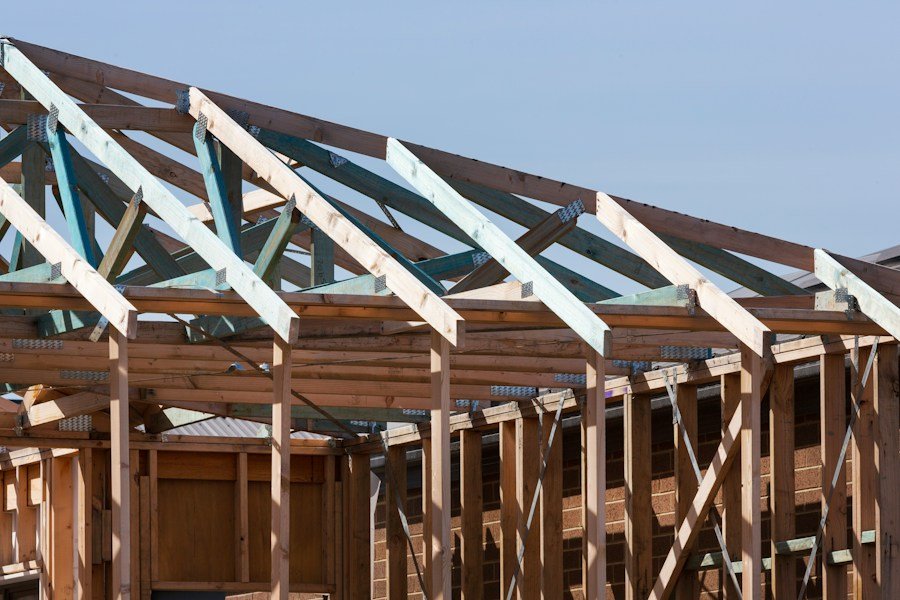
Ortley Beach (08751)
Ortley Beach shares its ZIP code with Seaside Heights and lost about 225 homes that were destroyed or left uninhabitable in Sandy. Much of what stands now is rebuilt or lifted onto pilings, so roofs are high, exposed on every side and often topped by low-slope decks with rails and drains. We see failing deck membranes, loose ridge caps, rusted nails in older surviving cottages and leaks where stair towers meet the main roof.
North Beaches: Normandy, Chadwick, Ocean and Silver Beach
The Dover Beaches North section, about 1,300 year-round residents between Lavallette and Brick’s beachfront, mixes small seasonal cottages with tall raised rebuilds. Ocean-block houses take salt spray directly, and bay-block homes take the west wind off Barnegat Bay. Typical calls are lifted shingles on windward slopes, corroded drip edge, failed pipe boots and skylights that leaked through a winter while the owner was away.
Silverton and Cattus Island
Silverton sits on the bay near Cattus Island County Park and had its worst flooding on record in Sandy, along with downtown. Ranches, capes and lagoon homes here range from original 1950s and 1960s houses to elevated rebuilds. Bay wind works on rakes and ridge vents, salt pits exhaust hoods and flashing, and many owners juggle roof work with flood-zone paperwork from earlier storm repairs.
Holiday City and the adult communities
Holiday City Phase I and Phase II along Yorktowne Boulevard are the best-known Toms River adult communities, with neighbours such as Greenbriar Woodlands, Gardens of Pleasant Plains, Lake Ridge, Dover Walk and Shenandoah Commons. Most homes are one-story with low-pitch roofs and long eaves. We fix rotted fascia, worn three-tab shingles near the end of a second life, sunroom roof seams and bathroom fans vented into the attic.
Downtown and the Old Village
Around Washington Street, Huddy Park and East Water Street, the Old Village holds 19th-century frame houses listed on the National Register, near the county courthouse. These steeper roofs carry chimneys, dormers and sometimes old wood or slate under later shingles. Leaks start at chimney counter flashing, box gutters and dormer cheeks, and older framing needs gentler handling than a subdivision ranch.
Gilford Park, Shelter Cove and Bay Shore
These bayside neighbourhoods are full of mid-century capes, ranches and lagoon houses with docks and bulkheads out back. Many have seen several reroofs and at least one addition, so we often find two roof systems meeting at a poorly flashed joint. Salt air rusts fasteners and vent caps faster than inland, and low back additions with flat or near-flat roofs pond water after heavy rain.
West Dover, North Dover, East Dover and Pleasant Plains
The inland mainland is where the township’s 1960s and 1970s building boom lives: split-levels, ranches and bi-levels on wooded lots, plus later colonials toward the Parkway. Many are on a second shingle layer over original plank or early plywood decks. Oak and pine limbs, pine needles packed in valleys and soft sheathing at the eaves are the usual problems here.
What we fix in Toms River
What Roof Problems Are Most Common in Toms River?
The most common Toms River roof problems are worn second-layer shingles on 1960s and 1970s houses, wind and deck leaks on raised island homes, and salt corrosion on anything near the bay or ocean. The six below account for most of the calls we take from the township.
Tired second layers on boom-era houses
With more than 16,700 Toms River homes built in the 1960s and 1970s, a large share now carry a second layer of shingles laid over the first. Two layers trap heat, hide soft decking and make every repair heavier. The code caps a roof at two layers, so the next job on many West Dover and North Dover houses is a full tear-off, and we price the deck repair honestly before it starts.
Wind exposure on raised homes
Lifting an Ortley Beach or Silverton house ten feet or more puts the roof into stronger, steadier wind than the original cottage ever saw. Shingle edges, rake trim and ridge caps take the load first. We check whether starter strips and edge metal were installed for coastal wind, because many lifted homes kept an older roof that was never meant to sit that high.
Salt corrosion at the bay and beach
On the barrier island and along Shelter Cove, Gilford Park and Silverton lagoons, salt air eats galvanized nails, steel drip edge, exhaust caps and flashing in a fraction of their inland life. Rust streaks below vents and pinholes in step flashing are common findings. Stainless or hot-dipped fasteners and aluminum or coated edge metal make repairs last longer near Barnegat Bay.
Low-pitch roofs in adult communities
Holiday City and similar communities were built with gentle roof slopes, so water moves slowly and wind-driven rain gets under shingle laps. Add sunrooms and screened porches with near-flat roofs, and the joints between them become the leak. Association rules on colour and material apply, and attached units need a permit, so we plan these jobs with the community’s paperwork in mind.
Manufactured and mobile home roofs
Toms River has about 1,500 mobile homes, including parks such as Homestead Run, Raymore on Route 70 and Roberts on Route 9. Their roofs are often thin metal or low-slope coverings that leak at seams, vent stacks and around add-on rooms. Repairs usually mean resealing seams, replacing vent flashings or adding a properly framed roof-over, all checked against park rules first.
Tree debris on wooded inland lots
West of the Parkway and toward Pleasant Plains, tall oaks and pitch pines stand close to roofs. Pine needles pack valleys and gutters, hold moisture against shingles and push water sideways under them. Summer thunderstorms bring down limbs that crack shingles or punch through older decking. Regular valley and gutter cleaning, plus pruning branches back from the eaves, prevents much of it.
Toms River weather
Storms and Weather That Damage Toms River Roofs
Toms River roofs are shaped by tropical storms and surge from the ocean side, nor’easters off Barnegat Bay, summer thunderstorms and the occasional heavy snow. These events and patterns explain most of the storm damage we document in the township.
Superstorm Sandy, October 29, 2012
Sandy pushed the bay into Silverton and downtown Toms River, causing the worst flooding those areas had seen, and wrecked the barrier island. About 225 Ortley Beach homes were destroyed or unlivable and roughly 9,000 properties township-wide were affected. Many surviving roofs lost shingles and edge metal, and the rebuild that followed produced the raised homes and newer roofs that now line the island.
June 2012 derecho
In the small hours of June 30, 2012, a fast line of derecho storms swept from Pennsylvania to the Shore, and Tuckerton, south of Toms River, logged an 81 mph gust. Inland neighbourhoods with mature oaks and pines took falling limbs on roofs, and many homes lost tabs and ridge caps. It remains a good example of how fast summer wind can damage roofs far from the beach.
Nor’easters off Barnegat Bay
Most winters bring at least one strong nor’easter that drives rain sideways for a day or more from the northeast. In Toms River that wind crosses open bay before reaching Silverton, Shelter Cove and the island, so it finds weak spots in rake edges, ridge vents and chimney flashing. Leaks that appear only in a nor’easter usually trace to wind-driven water, not a hole.
February 22 to 23, 2026 blizzard
The February 2026 blizzard put all of New Jersey under blizzard warnings and a statewide travel ban, with more than two feet of snow in parts of the eastern state and gusts near 60 mph on the coast. In Toms River, drifted snow on low-pitch roofs and ice at gutters brought spring calls for lifted shingles, ice-dam leaks and bent gutters.
Summer thunderstorms and sea-breeze storms
On hot afternoons, storms often form along the sea-breeze line and strengthen over the mainland. They bring short bursts of strong wind, hail now and then, and heavy rain that overwhelms gutters packed with pine needles. In wooded parts of the township these storms are the main cause of tree-on-roof claims, and a quick check after each one catches problems early.
Roofing services
Roof Repair Services We Provide in Toms River
We handle every common roof repair in Toms River, from a single pipe boot in Holiday City to a full tear-off on a raised Ortley Beach home. Each service below is described the way it usually applies in the township.
Roof Leak Repair in Toms River
Most Toms River leaks we trace start at pipe boots, chimney flashing on 1960s ranches, or deck drains and stair towers on raised island homes. We find the actual entry point with photos, fix that, and tell you whether the rest of the roof is near the end of its life.
Emergency Roof Repair in Toms River
When a limb comes through a West Dover roof or a nor’easter strips shingles in Ortley Beach, use the contact page to flag it as an emergency, day or night. A crew covers the opening, records the damage on camera for your insurer, and books the lasting fix once weather allows.
Storm Damage Roof Repair in Toms River
After a nor’easter or tropical storm we document wind damage slope by slope, separate it from age wear and flood damage, and give you an itemized repair quote. That matters in Toms River, where many island and bayfront homes carry separate wind deductibles and flood files.
Roof Replacement in Toms River
Replacements here are often first tear-offs on 1960s and 1970s houses that already carry two layers, or high roofs on raised homes that need coastal-rated edge metal and fasteners. Detached homes usually need no permit for covering work; deck replacement and attached units do.
Roof Inspection in Toms River
A free inspection gives you dated photos of each slope, the attic and the flashing, plus an honest age estimate. Toms River buyers often request one before closing on a Holiday City home or an island property, and absentee owners use one before summer rentals begin.
Flat Roof Repair in Toms River
Flat and low-slope roofs in Toms River include rooftop decks on raised homes, rear additions in Gilford Park and Shelter Cove, sunrooms in adult communities, and commercial buildings along Route 37. We patch seams, replace failed membrane sections and fix drains and scuppers.
Metal Roof Repair in Toms River
We repair standing-seam metal on newer island homes and porch roofs, and the thin metal roofs common on manufactured homes in the township’s parks. Most work is resealing seams, replacing corroded fasteners with stainless ones and fixing flashing at vents and walls.
Slate Roof Repair in Toms River
Slate is rare in Toms River, but a few older houses in the Old Village near East Water Street and Washington Street still have slate or have slate under later layers. We replace broken slates with matched pieces and repair flashing without walking the roof hard.
Shingle Roof Repair in Toms River
Asphalt shingles cover most Toms River homes. We replace blown-off tabs, reseal lifted edges, swap cracked ridge caps and match colours as closely as current products allow. On older three-tab roofs we tell you plainly when patching is no longer worth the money.
Roof Cleaning in Toms River
Shaded inland lots near the Pinelands edge grow moss and algae on north slopes, and island roofs collect salt film. We clean with low-pressure methods that protect shingle granules, then clear valleys of pine needles so water drains the way it should.
Gutter Repair in Toms River
Pine needles and oak leaves fill Toms River gutters fast, and salt air corrodes steel hangers near the bay. We clean and rehang gutters, fix leaking seams and downspouts, and repair the fascia and drip edge behind them, which often rot first.
Commercial Roofing in Toms River
We repair low-slope roofs on shops, offices and medical buildings along Route 37, Hooper Avenue and Route 9, and on mixed-use buildings downtown. Typical work is TPO or modified bitumen seam repair, rooftop unit curbs, coping and drain maintenance.
Toms River rules
Toms River Roof Permits, Flood Rules and Community Approvals
Permits & local review
Reroofing a detached one- or two-family house in Toms River usually needs no permit, because New Jersey treats roof covering repair and replacement as ordinary maintenance under N.J.A.C. 5:23-2.7. A permit from the township’s Building Department, part of Community Development, is still required for sheathing or deck replacement, rafter and truss work, a third layer, and any attached townhome, condo unit or commercial building.
Flood rules matter more here than in most towns. After Sandy, Toms River made hundreds of substantial-damage determinations, where repair costs reached half a home’s value and the house had to meet current flood standards, usually by elevation. The township later reopened appeals of those determinations, and in 2013 the council waived the 35-foot height limit for Sandy-damaged homes raised to FEMA guidelines. If your home is in a mapped flood zone and storm repairs are large, ask the floodplain manager how roof costs count before work begins.
The township has a Historic Preservation Commission, created in 2004, and the Old Village holds National Register houses on East Water Street. Ask about review before changing materials there. Holiday City and other adult communities require association approval, and the western township lies partly in the Pinelands.
Insurance claims
In Toms River the key insurance question is wind or water: shingles torn off by wind go to your homeowners policy, while bay or ocean water entering the house goes to flood insurance. Owners in Ortley Beach and Silverton learned that split in 2012, and it still drives claims after every major storm.
Policies on island and bayfront homes often carry a separate hurricane or named-storm deductible set as a percentage of the dwelling limit. Inland, the common claim is a tree or limb on the roof after a thunderstorm. Wear, old age, rot and rusted flashing are usually excluded. In adult communities the association’s policy may cover part of the roof, so check your documents. We supply dated photos and a written description separating storm damage from age wear. Your policy and your agent have the final word.
Pricing · updated November 2026
How Much Does Roof Repair Cost in Toms River?
As of November 2026, most Toms River roof repairs fall between $350 and $2,500, and full replacements on a typical ranch or split-level often land between $8,500 and $17,000. Raised island homes, decking replacement and coastal-rated materials push costs higher, as the factors below explain. For a statewide breakdown, see our roof repair cost guide.
Minor shingle repair
$350 – $800
Replacing a handful of blown-off or cracked shingles and resealing lifted edges, a common fix on West Dover ranches and North Beaches cottages after a windy week.
Pipe boot or vent flashing
$250 – $600
New pipe boots or vent flashing, often with stainless fasteners on homes near the bay where salt has cracked or rusted the original parts.
Single-source leak repair
$400 – $1,500
Tracing and fixing one leak, such as a chimney on a 1960s split-level or a stair-tower joint on a raised Ortley Beach house, with photos of the finished repair.
Chimney re-flashing
$600 – $1,800
New step and counter flashing around a chimney, typical on older homes in the Old Village and on mid-century capes in Gilford Park and Shelter Cove.
Flat roof patch or seam repair
$400 – $2,500
Membrane seam repair or section replacement on rooftop decks, rear additions or sunrooms, including Holiday City porch roofs and bayside lagoon home additions.
Emergency tarp
$300 – $1,200
Temporary tarping after a tree strike or storm, sized to the opening, with dated photos for your claim. Raised homes on the island often sit at the upper end.
What moves the price in Toms River
- Height of raised homes. Roofs on lifted Ortley Beach and Silverton houses need taller ladders, lifts or extra staging, which adds labour time.
- Two existing layers. Many 1960s and 1970s houses already carry two layers, so the next job includes full tear-off and disposal.
- Deck condition. Original plank or early plywood decks on boom-era homes often need sections replaced once the old roofing is off; we price this per sheet in writing.
- Coastal materials. Stainless fasteners, coated edge metal and high-wind shingle installation cost more and are worth it near the bay and beach.
- Rooftop decks and stair towers. Low-slope decks with rails and drains take more detailing than a plain gable roof.
- Association requirements. Holiday City and other communities may set colours and materials and need written approval, which affects scheduling.
- Summer traffic and access. Route 37 and Route 35 traffic in season and tight island lots slow deliveries and dumpster placement.
- Permits for attached homes. Townhomes, condos and deck replacement need a permit and inspection, which adds fees and time.
Toms River figures above are budgeting guides, not quotes. They combine our own repair ranges with the Roof Observations New Jersey cost guide (January 2026) and Fixr’s 2026 statewide replacement figures; the written quote that follows your free inspection is the only binding number.
Who does the work
Why Toms River Homeowners Choose Roof Repair SNJ
- Repairing NJ roofs for 25+ years
- General liability + workers’ comp insurance
- Workmanship warranty: 2 years on repairs, 10 years on full replacements, in writing
- Photo report with every inspection
Check any roofer before you sign in Toms River
Ask for the 13VH registration number and confirm it on the NJ license lookup. NJ law requires a signed written contract showing the registration number and total price, and gives you until midnight of the third business day to cancel (N.J.S.A. 56:8-151).
Nearby
Roof Repair Near Toms River: How Neighbouring Towns Differ
We also work in the towns around Toms River, and their roofs differ in age, exposure and rules. For our full Ocean County coverage see roof repair in Ocean County, or our pages for roof repair in Brick Township and roof repair in Lakewood.
Brick Township
Brick, just north of Toms River along Route 70 and the bay, has more 1970s and 1980s houses than Toms River and many lagoon neighbourhoods on the Metedeconk River. Its own adult communities, such as Greenbriar and Lions Head, have different association rules from Holiday City.
Berkeley Township
Berkeley, across the Toms River to the south, covers Bayville and large adult communities on the mainland plus South Seaside Park on the island. Its roofs are similar in age to Toms River’s, with more pine exposure on the western side.
Island Heights and Ocean Gate
These small boroughs on the river have older shore cottages and Victorian-era houses on tight lots, with steeper roofs and more chimney and dormer flashing work than the typical Toms River subdivision.
Seaside Heights and Lavallette
The island neighbours of Ortley Beach have dense rentals, motels and raised homes. Roofs are exposed to the same salt and wind, and season-driven scheduling is even tighter there because most owners rent all summer.
Lakewood and Jackson
To the northwest, Lakewood and Jackson are inland with no salt exposure, newer housing in many sections and more tree cover. Roof issues there lean toward attached-home permits, early flashing failures and storm-felled trees.
In depth
Toms River Roofing Questions, Answered in Depth
Reroofing a raised home in Ortley Beach or the North Beaches
A raised island home needs a roof built for higher, steadier wind, and the job takes more planning than a mainland reroof. Many Ortley Beach houses were lifted after Sandy with their existing roofs left in place, and others were rebuilt from the pilings up. Either way the roof now sits one or two storeys higher than the cottage that once stood on the lot.
What changes at that height: wind loads at eaves, rakes and ridges rise, so we use high-wind nailing patterns, sealed starter courses along every edge and coated or aluminum drip edge with stainless fasteners. Ridge vents need baffles that resist wind-driven rain, and exhaust caps should be corrosion-resistant. Low-slope rooftop decks need membrane flashed up the walls and around each rail post, with drains or scuppers that can handle a nor’easter downpour.
Access is the other half. Island lots are narrow, the house next door is often a few feet away, and summer traffic on Route 35 slows deliveries. We stage materials carefully and protect neighbouring siding and cars. Most owners want the work finished between October and May, before summer renters or family arrive, so booking in the fall gives the most flexibility.
Paperwork matters too. Re-covering a detached home is ordinary maintenance with no permit, but replacing sheathing or working on an attached unit needs one. If your house was the subject of a substantial-damage determination after Sandy, keep those records handy, because they help explain the structure’s history to an inspector or buyer. We give you photos of every stage, from tear-off to final ridge cap, so you can see the work even if you are not on the island while it happens.
Holiday City roofs: repair, replace and work with the association
Most Holiday City homes have one-story, low-pitch roofs that are on their second or third covering, and the association’s rules shape what you can install. Holiday City Phase I and Phase II, on Yorktowne Boulevard, are listed by Ocean County Planning among the township’s adult communities, along with Greenbriar Woodlands, Gardens of Pleasant Plains, Lake Ridge, Dover Walk and Shenandoah Commons.
Low-pitch roofs shed water slowly. Wind-driven rain can slip under shingle laps, and ice can back up at the eaves after a cold snap. When we replace these roofs, we install ice and water shield along the eaves and in valleys, and we pay special attention to sunrooms, enclosed porches and carports, whose flatter roofs often meet the main roof at a weak joint. Bathroom and kitchen fans should vent outside through proper roof or soffit vents, not into the attic, where they cause mould and rotted sheathing.
Before starting, check three things. First, the association’s architectural rules: many communities set approved shingle colours or require written approval before a reroof. Second, whether your home is detached or attached; attached units need a construction permit even for re-covering. Third, insurance: in some communities the master policy covers parts of the exterior, so a storm claim may run through the association.
Repair or replace? If the roof is more than about 20 years old, has curled or cracked shingles on several slopes, or already has two layers, replacement is usually better value than repeated patching. If damage is limited to one slope after a storm, a matched repair often works. We give you photos and a written opinion either way, and we are happy to send the association the same documents.
Repair or replace a 1960s split-level in West Dover or North Dover
Many Toms River split-levels and ranches from the 1960s and 1970s are on their second shingle layer, so the next major job is usually a full tear-off with some deck repair. Ocean County Planning counts more than 16,700 township homes built in those two decades, more than any other town in the county, and most were roofed with materials that have since been replaced at least once.
Signs that repair still makes sense: the roof is under about 15 years old, the leak traces to one flashing point such as a chimney, skylight or pipe boot, and the shingles still lie flat with most of their granules. A targeted repair in that case often buys years of service for a few hundred dollars.
Signs that replacement is due: two layers already on the roof, widespread curling or cracking, repeated leaks in different places, sagging between rafters, or a spongy feel near the eaves. Split-levels add a special weak point where the lower roof meets the upper wall; if that step flashing and kickout were never done right, water rots the wall sheathing behind the siding.
A tear-off lets us see the deck. Older houses may have board sheathing with gaps or early plywood that has delaminated around vents and eaves. Replacing sheathing requires a construction permit, and we include that and a per-sheet price in the written quote so there are no surprises. We also correct attic ventilation, which on many boom-era houses is limited to a couple of gable vents, by adding a balanced intake and ridge vent system. That keeps the new roof cooler in summer and reduces ice at the eaves in winter, and it is one of the cheapest ways to extend a Toms River roof’s life.
After a nor’easter in Silverton or Shelter Cove: wind claim, flood claim or both
When a storm brings both wind and high water to a Toms River bayfront home, the roof damage is usually a homeowners claim and the water inside is usually a flood claim, and each needs its own evidence. Silverton and downtown saw their worst flooding on record in Sandy, and nor’easters still push the bay into lagoon streets several times a decade.
Start with safety and a temporary fix. If shingles are gone or a limb is on the roof, a tarp prevents more interior damage and shows your insurer you acted to limit losses. Take your own photos before any cleanup, both outside and inside.
Then separate the two kinds of damage. Missing shingles, lifted ridge caps, torn flashing and a punctured deck from a fallen limb are wind damage. Water lines on walls, soaked flooring and ruined lower cabinets from rising water belong to the flood policy. We document roof damage slope by slope with dated photos and a written description that distinguishes storm damage from wear and old repairs, because adjusters often question older roofs.
There is one more step specific to flood zones. If your home is in a mapped flood area and the total repair cost from one event reaches half the structure’s market value, the substantial-damage rule can require the house to be brought up to current flood standards, which often means elevation. Roof replacement counts toward that total along with interior work. Toms River went through hundreds of these determinations after 2012. Before you sign repair contracts after a major storm, ask the township’s floodplain manager how your project will be counted, and keep itemized quotes for every trade.
Older roofs in the Old Village near East Water Street
The Old Village houses near East Water Street and Washington Street are among the oldest in Ocean County, and their roofs need repair methods that respect older framing and materials. Several of them, including the Horner, Crawford, Stewart and Giberson houses, are listed on the National Register as part of the Old Village of Toms River resource area, and the county courthouse nearby is listed too.
These houses often have steeper roofs, multiple chimneys, dormers and porch roofs that meet the main house at awkward angles. Over the decades many received asphalt shingles over original wood shingles, and a few still have slate on porches or rear wings. Leaks usually start at chimney counter flashing, at dormer cheeks where the side walls meet the roof, and at built-in or box gutters whose linings have failed.
We approach these roofs carefully. Old rafters may be undersized by modern standards, so we avoid heavy loads and check for sag before adding a new layer. Box gutters can often be relined rather than removed, which keeps the original look. Where slate survives, we replace broken pieces with matched slate and use copper or stainless hooks instead of nails through the face.
Toms River has had a Historic Preservation Commission since 2004. National Register listing alone does not usually limit what a private owner can do, but local rules can. If you plan to change roof material, remove a chimney or alter dormers on an Old Village house, ask the township whether commission review applies before you order materials. Like-for-like repairs on a detached house remain ordinary maintenance under state code, so most small fixes go ahead without a permit.
FAQ
Roof Repair in Toms River, NJ: Frequently Asked Questions
Do I need a permit to replace my roof in Toms River?
For a detached one- or two-family house in Toms River, replacing the roof covering is ordinary maintenance under New Jersey code, so no permit is needed. You need a permit from the township Building Department for new sheathing, structural repairs, a third layer, or any attached townhome or condo unit.
How much does a roof repair cost in Toms River?
Most Toms River roof repairs cost between $350 and $2,500 as of November 2026, depending on the problem. A pipe boot is often $250 to $600, a single leak $400 to $1,500, and chimney re-flashing $600 to $1,800. Raised Ortley Beach homes cost more because of height and access.
Do you repair roofs on raised homes in Ortley Beach?
Yes. We repair and replace roofs on raised and rebuilt homes in Ortley Beach and the North Beaches, including low-slope rooftop decks and stair towers. We use high-wind installation, sealed edges and corrosion-resistant fasteners, and we schedule around the summer season whenever owners ask.
Can I get my Holiday City roof replaced without association approval?
Usually not. Holiday City and most Toms River adult communities require written approval before a reroof and may set approved colours and materials. Attached units also need a township permit. We provide photos, product details and a written scope that you can submit to the association.
Is roof damage from a nor’easter covered by insurance in Toms River?
Wind damage such as missing shingles, lifted ridge caps or a fallen limb is usually covered by Toms River homeowners policies, minus your deductible. Water rising from the bay into the house is a flood insurance matter. Wear and old age are excluded. Your policy and agent decide coverage.
How do salt air and bay wind affect roofs in Silverton and Shelter Cove?
Salt air near Barnegat Bay corrodes nails, drip edge, vent caps and flashing much faster than inland, and bay wind lifts shingle edges on exposed slopes. In Silverton, Shelter Cove and Gilford Park we use stainless or hot-dipped fasteners and coated metal so repairs last longer.
Should I repair or replace the roof on my West Dover split-level?
If your West Dover roof is under about 15 years old and the leak comes from one spot, repair is usually best. If it already has two layers, curls on several slopes or leaks in multiple places, replacement with a full tear-off is better value. We give you photos and a written opinion.
Do roof repairs count toward substantial damage in a Toms River flood zone?
Yes. In a Toms River flood zone, roof work counts toward the total repair cost compared against half the home’s market value after a storm. If combined repairs reach that threshold, the house may need to meet flood standards. The township floodplain manager makes the determination, so ask before signing contracts.
Can you fix a leaking roof on a mobile home in Toms River?
Yes. We repair metal and low-slope roofs on manufactured homes in Toms River parks, including seam resealing, vent flashing and roof-over systems. Many parks have their own rules about exterior work, so we check those first and give you a written scope you can share with management.
How quickly can you tarp a roof after a storm in Toms River?
Send an emergency request through our contact page any time, day or night, with photos if you can. We schedule tarping in Toms River as quickly as crews and conditions allow, and we document the damage with dated photos so your insurance claim has the evidence it needs.
Are there historic rules for roofs in downtown Toms River?
Toms River has a Historic Preservation Commission, and several Old Village houses near East Water Street are on the National Register. If you plan to change roof materials or alter chimneys or dormers on an older downtown house, ask the township whether review applies before you order materials.
When is the best time to book roof work on a Toms River shore house?
For Ortley Beach and North Beaches homes, fall through spring is best, because summer traffic, rentals and family visits make access harder. Booking an inspection in September or October gives time to plan, order materials and finish before Memorial Day. Mainland work can be done year round.
Reviewed by the Roof Repair SNJ team · Last updated November 2026
Free inspection
Book a Free Roof Inspection in Toms River
Whether it is a raised house in Ortley Beach, a low-pitch roof in Holiday City or a split-level in North Dover, start with an inspection and dated photos. Request your free Toms River roof inspection and we will send a written itemized quote. You decide what to fix, with no pressure and a written warranty on the work you choose.
No pressure and no obligation. If a repair will do, we’ll tell you.
Roof Repair SNJ
- Serving Toms River and all of Ocean County
- Request roof service in Toms River
- Mon–Fri 5:00 AM–10:00 PM · Sat 5:00 AM–6:00 PM · Emergencies 24/7
Sources: Toms River, New Jersey (Wikipedia): sections, CDPs, Sandy flooding, area · Census Reporter: Toms River township profile (ACS 2024) · Ocean County Dept. of Planning: Housing units by units in structure and year built · Ocean County Dept. of Planning: Adult Communities of Ocean County (rev. 2/2026) · Patch: Hurricane Sandy displaced more than 5,000 in Toms River (Nov 2012) · Patch: Height restriction waived for Sandy-damaged homes (2013) · Shorebeat: Toms River to reopen appeals of substantially damaged determinations · Toms River Township: Building permit and construction inspection process · Toms River Township Code: Historic Preservation Commission (Ord. 3884-04) · National Register of Historic Places listings in Ocean County (Wikipedia) · National Hurricane Center: Tropical Cyclone Report, Hurricane Sandy · June 2012 North American derecho (Wikipedia) · February 2026 North American blizzard (Wikipedia) · NJ Pinelands Commission: Pinelands municipalities · N.J.A.C. 5:23-2.7 Ordinary maintenance (Cornell LII) · FEMA: Substantial improvement and substantial damage · NJ Division of Consumer Affairs license verification · Roof Observations: New Jersey roof cost guide (Jan 2026) · Fixr: Roof replacement cost in New Jersey (2026). Prices are planning ranges, not quotes. Permit and insurance information is general guidance; your town, policy and agent have the final word.