
Roof Repair NJ › NJ Locations › Ocean County › Brick
Shore Acres · Lake Riviera · Herbertsville · 08724
Roof Repair in Brick, NJ: Shore Acres, Lake Riviera and Beyond
Roof Repair SNJ repairs and replaces roofs throughout Brick Township, from rebuilt homes on the ocean beaches and Shore Acres to lagoon houses on the Metedeconk, Lake Riviera ranches and Greenbriar adult-community homes. Each visit begins with a no-cost inspection and time-stamped photos, and ends with an itemized written quote sorting storm damage from wear and from items that can safely wait.
- Ocean beaches, bay points and inland streets
- Snow, ice dam and storm damage repairs
- Written itemized quote after a free inspection
Free roof inspection in Brick
Photos of every problem we find and an itemized written price before any work. Emergency requests handled 24/7.
Roof Repair SNJ
Brick · Ocean County · all 21 NJ counties
Free inspection
Roof, attic and gutters checked at no cost.
Insured
Liability and workers’ comp; certificate on request.
Written quotes
Itemized price in writing before any work.
Photo-documented
Every problem photographed, before and after.
Brick at a glance
Brick Township Roofs at a Glance
Brick is a township of about 75,000 people built mostly between 1950 and 2000, split between a short stretch of ocean beach, a long bay and river shoreline, and wooded inland neighbourhoods. Its housing peaked in the 1970s and 1980s, so thousands of roofs are reaching their second or third replacement around the same time.
Population
73,620 (2020)
The 2020 Census counted 73,620 residents, and the 2024 American Community Survey estimate is about 76,600, with a median age of 42.3 years across the township.
Housing units
About 32,900
Ocean County Planning counts 32,889 units from 2018 to 2022 survey data, including 25,571 detached houses, 3,603 attached units and about 1,800 units in large buildings.
Peak building decade
1970s
The county table shows 7,603 Brick homes built in the 1970s and 5,820 in the 1980s, so many original roof decks and attic vents are now 40 to 55 years old.
Median home value
$488,200
The 2024 American Community Survey puts Brick’s median owner-occupied value at $488,200, with a median household income of about $112,700, among the higher figures in Ocean County.
Post-Sandy rebuild
396 demolitions
By late 2014 Brick’s building department had issued 396 demolition permits and 163 permits to raise homes after Sandy, mostly on the beaches and along the bay.
Record snow
24 to 30 inches
Brick saw about 30 inches in the December 2010 blizzard and 24 to 30 inches in the February 2026 blizzard, with power outages of up to 15 hours in some areas.
Neighborhoods & homes
Brick Township Neighborhoods and Their Roofs
Brick’s roofs change sharply from the ocean beaches to the bay points, the river lagoons and the inland subdivisions, and each area has its own repair pattern. These are the parts of the township we work in most and what we usually find there.
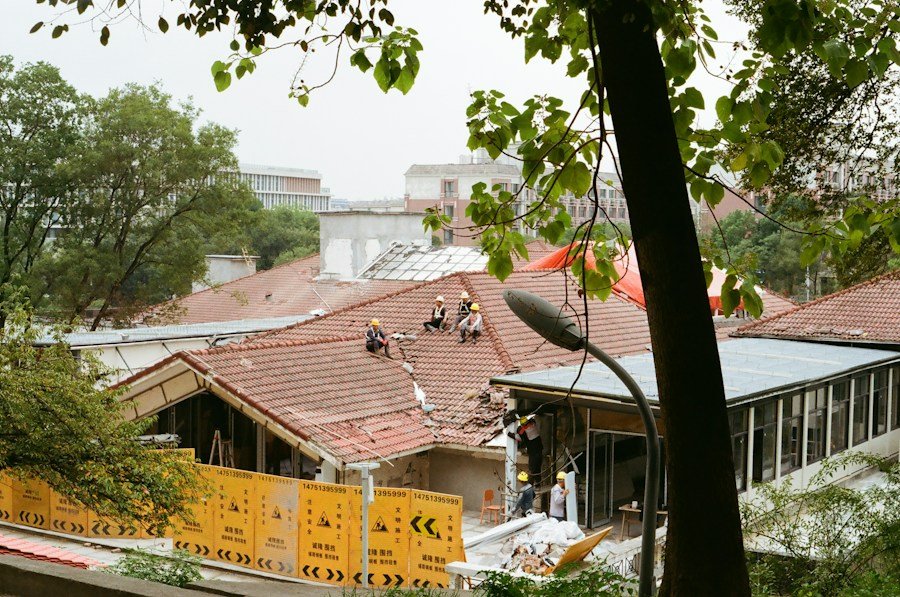
Brick’s ocean beaches and Camp Osborn
Brick Beach I, II and III cover only about half a mile of the barrier peninsula along Route 35 and are not connected to the mainland by land. Sandy and the fire that followed destroyed more than 70 homes in Camp Osborn, and much of this strip has been rebuilt. Roofs are newer but high and fully exposed, so we see wind-lifted edges, deck membrane leaks and corrosion on vents within a few years.
Shore Acres
Shore Acres sits on a bay point surrounded by water, and Sandy hit it hard, including the Shore Acres Yacht Club. Many original capes and ranches were demolished and replaced by large raised homes with complex hips, dormers and decks. Salt and wind from three sides make flashing, ridge vents and fasteners the main repair items, and flood-zone records matter on every larger job.
Metedeconk Neck, Havens Cove and Swan Point
Along the Metedeconk River and its coves, houses back onto lagoons and bulkheads, with docks and boat lifts in the yard. Homes range from 1960s ranches with flat-roof back rooms to raised rebuilds. River and bay wind, salt air and poorly flashed additions cause most leaks, and access to the rear slopes is often over a dock or a narrow side yard.
Cherry Quay, Mandalay Park and the lagoon streets
These lagoon neighbourhoods near Barnegat Bay are full of mid-century homes on small lots, many enlarged over the years with second-storey additions and sunrooms. That leaves roofs with mixed ages and several tie-ins. We often find newer shingles over an old deck on one section and a twenty-year-old roof on another, joined by a valley or wall flashing that has failed.
Lake Riviera, Laurelton and Baywood
These neighbourhoods grew in Brick’s 1950s to 1980s housing boom around Laurelton Circle, Route 88 and Lake Riviera. Expect ranches, capes with shed dormers, bi-levels and split-levels, many on second layers. The usual problems are tired three-tab shingles, soft eaves, failing chimney flashing and attics with too little ventilation, which leads to ice dams after heavy snow.
Herbertsville and Parkway Pines
Herbertsville and Parkway Pines sit near Parkway exit 91, separated from most of the township. They are wooded and quieter, with larger lots, colonials and newer homes alongside older farmhouses. Tall trees bring limb damage, moss on north slopes and gutters packed with needles and leaves, while the newer houses show early valley and skylight leaks.
Greenbriar, Lions Head and Winding River Village
Brick’s adult communities include Greenbriar I and II, Lions Head North and South, Winding River Village, Cedar Village, Seaview Village, Wedgewood Place, Princeton Commons and The Pavilion. Homes are mostly one-story with low or moderate pitch, and many are attached or association-maintained. Typical work is eave and fascia rot, pipe boot and fan vent leaks, and coordinated reroofs for groups of units.
What we fix in Brick
What Roof Problems Are Most Common in Brick?
Brick’s most common roof problems are aging 1970s and 1980s roofs with poor ventilation, ice dams after heavy snow, and salt and wind damage on the beaches, bay points and lagoons. These six problems make up most of our Brick repair calls.
Boom-era roofs reaching replacement
More than 13,400 Brick homes were built in the 1970s and 1980s. Most are on their second roof, and many on a second layer, with original attic ventilation limited to small gable vents. Shingles bake from below, decks soften at the eaves, and leaks start at old pipe flashings. Correcting ventilation during the next reroof is one of the best investments a Lake Riviera or Laurelton owner can make.
Ice dams after big snowfalls
Brick has taken some of the heaviest snow on the Jersey Shore, with about 30 inches in December 2010 and 24 to 30 inches in February 2026. On under-insulated capes and ranches, heat melts the snow, water refreezes at the cold eaves and backs up under shingles. The fix is ice and water shield at the eaves plus better insulation and venting.
Salt corrosion on the water
On Brick’s ocean beaches, Shore Acres and the Metedeconk lagoons, salt air corrodes nails, drip edge, step flashing and vent caps long before the shingles wear out. Rust stains on siding below a roof edge are a warning sign. We use stainless or hot-dipped fasteners and aluminum or coated steel flashing on waterfront Brick homes.
Mixed roof sections from additions
Lagoon homes in Cherry Quay and Mandalay Park and many inland capes have been expanded with second floors, sunrooms and rear additions. That creates several roof sections of different ages and pitches. Leaks happen where they meet, at valleys, wall flashing and the edge of near-flat back roofs. Fixing the tie-in properly matters more than replacing shingles around it.
Attached units in adult communities
Brick has about 3,600 attached housing units, many in adult communities such as Greenbriar and Lions Head. A roof that spans several units cannot be treated like a detached house: it needs a construction permit, association approval and coordination with neighbours. Leaks often travel along a shared roof before showing up in a ceiling, so we trace them across unit lines.
Wind-lifted shingles on raised rebuilds
The 163 Brick homes raised after Sandy and the many new houses built on demolished lots stand higher than the homes around them. Wind hits their eaves and rakes harder, and shingles installed without full edge sealing can peel back in a single nor’easter. We check nailing, starter strips and edge metal on these homes and upgrade them during repairs.
Brick weather
Storms and Weather That Hit Brick Township Roofs
Brick roofs face tropical storms and surge on the water side, unusually heavy snow, summer thunderstorms and repeated nor’easters. These are the dated events and recurring patterns behind most storm damage we document in the township.
Superstorm Sandy, October 29, 2012
Sandy flooded Brick’s beaches, bay points and lagoons and destroyed homes in Camp Osborn, where fire spread through more than 70 houses, and in Shore Acres and Normandy Beach. By 2014 the township had issued 396 demolition permits and 163 permits to raise homes. Many roofs that survived lost shingles and flashing, and the rebuild reshaped the waterfront skyline.
December 2010 blizzard
The blizzard of December 26 to 27, 2010 left about 30 inches in Brick, one of the highest totals recorded in New Jersey for that storm. Heavy drifts loaded low roofs and porch roofs, and the cold that followed produced widespread ice dams. Many Lake Riviera and Laurelton homeowners first learned about poor attic ventilation that winter.
June 2012 derecho
Before dawn on June 30, 2012, the derecho’s wind field crossed Ocean County on its way to the sea, where an 81 mph gust was measured at Tuckerton. Wooded parts of Brick such as Herbertsville took the worst of it on roofs, with snapped limbs, torn shingle tabs and ridge caps peeled back within a few minutes.
February 22 to 23, 2026 blizzard
The February 2026 blizzard dropped 24 to 30 inches on Brick, with outages lasting up to 15 hours in some neighbourhoods and a statewide travel ban. Snow loads, drifting on lee slopes and ice at gutters led to spring calls for lifted shingles, ice-dam stains on ceilings and gutters pulled off fascia.
Nor’easters on the bay and river
Strong northeast winds pile water into Barnegat Bay and the Metedeconk River and drive rain sideways into roofs for a day or more. Brick’s bay points and lagoon streets feel both the wind and the tidal flooding. Leaks that appear only in nor’easters usually trace to rake edges, ridge vents, chimney flashing or skylight curbs facing northeast.
Roofing services
Roof Repair Services We Offer in Brick
We provide the full range of roof repair work in Brick, from a single pipe boot in Greenbriar to a full tear-off on a Lake Riviera cape. Here is how each service usually applies in the township.
Roof Leak Repair in Brick
Brick leaks we trace most often start at old pipe flashings, chimney flashing on 1950s and 1960s capes, tie-ins between additions and the main roof, and skylight curbs. We locate the real entry point, photograph it and fix the cause, not just the stain.
Emergency Roof Repair in Brick
If a tree comes down in Herbertsville or a nor’easter strips shingles in Shore Acres, mark your request through the contact page as urgent, whatever the hour. We get the roof covered, log the damage in dated pictures and then set a date for the full repair.
Storm Damage Roof Repair in Brick
After a storm we document wind, hail and tree damage slope by slope on your Brick home and separate it from age wear. Waterfront owners often have separate wind deductibles and flood policies, so clear, itemized evidence helps the claim move.
Roof Replacement in Brick
Many Brick replacements are first tear-offs on 1970s and 1980s houses that already carry two layers. We correct attic ventilation, add ice and water shield at the eaves for snow country and use coastal-rated fasteners near the water. Detached homes need no permit for covering work.
Roof Inspection in Brick
Our free inspection photographs every roof plane, the attic space and each flashing detail, and gives a straight estimate of remaining life. Brick buyers often ask for one before closing in the lagoon neighbourhoods or adult communities, and sellers use the report to answer buyer questions.
Flat Roof Repair in Brick
Brick has plenty of low-slope roofs: rear additions on lagoon homes, sunrooms in adult communities, rooftop decks on raised rebuilds and commercial buildings along Route 70 and Route 88. Seams get rewelded or re-adhered, worn membrane gets cut out and replaced, and drains are cleared and re-flashed.
Metal Roof Repair in Brick
We repair standing-seam metal roofs and porch roofs on newer waterfront homes, and metal accents such as bay windows and dormers. Most calls involve opened seams, fasteners rusted by bay air that we swap for stainless, and wall or vent flashing that has pulled loose.
Slate Roof Repair in Brick
Slate is uncommon in Brick, but a few older farmhouses and churches in the township still carry slate on part of the roof. We replace broken slates with matched stone and repair flashing using slate-appropriate methods.
Shingle Roof Repair in Brick
Asphalt shingles cover most Brick homes. We swap out wind-torn tabs, glue down lifted edges and pick the closest current colour to your existing shingles. After heavy snow we also repair shingles damaged by ice dams and roof raking.
Roof Cleaning in Brick
Shaded north slopes in Herbertsville and around Lake Riviera grow moss and algae, and waterfront roofs collect salt film. We use low-pressure cleaning that protects granules, then clear valleys and gutters so water drains freely.
Gutter Repair in Brick
Heavy snow and ice pull gutters off Brick fascia, and leaves and needles clog them every fall. We clean, rehang and reseal gutters, repair rotted fascia and drip edge and make sure downspouts carry water away from foundations and lagoon bulkheads.
Commercial Roofing in Brick
We repair low-slope roofs on shopping centers, offices, medical buildings and restaurants along Route 70 and Route 88 and near Parkway exits 89 to 91. Typical tasks are TPO and modified bitumen seam work, curb flashing at rooftop units, coping caps, scuppers and keeping drains open.
Brick rules
Brick Township Roof Permits, Flood Rules and Associations
Permits & local review
In Brick, re-covering a detached one- or two-family house is ordinary maintenance under N.J.A.C. 5:23-2.7, so no permit is required. A permit from the Brick Building Department, which the township also calls the Division of Inspections, is needed for deck or sheathing replacement, rafter and truss work, a third layer, and roofs on attached townhomes, condos, larger multi-family buildings and commercial properties.
Flood-zone homes need extra care. Brick participates in FEMA’s Community Rating System and runs a Flood Map Information Service that tells owners whether a property is in a flood zone and its base flood elevation. Elevation certificates on file can be searched online through the township’s Forerunner tool. If a storm damages a home in a flood zone and total repairs approach half the home’s value, the substantial-damage rule may require meeting current flood standards; roof work counts toward that total.
Brick has about 3,600 attached units, many in adult communities such as Greenbriar and Lions Head, and those need association approval as well as a permit. The township’s Historic Preservation Commission, formed in 1998, is advisory and keeps a survey of historic sites; ask it about older properties before major changes.
Insurance claims
Most Brick roof claims involve wind, falling trees or the weight of snow and ice, which homeowners policies usually cover, while bay or river water inside the house falls under flood insurance. Waterfront owners in Shore Acres, the Metedeconk lagoons and the beaches often carry a separate hurricane or named-storm deductible, which can be thousands of dollars.
Snow is a bigger factor here than in many shore towns. After the 2010 and 2026 blizzards, many claims were for ice-dam leaks and collapsed gutters. Policies usually cover sudden damage from the weight of ice and snow but may question leaks blamed on poor insulation or old roofs. In adult communities the association may insure the roof. We document storm damage with dated photos and a written description. Your policy and agent have the final word.
Pricing · updated November 2026
How Much Does Roof Repair Cost in Brick?
As of November 2026, most Brick roof repairs cost between $350 and $2,500, and full replacements on a typical ranch, cape or bi-level usually fall between $8,500 and $17,000. Waterfront access, extra layers, deck repair and ventilation upgrades move the number. For statewide figures see our roof repair cost guide for New Jersey.
Minor shingle repair
$350 – $800
Swapping out a handful of torn or missing shingles and resealing lifted tabs, common on Lake Riviera and Laurelton homes after a nor’easter or a heavy snow followed by roof raking.
Pipe boot or vent flashing
$250 – $600
Fresh rubber pipe collars or vent flashing on 1970s and 1980s homes whose original rubber has cracked, using corrosion-resistant fasteners on lagoon and bay-point houses.
Single-source leak repair
$400 – $1,500
Finding and fixing one leak, such as an addition tie-in in Cherry Quay or a skylight on a Herbertsville colonial, with photos before and after the repair.
Valley repair
$500 – $1,500
Rebuilding a failed valley, often where a second-storey addition meets the original roof on mid-century lagoon homes, with ice and water shield beneath new metal or shingles.
Flat roof patch or seam repair
$400 – $2,500
Seam repairs or membrane section replacement on rear additions, rooftop decks on raised Shore Acres homes, or sunrooms in Greenbriar and Lions Head.
Emergency tarp
$300 – $1,200
Short-term cover for a storm or tree hole, with dated photos for the claim file. Raised beach homes and steep rebuilds cost more.
What moves the price in Brick
- Existing layers. Many Brick homes from the 1970s and 1980s already have two layers, so the next job includes tear-off and extra disposal.
- Deck repair. Original sheathing on boom-era houses often needs sections replaced, which requires a permit; we price it per sheet in writing.
- Ventilation upgrades. Adding ridge and soffit venting to houses that only have gable vents adds cost but helps prevent ice dams and heat damage.
- Snow-country details. Wider ice and water shield at the eaves and in valleys is worth the extra material in Brick.
- Waterfront access. Lagoon homes with docks and narrow side yards make staging and debris removal slower.
- Raised homes. Taller rebuilt houses in Shore Acres and on the beaches need more ladder work or lifts.
- Coastal materials. Stainless fasteners and coated edge metal cost more but last much longer near salt water.
- Association and permit steps. Attached units in adult communities need a permit, inspection and association approval, which affect timing and fees.
Treat these Brick numbers as a starting budget rather than a price. Sources are our company-wide repair ranges, the January 2026 Roof Observations guide to New Jersey roof costs and Fixr’s 2026 New Jersey replacement study; your itemized written quote after an inspection replaces them.
Who does the work
Why Brick Homeowners Choose Roof Repair SNJ
- Repairing NJ roofs for 25+ years
- General liability + workers’ comp insurance
- Workmanship warranty: 2 years on repairs, 10 years on full replacements, in writing
- Photo report with every inspection
Check any roofer before you sign in Brick
Ask for the 13VH registration number and confirm it on the NJ license lookup. NJ law requires a signed written contract showing the registration number and total price, and gives you until midnight of the third business day to cancel (N.J.S.A. 56:8-151).
Nearby
Roof Repair Near Brick: How Neighbouring Towns Compare
We work across the towns around Brick, and each has a different roofing profile. See Ocean County roof repair for the whole county, or our pages for roof repair in Toms River and Lakewood roof repair.
Point Pleasant and Point Pleasant Beach
North of Brick across the Metedeconk River, these towns have more pre-war shore cottages and steeper older roofs near the inlet and the Manasquan River, with more chimney, dormer and slate-remnant repairs than Brick’s ranches.
Mantoloking
Brick’s barrier-island neighbour was almost entirely rebuilt after Sandy. Its large raised homes carry complex roofs with copper, cedar and metal details, and repairs focus on high-wind detailing and salt corrosion.
Toms River
South of Brick, Toms River has even more 1960s houses, its own barrier-island sections such as Ortley Beach, and different adult communities such as Holiday City, with low-pitch one-story roofs.
Lakewood
West of Brick, Lakewood has no salt exposure and a much larger share of new attached housing. Its roof problems lean toward early flashing failures on newer townhomes and permits for attached buildings.
Wall Township
Across the county line in Monmouth County, Wall has more 1980s and 1990s colonials on larger wooded lots, so its roof issues look more like Herbertsville’s than like those of Brick’s waterfront neighbourhoods and lagoons.
In depth
Brick Roofing Questions, Answered in Depth
Stopping ice dams on a Lake Riviera or Laurelton cape
Ice dams on Brick capes and ranches are almost always a heat problem in the attic, so the lasting fix combines roof details with insulation and ventilation. Brick has had two of the heaviest snowfalls on the Jersey Shore in recent memory, about 30 inches in December 2010 and 24 to 30 inches in February 2026, and each one exposed the same weakness in the township’s older houses.
Here is what happens. Warm air from the living space leaks into the attic or the knee-wall spaces behind a cape’s shed dormers. It warms the roof deck, snow melts on the upper slope, and the water runs down to the cold overhang, where it refreezes. The ice ridge grows, meltwater pools behind it and works up under the shingles, and you see stains on ceilings or wet insulation along exterior walls.
Roof work alone helps but does not cure it. During a repair or reroof we install ice and water shield from the eaves to at least two feet inside the warm wall line, and in valleys. We also make sure drip edge and gutters let water leave the roof. The deeper fix is in the attic: sealing air leaks around light fixtures, bath fans and chimney chases, adding insulation where it is thin, and creating a continuous path from soffit vents to a ridge vent so the deck stays cold.
On capes, the low side attics behind knee walls are the trouble spot, and baffles are needed to keep insulation from blocking airflow. If you already have an ice dam, avoid chopping at it with tools that can cut shingles. Remove snow from the lower few feet with a roof rake from the ground if it is safe, and request an inspection once the snow clears so we can check for lifted shingles and wet sheathing.
Roofing a raised home in Shore Acres or on Brick’s beaches
On Shore Acres and Brick’s ocean beaches, newer raised homes need roofs detailed for high wind and salt, and owners should keep flood records close at hand for any major repair. After Sandy, Brick issued 396 demolition permits and 163 permits to raise homes, most of them on the waterfront, and Camp Osborn lost more than 70 houses to fire on top of the flooding.
The houses that replaced them are taller and more complicated: hip roofs, cross gables, decks, balconies and rooftop equipment. Each intersection is a possible leak. When we repair these roofs we look first at the details that wind and salt attack: ridge caps, rake edges, step flashing at walls, deck membranes and the flashing around railing posts and doors that open onto roof decks. Fasteners should be stainless or hot-dipped, and edge metal should be aluminum or coated.
Access is different too. Shore Acres lots are surrounded by water on several sides, and beach lots along Route 35 are narrow, so staging and debris removal take planning. Most owners prefer work between fall and spring, when traffic is lighter and the home is not full of family or renters.
Paperwork matters for bigger jobs. If your home is in a flood zone and a storm causes significant damage, total repair costs, including roofing, are compared to half the structure’s value. Brick’s Flood Map Information Service can confirm your zone and base flood elevation, and the township’s Forerunner tool lets you look up an elevation certificate on file. We provide itemized quotes and dated photos so you can show the township, your insurer or a buyer exactly what was done.
Reroofing attached homes in Greenbriar and Lions Head
Reroofing an attached adult-community home in Brick needs a construction permit, written association approval and a plan for the neighbouring units, which is why these jobs take more preparation than a detached house. Ocean County Planning lists Greenbriar I and II, Lions Head North and South, Winding River Village, Cedar Village, Seaview Village, Wedgewood Place, Princeton Commons, The Pavilion and Laurelton Gardens among the township’s adult communities.
Start by finding out who is responsible for the roof. In some communities the association owns and insures the roofs and schedules replacements building by building. In others each owner is responsible for the section above their unit. Your governing documents and master insurance policy will say which, and they also set approved shingle colours and styles.
Shared roofs leak in their own way. Water can enter above one unit, travel along the deck or a valley and appear in a neighbour’s ceiling. We trace leaks across unit lines and photograph the source so the right owner or the association can act. Party-wall areas need fire-rated details, and replacing part of a continuous roof means tying new shingles neatly into the old ones without leaving a ridge or a weak seam.
Because attached homes are not detached one- or two-family dwellings under state code, even re-covering requires a permit from the Brick Building Department and inspections. We prepare the scope, product information and photos that associations usually ask for, schedule work around residents who are home during the day, and keep driveways and walkways clear. If several neighbours in a building want their sections done together, the work is usually smoother, better matched and cheaper per unit.
Lagoon homes on the Metedeconk: additions, flat roofs and salt
Brick lagoon homes along the Metedeconk River and the bay usually have several roof sections of different ages, and the leaks come from where they join and from salt-weakened metal. Neighbourhoods such as Metedeconk Neck, Havens Cove, Swan Point, Cherry Quay and Mandalay Park were built out with modest mid-century houses that owners have expanded many times since.
A typical example is a 1960s ranch with a second-storey addition from the 1990s, a sunroom from the 2000s and a back porch roof facing the water. The main roof may be on its second layer while the addition carries a single newer roof. The weak points are the step flashing where the addition wall meets the lower roof, the valley between old and new sections, and the low-slope porch or sunroom roof, which may have been covered with shingles that are not designed for such a shallow pitch.
We fix these in order of risk. Low-slope sections get a proper membrane such as modified bitumen or TPO, flashed up the wall and finished with drip metal. Wall tie-ins get new step and counter flashing, and kickout flashings are added where a roof edge ends against a wall. Valleys between sections are rebuilt with ice and water shield underneath.
Salt is the other enemy. Within sight of the water, steel drip edge rusts, exhaust caps pit and nails lose their heads. Stainless or hot-dipped fasteners and aluminum flashing are standard on our lagoon jobs. We also check gutters and downspouts so roof water is carried away from bulkheads and foundations instead of pouring onto decks and docks.
Hiring a roofer in Brick after a big storm
After a major storm in Brick, check that any roofer is registered with the state, carries liability insurance and gives you a written contract before you sign anything. Sandy, the 2010 blizzard and the February 2026 blizzard each brought waves of door-to-door crews to Ocean County, and some left before their work was finished or warranties could be claimed.
New Jersey requires home improvement contractors to register with the Division of Consumer Affairs, and the registration number begins with 13VH. You can look up any contractor on the state’s license verification site. Registration requires commercial general liability insurance of at least $500,000, so ask for a certificate of insurance as well.
Your contract should be in writing, signed by both parties, and show the contractor’s legal name, business address and registration number, the total price, start and completion dates, and a description of materials. State law gives you three business days to cancel. Be cautious of anyone who asks for full payment up front, offers to waive your insurance deductible, or pushes you to sign over your claim.
For Brick specifically, ask how the roofer will handle snow-country details such as ice and water shield at the eaves, whether they use corrosion-resistant fasteners near the water, and whether your house needs a permit. Detached homes do not need one for re-covering, but attached units in adult communities and any sheathing replacement do. A good roofer will explain this before starting. We give every Brick homeowner photos, an itemized written quote and a written warranty: two years on repairs and ten years on full replacements.
FAQ
Roof Repair in Brick, NJ: Frequently Asked Questions
Do I need a permit to reroof my house in Brick Township?
No, if your Brick home is a detached one- or two-family house and you are only replacing the roof covering, which counts as ordinary maintenance under state code. You do need a permit from the Brick Building Department for sheathing replacement, structural repairs, a third layer, or attached units.
What does roof repair cost in Brick NJ?
Most Brick roof repairs run between $350 and $2,500 as of November 2026. Replacing a few shingles is often $350 to $800, a pipe boot $250 to $600 and a valley $500 to $1,500. Full replacements on typical Brick ranches and capes usually fall between $8,500 and $17,000.
How do I stop ice dams on my Brick house?
Ice dams on Brick homes come from attic heat melting snow that refreezes at the eaves. Lasting fixes include ice and water shield at the eaves, sealed attic air leaks, better insulation and balanced soffit-to-ridge ventilation. A roof rake from the ground helps during storms if it is safe.
Do you repair roofs in Greenbriar and Lions Head?
Yes. We repair and replace roofs in Greenbriar I and II, Lions Head North and South and other Brick adult communities. Attached units need a township permit and written association approval, and we prepare the scope, product details and photos most associations ask for.
Is my Brick roof damage covered by insurance after a blizzard?
Sudden damage from the weight of snow and ice, wind or falling trees is usually covered by Brick homeowners policies, minus your deductible. Insurers may question leaks blamed on poor insulation or an old roof. We provide dated photos and a written damage description. Your policy and agent decide coverage.
How does salt air affect roofs in Shore Acres and the lagoons?
In Shore Acres, the Metedeconk lagoons and on Brick’s beaches, salt air corrodes nails, drip edge, flashing and vent caps much faster than inland. We use stainless or hot-dipped fasteners and aluminum or coated metal on waterfront Brick homes so repairs last as long as the shingles.
How can I find out if my Brick home is in a flood zone?
Brick runs a Flood Map Information Service through its engineering and land use offices that confirms whether a property is in a flood zone and its base flood elevation. Elevation certificates on file can be searched through the township’s online Forerunner tool by address.
Should I repair or replace my 1970s roof in Brick?
If your Brick roof is on a second layer, curls on several slopes or leaks in more than one place, replacement is usually better value. A Brick roof younger than roughly 15 years with a single leak point is usually worth repairing. We give photos and a written recommendation.
Can you fix a leak where my addition meets the old roof?
Yes. Addition tie-ins are among the most common leak sources in Brick lagoon homes and inland capes. We replace step and counter flashing, add kickout flashing, rebuild valleys with ice and water shield and put proper membranes on low-slope sections that were wrongly shingled.
Do you handle emergency roof repairs in Brick?
Yes. Use our contact page at any hour, mark it urgent and attach photos if it is safe to take them. A crew covers the damaged Brick roof at the earliest safe opportunity, photographs everything for your insurer, then schedules the permanent work.
Does Brick have historic rules for roof work?
Brick’s Historic Preservation Commission, formed in 1998, is advisory and keeps a survey of historic sites, such as the Orient Baptist Church in Laurelton. Most Brick homes have no historic restrictions, but owners of older listed properties should ask the commission before major changes.
What is the best season for roof work in Brick?
Late spring through fall is ideal for inland Brick homes because shingles seal best in warm weather. For beach and Shore Acres homes, fall through early spring avoids summer traffic and guests. Booking an inspection soon after a snowy winter catches ice-dam damage early.
Reviewed by the Roof Repair SNJ team · Last updated November 2026
Free inspection
Get a Free Roof Inspection in Brick Township
From a raised home in Shore Acres to a cape near Laurelton Circle or a Greenbriar unit, it starts with a proper look at the roof. Book your free Brick roof inspection and get dated photos plus a written itemized quote. You choose the work, and every job comes with a written warranty.
No pressure and no obligation. If a repair will do, we’ll tell you.
Roof Repair SNJ
- Serving Brick and all of Ocean County
- Request roof service in Brick
- Mon–Fri 5:00 AM–10:00 PM · Sat 5:00 AM–6:00 PM · Emergencies 24/7
Sources: Brick Township, New Jersey (Wikipedia): sections, beaches, Sandy, blizzards · Census Reporter: Brick township profile (ACS 2024) · Ocean County Dept. of Planning: Housing units by units in structure and year built · Ocean County Dept. of Planning: Adult Communities of Ocean County (rev. 2/2026) · Shorebeat: Two years later, a forever-changed Brick Township (2014) · Brick Township: Building Department (Division of Inspections) · Brick Township: Floodplain Information · Brick Township: Historic Preservation Commission · National Register of Historic Places listings in Ocean County (Wikipedia) · National Hurricane Center: Tropical Cyclone Report, Hurricane Sandy · June 2012 North American derecho (Wikipedia) · February 2026 North American blizzard (Wikipedia) · N.J.A.C. 5:23-2.7 Ordinary maintenance (Cornell LII) · N.J.S.A. 56:8-151 Home improvement contracts (Justia) · NJ Division of Consumer Affairs license verification · FEMA: Substantial improvement and substantial damage · Roof Observations: New Jersey roof cost guide (Jan 2026) · Fixr: Roof replacement cost in New Jersey (2026). Prices are planning ranges, not quotes. Permit and insurance information is general guidance; your town, policy and agent have the final word.