
Roof Repair NJ › NJ Locations › Hudson County › Bayonne
Bergen Point · Uptown · Constable Hook · 07002
Roof Repair in Bayonne, NJ: Frame Two-Families, Flat Roofs and Bay Wind
Roof Repair SNJ inspects and repairs roofs across Bayonne, from frame two-families in Uptown and Midtown to older houses at Bergen Point, the landmark brick rows on 33rd Street and condo buildings on the Peninsula. Process: inspect, photograph with dates, issue a written itemized quote. Warranty: 2 years in writing on repairs.
- Low-slope rear roofs on frame two-families
- Salt-air flashing and coping on the peninsula
- Free photo inspection, written itemized quote
Free roof inspection in Bayonne
Photos of every problem we find and an itemized written price before any work. Emergency requests handled 24/7.
Roof Repair SNJ
Bayonne · Hudson County · all 21 NJ counties
Free inspection
Roof, attic and gutters checked at no cost.
Insured
Liability and workers’ comp; certificate on request.
Written quotes
Itemized price in writing before any work.
Photo-documented
Every problem photographed, before and after.
What we fix in Bayonne
What Fails Most Often on Bayonne Roofs?
Top findings in Bayonne: worn low-slope rear roofs on frame two-families, corroded flashing from salt air, wind damage on water-facing slopes, and second-layer front roofs that cannot take a third. Each item below lists the cause and the usual fix.
Rear low-slope roof on a frame two-family
Cause: most Bayonne two-families have a pitched front and a nearly flat rear roof over kitchens and back bedrooms, covered in rolled roofing or old modified bitumen. Finding: open laps, cracked patches, ponding at the back corner. Fix: cut out failed patches and install new modified bitumen with a proper edge, or replace the rear section entirely. On a detached house, no permit needed for covering work.
Salt-air corrosion
Cause: water on three sides, and the harbor, bay and Kill Van Kull carry salt spray and mist across the whole peninsula. Finding: rusted galvanized drip edge, pitted step flashing, failed nails and screws in coping, stained brick below. Fix: replace with aluminum, copper or coated steel, use stainless or hot-dipped fasteners, and seal laps. Ordinary steel components here fail years sooner than inland.
Wind from open water
Cause: no high ground breaks wind across Bayonne, and every slope faces water somewhere. Finding: lifted shingle tabs on west and south slopes, missing ridge caps, peeled membrane corners, loose gutters. Fix: hand-seal tabs, add high-wind ridge cap, fasten membrane edges under new termination bar and metal. Check after every nor’easter and southerly gale, starting with the corners.
Two layers already on
Cause: many front slopes on pre-1940 houses were re-roofed over the original layer decades ago. Rule: New Jersey allows a maximum of two layers, and a third layer requires a permit and is generally not approved. Finding: spongy feel, sagging at rafters, nails backing out. Fix: tear-off to the deck, replace soft boards (that part needs a permit), then one new layer with ice and water shield at eaves.
Shared walls and narrow side yards
Cause: detached Bayonne houses often sit a few feet apart, and some rows and twins share walls. Finding: water from one roof spilling onto the next, gutters discharging into a neighbour’s alley, flashing at a wall where a taller house meets a shorter one. Fix: re-route leaders, install step and counter flashing at the taller wall, and document the condition for both owners.
Bay windows, porches and small roofs
Cause: Bayonne frame houses carry many small roofs: front porches, bay window caps, entry hoods. Finding: soft wood at porch roof edges, failed rolled roofing, open seams at the house wall, rusted tin bay caps. Fix: new low-slope membrane or metal on the porch roof, new counter flashing into siding or brick, and fresh metal caps on bays. These are small jobs that stop big interior stains.
Bayonne rules
When Does a Bayonne Roof Job Need a Permit or Historic Review?
Permits & local review
Short answer: no permit for roof covering work on a detached one- or two-family house in Bayonne. Exceptions below. Under N.J.A.C. 5:23-2.7, repair or replacement of existing roof covering on detached one- and two-family dwellings is ordinary maintenance: no permit, no inspection, no notice. Because many Bayonne two-families are detached, this rule covers more homes here than in most of Hudson County. A permit from Bayonne’s municipal construction code office is required for:
- replacing sheathing, rafters or other structure;
- attached houses, such as the brick rows on 33rd Street and other rows and twins;
- three-family and larger buildings, condos and mixed-use buildings;
- a third roof layer (two is the maximum).
Historic review: Bayonne’s Historic Preservation Commission has designated properties since the city’s preservation ordinance was adopted in 1999. The city has one historic district, the Stephen R. Gregg-Bayonne County Park Historic District, plus individual landmarks such as the Schuyler and Isbills row houses, where the facades are protected. Ask before changing visible roofing or cornices on a landmark. Condo and townhome associations on the Peninsula set their own approval rules. Ordinary maintenance must still meet code.
Insurance claims
Rule of thumb: water from above is a homeowners claim; water from below is a flood claim. Homeowners and landlord policies usually cover sudden roof damage from wind, falling limbs or the weight of snow, and rain entering through that damage. They usually exclude wear, age and slow leaks. Rising water from surge or tide, as at Bergen Point in 2012, needs separate flood insurance. Near the water, check for a wind or named-storm deductible on your declarations page. For two-families, a dwelling or landlord form may treat tenant damage and loss of rent differently. Our report describes roof damage only, with dated photos, which keeps roof and flood claims separate. Your policy and agent have the final word.
Pricing · updated November 2026
What Does Roof Repair Cost in Bayonne in November 2026?
Range: most Bayonne roof repairs cost $350 to $2,500 as of November 2026. Most common: rear flat-roof seams and edges, shingle wind damage and flashing on frame two-families. Higher: deck replacement, permit work on attached and multi-unit buildings, slate and corrosion-resistant metal. These are planning ranges; the written quote after a free inspection is the real number.
Shingle and small repairs
$350 – $800
Replacing blown-off shingles on a windward Uptown or Bergen Point slope, hand-sealing lifted tabs and a new ridge cap section. Includes a check of nearby step flashing and how many layers are already on.
Pipe boots and vent flashing
$250 – $600
New boots or lead and aluminum flashing around plumbing vents and exhaust stacks on two-family roofs, where wind and sun off the bay dry out rubber collars faster than on sheltered inland roofs.
Single-source leak repair
$400 – $1,500
Locating and fixing one leak at the rear wall joint, a chimney, a skylight or a porch roof tie-in. Includes photos showing the source and which unit of a two-family was affected.
Flat-roof patch, seam or scupper
$400 – $2,500
Cutting out failed rolled roofing or modified bitumen on a rear roof, rebuilding the edge with new metal, widening a scupper or adding a leader. Common on Midtown and Uptown two- and three-families.
Chimney and skylight re-flashing
$400 – $1,800
Skylights usually $400 to $1,200; chimneys $600 to $1,800. In Bayonne, we price corrosion-resistant metal by default, since galvanized step and counter flashing pits quickly in salt air.
Slate, valley and deck repair
$500 – $2,500+
Matched slate on an older house, a valley rebuild ($500 to $1,500) or soft plank sheathing found under a two-layer tear-off ($500 to $2,000+). Deck work needs a permit.
What moves the price in Bayonne
- Detached or attached. Detached one- and two-families: no permit for covering work. Attached rows, three-families and condos: permit fee, paperwork and inspection.
- Layer count. A front slope already at two layers must be torn off before re-roofing, which adds labor and disposal.
- Metal choice. Aluminum, copper or coated steel and stainless fasteners cost more than galvanized, and last far longer on the peninsula.
- Side-yard access. Houses a few feet apart limit ladder and dumpster placement; materials often come off the street, and a dumpster may need curb space.
- Tenants. Two-family jobs that need access through an occupied upstairs unit take scheduling, not just labor.
- Wind exposure. Bay-facing and Kill Van Kull-facing slopes get high-wind ridge cap, extra fasteners and hand-sealed tabs.
- Deck condition. Pre-1940 plank decks often hide soft boards at eaves and rear walls, found only after tear-off.
- Landmark status. On a designated row house, matching cornice and coping details adds cost and time.
Planning figures for November 2026 from our site-wide repair ranges and published New Jersey cost guides (Roof Observations, January 2026; Fixr, 2026). Not quotes. More detail is in our roof repair cost guide.
Bayonne at a glance
What Does Bayonne’s Housing Data Say About Its Roofs?
Verdict: Bayonne is a city of old wood-frame two- to four-family houses on a narrow peninsula, surrounded by salt water on three sides. Evidence below. Each number changes how a roof here is inspected, permitted or insured.
Population (2020 Census)
71,686
On 5.82 square miles of land between Newark Bay, the Kill Van Kull and Upper New York Bay. One ZIP code, 07002. Land border only with Jersey City to the north.
2 to 4 unit buildings
About 45%
NeighborhoodScout’s reading of Census data: duplexes, converted houses and small apartment buildings are Bayonne’s most common housing. Single detached homes are about 14.5 percent; attached rows about 6 percent.
Built before 1940
About 36%
Another 32 percent dates to 1940 through 1969. Expect plank sheathing, two layers of roofing on many front slopes, and rear roofs patched many times since.
Owner-occupied homes
36.2%
Census QuickFacts, 2020-2024. Many owners live in one unit and rent the other, so roof work is often scheduled around tenants on two floors.
Median owner home value
$460,100
QuickFacts 2020-2024. Persons per household average 2.46, lower than most Hudson towns, reflecting smaller units in converted two- and three-families.
Sandy at Bergen Point
14.6 ft
National Weather Service record for the Bergen Point gauge, 8 to 10 p.m. on October 29, 2012. The next highest reading is 9.3 feet; minor flooding starts at 7.2 feet.
Neighborhoods & homes
Which Bayonne Sections Have Which Roofs?
Short answer: frame two- and three-families with low-slope rear roofs dominate from Uptown to Bergen Point; industrial and newer flat roofs cluster at Constable Hook and on the Peninsula. Section notes follow, with what we usually find on the roof.
Bergen Point (south end)
The old village at the southern tip, near the Bayonne Bridge approach and the 8th Street light rail station. Mix of older Victorian-era frame houses, two-families and newer condo buildings. Findings: wind-lifted shingles on south-facing slopes facing the Kill Van Kull, corroded galvanized flashing, worn rear rolled roofing and gutters pulled loose by gusts. The Bergen Point tide gauge sits just offshore, so many lots here are close to the water.
Constable Hook (east side)
Long an oil-terminal and industrial district on the Upper New York Bay side, now with some lofts and new construction near the water. Roofs: large low-slope industrial and commercial membranes, metal panel buildings and newer residential flat roofs. Typical items: failed TPO and modified bitumen seams, rusted metal deck edges, rooftop equipment curbs and pitch pans. Salt air and open-water wind from the harbor shorten the life of ordinary steel fasteners.
Midtown and Broadway
The commercial spine along Broadway, including the Bayonne Town Center district, with the 22nd Street and 34th Street light rail stations nearby. Roofs: flat roofs on mixed-use buildings with storefronts below and apartments above, plus frame two-families on the side streets off Avenue C and Avenue E. Typical items: parapet base flashing, clogged internal drains, old skylights over stairwells and patched membranes over rear additions.
East 33rd Street and the landmark row houses
A rare stretch of red brick row houses in a mostly wood-built city. The Schuyler Row House at 20 East 33rd Street and its neighbours at 14 and 16 East 33rd, plus the Isbills Row House at 43 West 33rd, are city-designated landmarks with protected facades. Roofs: flat or low-slope behind cornices, attached on both sides. Items: cornice and coping leaks, party-wall seams, and permit plus landmark questions before any visible change.
Uptown and Mercer Park
The north end toward the Jersey City line, around the 45th Street light rail station and Mercer Park, established in 1909 and later developed with WPA funds. Tree-lined blocks of frame two-families and some detached singles. Roofs: shingle front slopes and gables over a low-slope rear roof. Items: dormer and wall step flashing, cracked pipe boots, two-layer front roofs at the limit, and limbs from street trees over porch roofs.
Newark Bay side and Stephen R. Gregg Park
The west side along Kennedy Boulevard and the bay, beside the 97.5-acre Stephen R. Gregg Park, which is part of the Stephen R. Gregg-Bayonne County Park Historic District, the city’s only historic district. Houses face open water and westerly winter winds across Newark Bay. Items: blown-off ridge caps and shingles on west slopes, wind-driven rain under parapet caps, and ice at eaves on the colder bay-facing side.
The Peninsula at Bayonne Harbor
Built on the former Military Ocean Terminal, decommissioned in the late 1990s, with Cape Liberty Cruise Port operating since 2004 and newer housing and businesses. Roofs: modern low-slope membranes, townhome roofs and commercial buildings fully exposed to harbor wind. Items: perimeter edge metal, flashing at rooftop units, sealant joints and drainage. Most residential roofs here belong to associations, so the board or manager orders the work.
Bayonne weather
Which Storms Have Tested Bayonne Roofs?
Record: Sandy in 2012 is Bayonne’s benchmark, followed by repeated high-water gales, Ida’s 2021 rain and heavy snows. Dates and readings below come from the National Weather Service, the state climatologist and city updates.
October 29, 2012: Sandy
Reading: 14.6 feet at the Bergen Point gauge between 8 and 10 p.m., the highest on record by more than five feet. Effects: massive power outages in Bayonne, a mandatory overnight curfew, and shelters still open days later at Midtown Community School and Nicholas Oresko School, per the city’s November 2 update. Roof items: wind-stripped shingles, torn flat-roof edges and many owners juggling roof and flood claims at once.
December 23, 2022: the pre-Christmas gale
Reading: 9.1 feet at Bergen Point, among the gauge’s highest after Sandy, as a southeast to south gale arrived near high tide with up to two inches of rain. Roof items: southerly wind drove rain under parapet caps and loose flashing on the Kill Van Kull side, and rapid cold behind the storm froze wet gutters. Earlier high readings: 8.9 feet on October 27, 2018 and 8.4 feet on February 8, 2016.
September 1-2, 2021: Ida’s rainfall
Reading: 8.72 inches in nearby Harrison, with similar heavy totals across Hudson County in a few hours. Roof items: Bayonne rear roofs drain through one scupper or a single gutter run into a narrow side yard, and many could not keep up. Water backed up at the rear wall and entered at the roof-to-wall joint. Lesson: oversized outlets and leaders matter more than membrane brand.
January 23-24, 2016: the blizzard
Reading: 25.0 to 26.5 inches across Hudson County, per the state climatologist. Roof items: snow drifted against rear walls and parapets on low-slope roofs and sat for days, while wind packed it into valleys on front slopes. Meltwater found open laps at the rear roof edge. Action items for big snows: keep scuppers and gutters clear, and watch top-floor ceilings for stains or sagging.
Every year: salt air and three-sided wind
Condition: Bayonne is bounded by Newark Bay to the west, the Kill Van Kull to the south and Upper New York Bay to the east. Effects: salt deposits on metal, constant drying wind, and winter northwesterlies straight across the bay. Roof items: corroded flashing and fasteners, brittle sealant, lifted shingle tabs on west slopes. Inspection interval we recommend: once a year, plus after each named storm or gale warning.
Roofing services
Which Roofing Services Do Bayonne Homes Need Most?
Most requested in Bayonne: rear flat-roof repair, leak tracing, storm repair and shingle work on two-families. All twelve services are available; each card states how it applies to Bayonne buildings.
Roof Leak Repair in Bayonne
Bayonne leaks usually trace to the rear roof edge, a wall joint where a pitched front meets a flat back, or a chimney. We test, open and photograph the source, then fix that point. On two-families, we note which unit is affected so the owner and tenant both know the cause.
Emergency Roof Repair in Bayonne
After a gale or nor’easter, request help through our contact page at any hour. We tarp open slopes, secure peeled membrane edges and loose metal, and seal flashing so wind-driven rain off the bay stops entering. Permanent repairs follow once wind and tide settle.
Storm Damage Roof Repair in Bayonne
Storm damage on the peninsula is mostly wind: missing shingles on west and south slopes, lifted ridge caps, peeled corners and loose gutters. We photograph and date every item, separate it from old wear, and keep the roof report apart from any flood damage for the insurer.
Roof Replacement in Bayonne
When a front slope has two layers and soft boards, or a rear roof is more patch than membrane, replacement is the fix. Permit status: none for covering work on detached one- and two-families; required for deck replacement, attached rows and three-plus units. We file it.
Roof Inspection in Bayonne
Our free inspection follows a fixed list: covering, flashing, chimneys, rear roof, gutters, leaders, ventilation and attic or top-floor ceiling. Bayonne buyers use it before closing on a two- or three-family. Owners use it after a gale to see whether a claim is worth filing.
Flat Roof Repair in Bayonne
Bayonne’s flat roofs: rear half of most two-families, full footprint of Broadway mixed-use buildings. We repair modified bitumen, EPDM, TPO and rolled roofing, rebuild edges and scuppers, and upgrade drainage. Methods are on our flat roof repair page.
Metal Roof Repair in Bayonne
Metal here means coping, drip edge, porch roofs, bay window caps and metal panel buildings at Constable Hook. Salt air is the enemy. We replace rusted pieces with aluminum, copper or coated steel, refasten with stainless screws and reseal seams so the metal survives the harbor climate.
Slate Roof Repair in Bayonne
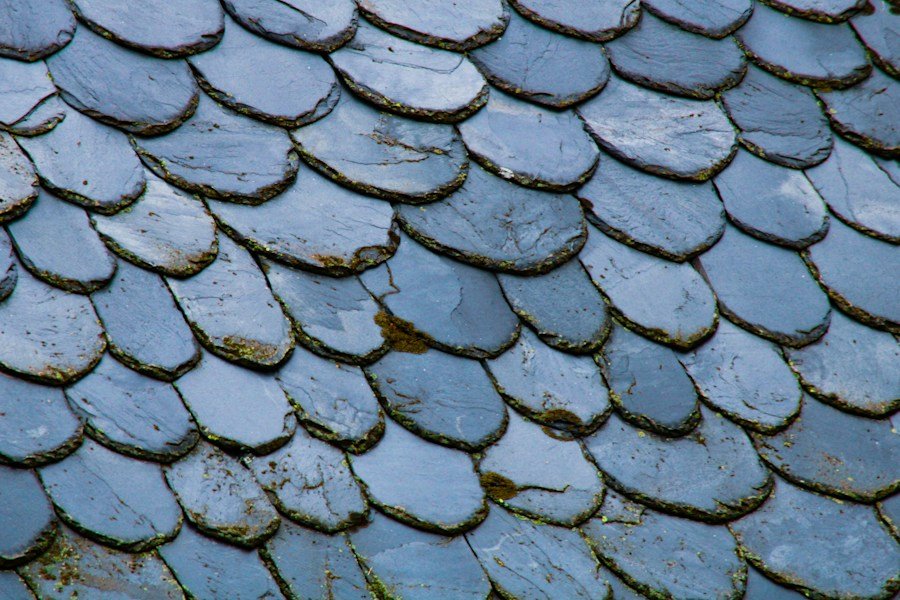
Slate is uncommon in Bayonne but survives on some older Bergen Point and Uptown houses and on church and institutional buildings. Broken slates swapped for matched stone on salt-resistant copper or stainless hooks; chimneys re-flashed without disturbing sound slate nearby.
Shingle Roof Repair in Bayonne
Shingles cover the front slopes and gables of most frame two-families from Uptown to Bergen Point. We replace blown-off shingles, hand-seal lifted tabs on windward slopes, swap cracked pipe boots, fix step flashing at dormers and confirm how many layers are on before quoting.
Roof Cleaning in Bayonne
On Bayonne flat roofs, cleaning means clearing scuppers, drains and gutters of leaves, grit and debris, and rinsing salt and grime off reflective coatings so they keep working. On shingle slopes, we remove moss and debris gently from shaded north sides. No high-pressure washing.
Gutter Repair in Bayonne
Narrow side yards make Bayonne gutters work hard. We resize and re-pitch gutters, add leaders where one outlet serves too much roof, direct discharge away from neighbours’ walls and foundations, and replace corroded hangers with aluminum or stainless hardware rated for the salt air.
Commercial Roofing in Bayonne
Commercial roofs along Broadway and Avenue C, industrial buildings at Constable Hook and newer buildings on the Peninsula need membrane, metal and drainage work. We repair and replace TPO, EPDM and modified bitumen, handle the permit, and schedule around store hours and tenants.
Who does the work
Why Bayonne Homeowners Choose Roof Repair SNJ
- Repairing NJ roofs for 25+ years
- General liability + workers’ comp insurance
- Workmanship warranty: 2 years on repairs, 10 years on full replacements, in writing
- Photo report with every inspection
Check any roofer before you sign in Bayonne
Ask for the 13VH registration number and confirm it on the NJ license lookup. NJ law requires a signed written contract showing the registration number and total price, and gives you until midnight of the third business day to cancel (N.J.S.A. 56:8-151).
Nearby
Which Neighbouring Towns Have Different Roofs From Bayonne?
Bayonne’s only land neighbour is Jersey City; Newark and Elizabeth face it across Newark Bay. Each has a different roof mix. County-wide notes are on our roof repair Hudson County page.
Jersey City
North across the city line, Greenville and the West Side continue Bayonne’s frame two-family pattern, but Downtown Jersey City adds brownstones and historic districts with commission review. See our roof repair in Jersey City page for those differences.
Newark
Across Newark Bay, Newark is denser, with about one in four homes owner-occupied and many attached frame three-families with flat rear roofs. More of its roof jobs need permits, and it has seven local historic districts, compared with Bayonne’s one.
Elizabeth
Southwest across Newark Bay in Union County, Elizabeth is a larger city by land area, with its own waterfront at Elizabethport. Roofs there face the same bay wind near the water, but most of its inland blocks sit farther from open water than any part of Bayonne.
Hoboken
Farther up the Hudson waterfront, Hoboken is almost all attached brick and brownstone row houses with flat roofs, a local historic district and about half the city flooded in Sandy. Nearly every Hoboken roof job needs a permit; many Bayonne two-family jobs do not.
Service areas
Roof Repair Near Bayonne: Hudson County Service Areas
We serve Bayonne and every town around it. See all of Hudson County on our Hudson County roof repair page or browse every county on the New Jersey service areas page.
All 12 towns we serve in Hudson County
East Newark · Guttenberg · Harrison · Hoboken · Jersey City · Kearny · North Bergen · Secaucus · Union City · Weehawken · West New York
In depth
What Do Bayonne Owners Ask Before Roof Work? Field Notes
Which Bayonne roof jobs need a permit? A checklist
Verdict: on a detached one- or two-family house, roof covering work needs no permit; almost everything structural, attached or larger does. Bayonne has more detached two-families than most Hudson towns, so it pays to know which side of the line your house is on. Use this list before signing a contract.
No permit (ordinary maintenance under N.J.A.C. 5:23-2.7):
- Replacing shingles or a whole shingle layer on a detached one- or two-family house.
- Tearing off and replacing a rear flat roof’s membrane on that same detached house, without touching the deck.
- Replacing flashing, pipe boots, drip edge and gutters.
- Re-roofing over one existing layer, so the result is two layers.
Permit required from the construction code office:
- Any sheathing or deck board replacement, or rafter repair.
- Any house that shares a wall: row houses, twins, townhomes.
- Three-family and larger buildings, condo buildings and mixed-use Broadway buildings.
- A third layer of roofing (two is the maximum).
Check before work:
- City-designated landmarks, such as the protected row houses on 33rd Street, and the Gregg Park historic district.
- Association rules on the Peninsula or in any condo building.
- Flood-damaged buildings, where total repair cost can trigger floodplain review.
Note: the exemption is not a pass on code. A no-permit roof still needs ice and water shield where code requires it, proper flashing and correct fastening. If a contractor tells you every Bayonne roof job needs a permit, or that none do, ask which part of the rule they mean. And if soft decking turns up mid-job on a detached house, the deck work then needs a permit; a good contract says how that is handled.
Inspecting a frame two-family in Bayonne: what we check, in order
Summary: the rear roof and the joint where it meets the house cause most leaks, so we inspect from back to front. A typical Bayonne two-family has a pitched front with a gable or dormers, a low-slope rear section over the kitchens, a porch roof, bay windows and a single chimney. Here is our sequence and what each step looks for.
- Rear low-slope roof. Membrane type and layers, open laps, ponding at corners, patch history, soft spots underfoot.
- Rear wall joint. Where the low roof meets the taller wall: counter flashing, siding clearance, sealant condition.
- Scupper or rear gutter. Size, slope, debris, where the leader discharges in the side yard.
- Front slope. Shingle condition on windward sides, lifted tabs, granule loss, number of layers at the eave.
- Ridge and vents. Ridge cap, ridge vent, pipe boots, exhaust caps.
- Chimney. Step and counter flashing, crown, mortar, cap.
- Small roofs. Porch roof, bay caps, entry hoods and their wall flashing.
- Metal. Drip edge, coping and flashing for salt corrosion.
- Inside. Top-floor ceilings and the attic or crawl space, if there is access, for stains, daylight and damp insulation.
What you receive: dated photos of each item, a list ranked by urgency, and a written itemized quote for the repairs that matter now. Items that can wait are marked as such. For buyers, we note the likely remaining life of each roof section, since front and rear roofs on the same Bayonne house are often different ages.
When the Bergen Point gauge is forecast above flood stage: roof steps
Action: secure the roof before the storm, document after it, and keep roof damage separate from flood damage. Minor coastal flooding at the Bergen Point gauge starts around 7.2 feet. The highest readings on record are 14.6 feet in Sandy (October 29, 2012), 9.3 feet, 9.1 feet on December 23, 2022, 8.9 feet on October 27, 2018 and 8.4 feet on February 8, 2016. Gales that push water that high usually bring strong wind and rain too, and that is what reaches roofs.
Before the storm (24 to 48 hours):
- Clear scuppers, gutters and leaders so rain can leave the rear roof fast.
- Look for loose coping, drip edge or flashing from the ground; have it fastened if you can.
- Move valuables away from top-floor ceilings that have leaked before.
- Photograph the roof and ceilings as they are now. Before-photos speed up claims.
After the storm:
- Stay off a wet roof. Photograph from the ground or a window: missing shingles, peeled edges, fallen limbs.
- Photograph ceilings and walls on upper floors separately from any ground-floor or basement water.
- Send photos through our contact page for tarping or repair.
- Report to your insurer. Roof damage goes on the homeowners or landlord policy; rising water goes on the flood policy.
Our inspection report describes roof damage only. That separation matters on the peninsula, where both kinds of damage can arrive in the same night, as they did in 2012.
Which metals and fasteners last in Bayonne’s salt air?
Recommendation: aluminum, copper or coated steel for flashing and edge metal, with stainless or hot-dipped galvanized fasteners; avoid bare galvanized steel within sight of the water. In Bayonne, that is most of the city. Newark Bay, the Kill Van Kull and Upper New York Bay surround the peninsula on three sides, and salt mist reaches every street.
What fails first:
- Electro-galvanized nails and screws in coping and drip edge, which rust and loosen.
- Thin galvanized step flashing at chimneys and walls, which pits through.
- Steel gutter hangers and straps, which rust and drop the gutter.
- Rubber pipe boots and exposed sealant, dried by constant wind and sun.
What we specify:
- Drip edge and coping: heavy aluminum or Kynar-coated steel, fastened with stainless screws.
- Step and counter flashing: aluminum on most houses; copper on older or landmark houses where appearance matters.
- Valleys: aluminum or copper, or a closed shingle valley over ice and water shield.
- Membrane edges: termination bar and metal cap with stainless fasteners at a close spacing for wind.
- Gutters: aluminum with aluminum or stainless hangers.
Never put copper and bare steel or aluminum in direct contact; mixed metals corrode each other faster in salt air. The upgrade usually adds a modest amount to a repair and avoids redoing it in a few years. On commercial and industrial roofs at Constable Hook, we also check rooftop equipment stands and curbs, which rust where they sit on the membrane.
Condos on the Peninsula and landmark row houses: who approves the work?
Answer: on a condo, the association usually owns and decides on the roof; on a designated landmark, the Historic Preservation Commission’s interest in the facade comes first; on a two-family, the owner decides. Bayonne has all three, sometimes on the same block.
Condos and townhomes (Peninsula at Bayonne Harbor and condo buildings citywide):
- The roof is usually a common element. Report leaks to the board or manager in writing, with photos and dates.
- The association’s master policy usually covers the roof; your unit policy covers your interior and improvements.
- Work on multi-unit buildings needs a permit from the construction code office.
Landmark row houses (for example the Schuyler Row House at 20 East 33rd Street, its neighbours at 14 and 16, and the Isbills Row House at 43 West 33rd):
- The commission protects facades; owners can update interiors.
- Flat rear roofs may not be visible from the street, but cornices, front parapets and anything on the facade are.
- Ask before changing visible materials. We provide photos and product details.
- As attached houses, these also need a construction permit for roof work.
Designation process, for context: the commission recommends a property to the City Council; the Council introduces an ordinance; the Planning Board reviews it; the Council then holds a hearing. The commission recommended St. Andrew’s Church on October 22, 2024 through this process. Two-family owners outside landmarks and the Gregg Park district face no historic review for roofing.
FAQ
Roof Repair in Bayonne, NJ: Frequently Asked Questions
Permit needed to re-roof a detached two-family in Bayonne?
No, as long as the job only repairs or replaces the roof covering. New Jersey treats it as ordinary maintenance under N.J.A.C. 5:23-2.7. If the deck or rafters need replacing, the house is attached, or a third layer is proposed, Bayonne’s construction code office requires a permit. Code still applies either way.
Can I add a third layer of shingles in Bayonne?
No. New Jersey allows a maximum of two roof layers, and many pre-1940 Bayonne houses already have two on the front slope. A third layer would need a permit and is generally not allowed. Tear off to the deck, replace any soft boards with a permit, and install one new layer.
Rear flat roof on my Bayonne two-family keeps leaking. Patch or replace?
If the leak comes from one seam or edge and the rest of the membrane is sound, patch it. If test cuts show wet layers, several old patches or soft deck, replace the rear section. On a detached two-family, replacing the covering needs no permit. We photograph test cuts so you can see the evidence.
Best flashing metal for houses near Bergen Point?
Aluminum, copper or coated steel, fastened with stainless or hot-dipped galvanized fasteners. Bare galvanized steel corrodes quickly in Bayonne’s salt air off the Kill Van Kull and the bays. Keep copper from touching steel or aluminum, since mixed metals corrode faster near salt water.
Does Bayonne have historic districts that affect roofing?
Bayonne has one historic district, the Stephen R. Gregg-Bayonne County Park Historic District, and individually designated landmarks such as the brick row houses on East 33rd Street, where facades are protected. Most Bayonne two-families face no historic review. On a landmark, ask the Historic Preservation Commission before changing visible roofing.
Sandy damage: was the Bergen Point reading really 14.6 feet?
Yes. The National Weather Service records 14.6 feet above mean lower low water at Bergen Point between 8 and 10 p.m. on October 29, 2012. The next highest reading is 9.3 feet. Minor flooding starts near 7.2 feet, so Sandy was in a class of its own for Bayonne.
Roof leak or flood damage: how do Bayonne claims split?
Rain entering through storm damage to the roof is usually a homeowners or landlord claim. Water rising from tide, surge or flooded streets is a flood-policy claim. Photograph upper-floor ceilings and the roof separately from ground-floor water, with dates. Our report covers roof damage only, keeping the two apart.
How often should a Bayonne roof be inspected?
Once a year, plus after any named storm or gale that pushes the Bergen Point gauge above flood stage. Salt air, three-sided wind and old rear membranes wear Bayonne roofs faster than sheltered inland roofs. Our free inspection includes dated photos and a ranked repair list.
Cost to fix wind-damaged shingles in Uptown Bayonne?
Usually $350 to $800 in November 2026 for a few missing or lifted shingles, hand-sealed tabs and a ridge cap section. Larger areas, two-layer roofs or soft decking cost more. Wind-facing slopes toward Newark Bay often need high-wind ridge cap and extra sealing.
Who fixes the roof on a Peninsula condo in Bayonne?
Usually the condo association, because the roof is typically a common element covered by the master policy. Report leaks in writing to the board or manager with photos. Work on multi-unit buildings needs a construction permit. Your own unit policy covers interior finishes and improvements.
Do you repair commercial roofs at Constable Hook and on Broadway?
Yes. We repair and replace TPO, EPDM, modified bitumen and metal roofs on Broadway mixed-use buildings, Avenue C storefronts and industrial buildings at Constable Hook. Commercial work requires a permit, which we handle, and we schedule around business hours and tenants.
Emergency roof tarp in Bayonne: how to request one?
Use our contact page at any hour and include photos if you can take them safely from the ground or a window. We tarp open areas, secure peeled membrane and loose metal, and seal flashing. Permanent repairs follow once wind and tide settle.
Reviewed by the Roof Repair SNJ team · Last updated November 2026
Free inspection
Book a Free Roof Inspection in Bayonne
From Bergen Point to Uptown, from a two-family’s rear roof to a landmark row house cornice, start with the facts. Request a free roof inspection in Bayonne and you will receive dated photos, a ranked repair list and a written itemized quote. Repairs carry a 2-year written warranty. For other areas, see roof repair NJ.
No pressure and no obligation. If a repair will do, we’ll tell you.
Roof Repair SNJ
- Serving Bayonne and all of Hudson County
- Request roof service in Bayonne
- Mon–Fri 5:00 AM–10:00 PM · Sat 5:00 AM–6:00 PM · Emergencies 24/7
Sources: U.S. Census Bureau QuickFacts: Bayonne city, New Jersey · Bayonne, New Jersey (background, borders, 2020 housing, landmarks) · NeighborhoodScout: Bayonne NJ real estate and housing data · Jersey Digs: Preserving architectural history in Bayonne · City of Bayonne: Historic Preservation Commission resolution on St. Andrew’s Church (2024) · National Weather Service: Bergen Point water level impacts and crests · Effects of Hurricane Sandy in New Jersey · City of Bayonne Hurricane Sandy Update #9 (Nov 2, 2012), via River View Observer · Office of the NJ State Climatologist: Ida rainfall totals · Office of the NJ State Climatologist: January 2016 recap · Rutgers: Hudson County Rental Housing Profile · N.J.A.C. 5:23-2.7 ordinary maintenance · Roof Observations: New Jersey roof cost guide (Jan 2026) · Fixr: Roof replacement cost in New Jersey (2026). Prices are planning ranges, not quotes. Permit and insurance information is general guidance; your town, policy and agent have the final word.