
Roof Repair NJ › NJ Locations › Essex County › Newark
Ironbound · Forest Hill · Vailsburg · 07105
Roof Repair in Newark, NJ: Flat Roofs, Three-Families and Historic Homes in Every Ward
Roof Repair SNJ fixes leaking, storm-damaged and worn roofs across Newark, from flat-roof three-families in the Ironbound and the North Ward to slate and steep gables in Forest Hill and brick two-families in Vailsburg and Weequahic. You get a free inspection with dated photos, a written itemized quote and a 2-year written workmanship warranty on repairs.
- Flat and low-slope roofs on attached homes
- Forest Hill slate and Victorian flashing work
- Free photo inspection, written itemized quote
Free roof inspection in Newark
Photos of every problem we find and an itemized written price before any work. Emergency requests handled 24/7.
Roof Repair SNJ
Newark · Essex County · all 21 NJ counties
Free inspection
Roof, attic and gutters checked at no cost.
Insured
Liability and workers’ comp; certificate on request.
Written quotes
Itemized price in writing before any work.
Photo-documented
Every problem photographed, before and after.
Newark at a glance
Newark at a Glance: The Numbers Behind Its Roofs
Newark is New Jersey’s largest city, a place where roughly three in four homes are rented and most buildings hold more than one household. That mix of dense multi-family housing, century-old historic districts and a low, hot, flood-prone setting beside the Passaic River and Newark Bay decides what goes wrong on Newark roofs and who has to approve the fix.
Population (2020 Census)
311,549
The largest city in New Jersey, packed into 24.14 square miles of land, which is why so many Newark roofs touch a neighbour’s roof or share a party wall.
Owner-occupied homes
24.4%
Census QuickFacts, 2020-2024. Most Newark households rent, so roof decisions often sit with a landlord, a two-family owner living downstairs or a condo board.
Median owner home value
$373,700
QuickFacts 2020-2024 estimate. Owners of two- and three-families weigh repair cost against rental income, which makes targeted repairs more common than full tear-offs here.
Wettest day on record
8.41 in.
The remnants of Ida on September 1, 2021 gave Newark its wettest day on record, overwhelming scuppers, leaders and internal drains on flat roofs citywide.
Hottest June day
103 F
National Weather Service: Newark hit 103 F on June 24, 2025, tying its hottest June day. Dark flat roofs in the Ironbound and Central Ward cook in that heat.
Local historic districts
7
Forest Hill, Weequahic Park, Lincoln Park, James Street Commons, Military Park Commons, North Broad Street and Four Corners. Visible exterior work there goes through city historic review.
Neighborhoods & homes
Which Newark Neighbourhoods Have Which Roofs?
Newark’s roofs change by ward: flat and low-slope roofs on attached frame three-families in the East and North Wards, slate and complex gables in Forest Hill, brick and frame two-families in Vailsburg and Weequahic, and commercial and masonry roofs downtown. Each section below explains what we usually find on roofs there.
Ironbound (East Ward, 07105)
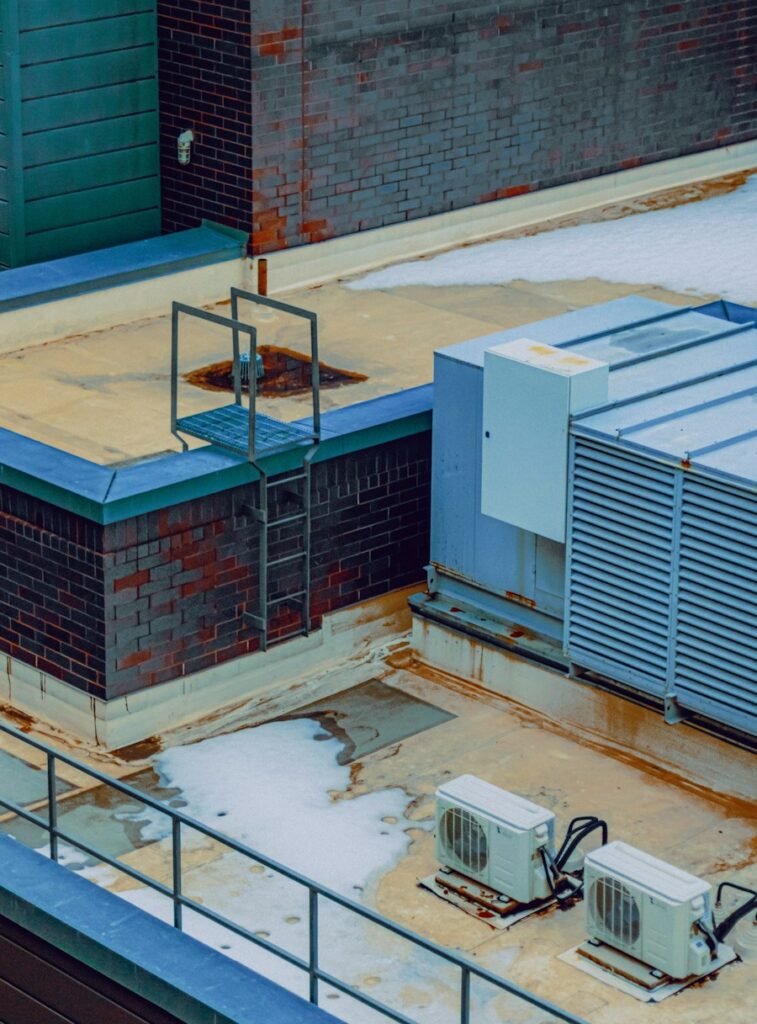
Between Penn Station and the Passaic, streets like Ferry, Wilson, Lafayette and Jefferson are lined with tight rows of frame two- and three-families, many re-sided and expanded over the years. Most have a nearly flat rear roof behind a short front parapet or a small mansard. We see layered tar patches over old modified bitumen, rusted metal coping, scuppers that drain onto a neighbour’s roof and rooftop additions tied in with little flashing. Low ground and heavy rain make drainage the first thing we check.
Forest Hill (North Ward, 07104)
Forest Hill is Newark’s largest historic district, with more than 1,200 homes in Victorian, Arts and Crafts, Tudor and Spanish and Italian revival styles near Branch Brook Park and Mount Prospect Avenue. These roofs carry slate, clay tile accents, copper valleys, turrets and big brick chimneys. Many still have original slate that can be repaired piece by piece. Because the area is a designated district, visible changes such as swapping slate for shingles need city historic review first.
North Ward: Roseville, Broadway and Mount Pleasant
Outside Forest Hill, the North Ward is mostly frame two- and three-families from the early twentieth century on narrow lots off Bloomfield Avenue, Broadway and Orange Street. Many have a low-slope main roof with asphalt shingles on a small front gable or a mansard face. Typical repairs are worn rolled roofing on rear additions, failed step flashing where a two-family meets a taller neighbour, and gutters and leaders that dump water against brick foundations.
Vailsburg (West Ward, 07106)
Vailsburg, along South Orange Avenue and Sanford Avenue toward the East Orange and South Orange lines, has a mix of 1910s to 1930s single-families, brick and frame two-families and some garden apartments. Pitched roofs are more common here than in the Ironbound, often with two layers of asphalt shingles over board sheathing. Ice dams on north-facing eaves, cracked pipe boots, dormer flashing on capes and chimneys no longer in use but never capped are the leaks we see most.
Weequahic (South Ward, 07108 and 07112)
The Weequahic section around Chancellor Avenue, Lyons Avenue and the 311-acre Weequahic Park has many 1920s brick and stucco two-families, Tudor-influenced single-families and apartment buildings. Expect steep front gables with slate or clay remnants, flat rear roofs over sunrooms, and internal gutters built into the eaves that rot and leak into ceilings. The Weequahic Park historic district adds historic review for visible work on the streets inside its boundaries.
Clinton Hill and the Central Ward
Clinton Hill, along Clinton Avenue and Bergen Street, and the Central Ward toward University Heights mix older brick row houses and frame homes with newer townhouse and infill developments built since the 1990s. The newer attached townhomes often have shallow-pitch shingle roofs or membrane roofs with shared drainage, and those attached buildings fall outside the no-permit rule for detached homes. Older brick homes here need parapet repointing, new counter flashing and rebuilt box gutters.
Downtown, Lincoln Park and James Street Commons (07102)
Downtown Newark and the nearby Lincoln Park, James Street Commons and Military Park Commons districts hold nineteenth-century brownstone and brick row houses, converted lofts and mixed-use buildings. Roofs are almost all flat with masonry parapets, bulkhead doors, skylights and rooftop mechanical units. Leaks come from parapet caps, pitch pans around equipment, clogged roof drains and flashing at the bulkhead. Three of Newark’s seven historic districts sit in this cluster, so plan for review on any visible change.
What we fix in Newark
What Roof Problems Are Most Common in Newark?
Most Newark roof leaks start on flat and low-slope roofs: at parapet walls, scuppers and drains, at seams between neighbours’ roofs, and under years of stacked patches. Older pitched roofs add slate, chimney and box-gutter problems, and the city’s heat and record rains speed all of it up.
Shared roofs and party-wall seams
In the Ironbound, the North Ward and Clinton Hill, many homes are attached or built inches apart, and one flat roof runs straight into the next. The seam at the party wall is often a strip of tar or a lapped membrane that each owner patched separately. Water entering on your neighbour’s side can surface in your top-floor ceiling. We trace it from the roof down and document which side of the line the defect is on before anyone pays for work.
Clogged scuppers and undersized leaders
Newark’s flat rear roofs drain through a single scupper or an internal drain into a leader. Leaves from street trees, gravel and old patching material block them, and roofs then pond. The Ida downpour of September 1, 2021 showed how fast a blocked outlet turns a light leak into a ceiling collapse. Clearing and re-flashing the scupper, adding an overflow and upsizing the leader are often cheaper than any membrane repair.
Layer upon layer of tar patches
Decades of quick fixes leave many Newark three-families with a roof that is half original modified bitumen and half roofing cement. Each patch traps moisture and hides the real defect. Infrared or moisture testing is not always needed; cutting a core and checking the deck usually tells us whether a targeted repair will hold or whether the roof has reached the point where a new membrane is the honest recommendation.
Parapet caps and metal coping
Brick and frame parapets at the front of Downtown row houses and Ironbound homes take wind and rain on three sides. Mortar joints open, metal coping rusts at its seams and the membrane flashing up the inside of the wall pulls loose. Water enters the top of the wall and shows up as staining well below the roof. Repointing, a new coping with sealed laps and fresh base flashing fixes most of these.
Heat-cracked dark membranes
Black modified bitumen and old built-up roofs on Newark’s flat roofs run far hotter than the air on a summer afternoon, and the city tied its hottest June day at 103 F on June 24, 2025. Heat dries out asphalt, opens seams and blisters the surface. Reflective coatings on sound membranes or a white TPO or granulated cap sheet on replacement can lower both roof temperature and top-floor heat.
Slate and box gutters on older single-families
In Forest Hill, Weequahic and parts of Vailsburg, roofs from the 1900s to 1930s have slate fastened with nails that are now rusting, copper or terne valleys and box gutters built into the eave. When the gutter lining fails, water goes straight into the cornice and wall. Re-lining a box gutter and replacing broken slate with matched salvage stone keeps the original roof working without changing its look.
Newark weather
Which Storms and Weather Have Hit Newark Roofs?
Newark’s roofs have taken a record rainstorm, a hurricane-force gust, the city’s biggest snowfall and record heat in the last fifteen years. Its low elevation along the Passaic River and Newark Bay also means heavy rain and storm surge reach the city in ways the ridge towns to the west never see.
Ida, September 1, 2021
Newark recorded 8.41 inches of rain, its wettest day on record, and the Newark Airport gauge logged 8.44 inches across the storm. On flat roofs that much water in a few hours exceeded what scuppers and leaders could carry. Roofs ponded above parapet height, water went over flashing that had never been tested that deep, and seams that had held for years opened. Many Newark leak calls from that week were drainage failures rather than worn membranes.
Sandy, October 29, 2012
Superstorm Sandy brought a peak gust of 78 mph at Newark. The tidal surge flooded the Passaic Valley Sewerage Commission treatment plant, which also lost power for three days. On roofs, the wind lifted metal coping, peeled loose membrane edges and stripped shingles from exposed front gables. Rooftop additions and satellite mounts tied in with little flashing were common failure points that still show up as slow leaks on uninspected roofs.
January 22-23, 2016 blizzard
Newark Liberty Airport measured 28.1 inches, its largest snowfall on record. Deep, drifted snow piles up against parapets and in the low corners of flat roofs, and the meltwater refreezes in scuppers and leaders. That ice blocks drainage, so water backs up under flashing. After big snows we recommend clearing drains and checking the high-side edges of rooftop additions where drifts sat longest.
Record heat, June 22-25, 2025
The National Weather Service recorded 101 F, 103 F and 101 F in Newark on June 23, 24 and 25, 2025, plus a record overnight low of 85 F. Heat like that softens asphalt, opens lap seams on modified bitumen, blisters old coatings and shrinks EPDM away from its edges. Top-floor apartments under dark roofs get the worst of it, which is why reflective roof surfaces matter more in Newark than in most towns.
Isaias, August 4, 2020
Tropical Storm Isaias left 48,155 Essex County customers without power, with Newark among the hardest-hit towns. In Newark the wind brought down street-tree limbs onto porch roofs and rear additions and pulled gutters from fascia. Branch Brook Park, Weequahic Park and the tree-lined streets of Forest Hill and Vailsburg had the most limb damage, and punctured roof decks there needed temporary tarps before repairs.
Roofing services
Roof Repair Services We Provide Across Newark
We offer all twelve of our roofing services in Newark, and on most Newark jobs that means flat-roof repair, leak tracing and storm repair on two- and three-families, plus slate and shingle work on older single-families. Each card below says how the service fits Newark homes.
Roof Leak Repair in Newark
In Newark, leak tracing often crosses property lines. We follow stains back through ceilings and up to the roof, check the party-wall seam, scupper and parapet, and photograph the source so you know whether the defect is on your roof or a neighbour’s before you spend money.
Emergency Roof Repair in Newark
After a downpour like Ida or a tree strike in Vailsburg or Forest Hill, request emergency help through our contact page at any hour. We tarp punctured decks, clear blocked scuppers and seal open flashing so water stops entering apartments while the permanent repair is planned.
Storm Damage Roof Repair in Newark
Newark’s storm damage is mostly wind-lifted coping, peeled membrane edges and limb punctures. We document each item with dated photos for your insurer, separate storm damage from old wear, and repair shared roofs in a way both neighbours can confirm.
Roof Replacement in Newark
When a Newark three-family roof is more patch than membrane, replacement with modified bitumen, TPO or EPDM makes sense. Attached buildings and three-unit homes usually need a construction permit, which we handle, and on detached one- and two-families the work is ordinary maintenance.
Roof Inspection in Newark
Our free Newark inspection covers the roof surface, parapets, coping, scuppers, leaders, chimneys and attic or top-floor ceilings. Buyers of Ironbound and North Ward multi-families use it before closing, and landlords use it to plan repairs before tenants report leaks.
Flat Roof Repair in Newark
Flat roofs are the core of Newark roofing. We repair modified bitumen, EPDM, TPO and old built-up roofs, re-flash scuppers and drains, and rebuild party-wall seams on attached homes from Ferry Street to Bloomfield Avenue. See our flat roof repair service for methods.
Metal Roof Repair in Newark
Metal in Newark is mostly coping, mansard faces, porch roofs and old standing-seam or flat-lock tin on Downtown and Lincoln Park row houses. We refasten and reseal seams, replace rusted sections and paint or coat sound metal so it lasts another decade.
Slate Roof Repair in Newark
Forest Hill and Weequahic still have slate on many 1900s to 1930s homes. We replace broken slates with matched salvage stone, re-flash chimneys and rebuild copper valleys so the original roof keeps working and stays consistent with city historic review.
Shingle Roof Repair in Newark
Vailsburg capes, North Ward front gables and the newer Central Ward townhouses carry asphalt shingles. We replace wind-lifted shingles, fix step flashing at dormers and walls, swap cracked pipe boots and check whether a second layer is already on before quoting.
Roof Cleaning in Newark
On Newark flat roofs, cleaning means clearing debris, gravel and leaves from drains and scuppers and washing reflective coatings so they keep reflecting heat. On shaded Forest Hill slate, we remove moss and debris gently without pressure washing the stone.
Gutter Repair in Newark
Many Newark leaders run down shared alleys and dump at foundations. We repair and resize leaders from flat-roof scuppers, re-line box gutters on older homes and re-hang gutters that storms or ice pulled away from fascia on two-families.
Commercial Roofing in Newark
Newark’s corner stores, Ironbound restaurants, churches and Downtown mixed-use buildings run on low-slope roofs with rooftop units. We repair and replace commercial membranes, flash equipment curbs and pitch pans, and pull the permits commercial work always requires.
Newark rules
Do You Need a Permit for Roof Repair in Newark?
Permits & local review
For a detached one- or two-family house in Newark, repairing or replacing the roof covering is ordinary maintenance under N.J.A.C. 5:23-2.7, so no construction permit or inspection is needed. That covers many Vailsburg single-families and detached two-families. Newark’s construction code office does require a permit when the job replaces sheathing or rafters, when the building is attached (row houses, townhomes, many Ironbound and North Ward homes that share walls), when it has three or more units, when it is commercial, or when a third layer of shingles is proposed.
Historic districts add a separate step. Under Newark’s zoning and land use regulations (Title 41, chapter 10), no permit may be issued and no work may begin on a designated property before historic review, and that includes repair or change to any part of the exterior visible from a public street. Applications for minor alterations and ordinary maintenance and repair can be reviewed by the city’s Historic Preservation Officer, who may issue a Certificate of No Effect or send the application to the commission. In Forest Hill, Weequahic Park, Lincoln Park and the downtown districts, ask before you change roofing material; we will prepare photos and product sheets. Condo and townhome associations in the Central Ward also set their own approval rules.
Insurance claims
Homeowners and landlord policies usually cover sudden roof damage in Newark, such as wind-lifted coping, tree limbs or the weight of snow, and usually exclude wear, age and long-term leaks. On attached homes, the first question is often whose roof failed. We photograph the defect and the party-wall line so each owner’s carrier sees the same evidence. Many Newark properties are insured as two- and three-family rentals under dwelling-fire or landlord policies, which can treat interior water damage and tenant loss of use differently from a homeowner policy, so check the declarations page. Flood water entering at ground level during storms like Ida is a flood-policy matter, separate from rain coming through the roof. Your policy and agent have the final word.
Pricing · updated November 2026
How Much Does Roof Repair Cost in Newark?
As of November 2026, most Newark roof repairs fall between $350 and $2,500, with flat-roof seam and scupper repairs on two- and three-families the most common jobs. Slate, deck replacement and permit-required work on attached buildings cost more. These are planning ranges; your price comes from a free inspection and a written quote.
Shingle and small repairs
$350 – $800
A few wind-lifted shingles on a Vailsburg cape or a North Ward front gable, resealed tabs and a quick check of nearby flashing. Narrow driveways and ladder setups off sidewalks can add labor time.
Pipe boots and vent flashing
$250 – $600
New boots or flashing around plumbing vents, bath fans and old range-hood stacks that poke through flat roofs on Ironbound three-families, where heat cracks the rubber collars quickly.
Single-source leak repair
$400 – $1,500
Finding and fixing one leak, whether at a party-wall seam, a scupper, a bulkhead door or a skylight curb. Leaks that cross onto a neighbour’s roof take longer to trace and document.
Flat-roof patch, seam or scupper
$400 – $2,500
Patching modified bitumen or EPDM, rebuilding a scupper and leader connection, re-flashing parapet bases and replacing rusted coping on Newark’s attached frame and brick homes.
Chimney and skylight re-flashing
$400 – $1,800
Skylights usually run $400 to $1,200 and chimneys $600 to $1,800. Forest Hill and Weequahic brick chimneys need step and counter flashing cut into the mortar joints.
Slate, valley and deck repair
$500 – $2,500+
Matched salvage slate in Forest Hill, copper valleys ($500 to $1,500) or a rotted deck section ($500 to $2,000+). Deck work on attached buildings may need a permit, which adds time and fees.
What moves the price in Newark
- Attached versus detached. A detached two-family needs no permit for roof covering work; an attached row house or three-family usually does, adding fees and inspection time.
- Access. Many Ironbound and North Ward homes have no driveway and only a narrow side alley, so materials go up by ladder or hoist from the sidewalk, and a dumpster may need street space.
- Patch history. Roofs with many layers of roofing cement take longer to open up and repair properly than clean membranes.
- Shared seams. Party-wall repairs sometimes need a neighbour’s permission to work on their side, which affects scheduling more than price.
- Historic review. In Forest Hill, Weequahic Park and the downtown districts, matching slate, copper or original details costs more than standard materials.
- Drainage upgrades. Adding an overflow scupper or upsizing a leader after Ida-type flooding is extra but often prevents the next leak.
- Heat-reflective surfaces. Coatings and white membranes cost a little more than black, and they reduce heat on top-floor apartments.
- Deck condition. Old plank decks under Newark flat roofs often have soft areas that are only found when the membrane is opened.
Planning ranges, not quotes, updated November 2026. Based on site-wide repair ranges, the Roof Observations New Jersey roof cost guide (January 2026) and Fixr’s 2026 New Jersey replacement data. A written itemized quote follows your free inspection. More detail is in our roof repair cost guide.
Who does the work
Why Newark Homeowners Choose Roof Repair SNJ
- Repairing NJ roofs for 25+ years
- General liability + workers’ comp insurance
- Workmanship warranty: 2 years on repairs, 10 years on full replacements, in writing
- Photo report with every inspection
Check any roofer before you sign in Newark
Ask for the 13VH registration number and confirm it on the NJ license lookup. NJ law requires a signed written contract showing the registration number and total price, and gives you until midnight of the third business day to cancel (N.J.S.A. 56:8-151).
Nearby
Roofs in Towns Next to Newark
We also work in every town bordering Newark, and each has a different roof mix. Our Essex County roof repair page covers the rest of the county, including the Oranges, Montclair and the Caldwells.
East Orange
East Orange has more brick apartment buildings and 1920s garden complexes than Newark’s frame-house wards, so its typical roofs are larger flat roofs with internal drains, parapets and bulkhead doors. Those are rarely detached one- or two-family homes, so most repairs need permits.
Irvington
Irvington shares Newark’s two- and three-family stock but has more pitched roofs with asphalt over board sheathing, often two layers deep. Low-slope rear additions installed with shingles below their minimum pitch are a frequent leak source there.
Belleville
Across the Second River from Newark’s North Ward, Belleville has capes, bungalows and two-families from the 1920s to 1950s. Dormer flashing on capes and worn pipe boots are the usual calls, with fewer flat roofs than the Ironbound.
Harrison and Kearny (Hudson County)
Across the Passaic from the Ironbound, Harrison and Kearny have similar attached frame and brick homes. Harrison logged 8.72 inches in Ida, the highest total in Hudson County, so drainage repairs on flat roofs are as common there as in Newark.
Elizabeth (Union County)
South of Newark Airport, Elizabeth mixes two-families, brick apartment buildings and industrial roofs. Its bayfront and riverside sections flooded badly in Ida, and its older neighbourhoods have more slate and clay tile than most of Newark’s East Ward.
In depth
Newark Roofing Questions, Answered in Depth
Fixing a flat roof on an Ironbound three-family
Most Ironbound flat roofs can be repaired rather than replaced if the deck is sound and the leaks come from a few identifiable points. A typical three-family on a side street off Ferry Street has a nearly flat rear roof of modified bitumen or an older built-up roof, a short parapet at the front, a scupper on one side and a leader running down the alley. Over the years the roof collects patches at the scupper, around vent stacks and along the party wall.
We start by clearing the surface and opening the drainage path, because a roof that holds water will fail at its weakest seam no matter how well the seam is patched. Then we cut out loose patches rather than coating over them, check the deck with a probe and a core where the surface feels soft, and repair with matching membrane heat-welded or torch-applied by the proper method. Parapet base flashing gets a new strip run at least eight inches up the wall and terminated under counter flashing or coping.
When more than about a third of the roof is blistered, soft or patched, or when the deck is rotted in several places, a new roof is usually the better use of money. On a detached two-family that is ordinary maintenance and needs no permit; on an attached or three-unit building it usually does. Either way, ask for photos of the deck when it is opened, and ask for an overflow scupper if the roof has only one outlet. Newark’s record rain during Ida showed why a second way off the roof matters. Our flat roof repair in Newark follows exactly this sequence.
Repairing slate on a Forest Hill Victorian or Tudor
Slate on a Forest Hill house is usually worth saving; the stone outlasts the nails, flashing and gutters around it. Forest Hill’s more than 1,200 homes include Victorians, Tudors and revival-style houses, many roofed in Pennsylvania or Vermont slate a century ago. The common failures are rusted nails letting slates slip, cracked slates from limbs or foot traffic, worn copper or terne valleys, chimney flashing that has pulled out of the mortar, and box gutters whose lining has split.
Good slate repair means replacing broken pieces with salvage slate of the same size, colour and thickness, fixed with copper slate hooks or nailed and covered by the course above. It means walking on the roof only with ladders and hooks, never straight on the stone. Valleys are rebuilt in copper, and chimneys get new step and counter flashing let into the mortar joints. Coating slate with tar or roofing cement is a sign of the wrong contractor.
Because Forest Hill is a designated historic district, visible exterior work goes through Newark’s historic review. In-kind repair is the easiest path: the city’s Historic Preservation Officer can review ordinary maintenance and issue a Certificate of No Effect. Replacing slate with asphalt shingles or changing the roof’s appearance is a bigger request that may go to the commission. If your slate is near the end of its life, ask for a written assessment showing how many slates are failing and whether the stone itself is delaminating before anyone suggests a full tear-off. See our slate roof repair page for more on methods.
Who pays when a leak crosses from a neighbour’s roof?
In Newark’s attached and near-attached homes, the owner whose roof has the defect is normally responsible, so the first job is proving where the water enters. In the Ironbound, Roseville and parts of Clinton Hill, two flat roofs often meet at a party wall with nothing more than a tar strip or a lapped membrane between them. Water that enters on one side can run along the deck or the wall and appear in the other house.
Our inspection traces the stain from the ceiling up, checks the seam, both sides of any parapet and nearby penetrations, and photographs the defect with the property line in view. If we can safely water-test the suspected area, we do. That gives both owners and their insurers the same evidence. Sometimes the honest answer is that the seam itself is the problem and belongs to both owners equally; then the best fix is a single continuous repair across the joint, agreed and paid for by both.
Practical steps: talk to your neighbour before work starts, get permission in writing if we need to step onto their roof, and ask for a written quote that splits the cost by side if you are sharing it. If the building is attached and the repair includes sheathing or more than covering, a permit is needed, and the applicant should be the owner of the roof being repaired. When neighbours cannot agree, a documented roof inspection is often what settles it.
Landlords: planning roof work around tenants in a Newark multi-family
With about three in four Newark households renting, most roof decisions here are made by landlords, and a little planning avoids tenant complaints and damage claims. A leaking roof on a two- or three-family affects the top-floor tenant first, and water left too long reaches the units below, the electrical system and the plaster ceilings common in older homes.
Schedule a roof inspection in spring and after any big storm, not only when a tenant calls. Ask for a photo report you can keep on file; it helps if a tenant or the city questions the building’s condition, and it helps with insurance claims after events like Ida or Isaias. Give tenants notice before work, especially on flat roofs where we may need access through a bulkhead or the top-floor apartment, and plan torch-applied or noisy work for daytime hours.
Budget wisely. Targeted repairs on a sound roof cost a fraction of replacement and can extend roof life by years. When a roof has been patched many times, though, the repeated service calls and interior damage often cost more over five years than a new membrane. Ask for both options in writing. Remember that three-unit buildings and attached homes usually need a construction permit for replacement, which takes time to issue. A white or reflective membrane can also keep top-floor apartments cooler during heat waves like June 2025, which tenants notice. Our inspection report is written to be shared with property managers.
What Ida taught Newark about roof drainage
On September 1, 2021, Newark’s 8.41 inches of rain showed that many city roofs fail because water cannot get off them fast enough, even when the membrane is in fair shape. A typical Newark flat roof was designed with one scupper or one internal drain and a single leader. In ordinary storms that is enough. In a record downpour, leaves and grit block the outlet within minutes, the roof fills like a tray, and water rises over flashing that ends only a few inches above the deck.
The fixes are mostly simple. Keep the outlet clear with a strainer and twice-yearly cleaning, especially under the street trees of Vailsburg and Forest Hill. Add an overflow scupper set slightly higher than the primary drain, so water has a second exit. Raise base flashing to at least eight inches where possible. Upsize the leader and make sure it discharges away from the foundation rather than into a neighbour’s alley or a clogged yard drain. Where the deck has sagged into a low spot, tapered insulation or crickets can push water toward the outlet.
None of this needs to wait for a full replacement. A drainage upgrade is usually a fraction of the cost of a new roof and can be added during a repair. If your ceiling leaked during Ida, during the heavy rain of summer 2025 or in any cloudburst since, ask for the drainage path to be checked first, before anyone sells you a new membrane. Learn more on our roof leak repair page, or see our wider guide to roof repair NJ.
FAQ
Roof Repair in Newark, NJ: Frequently Asked Questions
How much does roof repair cost in Newark, NJ?
As of November 2026, most roof repairs in Newark cost $350 to $2,500. Small shingle fixes run $350 to $800, a single traced leak $400 to $1,500, and flat-roof seam or scupper work on two- and three-families $400 to $2,500. Slate, deck and permit-required work cost more.
Do I need a permit to replace the roof on my Newark house?
Not for a detached one- or two-family house in Newark; replacing roof covering there is ordinary maintenance under state rules. You do need a permit for attached homes, buildings with three or more units, commercial roofs, sheathing or rafter replacement, or a third shingle layer.
Can I put shingles on a slate roof in Forest Hill?
Forest Hill is one of Newark’s seven historic districts, so changing a visible roof from slate to shingles needs city historic review before work begins. In-kind slate repair can be reviewed by the Historic Preservation Officer, while a material change may go to the commission for a decision.
Who fixes flat roofs on Ironbound three-families?
Roof Repair SNJ repairs modified bitumen, EPDM, TPO and older built-up flat roofs across the Ironbound and the rest of Newark’s East Ward. We trace leaks at party walls, scuppers and parapets, photograph the source and give you a written itemized quote before any work starts.
My neighbour’s roof is leaking into my Newark home. What can I do?
Start with an inspection that traces the stain to its source and photographs it with the property line visible. Share the report with your neighbour and both insurers. In Newark’s attached homes the owner of the failing roof is usually responsible, though a shared seam is often a joint repair.
How fast can you tarp a roof in Newark after a storm?
Emergency requests can be sent through our contact page at any hour. For storm damage in Newark we tarp punctured decks, clear blocked scuppers and seal open flashing to stop water entering apartments, then document the damage with photos and quote the permanent repair in writing.
Why does my Newark flat roof leak only in heavy rain?
A Newark flat roof that leaks only in downpours usually has a drainage problem: a blocked scupper, an undersized leader or base flashing too low for the water depth. Ida showed this citywide in 2021. Clearing the outlet and adding an overflow often fixes it without a new roof.
Does homeowners insurance cover roof damage in Newark?
Usually for sudden damage such as wind, falling limbs or snow load, and usually not for wear or age. Many Newark rentals carry landlord or dwelling-fire policies with different terms. Ground-level flooding from storms like Ida is a flood-policy issue. Your policy and agent decide what is covered.
Are there roofers who work in Vailsburg and Weequahic?
Yes. Roof Repair SNJ works throughout Vailsburg, Weequahic, Clinton Hill and the rest of Newark. Common jobs there are ice-dam leaks on north-facing eaves, dormer and chimney flashing, box-gutter re-lining on 1920s homes and replacing slipped slate on Weequahic Tudors.
Is a white roof worth it on a Newark row house?
Often, yes. Newark hit 103 F on June 24, 2025, and dark flat roofs get much hotter than the air. A reflective coating on a sound membrane, or a white TPO or reflective cap sheet on a new roof, lowers roof temperature and makes top-floor rooms more comfortable.
How do I check a roofer is registered before hiring in Newark?
Ask for the contractor’s New Jersey home improvement registration number, which starts with 13VH, and look it up on the state Division of Consumer Affairs verification site. Newark contracts must be written and signed, list the total price and give you three business days to cancel.
Do townhouses in Newark’s Central Ward need a permit for roof work?
Yes, usually. Attached townhouses fall outside the state’s no-permit rule for detached one- and two-family homes, so roof replacement on a Central Ward or Clinton Hill townhouse normally needs a permit from Newark’s construction office, and your association may also require its own approval.
Reviewed by the Roof Repair SNJ team · Last updated November 2026
Free inspection
Book a Free Roof Inspection in Newark
Whether it is a ponding flat roof in the Ironbound, a slipped slate in Forest Hill or a leak that seems to come from next door in Vailsburg, we will inspect it, photograph it and give you a written itemized quote. Request your free Newark roof inspection or send us photos of the problem. There is no cost and no obligation to go ahead.
No pressure and no obligation. If a repair will do, we’ll tell you.
Roof Repair SNJ
- Serving Newark and all of Essex County
- Request roof service in Newark
- Mon–Fri 5:00 AM–10:00 PM · Sat 5:00 AM–6:00 PM · Emergencies 24/7
Sources: U.S. Census Bureau QuickFacts: Newark city, New Jersey · N.J.A.C. 5:23-2.7 Ordinary maintenance · Newark zoning and land use regulations, historic preservation (Title 41, ch. 10) · Brick Underground: Newark’s historic districts · Effects of Hurricane Ida in the Northeastern United States · NJ Weather and Climate Network: Ida rainfall · Effects of Hurricane Sandy in New Jersey · NJ Weather and Climate Network: January 2016 blizzard recap · NWS New York: June 2025 heat wave · Patch: Isaias power outages hit 48K in Essex County · NJ Division of Consumer Affairs license verification · N.J.S.A. 56:8-151 home improvement contracts · Roof Observations: New Jersey roof cost guide · Fixr: Roof replacement cost in New Jersey. Prices are planning ranges, not quotes. Permit and insurance information is general guidance; your town, policy and agent have the final word.