
Roof Repair NJ › NJ Locations › Hudson County › Union City
Union Hill · West Hoboken · Bergenline · 07087
Roof Repair in Union City, NJ: Flat Roofs for 53,000 People per Square Mile
Roof Repair SNJ repairs flat, low-slope and pitched roofs across all 1.29 square miles of Union City, from three- and four-story walk-ups in Union Hill and West Hoboken to mixed-use buildings on Bergenline Avenue and membrane roofs on the newer condo towers. Each job starts with a free inspection with dated photos, followed by a written itemized quote and a 2-year written workmanship warranty on repairs.
- Flat roofs on walk-ups and storefronts
- Parapets, scuppers and shared roof seams
- Free photo inspection, written itemized quote
Free roof inspection in Union City
Photos of every problem we find and an itemized written price before any work. Emergency requests handled 24/7.
Roof Repair SNJ
Union City · Hudson County · all 21 NJ counties
Free inspection
Roof, attic and gutters checked at no cost.
Insured
Liability and workers’ comp; certificate on request.
Written quotes
Itemized price in writing before any work.
Photo-documented
Every problem photographed, before and after.
Union City at a glance
Union City in 6 Numbers: What They Mean for Its Roofs
With 68,589 residents on 1.29 square miles, Union City is one of the most densely built places in the country, and fewer than 1 in 5 homes is owner-occupied. In practice that means nearly every roof covers several households, sits wall to wall with the next building and is managed by a landlord, condo board or owner living on one floor. The six figures below drive how roofs here are repaired.
Population (2020 Census)
68,589
On just 1.29 square miles of land at the top of the Palisades, so a typical block holds dozens of attached buildings whose roofs meet at shared parapets and seams.
People per square mile
53,294
Census 2020 density figure. With so little ground, there is no yard for a dumpster or ladder on most lots, and roof access is planned from the street or roof hatch.
Owner-occupied homes
19.1%
QuickFacts 2020-2024. Roughly four in five households rent, so roof work is usually commissioned by landlords and condo associations, often for buildings under rent stabilization.
Median owner home value
$471,600
QuickFacts 2020-2024, mostly two- to four-family buildings and condos. Owners balance roof costs against rents that averaged $1,537 a month in the same period.
Homes in one-unit buildings (Hudson)
About 6%
Rutgers’ Hudson County rental profile (ACS 2022). In Union City, detached single-family houses are rarer still, which is why most roof replacements here need a permit.
Year founded
1925
Union City was created on June 1, 1925 by merging West Hoboken and Union Hill. Much of its housing predates the merger; Hudson’s median home dates to 1965 and 29.8 percent to before 1940.
Union City weather
From 8.72 Inches of Rain to 26 Inches of Snow: Weather That Hits Union City Roofs
Union City sits about 190 feet up on the Palisades, so it escapes the storm surge that floods its neighbours but takes the full force of wind, cloudbursts and snow on its flat roofs. These five events and conditions show what that means for roofs here.
Ida, September 1-2, 2021: rivers in the streets
Ida’s remnants dropped 8.72 inches on Harrison, among the highest totals in North Jersey, and Union City residents described Palisade Avenue and side streets as rivers, with 3 to 4 feet of water in some basements. Hudson County was declared a federal disaster area and FEMA held sessions at Union City High School on September 30, 2021. On roofs, single scuppers and drains backed up and water found old seams.
January 23-24, 2016 blizzard: 25 to 26.5 inches
The January 2016 blizzard dropped 25.0 to 26.5 inches across Hudson County. On a flat Union City roof that snow does not slide off; it drifts against parapets and bulkheads, sits for days and melts into any open seam. Older walk-ups with original joists can sag under drifts, so clearing drains before a storm and keeping meltwater moving matter as much as the roofing itself.
February 23, 2026 blizzard: 30.7 inches nearby
The February 23, 2026 blizzard set a Bergen County record of 30.7 inches in Lyndhurst, a few miles west across the Meadowlands. We did not find a Union City total, but a storm of that size loads flat roofs heavily, buries scuppers in drifts and packs ice into gutters and leaders. Afterward, leaks often appear at parapet bases and around hatches as the snow melts in place.
Sandy, October 29, 2012: wind on the ridge
Superstorm Sandy’s surge flooded about half of Hoboken and forced nearly every resident of Weehawken’s Shades neighbourhood out, both below the Palisades a short distance from Union City. The ridge itself stayed above the water, but the same storm drove wind across the exposed Palisades, lifting loose cap flashing, peeling membrane edges at parapets and tearing at rooftop equipment. Roofs on the Palisade Avenue side take the most direct wind from the river.
Freeze-thaw and summer heat
Every winter, temperatures cross freezing many times, and each cycle pushes water deeper into brick parapets, chimney stacks and old mortar on buildings that have stood for 100 years or more. Summers then bake dark flat roofs; Newark’s 103 F on June 24, 2025 is a reminder of how hot it gets. The combination is why Union City parapets and old flat roofs age faster than their age alone suggests.
Pricing · updated November 2026
6 Price Ranges for Union City Roof Repairs in November 2026
As of November 2026, most Union City roof repairs run $400 to $2,500, because most of them are flat-roof, parapet and drain repairs on attached multi-unit buildings. Smaller boot and shingle jobs on two-families cost less. These are site-wide planning ranges, and your written quote follows a free inspection. Our roof repair cost guide explains the figures.
Flat-roof patch or seam repair
$400 – $2,500
Repairing split modified bitumen or EPDM seams, blisters and edges on a Union Hill or West Hoboken walk-up, including the tie-in to the neighbour’s roof at the party wall.
Single-source leak repair
$400 – $1,500
Tracing and fixing one leak through a parapet cap, skylight curb, hatch or scupper, often found two units away from the stain on a top-floor ceiling.
Pipe boot and vent flashing
$250 – $600
Replacing cracked boots and re-flashing plumbing vents, exhaust fans and old flues, a common top-floor leak on buildings with 3 to 6 kitchens and bathrooms venting through one roof.
Minor shingle repair
$350 – $800
Replacing lifted or missing shingles on the pitched front or mansard of a two-family, and resealing the joint where the shingled front meets the flat rear roof.
Chimney or parapet re-flashing
$600 – $1,800
New counter flashing and cap or coping repair on brick parapets and chimney stacks that have faced 100 or more winters of freeze-thaw on the Palisades.
Emergency tarp or temporary seal
$300 – $1,200
Sealing a torn membrane or opened seam after wind or a cloudburst, clearing the drain, and photographing the damage for the building owner or condo board.
What moves the price in Union City
- Access. At 53,294 people per square mile, there is rarely a yard; materials go up through the hatch or by hoist from the street, which adds labour.
- Street permits. A dumpster, hoist or truck on Bergenline Avenue or a narrow side street usually needs city permission and timing around traffic.
- Construction permits. Most replacements are on attached or multi-unit buildings and need a permit and inspection, adding fees and scheduling.
- Layers to remove. Old rear roofs with 3 or 4 layers cost more to strip and dispose of, and rotted boards beneath must be replaced.
- Penetrations. A roof with 10 or more units, fans, vents and brackets takes longer to flash than an open roof of the same size.
- Party-wall tie-ins. Joining new membrane to a neighbour’s older roof needs extra detailing so the seam does not become the next leak.
- Masonry. Parapets and cornices often need repointing or new caps before flashing holds.
Ranges are planning figures as of November 2026, drawn from our site-wide repair ranges and published New Jersey cost data such as the Roof Observations NJ guide (January 2026, low-slope EPDM, TPO and PVC about $5.85 to $7.85 per square foot installed) and Fixr (2026). They are not quotes.
Neighborhoods & homes
7 Union City Sections and the Roofs on Each
Across seven recognisable sections, Union City’s roofs are mostly flat or low-slope roofs on attached buildings 100 years old or more, with a smaller number of pitched-roof two-families and a handful of high-rise membrane roofs. What changes from section to section is building height, how many units share a roof and how the roof drains.
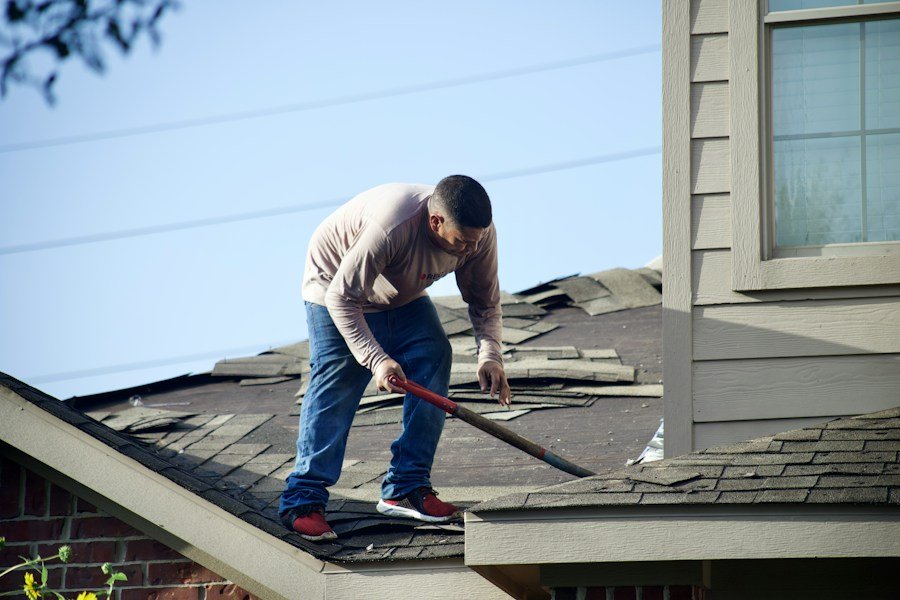
Union Hill (the northern section)
Union Hill was its own town until 1925, and its blocks north toward the West New York line are dense rows of three- and four-story frame and brick walk-ups and two-families, many from the early 1900s. Nearly all have flat roofs behind a front parapet with a scupper or a single drain at the rear. With 3 to 6 apartments under one roof, a leak at one seam often reaches the top-floor ceiling two units away from its source.
West Hoboken (the southern half)
The former West Hoboken, south toward the Jersey City and Hoboken lines, has a similar density but more brownstones, brick row houses and two-families with narrow pitched fronts and flat rears. Many of these buildings are 110 years old or more and have 2 to 4 layers of old roofing on the rear section. Soft deck boards near the scupper, worn parapet caps and old skylight curbs are the most frequent repairs.
Bergenline Avenue, ‘La Avenida’
Union City’s main commercial street runs north-south through the city, lined with mixed-use buildings: shops at street level, 2 to 3 floors of apartments above, and flat roofs crowded with rooftop units, signs and vents. Each of those penetrations is a potential leak. Store owners and upstairs tenants often discover the same leak at different times, so we trace it from the roof and document it for both.
Transfer Station and Summit Avenue
Around Summit Avenue and Paterson Plank Road, the old Transfer Station bus and trolley hub, buildings are a mix of mid-rise apartment blocks, older commercial buildings and walk-ups. Larger flat roofs here have 2 or more internal drains, bulkhead doors and, on some, original built-up tar and gravel. Clogged drains and failed flashing at bulkheads and elevator housings cause most leaks on these bigger roofs.
The Dardanelles on Central Avenue
The Dardanelles is a five-block stretch of Central Avenue from 23rd to 27th Streets, packed with attached residential buildings. Five blocks of continuous rooflines means water can travel along shared seams and party-wall parapets. When one owner re-roofs and the next does not, the joint between old and new membrane becomes the weak point, so we pay close attention to how a repair ties into the neighbour’s roof.
Palisade Avenue and the cliff edge
Along Palisade Avenue, home to City Hall at number 3715, buildings sit at about 190 feet near the Palisades edge facing Weehawken and the Manhattan skyline. Converted industrial buildings such as the former Yardley soap factory and the Union Hill Arts Building on 39th Street, once a silk mill, have big flat roofs with skylights and old roof hatches. The exposure here means more wind-driven rain against parapets and roof edges.
Kennedy Boulevard, Washington Park and the towers
On the west side, along Kennedy Boulevard and near the 22-acre Washington Park and 14.4-acre Reservoir Park, older walk-ups mix with the 22-story Troy Towers of 1966 and condo towers built since 2003, including The Thread (2008), the Altessa and Park City Grand. Tower roofs carry modified bitumen, TPO or EPDM with large mechanical areas and are managed by associations under reserve budgets and service contracts.
What we fix in Union City
6 Roof Problems Union City Owners Report Most
Six problems account for most Union City roof calls, and five of them involve flat roofs: shared seams between attached buildings, overloaded scuppers and drains, layered patches, parapet caps, rooftop penetrations and summer heat on dark roofing. Each one is tied to how the city is built.
Shared roofs across party walls
At 53,294 people per square mile, most Union City buildings share at least one wall with a neighbour, and on many blocks the roofs run continuously from building to building. A defect on one roof can show up as a stain next door. We trace leaks on both sides of the line and photograph exactly where the defect is, so two owners, or an owner and a condo board, can agree on who repairs what.
One scupper for a whole roof
Many walk-ups drain a 1,000 to 2,000 square foot roof through a single rear scupper or one internal drain. When Ida’s remnants dropped 8.72 inches on nearby Harrison in September 2021, outlets like that could not keep up, and residents described Palisade Avenue as a river. A blocked or undersized outlet floods the roof behind the parapet. Clearing, re-flashing and adding an overflow scupper are some of the best-value repairs here.
Decades of layered patches
Buildings that are 100 years old have often been patched every few years for decades. We regularly open rear roofs in West Hoboken and Union Hill with 3 or 4 layers of tar, roll roofing and coating over rotted boards. Each layer traps moisture and adds weight. Past a certain point patching stops working, and the right answer is to strip to the deck, replace soft boards and install a new membrane with a permit.
Parapet caps and front cornices
The front parapets of Union City walk-ups often carry a decorative cornice, stone or terracotta caps and metal flashing that is 50 years old or more. Open cap joints and cracked mortar let water into the wall, where it appears on the top floor several feet from the roof edge. Resetting caps, adding metal coping and replacing counter flashing at the roof line stop leaks that a membrane patch never reaches.
Penetrations on crowded roofs
A mixed-use building on Bergenline Avenue can have 10 or more penetrations: rooftop units, exhaust fans for restaurants below, plumbing vents, satellite dishes, sign brackets and a roof hatch. Every one needs a pitch pan, curb flashing or boot, and every one dries out. Restaurant exhaust grease also softens some roofing materials. We inspect and reseal or rebuild each penetration rather than coating over the whole roof.
Heat on dark flat roofs
On June 24, 2025, Newark, a few miles to the south-west, tied its hottest June day at 103 F. Dark tar, modified bitumen and EPDM roofs in Union City run far hotter than the air on days like that, which softens old patches, opens blisters and shrinks aging membrane at the edges. A reflective coating or a white TPO membrane on replacement keeps the top-floor apartments cooler and slows the aging.
Roofing services
12 Roofing Services and How Each Applies in Union City
Of the 12 services we offer, flat-roof repair, leak tracing and parapet and drain work make up most Union City jobs, followed by emergency and storm repairs and commercial roofs on Bergenline Avenue. Each is described here for Union City buildings; full details are on each roof repair NJ service page.
Roof Leak Repair in Union City
In a building with 3 to 6 units under one flat roof, the stain rarely sits below the leak. We trace water from the top-floor ceiling to the parapet, scupper, seam or penetration it entered through, and show you the photos before quoting a repair.
Emergency Roof Repair in Union City
When a cloudburst floods a roof behind its parapet or wind peels a membrane edge over a top-floor apartment, request emergency help through the contact page at any hour. We clear drains, tarp or seal the opening and document the damage for the owner’s insurer.
Storm Damage Roof Repair in Union City
After storms like Ida in 2021 or the 2016 and 2026 blizzards, we check Union City roofs for split seams, lifted parapet flashing, damaged hatches and rooftop units, and ponding left behind, with a dated photo report for adjusters and condo boards.
Roof Replacement in Union City
When a walk-up roof has 3 or more patch layers over soft boards, we strip it to the deck, replace rotted boards and install a new modified bitumen, EPDM or TPO roof. In Union City that work almost always needs a construction permit, which we include in the plan.
Roof Inspection in Union City
Our free inspection covers the membrane, seams, parapets, caps, scuppers, drains, hatches, skylights and every penetration, plus the top-floor ceilings where we can see them. Landlords and condo boards get a written condition report with dated photos.
Flat Roof Repair in Union City
Flat roofs make up the large majority of what we repair in Union City. We fix modified bitumen, EPDM, TPO and built-up roofs, rebuild scuppers and internal drains, install overflow scuppers and tie repairs cleanly into a neighbour’s roof at the party wall.
Metal Roof Repair in Union City
Metal on Union City roofs means parapet coping, cornice flashing, scupper boxes, leaders and old pressed-metal cornices on walk-ups. We replace rusted sections, refasten loose coping and seal joints so wind on the Palisades cannot lift them.
Slate Roof Repair in Union City
Slate is uncommon in Union City but survives on some church roofs, older two-families and mansard fronts. We replace broken slates individually with matching stone and re-flash the junction where a slate mansard meets the flat roof behind it.
Shingle Roof Repair in Union City
Pitched shingle roofs appear on the front slopes of some two-families and on rowhouse mansards. We replace lifted shingles, repair the edge where the shingled front meets the flat rear, and fix step flashing against taller neighbouring walls.
Roof Cleaning in Union City
Flat roofs in Union City collect grit, leaves, restaurant exhaust residue and debris from rooftop work. We clear the surface and drains, remove debris that blocks scuppers and can apply a reflective coating that cuts heat on sound membranes.
Gutter Repair in Union City
Most Union City buildings drain through scuppers and leaders rather than long gutters. We rebuild scupper boxes, replace cracked and undersized leaders, clear internal drains and fix the short gutters on two-families that empty onto a neighbour’s wall.
Commercial Roofing in Union City
We repair roofs on mixed-use buildings along Bergenline Avenue, Summit Avenue and Kennedy Boulevard, churches, schools and converted factory buildings, with written scopes and photos for owners, tenants and managers who share responsibility for the roof.
Union City rules
Why Most Union City Roof Jobs Need a Permit When Only About 6% of Hudson Homes Are Single-Unit
Permits & local review
Most Union City roof replacements need a construction permit, because most buildings here are attached or have three or more units. Under N.J.A.C. 5:23-2.7, re-roofing is ordinary maintenance only on detached one- and two-family dwellings, and in a county where about 6 percent of homes are in one-unit buildings, those are rare in Union City. Row houses, walk-ups, mixed-use buildings and condo buildings need a permit, as does deck or rafter replacement on any building and any third layer.
Permits go through the city’s construction code office, which its code calls the Construction Code Agency of the City of Union City, led by a Construction Official with building, plumbing and fire subcode officials. Jobs that involve structural roof framing need drawings, and the city code calls for architect or engineer plans for many residential projects. Condo roofs need board approval, and a dumpster or hoist on a city street usually needs city permission. Historic review is limited: the Monastery and Church of Saint Michael the Archangel is the city’s only National Register listing, and the Blue Chapel was designated a city historic site on November 3, 2010.
Insurance claims
With about 80 percent of Union City households renting, most roof claims here are filed by building owners and condo associations, while tenants’ belongings fall under their own renters policies. Homeowners and building policies generally cover sudden damage such as wind tearing a membrane, a rooftop unit blown loose, or the weight of ice and snow, and generally exclude wear, age and neglect. Flood is separate: basement water from Ida’s street flooding in 2021 was a flood matter, while rain entering through a storm-damaged roof can be a roof claim. On attached buildings, establishing which roof failed matters, so we photograph seams and parapets on both sides of a party wall. Your policy and agent have the final word.
Who does the work
Why Union City Homeowners Choose Roof Repair SNJ
- Repairing NJ roofs for 25+ years
- General liability + workers’ comp insurance
- Workmanship warranty: 2 years on repairs, 10 years on full replacements, in writing
- Photo report with every inspection
Check any roofer before you sign in Union City
Ask for the 13VH registration number and confirm it on the NJ license lookup. NJ law requires a signed written contract showing the registration number and total price, and gives you until midnight of the third business day to cancel (N.J.S.A. 56:8-151).
Nearby
5 Bordering Towns and How Their Roofs Differ
Union City is the only Hudson County municipality surrounded entirely by other Hudson towns, and all five of its neighbours share its dense, flat-roof character to some degree. The differences come down to height, waterfront exposure and building age. For the county view, see our Hudson County roof repair page.
Jersey City
Jersey City, to the south, has the same walk-ups in the Heights but adds brownstone historic districts Downtown and waterfront towers. Downtown districts bring historic commission review that Union City owners rarely face. See our Jersey City roof repair page for details.
Hoboken
Hoboken, below the cliff to the south-east, is a mile-square city of brownstones and row houses, about half of which flooded in Sandy. Its Historic Preservation Commission reviews visible exterior work in its district, and flood rules shape repairs in ways Union City’s ridge avoids.
Weehawken
Weehawken, to the east, mixes cliff-top houses and apartment buildings along Boulevard East with the low waterfront Shades area that emptied during Sandy. Its cliff-edge roofs take even more river wind than Palisade Avenue buildings do.
West New York
West New York, to the north, continues Union City’s pattern of walk-ups and two-families on narrow lots, with more high-rise apartment buildings on Boulevard East. Roof problems there mirror Union Hill’s: shared seams, single scuppers and layered patches.
North Bergen
North Bergen, to the west and north, has more detached one- and two-family houses with pitched shingle roofs toward its western neighbourhoods, so more of its re-roofing falls under the no-permit ordinary-maintenance rule than in Union City.
Service areas
Roof Repair Near Union City: Hudson County Service Areas
We serve Union City and every town around it. Bordering towns we also cover include Hoboken, Weehawken, West New York, North Bergen. See all of Hudson County on our Hudson County roof repair page or browse every county on the New Jersey service areas page.
All 12 towns we serve in Hudson County
Bayonne · East Newark · Guttenberg · Harrison · Hoboken · Jersey City · Kearny · North Bergen · Secaucus · Weehawken · West New York
In depth
5 Union City Roof Questions, Worked Through With Numbers
Patch or replace a 100-year-old walk-up roof?
A Union City flat roof is worth patching when the membrane is mostly sound and the defect is local; once there are 3 or more layers, soft boards near the scupper or blisters across more than a small share of the surface, replacement is the better spend. Many walk-ups in Union Hill and West Hoboken date to the early 1900s, and Hudson County’s housing has a median build year of 1965 with 29.8 percent built before 1940. Those older roofs have usually been patched every few years for decades.
Start with layers. New Jersey allows a maximum of 2 roof layers, so a roof that already has 2 must be stripped before re-roofing. In practice we often find 3 or 4 on older rear roofs, which is a code issue as well as a weight and moisture issue. Next, the deck. We probe around scuppers, drains and parapet bases, where rot starts. A few soft boards can be replaced during a repair; widespread softness means tear-off.
Then compare costs. A patch or seam repair runs $400 to $2,500. Low-slope membranes like EPDM, TPO and PVC cost about $5.85 to $7.85 per square foot installed in New Jersey before insulation, according to the Roof Observations guide (January 2026). On a 1,200 square foot walk-up roof that is a meaningful investment, but repeated $1,000 patches every year or two catch up quickly, especially when each leak also damages a tenant’s ceiling.
Finally, permits. On an attached or multi-unit building, replacement needs a permit from the city’s Construction Code Agency. We include permit time in the schedule. If you choose to patch, you get photos and a written note on what we expect to fail next, so you can plan a replacement in the following budget year instead of in an emergency.
Sizing drains and scuppers after Ida’s 8.72 inches
If your Union City roof flooded behind its parapet during Ida, the outlet was almost certainly too small, blocked, or both, and adding an overflow scupper is usually the cheapest permanent fix. On September 1-2, 2021, Ida’s remnants dropped 8.72 inches on Harrison, and Union City residents described Palisade Avenue as a river. Most of that rain fell in a few hours.
Consider the arithmetic. One inch of rain on 1,000 square feet of roof is about 620 gallons. A typical Union City walk-up roof of 1,000 to 2,000 square feet therefore had to shed many thousands of gallons through, in many cases, a single rear scupper or one internal drain. Any blockage from leaves, grit, or loose roofing debris and the water rises against the parapet, finding cap joints, flashing laps and old seams that are dry in an ordinary storm.
What we do: clear and test the existing outlet, replace corroded scupper boxes and strainers, check the leader for cracks or undersizing, and where the wall allows, cut an overflow scupper set slightly above the primary one. If the roof surface has low spots that hold water for more than about 48 hours after rain, we can add tapered insulation or crickets during replacement to move water to the outlets.
For associations and landlords, keep in mind that the basement flooding many Union City residents faced during Ida was flood damage, not roof damage, and the two are handled differently by insurers. Rain that came through a storm-damaged roof is a separate matter. Our dated photos document the roof side so the distinction is clear. Clearing outlets twice a year, in spring and after leaf fall, prevents most drain-related leaks.
Who pays when a leak crosses a party wall
When water enters on one Union City roof and shows up next door, the owner whose roof has the defect is usually responsible for repairing it, which is why a documented inspection of both sides comes first. With 53,294 people per square mile and blocks like the five-block Dardanelles stretch of Central Avenue, continuous rooflines are normal here. Seams at party walls are often a strip of flashing or a lapped membrane that each owner patched separately over many years.
Our process is straightforward. We inspect from the roof down, wet-test suspected areas where safe, and photograph the exact location of the defect relative to the property line, the parapet and any shared flashing. We then give each owner a written description. Often the problem is the joint itself, in which case the fairest fix is a single tie-in detail done once and shared.
Condo and co-op buildings add a layer. The roof is typically a common element, and repairs need board approval and are paid from association funds or reserves; unit owners usually should not hire roofers for the common roof on their own. For rental buildings under the city’s rent stabilization rules, owners sometimes ask the Rent Stabilization Board about capital improvement applications after a full replacement; the board’s minutes show such applications on its agenda, and the ordinance and board decide what qualifies.
Whatever the ownership structure, avoid a repair that ends at the property line without a proper termination. A new membrane stopped short against an old neighbour’s roof, with roofing cement filling the gap, becomes the next leak within a year or two. We terminate under a counter flashing or a proper cap, and repairs carry a 2-year written workmanship warranty.
Snow on flat roofs: 26 inches in 2016, 30.7 nearby in 2026
On a flat Union City roof, heavy snow mostly stays put, so the risks are drifting against parapets and bulkheads, blocked outlets and meltwater finding open seams, and on old framing, excess weight. The January 2016 blizzard dropped 25.0 to 26.5 inches across Hudson County, and the February 23, 2026 blizzard set a Bergen County record of 30.7 inches in Lyndhurst, a few miles west.
Fresh, dry snow is light, but wet, wind-packed snow and ice are much heavier, and drifts along parapets on the lee side can be two or three times the depth of the general snowfall. Older Union City walk-ups were framed with the lumber and spans of their era, and many have had extra roofing layers added since. If a top-floor ceiling cracks, sags or a door starts to stick during a heavy storm, treat it as urgent.
Before winter, the most useful steps are simple: clear scuppers and drains so meltwater can leave, make sure leaders are not cracked or frozen solid at the bottom, and fix open seams and parapet caps in the fall. During a storm, do not send tenants onto the roof with shovels; metal shovels cut membranes, and parapets are low. If removal is needed, it should be done by a crew with fall protection, leaving a thin layer of snow to protect the roofing.
After the melt, look for stains along exterior walls and around hatches and skylights, where water sitting against flashing for days finds a way in. We offer a post-storm inspection with dated photos. Damage from the weight of snow and ice is typically covered by building policies, while slow deterioration is not, so photographs taken soon after the event are important.
Cooler top floors: reflective roofs after 103 F
Replacing or coating a dark Union City flat roof with a reflective surface lowers roof temperatures sharply, slows membrane aging and can make top-floor apartments noticeably more comfortable. On June 24, 2025, Newark, a few miles to the south-west, tied its hottest June day at 103 F. Black tar, dark modified bitumen and EPDM surfaces run far hotter than the air on days like that.
In a building where 3 to 6 households live under one roof, the top floor carries much of the heat load. Older walk-ups often have little or no insulation between the roof deck and the top-floor ceiling, so the roof surface temperature reaches into those rooms directly. Heat also softens old roofing cement and patches, opens blisters and shrinks membranes at the edges, which is why some leaks first appear in July.
There are two main options. On a sound existing roof, a reflective coating rated for the membrane type can be applied after the surface is cleaned and any seams and blisters are repaired. Coatings do not fix leaks on their own, and on a roof with multiple patch layers or wet insulation they trap moisture, so we only recommend them where the roof underneath is in good shape. On replacement, a white TPO membrane or a cap sheet with a reflective surface builds the benefit in, and it can be combined with tapered insulation that improves drainage too.
On condo towers near Washington Park and Kennedy Boulevard, mechanical areas and the roofs above them follow the association’s service plan, and boards often weigh reflective options at replacement time. For walk-up owners, the choice usually comes up when the roof is due anyway. We can price both a standard and a reflective option in the same written quote, so you can compare.
FAQ
Roof Repair in Union City, NJ: Frequently Asked Questions
Does a Union City roof replacement need a permit?
Usually yes. Only detached one- and two-family houses are exempt under New Jersey’s ordinary-maintenance rule, and most Union City buildings are attached or have three or more units. Walk-ups, row houses, mixed-use and condo buildings need a permit from the city’s construction code office, as does any deck replacement.
How much does a flat roof repair cost in Union City?
As of November 2026, most Union City flat-roof patches and seam repairs run $400 to $2,500, and single-leak repairs $400 to $1,500. Access through hatches, street permits for hoists and party-wall tie-ins can push costs up. A free inspection gives you a written itemized quote for your building.
Why does my top-floor Union City apartment leak in heavy rain?
Most often a single scupper or drain is blocked or too small, water backs up behind the parapet and enters through cap joints, flashing or old seams. On a building with 3 to 6 units, the stain may be far from the entry point. Tell your landlord, who can arrange an inspection.
My neighbour’s roof joins mine in Union Hill. Who fixes the leak?
Usually the owner whose roof has the defect. In Union Hill and other attached blocks, we inspect both sides, photograph exactly where the defect sits relative to the party wall, and give each owner a written note. When the shared joint itself has failed, one shared tie-in repair is often the fairest fix.
Is there a historic district in Union City that affects roofing?
Union City has no designated historic district that we found. Its only National Register listing is the Monastery and Church of Saint Michael the Archangel, and the Blue Chapel was named a city historic site in 2010. Most Union City roof work faces construction permits, not historic review.
Can you repair a roof on Bergenline Avenue with a store below?
Yes. Bergenline Avenue mixed-use buildings often carry rooftop units, restaurant exhaust fans and sign brackets that each need flashing. We schedule around store hours where possible, trace leaks for both the business and upstairs tenants, and provide a written scope and photos for the owner.
How many roof layers are allowed on a Union City building?
New Jersey allows a maximum of two layers of roof covering. Many older Union City walk-ups already have two or more on the rear roof, so replacement means stripping to the deck, replacing soft boards and installing a new membrane, with a permit on attached or multi-unit buildings.
Did Ida damage roofs in Union City?
Ida’s September 1-2, 2021 rain, 8.72 inches in nearby Harrison, overwhelmed many Union City scuppers and drains, and residents described Palisade Avenue as a river. Most reported damage was basement flooding, but roofs ponded behind parapets and leaked at weak seams. Hudson County received a federal disaster declaration.
Should I shovel snow off my flat roof in Union City?
Not yourself. Metal shovels cut membranes and parapets are low. Clear scuppers and drains before a storm, watch top-floor ceilings for sagging or cracks during heavy snow like the 25 to 26.5 inches of January 2016, and have a crew with fall protection remove snow if needed.
Does a Union City condo owner hire the roofer?
Usually not. In Union City condo buildings and towers, the roof is normally a common element, so the association approves and pays for repairs from its funds or reserves. Unit owners should report leaks to the board or manager, who can request an inspection and a written scope.
How do I check a roofer working in Union City?
Every home improvement contractor in Union City must be registered with the New Jersey Division of Consumer Affairs, with a number starting 13VH and at least $500,000 in liability insurance. Check the number on the state site and get a written contract with the price and a three-day cancellation right.
Can a white roof keep my Union City top floor cooler?
Yes. Dark flat roofs get far hotter than the air on days like Newark’s 103 F on June 24, 2025. A reflective coating on a sound roof, or a white TPO membrane at replacement, lowers roof temperature, slows aging and helps top-floor apartments in Union City walk-ups stay cooler.
Reviewed by the Roof Repair SNJ team · Last updated November 2026
Free inspection
Get a Free Union City Roof Inspection
One scupper, one seam or one parapet cap is usually behind a Union City leak, whether on a Union Hill walk-up, a Bergenline Avenue storefront or a West Hoboken row house. Book a free Union City roof inspection and get dated photos and a written itemized quote you can share with tenants, neighbours or your board. Repairs carry a 2-year written workmanship warranty.
No pressure and no obligation. If a repair will do, we’ll tell you.
Roof Repair SNJ
- Serving Union City and all of Hudson County
- Request roof service in Union City
- Mon–Fri 5:00 AM–10:00 PM · Sat 5:00 AM–6:00 PM · Emergencies 24/7
Sources: U.S. Census Bureau QuickFacts: Union City city, New Jersey · Union City, New Jersey (Wikipedia: history, sections, parks, landmarks) · City of Union City code: Construction Code Agency · City of Union City: Hurricane Ida FEMA assistance notice · Hudson County View: Union City residents seek FEMA help after Ida · Union City Rent Stabilization Board minutes, June 10, 2024 · Rutgers: Hudson County Rental Housing Profile (ACS 2022) · Stacker: Counties with the oldest homes in New Jersey (ACS 2023 5-year) · Office of the NJ State Climatologist: Ida rainfall totals · Office of the NJ State Climatologist: January 2016 blizzard recap · Patch: February 2026 blizzard ranks in NJ history · Effects of Hurricane Sandy in New Jersey (Wikipedia) · National Weather Service: June 2025 heat wave summary · N.J.A.C. 5:23-2.7 Ordinary maintenance (Cornell LII) · NJ Division of Consumer Affairs license verification · N.J.S.A. 56:8-151 Home improvement contracts (Justia) · Roof Observations: New Jersey roof cost guide (Jan 2026) · Fixr: Roof replacement cost in New Jersey (2026). Prices are planning ranges, not quotes. Permit and insurance information is general guidance; your town, policy and agent have the final word.