
Roof Repair NJ › NJ Locations › Hudson County › Jersey City
Downtown · The Heights · Greenville · 07302
Roof Repair in Jersey City, NJ: Brownstones, Heights Row Houses and Flat Roofs Citywide
Roof Repair SNJ repairs flat, low-slope and pitched roofs across Jersey City, from brownstones in Paulus Hook, Van Vorst Park and Hamilton Park to frame row houses in the Heights and two-families in Greenville and Bergen-Lafayette. Every job starts with a free inspection and dated photos, and you get a written itemized quote plus a 2-year workmanship warranty on repairs.
- Brownstone and row house flat roofs
- Historic district paperwork help Downtown
- Free photo inspection, written itemized quote
Free roof inspection in Jersey City
Photos of every problem we find and an itemized written price before any work. Emergency requests handled 24/7.
Roof Repair SNJ
Jersey City · Hudson County · all 21 NJ counties
Free inspection
Roof, attic and gutters checked at no cost.
Insured
Liability and workers’ comp; certificate on request.
Written quotes
Itemized price in writing before any work.
Photo-documented
Every problem photographed, before and after.
Jersey City at a glance
Jersey City at a Glance: What Shapes Its Roofs
Jersey City is a dense, mostly renter-occupied waterfront city where the typical roof is flat, shared with a neighbour and sitting on a building more than a century old. Five local historic districts, a Downtown that floods from the Hudson and a ridge-top Heights exposed to wind make roof work here different from anywhere else in Hudson County.
Population (2020 Census)
292,449
New Jersey’s second-largest city on just 14.74 square miles of land, so most homes share party walls and roof edges with the buildings beside them.
Owner-occupied homes
27.9%
Census QuickFacts, 2020-2024. Roof decisions are usually made by landlords, two-family owners or condo and co-op boards rather than single homeowners.
Median owner home value
$566,900
QuickFacts 2020-2024. High values Downtown and in the Heights justify careful repair of cornices, slate mansards and original details rather than cheap patches.
Median gross rent
$2,007
QuickFacts 2020-2024. Landlords protecting rental income need fast leak response, because a top-floor leak quickly becomes a tenant habitability problem.
Local historic districts
5
Hamilton Park, Harsimus Cove, Paulus Hook, Van Vorst Park and West Bergen-East Lincoln Park. Work in them needs a Certificate of No Effect or a Certificate of Appropriateness first.
Sandy flood peak
About 10:30 p.m., Oct. 29, 2012
The Hudson overtopped the wall at Exchange Place and Liberty Harbor spilled into Marin Boulevard; Downtown, City Hall and the Medical Center flooded and half the city lost power.
Neighborhoods & homes
Which Jersey City Neighbourhoods Have Which Roofs?
Jersey City’s roofs follow its geography: nineteenth-century brick and brownstone row houses in the Downtown historic districts, frame row houses and walk-ups on the Heights ridge, two-families and small apartment houses in Journal Square, Bergen-Lafayette and Greenville, and membrane roofs on the high-rise waterfront.
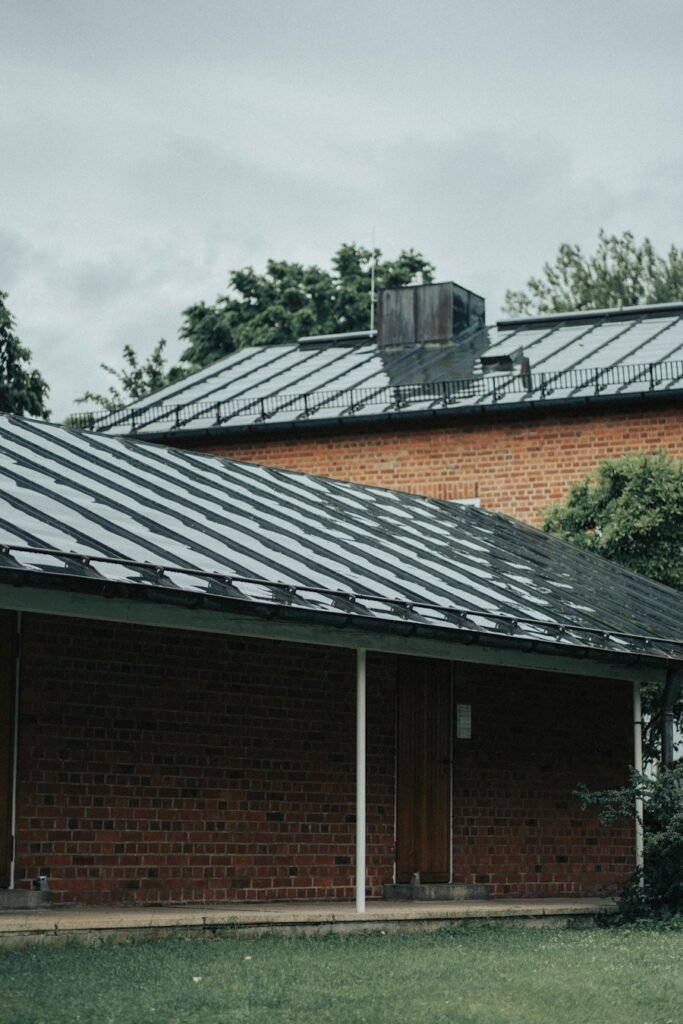
Paulus Hook (07302)
Paulus Hook, around Grand, Washington, Sussex and Warren Streets near Exchange Place, has some of the city’s oldest brick and brownstone row houses, many with wooden cornices and a nearly flat roof draining to the rear. During Sandy only a few intersections stayed dry and Warren and Montgomery flooded about a foot. Roof issues here are parapet caps, cornice leaks, old chimney flues and roof hatches. Because it is a local historic district, front cornice and visible roof changes need city sign-off.
Van Vorst Park and Hamilton Park
The row houses around Van Vorst Park and Hamilton Park, along Jersey Avenue, Montgomery Street, Erie Street and Ninth Street, date mainly from the mid to late 1800s and include brownstones, Italianate brick fronts and some mansard roofs with slate. Rear flat roofs often carry decks added in the 2000s. Leaks start where deck sleepers sit on the membrane, at the mansard-to-flat joint and at shared parapets. Both are designated districts, so rooftop additions go to the commission.
Harsimus Cove and the waterfront
Harsimus Cove, between Grove Street and the Newport waterfront along Second, Third and Fourth Streets, has brick row houses on blocks that sit just a few blocks from the Hudson. Next to it, Newport and the Exchange Place towers run on large commercial membranes managed by associations. Row-house roofs here suffer from clogged rear drains, failed flashing on roof decks and bulkheads, and salt-laden wind off the river that corrodes metal coping faster than inland.
The Heights (07307)
The Heights sits on the Palisades ridge above Hoboken, around Central Avenue, Palisade Avenue, Riverview Park and Ogden Avenue. Housing is mostly frame row houses and two- and three-families from about 1890 to 1930, many with aluminum or vinyl siding over clapboard and a pitched front with a flat rear. The ridge catches strong wind, so we see lifted roll roofing, loose coping and torn flashing more here than Downtown, plus ice backing up in shallow rear gutters.
Journal Square and McGinley Square (07306)
Around Journal Square, Bergen Avenue, Kennedy Boulevard and Montgomery Street toward McGinley Square, the stock mixes brick apartment buildings from the 1910s to 1930s, frame two-families and newer mid-rise condos. Apartment roofs are built-up or modified bitumen with internal drains, parapets and stair bulkheads. Typical calls are blocked drains, blistered membranes, leaking flashing at rooftop units and skylights over stairwells. Most of these buildings need permits for anything beyond small repairs.
Bergen-Lafayette and West Bergen-East Lincoln Park (07304)
Bergen-Lafayette, around Communipaw Avenue, Pacific Avenue and Bergen Avenue, and the West Bergen-East Lincoln Park district near Lincoln Park and Kennedy Boulevard, hold late nineteenth and early twentieth-century brick and frame row houses and larger single-families with front gables and some slate. Many were renovated after long vacancies. We often find new interiors under old roofs: decayed deck boards, missing drip edge and box gutters that were covered rather than repaired.
Greenville (07305)
Greenville, in the city’s south end along Ocean Avenue, Danforth Avenue and Garfield Avenue toward Bayonne, has many frame two-families, brick two-families and small apartment houses from the 1910s to 1950s, plus some detached homes on slightly bigger lots. Pitched shingle roofs are more common here than Downtown. Worn second layers of shingles, failing flashing at chimneys and dormers, sagging gutters and low-slope rear additions are the usual repairs.
West Side and Lincoln Park area
The West Side, along West Side Avenue toward Route 440 and the Hackensack River, mixes detached and semi-detached frame homes with garden apartments and newer townhouse developments. Townhouse rows and condos often share one roof and one association, which changes who orders repairs. Detached homes here are one of the few places in Jersey City where a roof replacement can be ordinary maintenance with no permit at all.
What we fix in Jersey City
What Roof Problems Are Most Common in Jersey City?
Jersey City roof leaks most often start at shared parapets, rear drains, roof decks and cornices on attached row houses, and at worn membranes on apartment buildings. Waterfront wind and salt, Downtown flooding and historic-district rules shape how each one is repaired.
Roof decks on row houses
Downtown and Heights row houses have gained thousands of rear roof decks. When sleepers sit directly on the membrane or deck posts are screwed through it, every fastener is a future leak, and water travels under the deck where no one can see it. The city’s historic commission reviewed a rooftop deck at 245 Third Street in Harsimus Cove in 2021, which shows how closely these additions are watched. We lift deck sections, repair the membrane and re-set sleepers on protective pads.
Cornices and front parapets
Brownstone and Italianate fronts in Paulus Hook, Van Vorst Park and Hamilton Park end in a wood or galvanized-metal cornice with a flat roof just behind. Rot in the cornice box, open joints in its metal cover and failed flashing where the roof meets the parapet send water into front rooms below. Repair in kind keeps the cornice’s look and usually counts as staff-level work in the historic districts.
Shared roofs and neighbour seams
With most Jersey City homes attached, one roof often flows into the next without a firm break. Neighbours re-roof at different times with different materials, leaving a joint of mismatched membrane and roofing cement. Water entering there can appear two houses away. We document which side of the line the defect is on and, where both owners agree, run one continuous repair across the seam.
Clogged rear drains and leaders
Many Jersey City row houses drain to a single rear scupper or internal drain that feeds a leader through a narrow rear yard. Leaves from street trees, wind-blown debris and old patching material block them. During Ida on September 1, 2021, Jersey Avenue, Newark Street, 18th Street, Montgomery Street and Route 7 flooded, and many top-floor leaks that night came from roofs that could not drain.
Salt air and wind on the waterfront and Heights
Blocks near the Hudson, Liberty Harbor and the Hackensack get salt-laden wind, and the Heights stands on the exposed Palisades ridge. Galvanized coping, steel flashing and old fasteners corrode faster there. Wind gets under loose membrane edges and peels them back. Stainless or aluminum flashing, fully adhered membrane edges and properly sealed coping laps last longer in these locations.
Aging roofs on renovated buildings
Bergen-Lafayette, McGinley Square and the West Side have many buildings renovated inside while the roof was left alone or just coated. We often find a new kitchen under an old built-up roof, soft deck boards near the rear wall and box gutters covered over with membrane. A full inspection before buying or renting out a renovated Jersey City building catches what the listing photos miss.
Jersey City weather
Which Storms and Weather Have Hit Jersey City Roofs?
Jersey City’s defining storm is Sandy, which flooded Downtown from the Hudson and Liberty Harbor in 2012, followed by Ida’s flash flooding in 2021 and major snowstorms. Its waterfront position also means steady salt air and wind exposure that inland towns do not face.
Sandy, October 29, 2012
The Hudson overflowed a wall at Exchange Place and Liberty Harbor spilled into southern Marin Boulevard. Water ran down Columbus Drive and Marin Boulevard and spread through low-lying blocks, peaking around 10:30 p.m. City Hall and the Jersey City Medical Center flooded, the mayor ordered evacuations of basement and first-floor units east of Greene Street and south of Columbus Drive, and half the city lost power. PATH service took until late January 2013 to fully recover.
Ida, September 1, 2021
Ida’s remnants brought 2 to 5 inches of rain to Jersey City and heavy flooding on Jersey Avenue, Newark Street, 18th Street, Route 7, Charlotte Circle and Montgomery Street, while nearby Harrison recorded 8.72 inches. The Newark to World Trade Center PATH bypassed Harrison because of flooding. For roofs, intense rain over a short time overloaded rear scuppers and leaders, and water rose over low base flashing on flat roofs.
January 22-23, 2016 blizzard
Hudson County received 25.0 to 26.5 inches of snow. On Jersey City’s flat roofs, drifts built up against parapets, bulkheads and the higher roof of the next building, and meltwater refroze in rear drains. Ice blocking a drain lets water back up under flashing, so the leak calls came days after the storm, during the thaw, rather than during the snowfall itself.
December 23, 2022 coastal storm
A powerful December storm pushed water at the nearby Bergen Point gauge to 9.1 feet above mean lower low water, with strong winds across Hudson County. For Jersey City roofs, the wind was the main threat: loose membrane edges, coping and rooftop equipment on the Heights and waterfront blocks are the most exposed. Storms like this test fastening at every roof edge.
Salt air and freeze-thaw, every year
Being bordered by the Hudson, Upper New York Bay and the Hackensack means Jersey City’s roofs live with salt-laden air, which corrodes galvanized metal, and with winter freeze-thaw cycles that open mortar joints in parapets and chimneys. These slow forces cause more leaks over a decade than any single storm, which is why we inspect metal and masonry on every visit.
Roofing services
Roof Repair Services We Provide in Jersey City
All twelve of our services are available in Jersey City, and here most work centres on flat-roof repair, leak tracing on attached row houses and storm repair near the waterfront. Each card shows how the service applies to Jersey City buildings.
Roof Leak Repair in Jersey City
We trace Jersey City leaks from the top-floor ceiling to the roof, checking party-wall seams, deck fasteners, cornices and rear drains, and photograph the source so you know whether it is your roof, a neighbour’s or a shared seam before any money is spent.
Emergency Roof Repair in Jersey City
When a storm floods a rear roof in the Heights or a limb hits a Greenville two-family, send an emergency request through our contact page at any hour. We stop the water with tarps, drain clearing and temporary seals, then quote the permanent repair in writing.
Storm Damage Roof Repair in Jersey City
Storm damage in Jersey City is usually peeled membrane edges, lifted coping, damaged rooftop equipment curbs and debris punctures. We document each item with dated photos for insurance and separate storm damage from older wear on the same roof.
Roof Replacement in Jersey City
Replacing a Jersey City row-house roof typically means a new modified bitumen, TPO or EPDM membrane with new flashing and drains. Because most homes here are attached, replacement usually needs a permit from the Division of the Construction Code Official, which we handle.
Roof Inspection in Jersey City
Our free Jersey City inspection covers membrane, seams, parapets, cornices, decks, bulkheads, drains and the top-floor ceilings below. Buyers of Downtown brownstones and Journal Square multi-families use it before closing to price roof work into their offer.
Flat Roof Repair in Jersey City
Most Jersey City roofs are flat. We patch and re-seam modified bitumen, EPDM and TPO, rebuild drains and scuppers, and repair the joints between neighbouring roofs from Paulus Hook to the West Side. See how on our flat roof repair page.
Metal Roof Repair in Jersey City
Metal in Jersey City means galvanized cornice covers, coping, mansard faces and some old flat-seam tin roofs on Downtown row houses. We repair seams, replace corroded sections with longer-lasting metals near the water and refinish sound metal.
Slate Roof Repair in Jersey City
Slate survives on mansards around Hamilton Park and Van Vorst Park and on front gables in West Bergen-East Lincoln Park. We replace broken slates with matched stone and re-flash the mansard-to-flat joint, keeping the appearance the historic districts expect.
Shingle Roof Repair in Jersey City
Shingle roofs are concentrated in Greenville, the West Side and on Heights front gables. We replace wind-lifted shingles, repair step flashing where a pitched front meets a flat rear, and replace cracked pipe boots.
Roof Cleaning in Jersey City
In Jersey City, roof cleaning mostly means clearing rear drains, scuppers and the space under roof decks, where leaves and debris collect and hold water against the membrane. We also clean reflective coatings so they keep top floors cooler.
Gutter Repair in Jersey City
Rear leaders on Jersey City row houses run through tight yards and often discharge into failing yard drains. We repair and resize leaders, fix box gutters behind cornices and re-hang front gutters on Greenville and West Side two-families.
Commercial Roofing in Jersey City
Corner stores on Central Avenue, Journal Square mixed-use buildings, churches and walk-up apartment houses need commercial membrane repair, equipment-curb flashing and drain work. Commercial roof work always needs a permit, which we arrange.
Jersey City rules
Do You Need a Permit or Historic Approval for Roof Work in Jersey City?
Permits & local review
Only detached one- and two-family homes in Jersey City can have their roof covering repaired or replaced without a permit, under the ordinary-maintenance rule in N.J.A.C. 5:23-2.7. Most Jersey City homes are attached row houses, three-families or apartment buildings, so a permit from the Division of the Construction Code Official, part of the Department of Housing, Economic Development and Commerce, is usually needed for replacement. Any job that replaces sheathing or rafters, adds a third layer or involves a commercial building needs one too.
Inside the five local historic districts, Hamilton Park, Harsimus Cove, Paulus Hook, Van Vorst Park and West Bergen-East Lincoln Park, owners must secure a Certificate of No Effect or a Certificate of Appropriateness before work begins. The city describes staff-approved work as rehabilitation, restoration, maintenance and repairs, while the commission reviews rooftop additions, new construction, demolition and work inconsistent with the city’s standards. A new roof deck or a visible change in roofing material is a commission matter; in-kind roof repair is usually a staff matter. Condo and co-op buildings Downtown and on the waterfront need board approval as well. We will prepare photos and product details for each step.
Insurance claims
Homeowners, landlord and condo master policies usually cover sudden roof damage in Jersey City, such as wind-peeled membrane or a falling limb, and usually exclude wear and gradual leaks. Downtown, the bigger distinction is water from above versus water from below: Sandy’s flooding along Marin Boulevard and Columbus Drive was a flood-insurance event, while rain through a roof is a homeowners claim. In condo buildings the association’s master policy normally covers the roof, and unit owners cover their interiors. For attached row houses, our photos show exactly where the defect sits relative to the property line, which helps when two insurers are involved. Policy language and your agent have the final word.
Pricing · updated November 2026
How Much Does Roof Repair Cost in Jersey City?
As of November 2026, most Jersey City roof repairs cost $350 to $2,500, with flat-roof seam, drain and roof-deck repairs on row houses the most common. Permit-required work on attached buildings, slate mansards and cornice repairs can cost more. These are planning ranges; your written quote follows a free inspection.
Shingle and small repairs
$350 – $800
Replacing a few lifted shingles on a Greenville or West Side two-family or a Heights front gable, plus a check of surrounding flashing. Street parking for the truck often shapes scheduling on busy blocks.
Pipe boots and vent flashing
$250 – $600
New collars and flashing around plumbing vents, kitchen exhausts and old flues on row-house flat roofs, where ponding water and heat shorten the life of rubber boots.
Single-source leak repair
$400 – $1,500
Tracing and fixing one leak at a parapet, roof hatch, skylight or deck post. Leaks under roof decks cost more because deck boards must be lifted and reset.
Flat-roof patch, seam or drain
$400 – $2,500
Membrane patches, party-wall seam repair, rear scupper and drain rebuilds and new base flashing on brownstones and frame row houses across Downtown and the Heights.
Chimney, skylight and bulkhead flashing
$400 – $1,800
Skylights run $400 to $1,200 and chimneys $600 to $1,800. Stair bulkheads and roof hatches on Jersey City row houses fall in the same range.
Slate, cornice and deck repair
$500 – $2,500+
Matched slate on Hamilton Park mansards, cornice flashing, copper valleys ($500 to $1,500) or a rotted deck section ($500 to $2,000+). Historic-district detail adds cost.
What moves the price in Jersey City
- Permits on attached homes. Most Jersey City buildings are attached, so replacement and deck work usually need a permit, adding fees and inspection time.
- Historic paperwork. In the five local districts, a Certificate of No Effect or Certificate of Appropriateness comes first, and in-kind materials such as slate or copper cost more.
- Roof decks. Lifting and resetting deck sections to reach the membrane adds labor to any repair beneath them.
- Access. No driveways and few rear alleys mean materials go up through a hatch, by ladder from the street or by hoist, and dumpsters may need a street permit.
- Parking. Downtown and Heights blocks have tight parking, which can affect timing and crew size.
- Waterfront metals. Stainless or aluminum flashing near the Hudson and Hackensack costs more than galvanized and lasts much longer in salt air.
- Hidden deck rot. Old plank decks under renovated roofs often hide soft sections found only when the membrane is opened.
These Jersey City figures are planning ranges for November 2026, not quotes. They draw on our site-wide repair ranges, the January 2026 Roof Observations New Jersey cost guide (low-slope EPDM, TPO and PVC about $5.85 to $7.85 per sq ft installed) and Fixr’s 2026 New Jersey data. Your own price comes in writing after a free inspection; our roof repair cost guide explains more.
Who does the work
Why Jersey City Homeowners Choose Roof Repair SNJ
- Repairing NJ roofs for 25+ years
- General liability + workers’ comp insurance
- Workmanship warranty: 2 years on repairs, 10 years on full replacements, in writing
- Photo report with every inspection
Check any roofer before you sign in Jersey City
Ask for the 13VH registration number and confirm it on the NJ license lookup. NJ law requires a signed written contract showing the registration number and total price, and gives you until midnight of the third business day to cancel (N.J.S.A. 56:8-151).
Nearby
Roofs in Towns Next to Jersey City
We work in all of Jersey City’s neighbours, and their roofs differ more than people expect. Our Hudson County roof repair page covers all twelve Hudson towns.
Hoboken
Hoboken’s Mile Square is almost entirely brownstone and brick row houses with flat roofs, like Downtown Jersey City, but a much larger share of the city sat in flood zones after Sandy. Its own Historic Preservation Commission reviews visible exterior work.
Bayonne
South of Greenville, Bayonne has many more frame two-families with pitched shingle roofs and a long exposure to Newark Bay and the Kill Van Kull. Wind-driven rain and salt corrosion on gutters and flashing are bigger factors there.
Union City
North of the Heights on the same Palisades ridge, Union City is dense three- and four-story walk-ups with flat roofs and parapets. Roof work there is almost always on attached buildings, so permits are routine.
Kearny
Across the Hackensack from the West Side, Kearny mixes brick two-families and detached frame homes with pitched roofs. More homes there are detached, so more roof replacements count as ordinary maintenance with no permit.
Secaucus
Secaucus has newer townhouse developments and detached homes in the Meadowlands, with shingle roofs and association-managed buildings. HOA rules matter more there than historic districts, and the low land is exposed to wind across the marsh.
In depth
Jersey City Roofing Questions, Answered in Depth
Repairing a brownstone roof in a Downtown historic district
On a brownstone in Paulus Hook, Van Vorst Park, Hamilton Park or Harsimus Cove, most roof repair is in-kind maintenance that city staff approve with a Certificate of No Effect, as long as nothing visible changes. The flat rear roof is rarely visible from the street, but the cornice, front parapet, mansard and any rooftop structure usually are.
Here is how a typical job runs. We inspect and photograph the roof, cornice and parapets and write a scope that names materials. If the work is repair of existing materials, such as patching membrane, re-flashing a chimney, replacing broken mansard slate with matching stone or re-covering the cornice in the same profile, you or we submit it to the city’s historic preservation staff for a Certificate of No Effect before work starts. If you want something new and visible, such as a roof deck, a bulkhead, a raised parapet or a different material on the mansard, it becomes a Certificate of Appropriateness application for the commission.
Plan time for both steps. Attached row houses also usually need a construction permit for replacement, and the historic sign-off comes first. Keep copies of photos showing the existing condition; they help staff confirm the work is truly in-kind. Many historic roofs have hidden value: original cornice brackets, copper flashing and slate that can last decades more with proper care. Coating a cornice with tar or wrapping it in vinyl may look like a quick fix, but it traps water and is the kind of change the districts are meant to prevent. Our slate roof repair work on mansards follows the same in-kind approach.
Roof decks on Jersey City row houses: leaks, approval and repair
A roof deck is the most common source of hidden leaks on Jersey City row houses, and in the historic districts it is also the most closely reviewed rooftop addition. The commission’s 2021 review of a rooftop deck at 245 Third Street in Harsimus Cove is a public example of how these projects are examined for visibility and fit.
Leaks under decks start in three ways. Sleepers or deck frames sit directly on the membrane, and their weight and movement wear through it. Posts and railings are screwed through the roof, and each fastener becomes a hole. Debris collects under the boards and holds water against seams and drains. Because the deck hides the roof, the leak may run for months before a ceiling stains.
The repair approach is to lift the deck sections over the suspected area, clean and dry the membrane, repair or replace it, add protection board or pads under every sleeper and flash any post that must penetrate the roof with a proper pitch pan or sleeve. Where possible we recommend a free-floating deck on pedestals that never penetrates the membrane, with removable panels at drains and seams.
If you are adding or rebuilding a deck, check first whether your block is in a historic district; new decks there require a Certificate of Appropriateness. Attached buildings need a construction permit as well. And whatever the deck design, make sure the membrane underneath is close to new: a 15-year-old roof under a new deck will fail first, and lifting a new deck to replace it is expensive.
After Sandy: roofing in Downtown’s flood-prone blocks
Downtown Jersey City learned in 2012 that water can arrive from the Hudson and Liberty Harbor as well as from the sky, and both affect how roof systems should be built. Sandy’s surge overtopped the wall at Exchange Place, ran down Columbus Drive and Marin Boulevard, turned Paulus Hook into an island and forced evacuations of basement and first-floor units east of Greene Street and south of Columbus Drive. Half the city lost power.
Flood water does not reach roofs, but floods change roof decisions. Many owners in these blocks moved boilers, electrical panels and condensers up and out of basements after Sandy, often onto the roof. Every new rooftop unit needs a proper curb, flashing and a path for water around it, and a heavy unit set on an old deck can cause ponding. If equipment has moved to your roof, the flashing around its curb and the conduit and line-set penetrations deserve close checking.
Wind is the other Sandy lesson. Storms that push water into Downtown also blow hard across the open harbour, so roof edges, coping and membrane laps near the waterfront need full adhesion and sealed fastening. After any major coastal storm, we suggest an inspection of edges and equipment even if no leak has appeared. For insurance, remember that surge or ground-level flooding is a flood-policy matter, while wind or rain damage through the roof is a homeowners or master-policy claim; documenting which is which matters. Our storm damage roof repair team photographs both.
Condos, co-ops and two-family owners: who orders the roof repair?
In Jersey City, where barely more than a quarter of homes are owner-occupied, the person living under a leaking roof is often not the person who can authorize its repair. Knowing who decides saves weeks.
In a condominium, whether a converted brownstone in Hamilton Park or a tower on the waterfront, the roof is almost always a common element. The association orders and pays for repairs from its budget or reserves, and unit owners report leaks to the board or managing agent. Our inspection report can be addressed to the association, with photos the board can share with owners. In a co-op, the corporation plays the same role.
In a two-family or three-family where the owner lives in one unit, the owner decides, but tenants should report leaks in writing quickly. Top-floor tenants are usually the first to see stains. Owners should act before water reaches wiring or plaster below, and should keep the inspection photos as records.
In attached buildings with separate owners, the roof often belongs to each owner within their property lines, so a leak at a shared seam may involve two decision makers. A documented inspection that shows exactly where the defect sits makes those conversations easier. If you are buying in Jersey City, ask for the association’s roof history and reserve study, or get your own inspection of a row house before closing. Many renovated buildings in Bergen-Lafayette and McGinley Square have new interiors under old roofs. A clear roof inspection report before you buy is the cheapest protection.
Wind and ice on the Heights: roofs on the Palisades ridge
Homes in the Heights sit on the Palisades ridge above Hoboken and the Hudson, and their roofs take more wind than most of Jersey City. The typical Heights home is a frame row house or two- or three-family built between about 1890 and 1930, often with a short pitched front roof or false mansard and a flat rear roof.
Wind exposure shows up as lifted roll roofing on rear flat sections, loose metal coping on parapets, torn flashing where the pitched front meets the flat rear, and shingles peeled from the front slope. Roofs near Riverview Park, Ogden Avenue and the cliff edge get the strongest gusts. A good repair here uses fully adhered membranes, additional fastening at edges, wind-rated shingles and sealed coping laps, all of which cost little extra at the time of repair.
Winter brings a second problem. Shallow rear gutters and single scuppers freeze, and snow drifts against the taller building next door. Meltwater then backs up under the flashing of the lower roof. In the January 2016 blizzard Hudson County received 25 to 26.5 inches of snow, and many leaks appeared during the thaw a few days later. Keeping drains clear in late fall, extending flashing higher up neighbouring walls and adding a heat-traced leader in extreme cases all help. If your Heights roof leaks only in winter or in wind-driven rain from the east, ask for those specific conditions to be checked. You can read more about general roof repair NJ conditions on our homepage.
FAQ
Roof Repair in Jersey City, NJ: Frequently Asked Questions
How much does roof repair cost in Jersey City, NJ?
As of November 2026, most roof repairs in Jersey City cost $350 to $2,500. A single traced leak runs $400 to $1,500 and flat-roof seam or drain repairs $400 to $2,500. Slate mansards, cornice work and permit-required jobs on attached row houses can cost more.
Do I need a permit to replace my roof in Jersey City?
Only detached one- and two-family homes in Jersey City are exempt under the state ordinary-maintenance rule. Attached row houses, three-families, apartment buildings and commercial roofs usually need a permit from the Division of the Construction Code Official, as does any sheathing or rafter work.
Do I need historic approval to fix my roof in Paulus Hook?
Yes, Paulus Hook is one of Jersey City’s five local historic districts, and work there needs a Certificate of No Effect or a Certificate of Appropriateness first. In-kind maintenance and repairs are usually approved by staff, while visible changes and rooftop additions go to the commission.
Why does my roof deck leak in Jersey City?
Jersey City roof decks usually leak where sleepers wear through the membrane, posts are fastened through the roof or debris traps water under the boards. Repair means lifting deck sections, fixing the membrane, adding protection pads and flashing any penetration properly.
Who is responsible for a leak from my neighbour’s roof in the Heights?
Usually the owner of the roof with the defect. Heights row houses often share seams, so an inspection should trace the leak and photograph it with the property line visible. Shared seams are often repaired jointly, with both owners splitting one continuous repair.
Does my condo association fix the roof in Jersey City?
In most Jersey City condominiums the roof is a common element, so the association orders and pays for repairs and the master policy covers sudden roof damage. Unit owners should report leaks to the board or managing agent in writing and photograph any interior damage.
Did Sandy damage roofs in Downtown Jersey City?
Sandy mainly flooded Downtown from the Hudson and Liberty Harbor on October 29, 2012, but its winds also lifted coping and membrane edges near the waterfront. Many owners later moved equipment to roofs, adding curbs and penetrations that need careful flashing.
What roofing works best near the Jersey City waterfront?
Near the Hudson and Hackensack, fully adhered membranes, stainless or aluminum flashing and sealed coping laps resist salt air and wind best. Galvanized metal corrodes faster in Jersey City’s waterfront blocks, so we inspect metal on every visit there.
How do I find a roofer for a Journal Square apartment building?
Look for a registered contractor experienced with built-up and modified bitumen roofs, internal drains and rooftop units. Journal Square apartment buildings need permits for most work. Roof Repair SNJ offers a free inspection with photos and a written itemized quote.
Is a roof replacement on a West Side house exempt from permits?
If it is a detached one- or two-family house on the West Side, replacing the roof covering is ordinary maintenance with no permit needed. Attached townhouses or homes needing new sheathing still need a permit from Jersey City’s construction office.
Can you repair slate mansards around Hamilton Park?
Yes. We replace broken slates on Hamilton Park and Van Vorst Park mansards with matched stone, re-flash the joint between the mansard and the flat roof and repair copper details. In-kind repair keeps the appearance the historic district expects and is usually staff-approved.
How do I check a Jersey City roofer is legitimate?
Ask for the New Jersey home improvement registration number, starting 13VH, and verify it on the Division of Consumer Affairs site. Your contract must be written and signed, list the total price, include proof of insurance and give you three business days to cancel.
Reviewed by the Roof Repair SNJ team · Last updated November 2026
Free inspection
Get a Free Roof Inspection in Jersey City
From a brownstone cornice in Paulus Hook to a leaking rear roof in the Heights or a worn shingle roof in Greenville, we will inspect it, photograph it and explain your options. Book a free Jersey City roof inspection or send us photos of the leak. You get a written itemized quote with no obligation.
No pressure and no obligation. If a repair will do, we’ll tell you.
Roof Repair SNJ
- Serving Jersey City and all of Hudson County
- Request roof service in Jersey City
- Mon–Fri 5:00 AM–10:00 PM · Sat 5:00 AM–6:00 PM · Emergencies 24/7
Sources: U.S. Census Bureau QuickFacts: Jersey City, New Jersey · N.J.A.C. 5:23-2.7 Ordinary maintenance · Jersey City Historic Preservation · Jersey City HPC staff report, 245 Third Street roof deck · Jersey City Division of the Construction Code Official · Effects of Hurricane Sandy in New Jersey · Patch: Several roads flood in Jersey City during Ida · NJ Weather and Climate Network: Ida rainfall · NJ Weather and Climate Network: January 2016 blizzard recap · NWS: Bergen Point coastal flood impacts · NJ Division of Consumer Affairs license verification · N.J.S.A. 56:8-151 home improvement contracts · Roof Observations: New Jersey roof cost guide · Fixr: Roof replacement cost in New Jersey. Prices are planning ranges, not quotes. Permit and insurance information is general guidance; your town, policy and agent have the final word.