
Roof Repair NJ › NJ Locations › Sussex County
Vernon, Sparta, Newton, Hopatcong, 24 towns
Roof Repair in Sussex County, NJ: Built for New Jersey’s Snow Belt
Roof Repair SNJ fixes leaks, ice dam damage, storm damage and worn flashing on homes across all 24 Sussex County municipalities, from Vernon and Sparta to Newton, Hopatcong and Wantage. Every visit starts with a free inspection and photos of what we found, followed by a written, itemized quote, with repairs backed by a 2-year workmanship warranty in writing.
- Ice dam and snow load repairs
- Free inspection with roof photos
- Written itemized quote, 2-year repair warranty
Free roof inspection in Sussex County
Photos of every problem we find and an itemized written price before any work. Emergency requests handled 24/7.
Roof Repair SNJ
24 Sussex County towns · all 21 NJ counties
Free inspection
Roof, attic and gutters checked at no cost.
Insured
Liability and workers’ comp; certificate on request.
Written quotes
Itemized price in writing before any work.
Photo-documented
Every problem photographed, before and after.
Sussex County at a glance
Sussex County, NJ at a Glance for Homeowners
Sussex County is the highest, snowiest corner of New Jersey, and its roofs carry more winter than anywhere else in the state. Ridges, lake basins and long rural roads shape what fails on a Sussex roof and how a repair has to be planned, so these six facts frame everything else on this page. For statewide guidance, see our roof repair NJ overview.
County seat
Newton
Newton’s Town Plot Historic District, listed on the National Register in 1992, holds the county’s densest block of 19th-century houses and older roofs.
Towns and people
24 municipalities, 144,221 residents
2020 Census municipal totals. Vernon Township (22,358) and Sparta (19,600) are the largest; Walpack, inside the Delaware Water Gap recreation area, counted 7 residents.
Highest point
High Point, 1,803 ft
High Point in Montague Township is the highest natural elevation in New Jersey. Its monument weather station logged a 56 mph gust during the March 2, 2018 nor’easter.
Average snowfall
40 to 50 inches a year
The State Climatologist puts the northern highlands at 40 to 50 inches, against 10 to 15 inches in the far south. The Kittatinny Valley near Newton is known locally as the Snow Belt.
Median home built
1972
American Community Survey 2023 five-year data reported by Stacker: Sussex’s median home dates to 1972, and 14.1 percent of homes were built in 1939 or earlier.
Frost-free season
About 155 days
Rutgers climate data for the northern zone: last killing frost around May 4 and first around October 7, which leaves a short window for roofing work.
Homes & roofs
What Kinds of Homes and Roofs Does Sussex County Have?
Sussex County roofs are mostly asphalt shingles on 1970s and 1980s raised ranches, split-levels and colonials, mixed with converted lake bungalows, ski-area condos, mining-town houses and old farmhouses with metal or slate. Each group fails in its own way, so the first thing a good inspection settles is which kind of house you have.
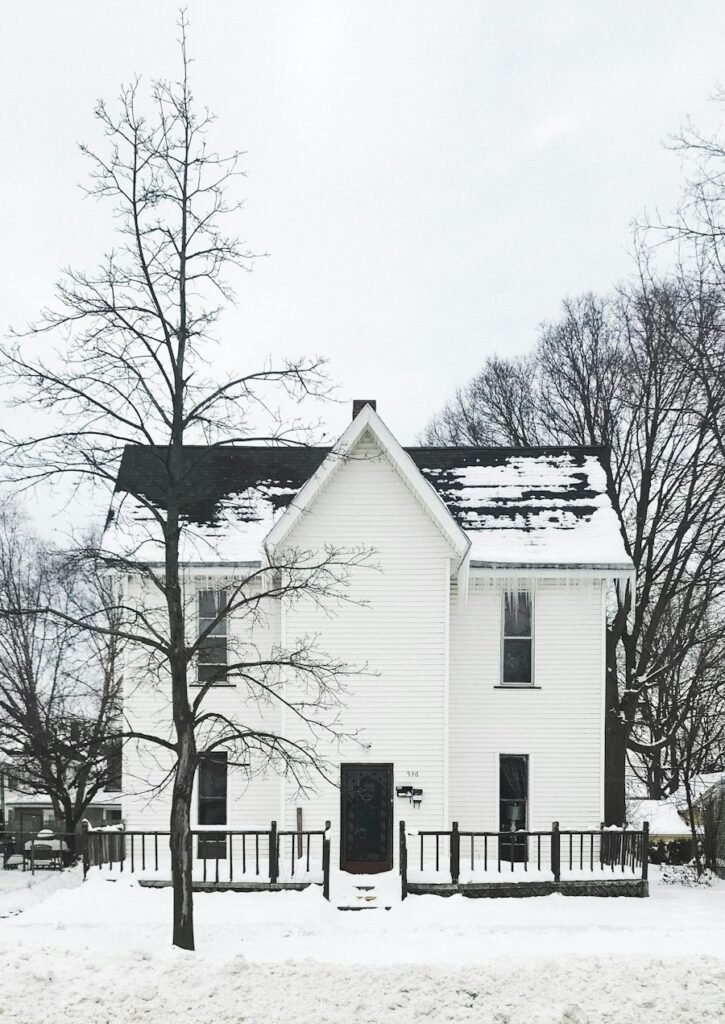
1970s and 1980s raised ranches and split-levels
With a median build year of 1972, a huge share of Sussex homes are raised ranches, bi-levels and split-levels in subdivisions across Vernon, Sparta, Byram, Hardyston and Wantage. Most are on their second or third asphalt roof. The weak spots we see over and over are the low-pitch roof over the lower level of a split, where snow sits for weeks, short eave overhangs with no ice and water shield, and bathroom fans vented into the attic instead of through the roof.
Converted lake bungalows and cottages
Hopatcong, Highland Lakes in Vernon, Culver Lake in Frankford, Lake Owassa and the lake neighbourhoods of Byram and Stanhope started as summer bungalows and second homes. After Route 80 arrived in the 1960s many became year-round houses with insulation, dormers and additions pushed onto old framing. Expect roofs layered over roofs, shallow-pitch shed additions, undersized rafters and moss on the shaded side under tall hemlocks and oaks.
Lake Mohawk alpine-style homes
Lake Mohawk, split between Sparta and Byram, was built from 1926 on with an alpine motif, and many older homes there have steep gables, turret-like bays, stone chimneys and small dormers. Those details mean more flashing per square foot than a typical colonial. Steep pitches shed snow well, but valleys and chimney crickets collect ice, and replacement shingles have to suit the look the neighbourhood is known for.
Vernon ski-area condos and townhomes
Around Mountain Creek in Vernon, the 1980s brought the 1,300-unit Great Gorge Village condominium development, followed by Black Creek Sanctuary from 2002 and The Appalachian in 2006 and 2007. Attached roofs with shared ridges, long runs of valley and heavy snow off the mountain make leaks travel between units. Work usually goes through an association, and attached buildings need a construction permit even for re-roofing.
Newton, Branchville and Sussex Borough village houses
Newton’s Town Plot district, Branchville’s Main Street and the borough of Sussex have 19th- and early 20th-century houses with tall gables, front porches with their own low roofs, box gutters built into the cornice and brick chimneys. Box gutters and porch roofs are where most of the leaks start. Some still have slate or old tin under later shingle layers, which changes how a repair is approached.
Franklin, Ogdensburg and Hamburg mining-era homes
Zinc mining drove Franklin and Ogdensburg in the late 1800s and early 1900s, and both towns, along with neighbouring Hamburg, still have compact frame houses from that era on small lots. Many have been re-roofed with asphalt over original boards, with low porch roofs, chimney stacks that have lost mortar and roof-to-wall joints where siding was never properly lapped over step flashing.
Farmhouses, bank barns and outbuildings
Wantage, Frankford, Montague, Lafayette, Green and Sandyston still carry the county’s dairy history, even though the number of dairy farms fell from 137 in 1982 to 30 in 2002. Farmhouses often have standing-seam or ribbed metal on porches and barns, sometimes slate on the main house, and outbuildings with corrugated panels. Rusted fasteners, lifted seams and snow sliding onto lower roofs are the usual problems.
Sussex County weather
How Does Sussex County Weather Damage Roofs?
Snow, ice and cold do most of the damage to Sussex County roofs, followed by wind and falling trees in summer storms and the remnants of tropical systems. The events below are real, dated storms that hit the county and the roof problems each one tends to leave behind.
The Snow Belt and the February 2021 nor’easter
The northern highlands average 40 to 50 inches of snow a year, and the storm of January 31 to February 3, 2021 dropped 32.0 inches at both Andover and Newton, with Newton logging 48.4 inches for the month. Snow that deep loads framing, packs into valleys and sits on low-slope sections for weeks. On older lake cottages and porch roofs we check for sagging, cracked rafters and nail pops after winters like that.
March 2018: four nor’easters in one month
March 2018 brought four nor’easters. Branchville measured 16.5 inches on March 2, Highland Lakes 21.0 inches on March 6 and 7, and Hardyston totalled 37.3 inches for the month, while the High Point Monument station gusted to 56 mph. Heavy, wet spring snow is the worst kind for gutters and ice dams, and back-to-back storms left no time for roofs to clear before the next one.
October 29, 2011: snow on leafy trees
The National Weather Service reported 8 to 16 inches of heavy, wet snow over the mountains of northwest New Jersey on October 29, 2011, while most trees still held their leaves. Limbs and whole trees broke under the weight and came down on houses and lines. Sussex roofs surrounded by mature oaks, maples and hemlocks are exposed to this every early-season storm, and punctures from branches are common.
Tropical Storm Isaias, August 4, 2020
Isaias was expected to be a rain event, but wind did the damage in Sussex: gusts reached 62 mph in Vernon, about 28,000 county residents lost power, Route 515 was closed for days by fallen trees and lines, and at one point 98 percent of Sussex Borough and 93 percent of Wantage were dark. The roof calls that follow storms like this are tree strikes, torn ridge caps and lifted shingle tabs.
Deep cold and freeze-thaw cycles
Sussex regularly records New Jersey’s lowest temperatures; on January 20, 2025 the coldest readings in the state were in Sussex County, and Sandyston and Walpack show up as frequent cold spots in state climate summaries. Repeated freezing and thawing pumps water under shingle edges, cracks sealant at pipe boots, splits old chimney crowns and makes brittle shingles snap when someone walks on them in winter.
Summer thunderstorms and Ida’s rain
The northern zone sees about twice as many thunderstorms as the Jersey coast. High Point Monument recorded a 61 mph gust in a scattered storm on August 25, 2020, and post-tropical storm Ida dropped 5.77 inches on Vernon Township on September 1 and 2, 2021. Hard rain finds every open nail hole and loose step flashing, and gusts on exposed ridges strip shingles from the windward slope.
Roofing services
Roof Repair Services We Provide Across Sussex County
All 12 of our services are available everywhere in Sussex County, and each one is shaped by the snow, the lakes and the age of the housing here. Below is how each service usually plays out on Sussex homes.
Roof Leak Repair in Sussex County
In Sussex, many winter leaks are ice dam backups at the eaves rather than holes in the roof, so we trace the water before we fix anything. Split-level roof junctions in Vernon and Sparta, chimney flashing on Newton village houses and old additions on Hopatcong cottages are the usual sources.
Emergency Roof Repair in Sussex County
When a tree comes through a roof after a storm like Isaias, we tarp and secure the opening first, then document it for your insurer. Emergency requests through the contact page are taken 24/7, including from rural roads in Montague, Sandyston and Walpack where access takes planning.
Storm Damage Roof Repair in Sussex County
Sussex storm damage is mostly wind on exposed ridges in Vernon and Hardyston, falling limbs in wooded lots around the lakes and wet-snow loading. We photograph creased tabs, missing shingles and punctures so you have clear evidence before filing a claim.
Roof Replacement in Sussex County
Many Sussex roofs from the 1990s and early 2000s are reaching the end of their life. A replacement here should include ice and water shield well past the warm wall line, balanced ventilation and a check of the decking, which is often soft on older lake homes. Full replacements carry a 10-year workmanship warranty.
Roof Inspection in Sussex County
A spring inspection after a Sussex winter catches cracked pipe boots, lifted shingles, gutter damage and sagging that snow load leaves behind. We send photos of every problem so a seasonal owner in Highland Lakes or Lake Mohawk can see the roof without being there.
Flat Roof Repair in Sussex County
Flat and near-flat roofs show up on Hopatcong cottage additions, Newton and Branchville storefronts and some Vernon condo buildings. Snow that sits for weeks finds every weak seam, so we look at seams, drains and flashing at walls, and repair EPDM, modified bitumen or TPO as needed.
Metal Roof Repair in Sussex County
Standing-seam and ribbed metal is common on Wantage, Frankford and Lafayette farmhouses and barns. We reseal or replace failed fasteners, reseat lifted seams, fix rusted panels and add snow guards where sliding snow has been crushing gutters or lower roofs.
Slate Roof Repair in Sussex County
Slate survives on some Newton, Branchville and Sussex Borough houses, and on old farmhouses in Montague and Sandyston. We replace broken slates with matching stone using copper hooks or slate hooks and re-flash chimneys and valleys, keeping a sound slate roof in service instead of covering it.
Shingle Roof Repair in Sussex County
Asphalt shingles cover most homes in Sparta, Byram, Vernon and Andover Township. Cold makes them brittle, so we schedule winter repairs carefully, hand-seal replacement tabs and match colour and profile as closely as current products allow.
Roof Cleaning in Sussex County
Shade from hemlocks, oaks and maples around Lake Mohawk, Culver Lake and Highland Lakes keeps north slopes damp, and moss and algae grow fast. We clean with low pressure and roof-safe solutions, and clear needles and debris that block valleys and gutters.
Gutter Repair in Sussex County
Ice and heavy snow pull gutters off Sussex fascia every winter. We re-hang and re-pitch gutters, replace rotted fascia, fix the drip edge behind the gutter and route downspouts away from foundations on sloped lake lots.
Commercial Roofing in Sussex County
We repair low-slope roofs on Main Street buildings in Newton, Sparta and Franklin, small retail strips along Route 15 and Route 23, and farm and equine buildings. Snow load and drainage are the first things we check on any Sussex commercial roof.
Sussex County rules
Sussex County Roofing Permits, Historic Districts and Insurance
Permits & local review
Re-roofing a detached one- or two-family house in Sussex County usually needs no permit, but attached condos, structural work, a third layer and some historic properties change that. Since March 5, 2018, repair or replacement of roof covering on detached one- and two-family homes counts as ordinary maintenance under N.J.A.C. 5:23-2.7, so no permit, inspection or notice is required. The work still has to meet code. A permit through your municipal construction office is needed for replacing sheathing or decking, rafter or truss repairs, any building that is not a detached one- or two-family house, and a third roof layer (two is the maximum).
That attached-building rule matters a lot in Sussex. Units at Great Gorge Village and other Vernon condo and townhome communities need a permit, and the association normally has to approve the work and the contractor first. Lake communities often have their own covenants on materials and colours. In Newton, the Historic Preservation Advisory Commission oversees the Newton Historic District, so check with the town before changing roofing materials there. Other National Register districts in the county include Lafayette Village, Peters Valley in Sandyston, Wallpack Center and White Deer Plaza at Lake Mohawk.
Insurance claims
Homeowners insurance in Sussex County usually covers sudden damage such as a tree falling on the roof, wind, hail and the weight of ice and snow, and usually excludes wear, age and neglect. Ice dam claims are a grey area: interior water damage from a sudden backup is often covered, while an old roof that has been leaking for seasons is not. Your policy and agent have the final word.
Two Sussex-specific points. If you own a seasonal lake house in Hopatcong, Highland Lakes or Culver Lake, read your policy’s vacancy or unoccupancy language, since a leak nobody sees for weeks can complicate a claim. After a wind event like Isaias, document everything before cleanup: photos of the tree on the roof, the interior ceiling, the date, and any tarp invoice. We provide dated inspection photos and a written itemized repair scope you can hand to your adjuster.
Pricing · updated November 2026
How Much Does Roof Repair Cost in Sussex County?
As of November 2026, most Sussex County roof repairs fall between $350 and $1,500, while chimney re-flashing, slate work and rotted deck sections can run $1,500 to $2,500 or more. Winter conditions, steep lake lots and long drives to the north and west of the county affect where in each range a job lands.
Shingle replacement
$350 to $800
Replacing a small patch of missing or creased shingles after wind on a Vernon or Hardyston ridge, hand-sealing tabs and checking nearby nails, with cold-weather sealing when needed.
Pipe boot or vent flashing
$250 to $600
Replacing a cracked rubber pipe boot or vent flashing, a common Sussex failure because freeze-thaw cycles split the rubber collar years before the shingles wear out.
Single-source leak repair
$400 to $1,500
Tracing and fixing one leak, such as a split-level roof junction in Sparta or an addition tie-in on a Hopatcong cottage, including photos before and after.
Chimney re-flashing
$600 to $1,800
New step and counter flashing on brick or stone chimneys, common on Newton village homes and Lake Mohawk houses, with a crown check and cricket where snow piles up.
Emergency tarp
$300 to $1,200
Securing a roof opened by a fallen tree or wind, sized to the hole and the access, with dated photos for your insurance claim and a follow-up repair quote.
Slate or deck repair
$500 to $2,500+
Replacing broken slates on older Newton or farmhouse roofs, or cutting out a rotted deck section on a lake cottage. Deck replacement needs a construction permit.
What moves the price in Sussex County
- Season and snow cover. Work between December and March can need snow removal and cold-weather sealing, and a short frost-free season compresses the schedule.
- Lake lot access. Narrow lanes and steep driveways around Lake Hopatcong, Highland Lakes and Lake Mohawk limit ladder and dumpster placement.
- Distance. Homes in Montague, Sandyston, Walpack and northern Wantage add travel time compared with the Route 15 corridor.
- Hidden layers. Converted cottages often have two roofs already, which rules out a third layer and can turn a patch into a tear-off.
- Deck condition. Years of ice dam backups soften plywood and boards at the eaves, and any deck work brings a permit.
- Steep and complex rooflines. Alpine-style Lake Mohawk homes and Victorian gables in Newton need more staging and flashing labour.
- Material. Slate, metal and cedar cost more to repair than asphalt, and matching old slate can take sourcing time.
- Attached buildings. Vernon condos need a permit and association approval, which adds paperwork and scheduling.
These are planning ranges, not quotes. Your price comes after a free inspection, in writing. Replacement figures elsewhere on our site draw on the Roof Observations NJ cost guide (January 2026) and Fixr (2026). See our roof repair cost guide for more detail.
Who does the work
Why Sussex County Homeowners Choose Roof Repair SNJ
- Repairing NJ roofs for 25+ years
- General liability + workers’ comp insurance
- Workmanship warranty: 2 years on repairs, 10 years on full replacements, in writing
- Photo report with every inspection
Check any roofer before you sign in Sussex County
Ask for the 13VH registration number and confirm it on the NJ license lookup. NJ law requires a signed written contract showing the registration number and total price, and gives you until midnight of the third business day to cancel (N.J.S.A. 56:8-151).
24 towns
Roof Repair Notes for Sussex County Towns
Sussex towns differ more than most people expect: a Vernon condo, a Hopatcong cottage and a Wantage farmhouse need very different repairs. These notes cover the larger and most distinct towns; we serve every municipality in the county, and crews also cover roof repair in Warren County and Morris County next door.
Vernon Township
The county’s largest township mixes Highland Lakes cottages, 1970s and 1980s raised ranches, and condos and townhomes around Mountain Creek and Great Gorge Village. Isaias pushed gusts to 62 mph here in 2020 and Ida dropped 5.77 inches in 2021. Exposed homes on the valley sides lose shingles in wind, while the condos see leaks run along shared ridges and valleys.
Sparta
Sparta has the alpine-style houses around Lake Mohawk and White Deer Plaza, plus large colonials in newer subdivisions. Sparta was the snowiest reported spot in New Jersey in 2023 with 27.5 inches through early December, a low year by local standards. Steep roofs with many dormers mean flashing, valleys and chimney crickets get most of our attention here.
Hopatcong
Hopatcong’s hillside streets above New Jersey’s largest lake are lined with former summer bungalows turned into year-round homes. Expect added dormers, low-slope additions, two roof layers and heavy tree cover. Moss, soft decking at the eaves and leaks where an addition meets the original roof are the most common calls, and steep lots make access and debris removal part of the plan.
Wantage Township
Wantage is wide and rural, with farmhouses, barns, ranch homes on large lots and newer houses near Route 23. In the 2020 Isaias outage, 93 percent of the township lost power. Metal roofs on farm buildings, wind exposure in open fields and long gutter runs on ranch houses shape most repairs here, along with snow drifting against roof-to-wall joints.
Newton
The county seat holds the Newton Town Plot Historic District, with 19th-century houses, box gutters, porch roofs and brick chimneys. Newton recorded 32 inches in the February 2021 nor’easter. Box gutter linings, chimney flashing and old slate or tin hidden under shingles are typical finds, and owners in the historic district should ask the town about review before changing materials.
Hardyston
Hardyston includes the Crystal Springs area and the Route 23 corridor near Hamburg, with resort-era townhomes, newer single-family homes and older farmhouses. It totalled 37.3 inches of snow in March 2018. Attached buildings need permits and association sign-off, and exposed hillside homes see wind damage on ridges and rakes.
Byram Township
Byram shares Lake Mohawk with Sparta and also has Cranberry Lake and many wooded subdivisions of split-levels and ranches. When the 2020 storm hit, 78 percent of Byram lost power at one point, as falling trees took down lines. Tree strikes, clogged valleys from needles and leaves, and moss on shaded slopes are the recurring problems.
Andover Township and Andover Borough
Andover recorded 32.0 inches in the February 2021 storm, tying Newton for the county’s heaviest total. The township has colonials and ranches on larger lots, while the small borough has older village houses along Route 206. Ice dams on long, low eaves and snow load on attached garages are the issues we see most.
Franklin and Ogdensburg
These former zinc-mining towns have compact early 20th-century frame houses, porches and chimneys, mixed with postwar ranches. Older roofs here often sit on board decking, and roof-to-wall joints and chimney flashing were frequently patched with roof cement over the years. Proper step and counter flashing usually solves leaks that patching never did.
Montague and Sandyston
In the northwest corner, around High Point and the Delaware Water Gap recreation area, homes range from cabins and second homes to old farmhouses, with the Peters Valley district in Sandyston. Sandyston is one of the coldest spots in New Jersey. Deep cold, long snow cover, metal roofs and long drives make planning and timing important for every repair.
All 24 municipalities we serve in Sussex County
Vernon · Sparta · Hopatcong · Wantage · Newton · Hardyston · Byram · Andover Township · Frankford · Franklin Borough · Hampton Township · Stillwater · Montague · Green · Stanhope · Hamburg · Fredon · Lafayette · Ogdensburg · Sussex · Sandyston · Branchville · Andover Borough · Walpack
Seasonal roof care
Sussex County Roof Maintenance Calendar
In Sussex County, roof maintenance runs on the snow calendar: prepare in fall, watch for ice dams in winter, repair in spring and finish bigger work in summer. Here is what to do in each season.
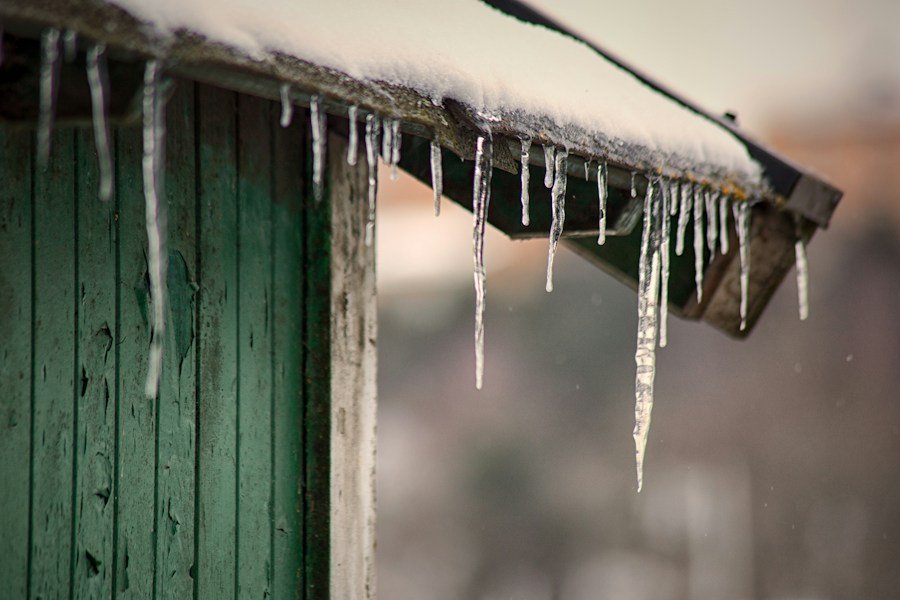
Spring is when Sussex roofs show what winter did to them, so April and May are the best months for an inspection. Once the snow is off, walk around the house with binoculars and look for missing or lifted shingles on the windward slope, gutters pulled away from the fascia and stains on the soffit where ice dams pushed water back. Inside, check the attic for damp insulation near the eaves and nail tips with rust stains. On lake cottages, look closely at the joint where any addition meets the original roof. Pipe boots crack in the cold, so check every vent collar. Because the last killing frost in the northern zone comes around May 4, sealant and shingle adhesive bond better from mid-May onward, which makes late spring a good time for repairs that need hand-sealing. If you have a seasonal home at Highland Lakes or Lake Mohawk, ask for photos of the roof before you open the house for summer.
Summer is the main window for larger Sussex County roof projects and for storm damage repair after thunderstorms. The northern zone sees about twice as many thunderstorms as the coast, and summer gusts on High Point and the Vernon valley sides have topped 60 mph. After a strong storm, check for shingles in the yard, dented gutters and branches on the roof. Trim limbs that hang over the roof, especially oaks and hemlocks on lake lots, because the Isaias outages in 2020 were mostly caused by trees. Summer is also the time to deal with ventilation: a hot attic in July and an ice dam in February usually come from the same missing intake vents. If a replacement is due, book it for June through September so the full roof, including ice and water shield, goes on in warm, dry weather and has time to seal before the first snow.
Fall is the most important season for Sussex roofs, because the first frost can arrive in early October and the first heavy snow sometimes comes before the leaves are down. The October 29, 2011 storm dropped 8 to 16 inches on the northwest mountains while trees were still in leaf, so trim dead limbs before Halloween. Clean gutters and valleys after the leaves and needles drop, and again in late November if you are surrounded by oaks. Make sure downspouts are clear and pointed away from the foundation. Check that bathroom and kitchen fans vent outdoors, not into the attic, since warm moist air feeds ice dams. Replace cracked pipe boots and loose flashing before the cold makes shingles brittle. If you plan to leave a lake house empty for the winter, have the roof checked first and arrange for someone to look at it after big storms.
Winter in Sussex County means watching for ice dams, snow load and leaks, and fixing urgent problems safely. With 40 to 50 inches a year and storms like February 2021 delivering 32 inches at once, use a roof rake from the ground to pull snow back from the eaves after big storms, especially on low-slope sections and porch roofs. Never chip ice with a hammer or climb onto a snowy roof. Watch for icicles forming along the whole eave, water stains on ceilings near exterior walls and doors that start to stick, which can be a sign of heavy loading. If water comes in, put a bucket under it, move belongings and send us photos through the contact page. Many winter repairs can be done in cold weather with the right methods, and a temporary fix can hold until spring when permanent work bonds properly.
In depth
Sussex County Roofing Questions Most Contractors Skip
Why do ice dams form on Sussex County roofs, and how are they fixed for good?
Ice dams form when heat from the house melts snow on the upper roof and the water refreezes at the cold eaves, building a ridge of ice that pushes water back under the shingles. Sussex gets them more than any other part of New Jersey because it gets more snow and colder nights, and because much of its housing was built in the 1970s with thin attic insulation and few intake vents.
The permanent fix has three parts. First, stop the heat: air-seal the attic floor around light fixtures, bath fans, plumbing stacks and the attic hatch, then add insulation. Second, ventilate: continuous soffit intake and a ridge or roof vent keep the roof deck cold so snow melts evenly. Raised ranches and split-levels often have soffits that were never cut open, or insulation stuffed against them. Third, protect the eaves: when the roof is replaced, ice and water shield should run from the drip edge to at least 24 inches inside the warm wall, and on Sussex homes with deep snow we often run it farther, plus in all valleys and around chimneys.
Heat cables can help on a problem eave but treat the symptom. Removing snow with a roof rake from the ground after big storms helps too. What does not help is chipping ice or salting the roof, which damages shingles and gutters. If you already have stains on ceilings near exterior walls, an inspection can tell whether the decking at the eaves has softened, which affects whether a repair or a section replacement makes sense.
How should you repair the roof on a converted lake cottage in Hopatcong or Highland Lakes?
Treat a converted lake cottage as an old summer house that has been asked to behave like a year-round home: check the framing, the layers and the additions before deciding on any repair. Hopatcong’s bungalows, and the cottages around Highland Lakes, Culver Lake and Lake Owassa, were often built light, with small rafters on wide spacing, then insulated, heated and extended over the decades.
Start with the layers. Many of these roofs already have two layers of shingles, and New Jersey allows no more than two, so a full roof job means a tear-off. Then look at the additions. Shed dormers and rear additions were often framed at a shallow pitch that asphalt shingles do not suit; below about 2 in 12, a low-slope membrane such as modified bitumen or EPDM is the right material. The joint between the addition and the original roof is the number one leak point, usually because the flashing was tucked behind siding incorrectly or never installed.
Then check the deck and framing. Years of snow load and ice dams can leave soft plywood or boards at the eaves and sagging between rafters. Replacing sheathing or sistering rafters requires a construction permit, which we account for in the quote. Finally, think about the trees. Tall hemlocks and oaks shade north slopes, so moss grows and gutters fill with needles. Trimming overhanging limbs, cleaning valleys and installing a drip edge with proper gutter hangers will extend any repair. For seasonal owners, we photograph the whole roof so you can decide from wherever you live in the off season.
Who is responsible for roof repairs in Vernon condos and townhomes?
In most Vernon condominium and townhome communities, the association controls and usually pays for roof repairs, and the owner reports the leak and allows access. Check your master deed and bylaws, because some communities make owners responsible for certain roof elements, skylights or their own unit’s section.
Communities around Mountain Creek grew in waves: Great Gorge Village’s 1,300 units in the 1980s, Black Creek Sanctuary from 2002 and The Appalachian in 2006 and 2007, with more townhome clusters around Crystal Springs in neighbouring Hardyston. These buildings share ridges, valleys and walls, so a leak in one unit can start several feet away over a neighbour’s ceiling. Snow sliding off upper roofs onto lower ones, and wind across the valley, are frequent causes.
Two rules apply. First, attached buildings are not covered by New Jersey’s ordinary maintenance exemption, so re-roofing or repair work on condos and townhomes needs a construction permit from Vernon’s construction office. Second, the association usually has to approve the contractor and may require proof of insurance and its own certificate. If you are a board or property manager, we can inspect a whole building or complex, document each section with photos and give a prioritised written scope that separates urgent leaks from planned work. If you are an owner with a leak, report it in writing to the association, photograph the damage inside and keep a record of dates.
Repair or replace: what makes sense for a 1970s Sussex County split-level?
For a typical 1970s Sussex split-level or raised ranch, repair makes sense when the roof is under about 15 years old and the problem is local; replacement makes sense when the shingles are brittle, curling or granule-bare across whole slopes, or when leaks keep moving. With the county’s median home built in 1972, many houses are now on a roof installed in the late 1990s or 2000s, which puts them close to the end of an asphalt roof’s life in this climate.
Several things push toward replacement in Sussex. If the house already has two layers, any major work means a tear-off. If ice dams have been a problem every winter, replacement is the chance to add ice and water shield, open the soffits and fix ventilation, which a patch cannot do. If the deck at the eaves is soft, it will keep failing. And freeze-thaw cycles make old shingles crack when they are walked on, so repairs on a very old roof can cause new damage.
Things that point toward repair: one leak at a pipe boot, chimney or the junction where the upper and lower roofs meet; wind damage to a few shingles on an otherwise sound roof; or a roof under ten years old with an installation problem. We give you the cost of the repair and, if relevant, a replacement quote, both in writing, with photos so you can see why. A repair carries our 2-year workmanship warranty and a full replacement carries 10 years. For the bigger decision, our roof replacement guide covers materials and timelines.
What should you do after a tree falls on your roof in a Sussex County storm?
Get everyone out of the affected rooms, stay away from downed lines, then document the damage and arrange emergency tarping before you start cleanup. Sussex is heavily wooded, and storms like Isaias in August 2020 and the October 2011 snowstorm brought down thousands of trees on homes and power lines.
Step one is safety. If a tree is touching wires or the roof is visibly sagging, leave the house and report the line to your utility. Do not go into the attic under a heavy limb. Step two is documentation: take photos and video of the tree on the roof from several angles, the inside ceilings and walls, and anything wet or broken, with the date. Step three is to protect the house. Your policy expects you to prevent further damage, so have the opening tarped as soon as it is safe; keep the invoice. Tree removal from the roof usually comes first and may be handled by a tree service working with the roofer.
Step four is the claim. Report it to your insurer and ask whether tree removal, tarping and temporary repairs are covered. Step five is the permanent repair. A tree strike often cracks rafters and decking, which needs a construction permit, so expect the repair to include a framing check. We provide dated photos, a written itemized scope and a clear separation between storm damage and pre-existing wear, which helps your adjuster. Emergency requests for storm damage roof repair in Sussex County can be sent through our contact page at any hour.
How do you care for metal and slate roofs on Sussex farmhouses and barns?
Metal and slate on Sussex farmhouses and barns last decades if you keep the fasteners, seams and flashings sound and stop sliding snow from damaging lower roofs. Wantage, Frankford, Montague, Lafayette, Green and Sandyston still have many farmsteads with standing-seam or ribbed metal on porches and barns, and some farmhouses with slate or old terne-coated metal on the main roof.
On exposed-fastener metal, the rubber washers under screw heads break down in sun and cold, and loose screws let water in. Replacing or resealing fasteners is inexpensive and often stops leaks completely. Lifted seams and rust at the panel ends near the eaves need closer attention, and old painted metal should be cleaned and coated before rust goes through. On standing seam, check the seams and the flashing where the roof meets chimneys and walls. Metal sheds snow suddenly, so snow guards above entrances, gutters and lower roofs prevent damage and injury.
On slate, the stone usually outlasts the nails and flashing. Broken or slipped slates should be replaced with matching slate held by hooks or proper nailing, never sealed with roof cement or covered with shingles. Valleys and chimney flashing are the first things to fail. Barns bring their own issues: wide spans, open eaves, birds and animals, and roofs that are hard to reach. We plan access with lifts or staging where ladders are not safe. Our metal roof repair service covers farm buildings as well as houses.
FAQ
Roof Repair in Sussex County, NJ: Frequently Asked Questions
How much does roof repair cost in Sussex County, NJ?
Most Sussex County roof repairs cost between $350 and $1,500 as of November 2026. A pipe boot runs about $250 to $600, chimney re-flashing $600 to $1,800, and slate or rotted deck repairs $500 to $2,500 or more. Winter conditions, steep lake lots and distance affect the final written quote.
Do I need a permit to repair my roof in Sussex County?
Not for a detached one- or two-family home. Since 2018, New Jersey treats roof covering repair and replacement on those homes as ordinary maintenance. You do need a permit for decking or rafter work, a third layer, or attached condos and townhomes such as those in Vernon’s ski-area communities.
How do I stop ice dams on my Sussex County home?
Stop heat from reaching the roof by air-sealing and insulating the attic, add soffit and ridge ventilation so the deck stays cold, and use ice and water shield at the eaves when re-roofing. In the short term, rake snow off the eaves from the ground after big storms.
Can roofs be repaired in winter in Sussex County?
Yes. Leaks, tree damage and missing shingles can be repaired in winter with cold-weather methods such as hand-sealing shingles and using adhesives rated for low temperatures. Some work bonds better after mid-May, so a temporary winter repair is sometimes followed by a permanent fix in spring.
Does homeowners insurance cover ice dam damage in Sussex County?
Often, for sudden interior water damage from an ice dam backup, but usually not for a worn roof that has leaked for a long time. Coverage depends on your policy. Photograph the ice, the stains and the date, and ask your agent before repairs begin.
Which Sussex County towns do you serve?
We serve all 24 Sussex County municipalities, including Vernon, Sparta, Hopatcong, Wantage, Newton, Hardyston, Byram, Andover, Frankford, Franklin, Hampton, Stillwater, Montague, Green, Stanhope, Hamburg, Fredon, Lafayette, Ogdensburg, Sussex Borough, Sandyston, Branchville and Walpack.
How heavy is too much snow on a Sussex County roof?
It depends on the snow’s water content and your roof’s framing, not just depth. Wet spring snow like March 2018 weighs far more than powder. Watch for sagging, cracking sounds, sticking interior doors or new ceiling cracks, and rake snow from low-slope and porch roofs after storms over a foot.
Do Newton historic district homes need approval for roof work?
Possibly. Newton’s Historic Preservation Advisory Commission oversees the Newton Historic District, and the town has an application to appear before it. Before changing roofing materials or visible details on a house in the district, check with the town’s planning and zoning office.
How long does an asphalt roof last in Sussex County?
Usually about 18 to 25 years for architectural shingles, often less on roofs with poor ventilation or repeated ice dams. Heavy snow, deep cold and shaded lake lots shorten life. An inspection showing brittle, curling or granule-bare shingles across whole slopes means replacement planning should start.
Can you inspect my lake house roof while I am away?
Yes. We inspect seasonal homes in Hopatcong, Highland Lakes, Lake Mohawk, Culver Lake and other Sussex lake communities and send photos of every problem with a written quote, so you can decide on repairs without being there. Arrange access through the contact page.
Reviewed by the Roof Repair SNJ team · Last updated November 2026
Nearby
Roof Repair Near Sussex County
We also work in the counties next to Sussex County. See every county we serve on our New Jersey service areas page, or start from our roof repair NJ homepage.
Free inspection
Get a Free Roof Inspection in Sussex County
Whether it is an ice dam stain in a Sparta split-level, a tree on a Hopatcong cottage or a leaking barn roof in Wantage, start with a free inspection and photos. Request a free roof inspection in Sussex County and you will get a written, itemized quote. No pressure and no obligation, and repairs carry a 2-year warranty in writing.
No pressure and no obligation. If a repair will do, we’ll tell you.
Roof Repair SNJ
- Serving all 24 Sussex County towns
- Request roof service in Sussex County
- Mon–Fri 5:00 AM–10:00 PM · Sat 5:00 AM–6:00 PM · Emergencies 24/7
Sources: N.J.A.C. 5:23-2.7 Ordinary maintenance (Cornell LII) · NJ Division of Consumer Affairs license verification · N.J.S.A. 56:8-151 home improvement contracts · Office of the NJ State Climatologist, NJ climate overview · ONJSC February 2021 and Winter 2020/21 recap · ONJSC March 2018 recap · ONJSC August 2020 and summer recap · ONJSC Post-Tropical Storm Ida recap · NWS Mount Holly, October 29, 2011 snowstorm summary · Sparta Independent, locals compare Isaias to Sandy · News 12, Sussex County sees lowest temperatures in NJ (Jan 2025) · NJ 101.5, NJ’s snowiest spot in 2023 · Stacker, counties with the oldest homes in NJ (ACS 2023 5-year) · Town of Newton, history and Historic Preservation Advisory Commission · NRHP listings in Sussex County, NJ · Sussex County, New Jersey (background) · Lake Mohawk, New Jersey (background) · Lake Hopatcong (background) · Borough of Hopatcong history · Mountain Creek (background) · Roof Observations, New Jersey roof cost guide (Jan 2026) · Fixr, roof replacement cost New Jersey (2026). Prices are planning ranges, not quotes. Permit and insurance information is general guidance; your town, policy and agent have the final word.