
Roof Repair NJ › NJ Locations › Warren County
Phillipsburg, Hackettstown, Belvidere, 22 towns
Roof Repair in Warren County, NJ: River Towns, Slate and Farm Roofs
Roof Repair SNJ repairs leaks, storm damage, slate, metal and shingle roofs in all 22 Warren County municipalities, from the Delaware River towns of Phillipsburg and Belvidere to Hackettstown, Washington and the farm townships between. You get a free inspection with photos, a written itemized quote and a 2-year workmanship warranty on repairs, in writing.
- Slate, metal and barn roof repairs
- Free inspection with dated photos
- Written quote, warranty in writing
Free roof inspection in Warren County
Photos of every problem we find and an itemized written price before any work. Emergency requests handled 24/7.
Roof Repair SNJ
22 Warren County towns · all 21 NJ counties
Free inspection
Roof, attic and gutters checked at no cost.
Insured
Liability and workers’ comp; certificate on request.
Written quotes
Itemized price in writing before any work.
Photo-documented
Every problem photographed, before and after.
Warren County at a glance
Warren County, NJ at a Glance for Homeowners
Warren County is a river-and-ridge county with some of the oldest housing in northwest New Jersey, which means more slate, more metal and more old framing than most of the state. These six facts explain why Warren roofs need a different eye from suburban roofs. Our roof repair NJ page covers statewide basics.
County seat
Belvidere
A Delaware River town of 2,520 residents in 2020. Its Belvidere Historic District, listed on the National Register in 1980, is full of 19th-century houses around the town green.
Towns and people
22 municipalities, 109,632 residents
2020 Census municipal totals. Phillipsburg (15,249) and Hackettstown (10,248) are the largest; most other towns are rural townships under 8,000 people.
Older homes
22.6% built before 1940
ACS 2023 five-year data reported by Stacker: 22.6 percent of Warren homes were built in 1939 or earlier, and the median home dates to 1972.
Delaware River
Record crest 38.85 ft
The Riegelsville gauge peaked at 38.85 feet in August 1955 against a 22-foot flood stage, and topped 30 feet again in 2004, 2005 and 2006.
Elevation range
160 ft to 1,600 ft
From the Musconetcong’s mouth at the Delaware to the Kittatinny Ridge west of Blairstown, Warren’s ridges and valleys give roofs very different wind and snow exposure.
January average
27 F to 29 F
Average January temperatures run about 27.0 F in Hackettstown and 29.0 F in Phillipsburg, cold enough for regular freeze-thaw cycles and ice dams on older homes.
Homes & roofs
What Kinds of Homes and Roofs Does Warren County Have?
Warren County mixes railroad-era twins and rowhouses in Phillipsburg, Victorian town houses in Belvidere and Washington, stone and frame village houses, farmhouses with bank barns, and postwar and newer suburbs around Hackettstown and Lopatcong. Slate and metal are far more common here than in central or southern New Jersey.
Phillipsburg twins, rowhouses and worker housing
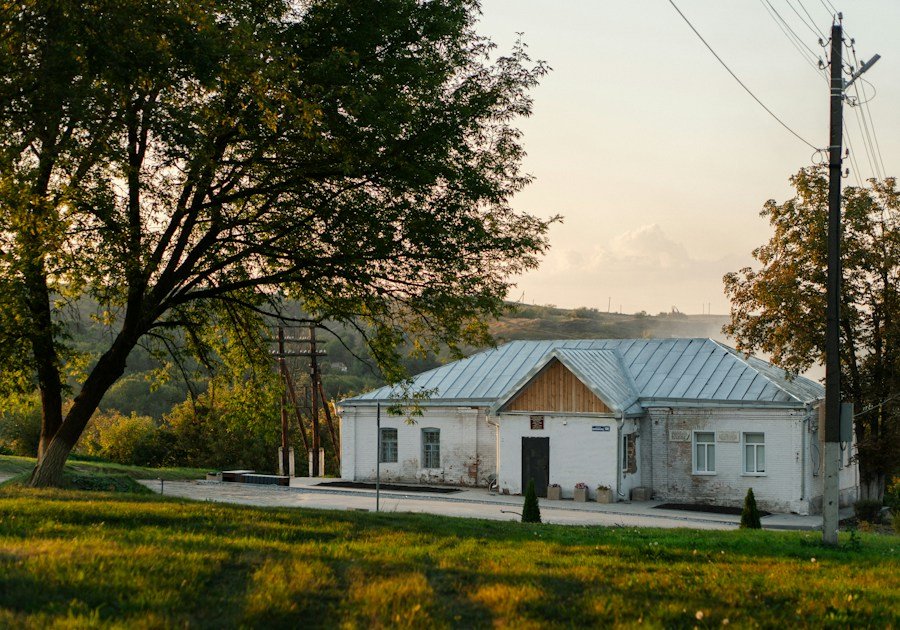
Phillipsburg grew around five railroads, the western end of the Morris Canal and the Ingersoll Rand works, so its hillside streets above the Delaware are lined with frame and brick twins, rowhouses and narrow detached houses from the late 1800s and early 1900s. Shared rooflines, party-wall flashing, built-in box gutters and small rear flat roofs over kitchens are typical, and attached houses need a permit for roof work.
Belvidere and Washington Borough Victorians
Belvidere’s historic district and Washington Borough’s older blocks have 19th-century and Victorian-era houses with tall gables, cross gables, wraparound porches and occasional mansard roofs. Slate on the main roof with tin or flat-seam metal on porches is a common combination. Porch roofs, box gutters, cornices and the joints where several roof planes meet are where the leaks start.
Slate roofs from the Slate Belt next door
Across the Delaware, the Pennsylvania Slate Belt around Bangor, Pen Argyl and Wind Gap reaches the river at Portland, opposite Knowlton Township, and was the world’s leading slate district before World War I. Warren’s older houses, churches and barns reflect that proximity. Many of these grey and blue-black roofs are well over a century old and still sound, with failed nails, flashing and valleys being the real problem.
Farmhouses and bank barns
Harmony, Knowlton, Hope, Franklin, Greenwich, Pohatcong, White and Mansfield townships still have working and former farms, with several farmsteads on the National Register. Farmhouses often have slate or standing-seam metal, while bank barns, wagon sheds and corn cribs carry slate, corrugated steel or old ribbed panels. Wide spans, high eaves and open valley wind make barn roofs a specialist job.
Stone and frame village houses
Hope was founded by Moravians in 1769 and its historic district dates from 1973, while Johnsonburg, Port Murray, Port Colden, Asbury and Oxford’s industrial district preserve 18th- and 19th-century villages. Thick stone walls, end chimneys and simple gable roofs are common. Chimney flashing into old masonry, deteriorated mortar at the roof line and decking boards of mixed width are the details that matter here.
Postwar and newer suburbs
Lopatcong, Pohatcong, Greenwich, Independence, Mansfield and the edges of Hackettstown have postwar ranches, 1970s and 1980s split-levels and colonials, and newer subdivisions and townhome communities. Most have asphalt shingles on their second or third roof. Ice dams on low eaves, cracked pipe boots, wind damage on open lots and leaks at skylights and attached garages are the usual calls.
Ridge and woodland homes in the north
Blairstown, Hardwick, Frelinghuysen and Knowlton sit below the Kittatinny Ridge, which reaches about 1,600 feet west of Blairstown. Homes here range from old farmhouses to cabins and newer houses on wooded lots. Tree cover brings falling limbs, moss and clogged gutters, while houses on open slopes take the brunt of winds coming up the valley.
Warren County weather
How Does Warren County Weather Damage Roofs?
Warren County roofs take heavy snow in the north, tropical rain and river flooding in the south and west, and wind across open valleys everywhere. These are real, dated events and what each one does to a roof.
Delaware River floods of 2004, 2005 and 2006
Three major Delaware floods hit in less than two years. The Riegelsville gauge crested at 30.95 feet on September 23, 2004, 34.07 feet on April 4, 2005 and 33.62 feet on June 28, 2006, against a 22-foot flood stage and the 38.85-foot record of August 1955. Floods rarely reach a roof, but the soaking rain that drives them pushes water through old flashing, and flood-zone homes face strict rules on repair costs.
The February 2021 nor’easter
The storm of January 31 to February 3, 2021 dropped 32.1 inches on Frelinghuysen, the highest total in the state, and Frelinghuysen finished February with 50.3 inches. Snow that deep loads old barn roofs, packs valleys on Victorian houses and causes ice dams on low ranch eaves. After winters like that we look for cracked rafters, slipped slates and gutters pulled off fascia.
Post-tropical storm Ida, September 1 and 2, 2021
Ida dropped 6.63 inches on Greenwich Township, and Stewartsville recorded 5.21 inches in just six hours. Rain at that rate overwhelms gutters and valleys, backs water up under slate and shingles at low-slope transitions and finds any opening around chimneys and skylights. Leaks in storms like this usually come from sheer water volume, which is why gutter capacity matters here.
Tropical Storm Isaias and late-summer wind, 2020
Isaias on August 4, 2020 dropped 5.14 inches on both Blairstown and White Township while gusty winds knocked out power across New Jersey. Three weeks later, on August 27, early-morning winds brought down trees and wires in Warren County. Falling limbs puncturing roofs, lifted ridge caps and missing shingles on the windward slope are the typical results.
Early and late heavy snow
On October 29, 2011, the National Weather Service reported 8 to 16 inches of heavy, wet snow over the mountains of northwest New Jersey while trees were still in leaf, causing widespread tree damage. In March 2018, White Township measured 12.5 inches on March 6 and 7 and Hackettstown 10.5 inches on March 20 to 22. Wet snow is heavy and breaks limbs onto roofs.
Valley wind, cold and freeze-thaw
Warren’s long valleys, the Kittatinny, Pequest, Pohatcong and Musconetcong, and its open farm fields give wind a long run at houses and barns, especially on ridge-top lots near Jenny Jump Mountain and the Kittatinny. Average January temperatures of 27 F in Hackettstown mean constant freeze-thaw, which loosens slate nails, cracks old mortar at chimneys and splits sealant at pipe boots.
Roofing services
Roof Repair Services We Provide Across Warren County
All 12 of our services cover every Warren County town, and the old housing, slate, barns and river exposure here shape how each one is done. This is how each service applies to Warren homes.
Roof Leak Repair in Warren County
Warren leaks often come from century-old details: box gutters in Phillipsburg and Belvidere, chimney flashing into stone walls in Hope and Johnsonburg, and porch roof tie-ins on Washington Victorians. We trace the water path and fix the source, then show you photos.
Emergency Roof Repair in Warren County
When wind or a fallen tree opens a roof in Blairstown, Hardwick or anywhere in Warren, we tarp and secure it first, then document the damage for insurance. Emergency requests through the contact page are taken 24/7.
Storm Damage Roof Repair in Warren County
Warren storm damage ranges from wind-stripped shingles on open valley lots to limbs through roofs under the Kittatinny and water entry from heavy tropical rain like Ida. We photograph every item so your claim separates storm damage from age.
Roof Replacement in Warren County
With over a fifth of Warren homes built before 1940, replacements often uncover board decking, two old layers or rotted rafter tails. We plan for that in the quote, use ice and water shield at eaves and valleys, and back full replacements with a 10-year workmanship warranty.
Roof Inspection in Warren County
An inspection on an older Warren home checks slate, flashing, chimneys, box gutters and attic framing, not just the shingles. We provide dated photos and a written report, useful before buying a farmhouse or Victorian in Belvidere, Washington or Hope.
Flat Roof Repair in Warren County
Rear kitchen roofs on Phillipsburg rowhouses, porch roofs on Victorians and commercial roofs on Washington and Hackettstown main streets are often flat or nearly flat. We repair EPDM, modified bitumen, TPO and old flat-seam metal, and fix the drains and scuppers that clog.
Metal Roof Repair in Warren County
Farm buildings across Harmony, Knowlton, Franklin and White townships carry ribbed and corrugated steel, and many farmhouses have standing seam. We replace failed fasteners, reseal seams, repair rusted panels and add snow guards where sliding snow damages gutters.
Slate Roof Repair in Warren County
Slate is a Warren County specialty given the Slate Belt across the river. We replace broken or slipped slates with matching stone, re-flash chimneys and valleys in copper, and keep sound slate roofs on Belvidere, Washington and Phillipsburg houses in service for decades.
Shingle Roof Repair in Warren County
Asphalt shingles cover most homes in Lopatcong, Pohatcong, Independence, Mansfield and Hackettstown subdivisions. We replace wind-damaged shingles, match colours as closely as current products allow, hand-seal tabs and fix the flashing details that cause most shingle-roof leaks.
Roof Cleaning in Warren County
Wooded lots in Blairstown, Hardwick and Frelinghuysen keep north slopes damp, so moss and algae spread. We clean with low pressure and roof-safe solutions, which matters on slate and older shingles, and clear debris from valleys and gutters.
Gutter Repair in Warren County
Ida showed how quickly heavy rain overwhelms gutters. We re-hang and resize gutters, reline built-in box gutters on older Phillipsburg and Belvidere houses, replace rotted fascia and direct downspouts away from stone foundations.
Commercial Roofing in Warren County
We repair low-slope roofs on Phillipsburg, Washington and Hackettstown main street buildings, retail along Route 22, Route 31 and Route 57, churches with slate and agricultural buildings. Drainage, flashing at parapets and snow load are our first checks.
Warren County rules
Warren County Roofing Permits, Flood Zones and Historic Districts
Permits & local review
Re-roofing a detached one- or two-family home in Warren County usually needs no permit, but attached twins and rowhouses, structural repairs, a third layer and flood-damaged homes in mapped floodplains bring extra rules. Under N.J.A.C. 5:23-2.7, roof covering repair or replacement on detached one- and two-family homes has been ordinary maintenance since March 5, 2018: no permit, inspection or notice. It still has to meet code. Your municipal construction office issues permits for deck or sheathing replacement, rafter or truss work, a third layer, and any building that is not a detached one- or two-family house.
In Warren, the attached rule applies to many Phillipsburg twins and rowhouses, and to townhomes in Hackettstown, Allamuchy and Lopatcong. Along the Delaware in Phillipsburg, Pohatcong, Belvidere, White, Harmony and Knowlton, homes in mapped flood zones that are substantially damaged must meet floodplain rules, and roof work after a flood counts toward that total, so talk to the local floodplain administrator first. Warren has 16 National Register historic districts, including Belvidere, Hope, Blairstown, Port Murray, Port Colden and the Phillipsburg Commercial district. Ask your municipal clerk whether a local preservation ordinance applies before changing slate or other visible materials.
Insurance claims
Standard homeowners insurance in Warren County usually covers sudden roof damage from wind, hail, falling trees and the weight of snow and ice, but it does not cover river flooding, which needs a separate flood policy. That distinction matters in Delaware River towns. Water that enters through a damaged roof during a storm is usually a homeowners claim; water rising from the river or from surface flooding is a flood claim. Wear, age and neglect are usually excluded under both.
Barns and outbuildings are another Warren-specific issue. A barn may be covered under your homeowners policy as an other structure with a lower limit, or under a separate farm policy, so check before you need it. Slate roofs raise a third point: ask whether your policy pays to match slate or only for a cheaper material. Your policy and agent have the final word. We provide dated photos and an itemized written scope that separates storm damage from long-term wear.
Pricing · updated November 2026
How Much Does Roof Repair Cost in Warren County?
As of November 2026, most Warren County roof repairs cost $350 to $1,500, while slate repairs, chimney re-flashing and rotted deck sections often run $600 to $2,500 or more. Old houses, slate, barn heights and access on narrow river-town streets push some jobs toward the top of each range.
Shingle replacement
$350 to $800
Replacing wind-damaged shingles on a Lopatcong or Mansfield split-level or an exposed farmhouse in Harmony, hand-sealing tabs and checking nearby nails and flashing.
Pipe boot or vent flashing
$250 to $600
Replacing cracked rubber pipe boots and vent flashing. Warren’s freeze-thaw cycles split boot collars long before the shingles around them wear out.
Single-source leak repair
$400 to $1,500
Finding and fixing one leak, such as a porch roof tie-in on a Washington Victorian, a party-wall flashing on a Phillipsburg twin or a skylight in Hackettstown.
Chimney re-flashing
$600 to $1,800
New step and counter flashing, often copper, on brick or stone chimneys, common on Belvidere houses and stone homes in Hope and Johnsonburg, with a crown check.
Flat roof patch or seam
$400 to $2,500
Repairing rear kitchen roofs on Phillipsburg rowhouses, porch roofs and main street commercial roofs in EPDM, modified bitumen, TPO or old flat-seam metal.
Slate or deck repair
$500 to $2,500+
Replacing broken slates with matching stone on Victorians, churches and barns, or cutting out rotted deck boards. Deck or sheathing replacement requires a construction permit.
What moves the price in Warren County
- Slate. Warren has more slate than most counties, and matching size, colour and thickness can take sourcing time.
- House age. Pre-1940 homes often have board decking, hidden layers and rotted rafter tails that only show once work starts.
- Barn heights and spans. Bank barns and tall outbuildings may need a lift or staging instead of ladders.
- River-town access. Steep, narrow streets and limited parking on Phillipsburg’s hillsides affect dumpster and ladder placement.
- Attached buildings. Twins, rowhouses and townhomes need a permit, and party-wall flashing ties into the neighbour’s roof.
- Copper and box gutters. Relining a built-in gutter or using copper flashing costs more than aluminum but suits older houses.
- Distance. Remote farms and ridge homes in Hardwick, Knowlton and Hope add travel time.
- Flood-zone paperwork. After a flood, substantial damage reviews can add steps before work starts.
These are planning ranges, not quotes, and your price comes after a free inspection in writing. Replacement cost data on our site draws on the Roof Observations NJ cost guide (January 2026), which lists natural slate at $31.00 to $40.35 per square foot installed, and Fixr (2026). More detail is in our roof repair cost guide.
Who does the work
Why Warren County Homeowners Choose Roof Repair SNJ
- Repairing NJ roofs for 25+ years
- General liability + workers’ comp insurance
- Workmanship warranty: 2 years on repairs, 10 years on full replacements, in writing
- Photo report with every inspection
Check any roofer before you sign in Warren County
Ask for the 13VH registration number and confirm it on the NJ license lookup. NJ law requires a signed written contract showing the registration number and total price, and gives you until midnight of the third business day to cancel (N.J.S.A. 56:8-151).
22 towns
Roof Repair Notes for Warren County Towns
Each Warren County town has its own mix of roofs, from Phillipsburg twins to Hope’s stone houses and Blairstown’s ridge homes. These notes cover the largest and most distinct towns, and we serve all 22. We also work across the line in Hunterdon County and Sussex County.
Phillipsburg
Warren’s largest town rises from the Delaware opposite Easton, with railroad-era twins, rowhouses, Victorian detached houses and the Phillipsburg Commercial Historic District downtown. Shared rooflines, box gutters, rear flat roofs and slate under later shingles are common. Attached houses need permits, and homes near the river in mapped flood zones face substantial damage rules after a flood.
Hackettstown
Set in the Musconetcong valley and home to Centenary University and the Mars Wrigley headquarters, Hackettstown has older houses near Main Street, postwar ranches and newer townhome communities. With January averages around 27 F, ice dams on low eaves and cracked pipe boots are frequent. Hackettstown recorded 10.5 inches in the March 20 to 22, 2018 nor’easter.
Lopatcong
Lopatcong, next to Phillipsburg, has split-levels, colonials, newer subdivisions and townhome developments, plus commercial roofs along Route 22 and Route 57. Most roofs are asphalt shingles on homes from the 1970s onward. Wind on open lots, skylight and chimney leaks, and ventilation problems that cause ice dams are the main issues.
Mansfield Township
Mansfield includes the Port Murray Historic District and the Miller and Perry-Petty farmsteads on the National Register, along with postwar homes and newer developments near Route 57. Farmhouses here may carry slate or metal, while newer homes have architectural shingles. Snow load on barns and leaks at old chimney flashing are typical calls.
Washington Borough
Washington Borough’s older streets have Victorian and early 20th-century houses with porches, slate main roofs, tin porch roofs and built-in gutters, along with a commercial district on Route 31 and Route 57. Porch roof tie-ins, box gutter linings and slate repairs make up much of the work here, and many owners prefer to keep slate rather than replace it.
Washington Township
Washington Township surrounds the borough and includes the Port Colden, Pleasant Valley, Bowerstown and Imlaydale historic districts, plus farms and newer subdivisions. Stone and frame village houses, farmhouses with metal or slate, and modern colonials sit within a few miles of each other. Valley wind and the Musconetcong and Pohatcong exposure affect the open properties.
Blairstown
Blairstown sits under the Kittatinny Ridge, the county’s highest ground, with a historic village district listed in 2007, farms and wooded lots. Isaias dropped 5.14 inches here in August 2020. Tree damage, moss and clogged gutters on wooded lots, and wind on open slopes, are the repairs we see most.
Belvidere
The county seat sits on the Delaware with a historic district of 19th-century houses around its green, many with slate, cross gables, porches and box gutters. Belvidere measured 10.4 inches in the December 16 and 17, 2020 storm. Slate repair, chimney flashing and gutter relining are typical, and river-side homes should check flood-zone status.
Hope Township
Hope was founded by Moravians in 1769 and its historic district, listed in 1973, is one of the oldest in the county, with stone buildings and simple gable roofs. Chimney and roof-to-wall flashing into old stone, irregular board decking and matching traditional materials matter more here than speed. Surrounding farms add barns and metal roofs.
Greenwich Township
Greenwich, including the Stewartsville area, has farms, older village homes and large newer subdivisions. It took the county’s highest Ida rainfall, 6.63 inches, on September 1 and 2, 2021, and Stewartsville saw 5.21 inches in six hours. Gutter capacity, valley flashing and downspout routing are the first things we check on homes here.
All 22 municipalities we serve in Warren County
Phillipsburg · Hackettstown · Lopatcong · Mansfield Township (Warren County) · Washington Borough · Washington Township (Warren County) · Blairstown · Greenwich Township (Warren County) · Independence · Allamuchy · White · Pohatcong · Franklin Township (Warren County) · Knowlton · Liberty · Belvidere · Harmony · Oxford · Alpha · Frelinghuysen · Hope · Hardwick
Seasonal roof care
Warren County Roof Maintenance Calendar
Warren County roofs need a spring check after the snow, summer storm readiness, fall gutter and tree work, and careful winter watching for ice and snow load. Here is the seasonal plan we suggest for Warren homes and barns.
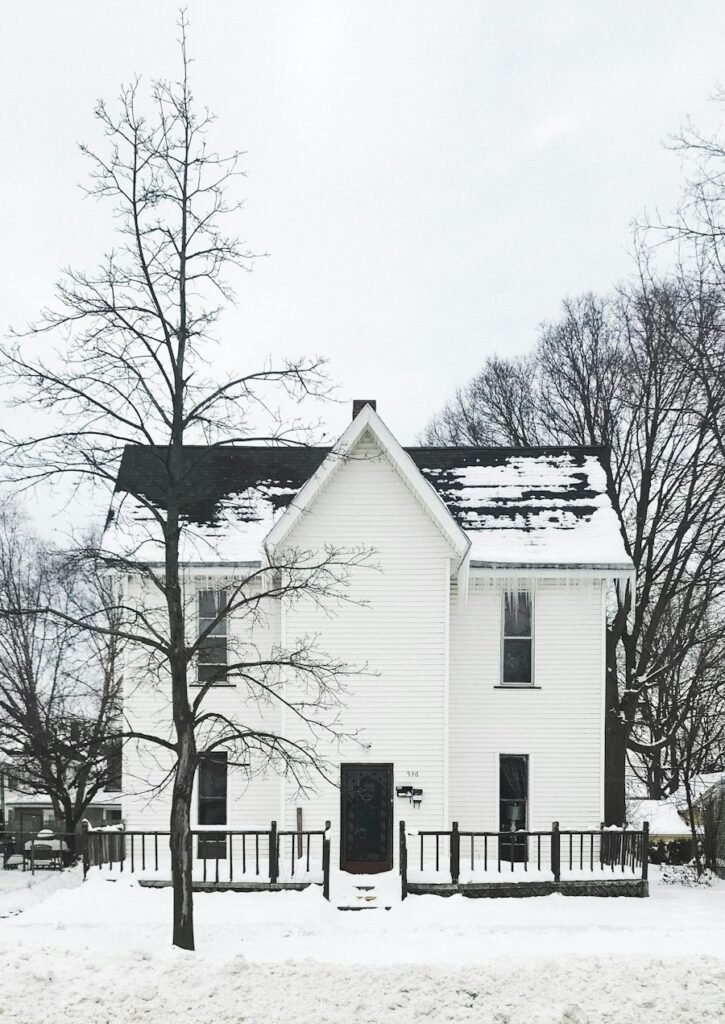
Spring is the best time for a full Warren County roof inspection, because winter damage is visible and the weather is good enough to fix it. After the snow melts, look for slipped or broken slates on the lawn, missing shingles, gutters pulled away from the fascia and stains on porch ceilings. Inside, check the attic and the top-floor ceilings for damp spots near chimneys and exterior walls. On farm buildings, walk around the barn and look for lifted metal panels, missing fasteners and daylight through the roof. Spring is also flood season on the Delaware, as April 2005 showed, so if you live near the river, check that gutters and downspouts carry water well away from the foundation. Book slate and chimney repairs for April through June, when mortar and sealants cure properly and there is time to source matching slate before summer storms.
Summer in Warren County brings thunderstorms and the remnants of tropical systems, so storm readiness is the main job. Isaias in August 2020 and Ida in September 2021 both dumped five to almost seven inches of rain here, and Stewartsville saw more than five inches in six hours. Make sure gutters and downspouts are clear and big enough; on large roofs, an extra downspout can prevent overflow into walls and basements. Trim limbs that hang over the roof, especially on wooded lots in Blairstown, Hardwick and Frelinghuysen. Check attic ventilation on hot days: a stifling attic shortens shingle life and contributes to ice dams in winter. Summer is the best time for a full replacement, a barn roof project or a large slate restoration, because long dry spells let crews open the roof safely. After any strong storm, look for damage from the ground and send photos if you see a problem.
Fall is when Warren County homeowners should prepare roofs for snow, ice and freeze-thaw. Clean gutters and valleys once the leaves are down, and again in late November in heavily wooded areas. Clear built-in box gutters on older Phillipsburg and Belvidere houses, since a blocked box gutter can send water straight into a wall. Check chimney flashing and crowns, and replace cracked pipe boots before cold weather. The October 29, 2011 storm brought 8 to 16 inches of wet snow to northwest New Jersey while trees were in leaf, so remove dead or weak limbs over the house early in the season. On barns, tighten loose fasteners and fix lifted panels before winter wind. If you have metal roofs, add snow guards above doors, walkways and lower roofs. Inside, make sure bath and kitchen fans vent outside and the attic hatch is sealed and insulated.
Winter in Warren County means snow load, ice dams and freeze-thaw damage, so watch closely and fix urgent problems safely. The February 2021 nor’easter put 32.1 inches on Frelinghuysen, and storms like that can stress older framing and barn roofs. Use a roof rake from the ground to pull snow off low eaves, porch roofs and flat sections, and never climb onto a snowy or icy roof, especially slate, which is slippery and breaks underfoot. Watch for long icicles along the eaves, water stains near exterior walls and sagging in barn roofs. Snow sliding off metal roofs can tear gutters and damage lower roofs, so keep people and cars clear. If water comes in, contain it, protect belongings and send us photos through the contact page. Temporary repairs are often possible in winter, with permanent work scheduled when weather allows.
In depth
Warren County Roofing Questions Most Contractors Skip
Should you repair or replace an old slate roof in Warren County?
Most Warren County slate roofs are worth repairing as long as the slate itself is still hard and sound. Good-quality slate can last a century or more; what fails first is usually the nails, the flashing and the valleys. A roof with a few broken or slipped slates, a leaking valley or a rusted chimney flashing is a repair job.
To tell whether the slate is sound, look at it closely. Good slate rings when tapped and has a clean surface. Slate near the end of its life flakes, delaminates, turns soft or powdery at the edges and breaks easily. If a large share of slates on several slopes show that, or if the nails have rusted through so slates slide off in many places, replacement or a strip-and-relay of the sound slates becomes worth pricing.
Bad repairs are a big problem on Warren roofs. Slates glued in place with roof cement, tar smeared over valleys, and asphalt patches on a slate roof all trap water and make the next repair harder. A proper repair uses matching slate of the same size and thickness, held with copper nails or slate hooks, and copper or other long-life flashing. Do not walk on a slate roof; we use roof ladders and hooks to avoid breaking more. Our slate roof repair service explains materials and methods. Before deciding, get a written assessment with photos showing the condition of slate, flashing and valleys, so you can compare repair and replacement costs side by side.
What happens to roof repairs after a Delaware River flood?
After a Delaware River flood, homes in mapped flood zones may face substantial damage review, and roof repairs can count toward that total, so check with your local floodplain administrator before starting work. Warren’s river towns, including Phillipsburg, Pohatcong, Belvidere, White, Harmony and Knowlton, saw three major floods in 2004, 2005 and 2006, with the Riegelsville gauge cresting above 30 feet each time.
Under the federal flood insurance rules your municipality enforces, if the cost to repair a building in a flood zone reaches 50 percent of its market value, the whole building must be brought into compliance with current floodplain rules, which can mean elevation. The total often includes all repairs from the event, not just flood repairs, so a roof repair done at the same time as interior flood work can push a home over the line. That is why the order and documentation of work matter.
Roofs themselves rarely flood, but the storms that drive river floods bring long, heavy rain that finds weak flashing, and the wind that comes with them strips shingles. After a flood event, document roof damage separately from flood damage with dated photos, because your homeowners policy usually covers wind and roof-entry water while your flood policy covers rising water. We provide a separate, itemized roof scope for exactly that reason. If you are buying near the river, ask the seller for the flood history and have the roof and attic inspected together, since repeated humidity can damage decking and insulation from below.
How do you repair barn and farm building roofs in Warren County?
Barn roofs in Warren County are repaired the same way they were built: section by section, using materials that match the building and access equipment suited to the height. The county’s farm townships, including Harmony, Knowlton, Hope, Franklin, Greenwich, White and Mansfield, still have bank barns, dairy barns, wagon houses and sheds, several on National Register farmsteads.
Metal is the most common barn roof. On exposed-fastener panels, the neoprene washers break down and screws back out, so leaks appear in rows along the purlins. Replacing fasteners with oversized screws and new washers stops many leaks cheaply. Rusted panel ends at the eaves and lifted laps are next; panels can be replaced individually, and sound old metal can be cleaned and coated. Slate barns need slate repair methods: matching slates, hooks and proper valleys, and on very large roofs a plan to work in phases.
The structure matters as much as the covering. Barns have long spans, wide rafter spacing and sometimes rotted plates where the roof meets the wall. Snow loads like February 2021 stress these, and sagging ridges should be checked before roofing work. Valley wind lifts open eaves, so fastening at rakes and eaves needs attention. Access is often the biggest cost; we plan for lifts or staging rather than long ladders on high gables. Gutters on barns are often missing or failing, and water at the base rots sills. We give you a written scope with priorities, so you can fix urgent leaks first and plan the rest over several seasons. Our metal roof repair page covers panel and fastener options.
What is different about repairing roofs on Phillipsburg twins and rowhouses?
Repairing an attached Phillipsburg twin or rowhouse means working on a shared roof system, so the party-wall joint, the neighbour’s roof and a construction permit all come into play. Phillipsburg’s railroad and industrial history left many attached frame and brick houses on its hillside streets above the Delaware.
The permit rule is simple. New Jersey’s ordinary maintenance exemption for roof covering applies only to detached one- and two-family homes, so roof work on an attached house needs a construction permit from Phillipsburg’s construction office. A registered contractor handles that as part of the job.
The technical issues are about where the two roofs meet. On twins, the joint at the party wall is often a weak point, especially when one side was re-roofed with different material or a different number of layers. Proper flashing or a continuous membrane over the joint, coordinated with the neighbour, stops leaks that patching never does. Built-in box gutters along the front cornice are common, and when their linings fail, water runs into the wall and shows up as stains on the front rooms. Rear additions often have low-slope roofs that need a membrane, not shingles. Chimneys may be shared too. If your neighbour is planning work, coordinating at the same time can save money for both and give a better joint. We photograph both sides of the joint, explain what is on your side and what is on theirs, and give a written, itemized scope.
How do you choose a roofer in Warren County, including contractors from Pennsylvania?
Any contractor doing home improvement work on your Warren County house, including one based across the river in Easton or the Slate Belt, must be registered with the New Jersey Division of Consumer Affairs. Registration numbers start with 13VH, and you can look one up on the state’s license verification site. Registration requires commercial general liability insurance of at least $500,000.
New Jersey’s home improvement contract law, N.J.S.A. 56:8-151, also sets rules for the contract itself. For most jobs it must be in writing and signed, show the contractor’s legal name, business address and registration number, state the total price, include a copy of the insurance certificate, and give you a three-business-day right to cancel. A Pennsylvania company that does not know these rules is a warning sign.
Beyond paperwork, ask questions that fit Warren homes. Does the roofer repair slate, or only replace it? Have they worked on barns, box gutters or stone chimneys? How do they handle board decking and old layers on a pre-1940 house? Do they provide photos of the problem before and after? A good roofer will explain whether repair or replacement makes sense and why, give you a written, itemized quote, and put the workmanship warranty in writing. Ours is 2 years on repairs and 10 years on full replacements. Be cautious with door-to-door crews after storms, large cash deposits and anyone who wants you to sign an insurance assignment on the spot.
Repair or replace: what makes sense for Warren County’s older homes?
For Warren County’s older homes, repair is usually right when the roofing material is sound and the problem is a detail; replacement makes sense when the covering is worn across whole slopes or the deck underneath has failed. With 22.6 percent of the county’s homes built before 1940, many roofs sit on old framing that has been re-covered several times.
Start by finding out what is actually on the roof. Many older Warren houses have asphalt shingles over one earlier layer, and some have shingles over slate or wood shingles. New Jersey allows at most two layers, so if there are already two, any replacement is a full tear-off, and the deck underneath, often boards with gaps, may need new sheathing, which requires a permit.
Repair makes sense for leaks at chimneys, porch roof tie-ins, box gutters, skylights and pipe boots, for a few missing shingles or slates, and for valley problems on an otherwise sound roof. Replacement makes sense when shingles are curling, cracked or bare across several slopes, leaks keep moving, or the deck is soft. On slate, replacement is usually the last resort. On postwar ranches and 1970s split-levels in Lopatcong or Mansfield, ventilation and ice dams also factor in, because a replacement is the chance to fix both. We give you both options in writing with photos, so the decision is based on what is really there. See our roof inspection page for what we check.
FAQ
Roof Repair in Warren County, NJ: Frequently Asked Questions
How much does roof repair cost in Warren County, NJ?
Most Warren County roof repairs cost $350 to $1,500 as of November 2026. Pipe boots run about $250 to $600, chimney re-flashing $600 to $1,800, flat roof patches $400 to $2,500, and slate or deck repairs $500 to $2,500 or more. Old houses, slate and barn heights affect the written quote.
Do I need a permit to repair my roof in Warren County?
Not for a detached one- or two-family home, since New Jersey treats roof covering work on those homes as ordinary maintenance. You need a permit for deck or rafter work, a third layer, or attached homes such as Phillipsburg twins and rowhouses and townhomes in Hackettstown or Lopatcong.
Can an old slate roof in Warren County be repaired?
Usually, yes. If the slate is still hard and sound, broken slates, valleys and flashing can be repaired with matching stone and copper, and the roof can last decades more. Replacement is worth considering only when the slate flakes, softens or fails across large areas.
Does homeowners insurance cover flood damage in Phillipsburg or Belvidere?
No. Standard homeowners policies exclude river and surface flooding, which needs a separate flood policy. Wind damage to the roof and rain entering through storm damage are usually homeowners claims. Document roof and flood damage separately with dated photos and ask your agent.
Can a Pennsylvania roofer work on my Warren County house?
Yes, if the contractor is registered with the New Jersey Division of Consumer Affairs. Registration numbers start with 13VH and can be checked on the state’s verification site. The contract must also meet New Jersey rules, including a written price and a three-business-day right to cancel.
Do you repair barn roofs in Warren County?
Yes. We repair metal, slate and older roofs on barns and farm buildings across Warren County, including fastener replacement, panel repairs, slate repairs and flashing. Access equipment is planned for the height, and we give a written, prioritised scope so work can be done in stages.
Which Warren County towns do you serve?
We serve all 22 Warren County municipalities, including Phillipsburg, Hackettstown, Lopatcong, Mansfield, Washington Borough, Washington Township, Blairstown, Greenwich, Independence, Allamuchy, White, Pohatcong, Franklin, Knowlton, Liberty, Belvidere, Harmony, Oxford, Alpha, Frelinghuysen, Hope and Hardwick.
What causes roof leaks in older Phillipsburg and Belvidere houses?
The most common causes are failed box gutter linings, worn chimney flashing, porch roof tie-ins, slipped slates and old patches made with roof cement. Many leaks show up far from their source, so tracing the water path from the attic before repairing anything saves money.
How do I prevent ice dams on my Warren County home?
Seal air leaks and add insulation in the attic, open soffit vents and add ridge ventilation so the roof stays cold, and install ice and water shield at the eaves when re-roofing. After big snowstorms, rake snow off the lower roof from the ground.
When is the best time for roof work in Warren County?
Late spring through early fall is best for replacements, slate restoration and barn projects, because mortar, sealants and shingles bond well in warm, dry weather. Leaks and storm damage can be repaired year-round, with temporary winter fixes followed by permanent repairs when conditions improve.
Reviewed by the Roof Repair SNJ team · Last updated November 2026
Nearby
Roof Repair Near Warren County
We also work in the counties next to Warren County. See every county we serve on our New Jersey service areas page, or start from our roof repair NJ homepage.
Free inspection
Book a Free Roof Inspection in Warren County
From a leaking box gutter in Phillipsburg to broken slates in Belvidere or a barn roof in Harmony, start with a free inspection and photos of what we find. Send us your roof photos or book an inspection in Warren County and get a written, itemized quote. There is no obligation, and repairs carry a 2-year warranty in writing.
No pressure and no obligation. If a repair will do, we’ll tell you.
Roof Repair SNJ
- Serving all 22 Warren County towns
- Request roof service in Warren County
- Mon–Fri 5:00 AM–10:00 PM · Sat 5:00 AM–6:00 PM · Emergencies 24/7
Sources: N.J.A.C. 5:23-2.7 Ordinary maintenance (Cornell LII) · NJ Division of Consumer Affairs license verification · N.J.S.A. 56:8-151 home improvement contracts · Office of the NJ State Climatologist, NJ climate overview · ONJSC February 2021 and Winter 2020/21 recap · ONJSC March 2018 recap · ONJSC August 2020 and summer recap · ONJSC Post-Tropical Storm Ida recap · NWS Mount Holly, October 29, 2011 snowstorm summary · NWS Mount Holly, December 16-17, 2020 event review · Delaware River floods and Riegelsville crests (background) · Stacker, counties with the oldest homes in NJ (ACS 2023 5-year) · NRHP listings in Warren County, NJ · Warren County, New Jersey (background) · Phillipsburg, New Jersey (background) · Hackettstown, New Jersey (background) · Belvidere, New Jersey (background) · Hope Township, New Jersey (background) · Slate Belt (background) · Roof Observations, New Jersey roof cost guide (Jan 2026) · Fixr, roof replacement cost New Jersey (2026). Prices are planning ranges, not quotes. Permit and insurance information is general guidance; your town, policy and agent have the final word.