Roof Repair NJ › NJ Locations › Mercer County › Trenton
Mill Hill · Chambersburg · Hiltonia · 08611
Roof Repair in Trenton, NJ: Rowhouses, Flat Rear Roofs and Historic Districts
Roof Repair SNJ fixes leaking and storm-damaged roofs across Trenton, from flat rear roofs on Chambersburg and North Ward rowhouses to slate and tile on Cadwalader Heights and Hiltonia homes. You get a free inspection with photos, a written itemized quote, and advice on whether your block needs a city permit or Landmarks Commission approval before work starts.
- Party-wall and parapet flashing on attached rowhouses
- Low-slope rear roofs patched or fully replaced
- Mill Hill gutters and cornices repaired in kind
Free roof inspection in Trenton
Photos of every problem we find and an itemized written price before any work. Emergency requests handled 24/7.
Roof Repair SNJ
Trenton · Mercer County · all 21 NJ counties
Free inspection
Roof, attic and gutters checked at no cost.
Insured
Liability and workers’ comp; certificate on request.
Written quotes
Itemized price in writing before any work.
Photo-documented
Every problem photographed, before and after.
Trenton at a glance
Trenton at a Glance: What Shapes a Roof Repair in the Capital City?
Trenton is a dense, mostly renter-occupied city of attached brick and frame houses, eight local historic districts and two rivers that flood, and each of those facts changes how a roof job is scoped and priced. These six numbers explain why a Trenton roof repair looks different from one in the suburbs around it.
Population (2020)
90,871
New Jersey’s capital and the Mercer County seat packs this population into about 7.6 square miles of land, so most roofs touch a neighbour’s roof.
Owner-occupied homes
37.9%
Census QuickFacts (2020-2024) shows most Trenton households rent, so many roof calls come from landlords, property managers and tenants reporting ceiling stains.
Median home value
$160,700
QuickFacts median for owner-occupied homes. With values this modest, a well-targeted repair often makes more financial sense than a full tear-off.
Housing units (2020)
34,322
The 2020 census counted 12.2 percent of units vacant. An empty house in the middle of a row can leak sideways into the occupied homes beside it.
Local historic districts
8
The Trenton Landmarks Commission for Historic Preservation reviews exterior improvements on designated properties, including Mill Hill, listed on the National Register in 1977.
Delaware River flood stage
20 ft
NWS records at the Trenton gauge include a 28.6 ft crest in August 1955 and three crests above flood stage in 2004, 2005 and 2006.
Neighborhoods & homes
Which Trenton Neighbourhoods Have Which Roofs?
Trenton’s roofs change block by block: rowhouses with flat or low-slope rear sections dominate Chambersburg, Mill Hill, East Trenton and the North Ward, while the West Ward has detached Tudors, colonials and bungalows with steep slate, tile or shingle roofs. Here is what we usually find in each part of the city.
Mill Hill
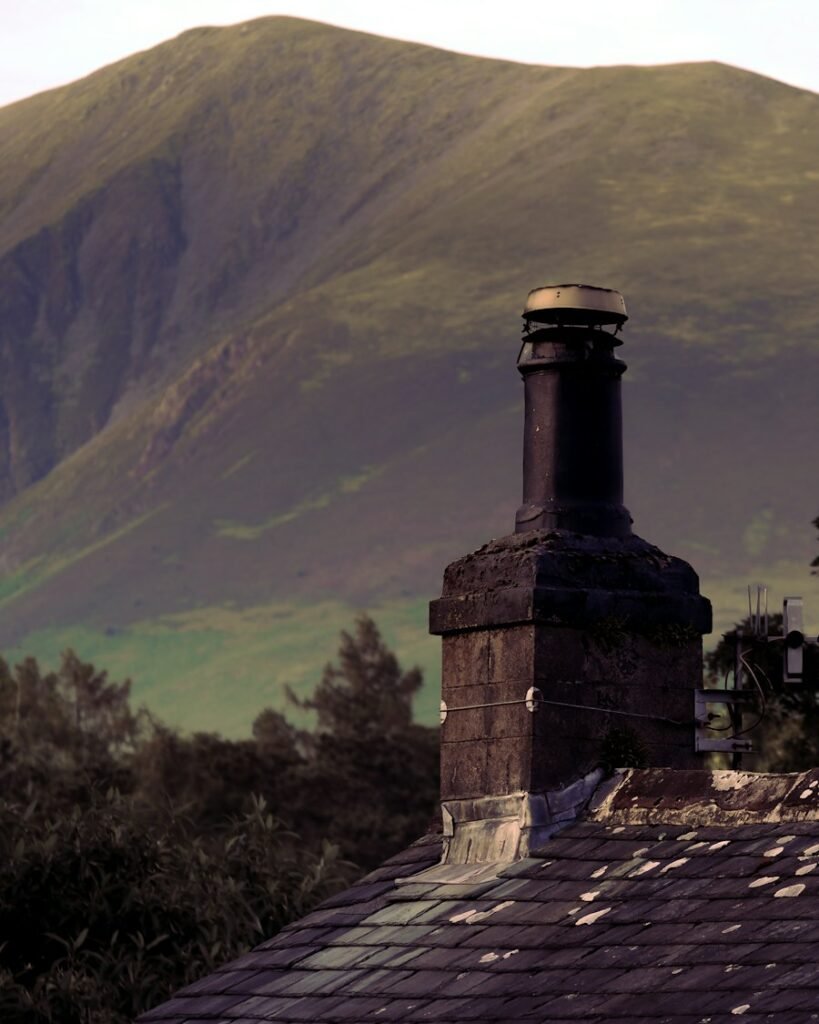
Settled in 1679 and listed as a historic district in 1977, Mill Hill is mostly two- and three-storey brick and clapboard rowhouses in Federal, Greek Revival, Italianate, Second Empire and Queen Anne styles. Front slopes are often slate or have mansard faces, rears step down to low-slope roofs, and recessed front gutters sit behind wood cornices. Leaks here usually start at the cornice gutter lining, at party-wall flashing, or at old chimneys shared between two houses.
Chambersburg
The Burg, Trenton’s traditional Italian section and now home to large Latino, Burmese and Bhutanese communities, is a tight grid of brick rowhouses and twins in the South Ward. Most have a pitched front section and a long flat rear roof over the kitchen, often several layers of roll roofing or coated built-up felt. Ponding water at the back wall, cracked flashing where the rear roof meets the main wall, and rusted scuppers are the everyday repairs.
Cadwalader Heights
Laid out with Olmsted’s curving streets beside Cadwalader Park and built out between 1907 and 1937, this 31-acre neighbourhood has Tudor, Georgian, Colonial Revival, Dutch Colonial and Craftsman houses on half-acre lots. Steep slate and tile roofs, copper valleys and tall brick chimneys are common. Mature red oaks, lindens and sycamores keep valleys and gutters clogged, and a slipped slate above a dormer is a typical spring call.
Berkeley Square and West State Street
The Berkeley Square Historic District, listed in 1980, covers West State Street, Berkeley, Riverside, Carteret, Parkside and Edgewood Avenues near Route 29. Large late-Victorian and early twentieth-century houses here carry complex roofs with turrets, dormers, built-in gutters and decorative ridge work. Repairs must respect the district, and the height and pitch of these roofs mean proper staging and fall protection are part of almost every job.
Hiltonia and Glen Afton
In the West Ward, Hiltonia runs up to the Ewing line and Glen Afton sits along the Delaware. These are Trenton’s most suburban streets: detached colonials, Tudors, Cape Cods and ranches with attached garages and full gutter runs. Roofs are mostly asphalt shingle with some slate and clay tile on older houses. The common problems are worn pipe boots, failing step flashing at dormers, and ice backing up under shingles along shaded north eaves.
North Ward and Five Points
Around the Battle Monument at Five Points, the North Ward has blocks of brick rowhouses and larger three-storey homes, many built for the Polish-American community that still anchors the area. Decades of disinvestment left vacant houses mid-row, and a failed roof next door lets water track along shared rafters and parapets. Here we often repair a parapet cap, rebuild cricket flashing behind a chimney, or seal a party wall the neighbour can no longer maintain.
East Ward
The East Ward, the city’s smallest and home to the Trenton Transit Center and Trenton Central High School, mixes two-storey rowhouses with porch-front twins and small apartment buildings. Low-slope porch roofs and rear additions are tied into the main walls with metal flashing that has often been tarred over several times. Built-up tar layers hide rotted deck boards, so we probe and core suspect areas before quoting a patch.
South Trenton, Duck Island and Lamberton
South of the Assunpink toward the river, South Trenton and the Lamberton waterfront combine rowhouses with former industrial buildings, warehouses and small commercial properties. Flat roofs on these buildings use modified bitumen, EPDM or older built-up systems with parapet walls, coping and internal drains. Wind-driven rain off the river and clogged drains after storms cause most leaks, and many owners need commercial-grade repairs rather than a residential patch.
What we fix in Trenton
What Roof Problems Are Most Common in Trenton?
Most Trenton roof leaks come from the places where attached houses meet: parapets, party walls, low-slope rear roofs and built-in front gutters. These six problems account for the bulk of what we find on city inspections.
Parapet and party-wall flashing failures
On a Trenton row, the brick wall between two houses often rises above the roofline as a parapet. Its cap, the counter flashing let into the mortar and the base flashing below all age at different rates. When the mortar joints open, water runs down inside the wall and appears as a stain on the stair side of the top floor. Fixing it means repointing or capping the parapet and resetting counter flashing, not smearing more tar along the base.
Ponding on flat rear roofs
The kitchen and bathroom wings behind Chambersburg and North Ward rowhouses were built with almost no pitch. Years of re-roofing over the old surface add weight and trap moisture, and sagging joists create bowls that hold water for days after a storm. Small blisters and split seams follow. We check slope with a level, cut test openings and, where needed, add tapered insulation or a cricket so the roof drains to its scupper.
Built-in gutters behind cornices
Mill Hill and Berkeley Square fronts often have recessed gutters hidden inside the wood cornice. The Mill Hill restoration guidance asks owners to preserve and repair them. When their metal lining rusts or a seam cracks, water rots the cornice and runs into the front wall. Relining with copper or a fully adhered membrane, then repairing the wood in kind, is usually cheaper than the plaster and brick repairs that follow a long leak.
Leaks from a vacant house next door
With about one in eight housing units vacant in 2020, plenty of Trenton blocks have an empty house in the row. A neighbour’s collapsed roof or missing parapet cap can push water sideways into your attic. We document the source with photos, protect your side with flashing and a membrane turned up the shared wall, and give you a report you can use with the owner, the city or your insurer.
Second Empire mansards and dormers
Mansard faces on Mill Hill’s Second Empire rowhouses and similar houses elsewhere in the city are steep, slate-covered walls with dormers set into them. Slate on a mansard is hard to reach, and the small flat deck above it is often a forgotten layer of roll roofing. Leaks start at dormer cheeks, at the transition between the mansard and the deck, or where a slate has slipped. These need slate hooks, copper or lead-coated flashing and careful staging.
Tree debris on West Ward roofs
Cadwalader Park and the Olmsted-planned streets of Cadwalader Heights give the West Ward a mature canopy of oaks, lindens and sycamores. Leaves, seed pods and twigs fill valleys and gutters every fall, water backs up under slate and shingles, and fallen limbs crack tiles in summer storms. Gutter cleaning, valley flushing and a check of the gutter hangers after leaf drop prevent most of these leaks.
Trenton weather
How Has Trenton’s Weather Damaged Roofs?
Trenton sits where the Delaware River bends and the Assunpink Creek joins it, so the city’s worst storms have been river floods and extreme rainfall rather than coastal wind. These dated events and recurring conditions explain what we look for after a storm here.
August 1955: Connie and Diane
Back-to-back tropical storms gave Trenton its wettest month on record, 14.55 inches in August 1955, and the Delaware crested at 28.6 feet on August 20, more than eight feet over flood stage. Many of the rowhouses and riverfront homes standing today went through that flood. When we open old ceilings near the river we still find patched joists and mismatched decking from repairs made after that summer.
September 16, 1999: Hurricane Floyd
Floyd dropped 7.25 inches of rain on Trenton in one day, the city’s all-time daily record, and the Assunpink flooded about 40 homes and three businesses. That much rain in hours overwhelms the single scuppers and small downspouts on rowhouse rear roofs, so water climbs over flashing that never leaks in a normal storm. We size scuppers and leaders on flat roofs with storms like Floyd in mind.
2004 to 2006: three Delaware floods in 21 months
The Delaware at Trenton crested at 23.41 feet on September 19, 2004, 25.33 feet on April 4, 2005 and 25.09 feet on June 29, 2006. Riverside streets such as the Island neighbourhood along the floodplain took the worst of it. Floodwater is not a roof problem, but repeated soaking of walls and framing weakened the structure under some roofs, and repairs after major flood damage can trigger floodplain rules.
September 1-2, 2021: Ida
Ida’s rain sent the Assunpink Creek at Trenton to a major-flood reading of 12.59 feet, while the Delaware reached minor flood stage at 20.7 feet. Across the city the problem on roofs was volume: clogged scuppers, gutters packed with summer leaves, and rear roofs that ponded until water found an open seam. Many calls afterward were for leaks that had been slow drips for years and finally gave way.
Summer heat on dark flat roofs
Rutgers climatologists place Trenton at the southern edge of New Jersey’s central climate zone, with more 90-degree days than areas to the north and an urban heat island on top. Black roll roofing and asphalt-coated flat roofs on rowhouses bake through July and August, drying and cracking within a few seasons. Reflective coatings or a white TPO or modified-bitumen cap sheet lower surface temperatures and slow that cycle.
Roofing services
Which Roofing Services Do Trenton Homes and Buildings Need?
Trenton owners mostly need leak repair on attached homes, flat-roof work and storm response, with slate and historic repairs in Mill Hill and the West Ward. Each service below is described the way it applies in Trenton, and our main roof repair NJ page covers how we work statewide.
Roof Leak Repair in Trenton
On Trenton rowhouses we trace leaks to parapets, party walls, chimney crickets and rear-roof seams rather than guessing from the ceiling stain. Many leaks travel along shared rafters, so we inspect both sides of a party wall when the neighbour allows access.
Emergency Roof Repair in Trenton
After a tree limb through a Cadwalader Heights slate roof or a flat rear roof that splits during a downpour, request emergency help through the contact page. We tarp or temporarily seal the opening, photograph everything for insurance, and schedule the permanent repair.
Storm Damage Roof Repair in Trenton
Trenton storm damage is usually wind-lifted flashing on rows, blown-off parapet caps, and tree damage in the West Ward. We document Floyd- or Ida-type rainfall leaks separately from wind damage so your claim describes what actually happened.
Roof Replacement in Trenton
Full replacement on attached Trenton houses needs a construction permit from the city, and on landmarked blocks, Landmarks Commission approval. We handle the paperwork, coordinate with neighbours on shared flashing, and remove old layers down to the deck.
Roof Inspection in Trenton
A Trenton inspection covers the front slope, rear flat roof, parapets, chimneys, gutters and the condition of neighbouring roofs that affect yours. Buyers of Chambersburg and Mill Hill rowhouses use the photo report to negotiate before closing.
Flat Roof Repair in Trenton
Most Trenton rowhouses have at least one flat or low-slope section. We patch modified bitumen, recoat built-up roofs, reseal scuppers and, when layers are rotten, strip and install a new membrane with proper slope to the drain.
Metal Roof Repair in Trenton
Standing-seam and flat-seam metal show up on Mill Hill porch roofs, bay windows and mansard decks, and on older commercial buildings in South Trenton. We reseal seams, replace rusted panels and repaint terne or galvanized metal to stop corrosion.
Slate Roof Repair in Trenton
Slate covers many Mill Hill mansards, Berkeley Square Victorians and Cadwalader Heights Tudors. We replace broken slates with matched pieces on copper hooks, re-flash dormers and chimneys, and keep sound slate roofs working instead of replacing them.
Shingle Roof Repair in Trenton
Asphalt shingles cover the front slopes of most rowhouses and nearly every roof in Hiltonia and Glen Afton. We replace blown tabs, reseal step flashing at dormers and fix ice-dam damage along shaded eaves without disturbing the rest of the roof.
Roof Cleaning in Trenton
Under the West Ward’s oaks and sycamores, moss and algae streaks spread on north-facing slopes. We use low-pressure, roof-safe cleaning that will not strip granules from shingles or crack slate, and clear debris from valleys while we are up there.
Gutter Repair in Trenton
Trenton gutter work ranges from relining Mill Hill built-in gutters and replacing half-round copper to clearing clogged scuppers and leaders on rear flat roofs. Proper downspouts keep water off brick foundations and party walls.
Commercial Roofing in Trenton
Corner stores, churches, small apartment buildings and South Trenton warehouses need commercial roof repair: EPDM, TPO and modified bitumen, parapet coping, internal drains and roof hatches. These buildings always need a construction permit for replacement.
Trenton rules
Do You Need a Permit or Historic Approval for Roof Work in Trenton?
Permits & local review
A detached one- or two-family Trenton house can usually be reroofed without a permit, but most Trenton homes are attached rowhouses or twins, and those need a construction permit for roof replacement. Under N.J.A.C. 5:23-2.7, roof covering work on detached one- and two-family homes is ordinary maintenance. Attached houses, buildings with three or more units, commercial roofs, deck or rafter work and a third roof layer all need a permit.
- City permits: Trenton’s Division of Inspections enforces the construction and housing codes, and building permits are issued through its Technical Services office under the Construction Official. Zoning approval comes from the separate Zoning office.
- Historic districts: The Trenton Landmarks Commission for Historic Preservation reviews exterior improvements on designated properties in the city’s eight districts. The Land Development Ordinance requires a certificate of appropriateness before zoning approval, and a change to a roofline is never treated as minor work. Emergency repairs and in-kind repairs on rear or side walls not visible from the street are exempt.
- Mill Hill: The neighbourhood’s restoration guidance asks owners to apply before any exterior project, even one that needs no building permit.
- Floodplain: Homes near the Delaware or Assunpink with major flood damage may face substantial-damage rules, so ask the city before combining roof work with flood repairs.
Insurance claims
In Trenton the hardest insurance question is usually whose roof caused the leak, because attached houses share walls, parapets and sometimes flashing. If water came through your neighbour’s failed parapet or a vacant house’s open roof, your insurer may pay and then pursue the other owner, but you need photos showing the source. Sudden wind or tree damage is normally covered; slow leaks from worn roll roofing are normally treated as maintenance. Water that rose from the Assunpink or the Delaware is flood damage, which homeowners policies exclude and only a separate flood policy covers. Many Trenton rentals are insured under landlord or dwelling policies whose roof terms differ from a homeowner policy, so landlords should read their own form. Our inspection report separates storm damage from age-related wear so the adjuster sees both clearly.
Pricing · updated November 2026
How Much Does Roof Repair Cost in Trenton?
As of November 2026, most Trenton roof repairs fall between $400 and $2,500, with flat rear-roof patches and parapet flashing the most common jobs and slate or mansard work at the higher end. These planning ranges reflect New Jersey pricing; see our roof repair cost guide for how a quote is built.
Pipe boot or vent flashing
$250 – $600
Replacing a cracked rubber boot or rusted vent flashing on a rowhouse front slope or flat rear roof, with sealant and fasteners matched to the roof surface, plus photos of the finished detail.
Shingle repair
$350 – $800
Replacing blown or cracked shingles on a Hiltonia colonial or a rowhouse front slope, matching colour as closely as available, and resealing nearby tabs that the same wind loosened.
Single-source leak repair
$400 – $1,500
Tracing and fixing one leak, such as party-wall counter flashing, a chimney cricket or a split rear-roof seam, including any small section of flashing or membrane that must be replaced.
Flat rear-roof patch or seam
$400 – $2,500
Cutting out blistered or ponding sections of modified bitumen or built-up roofing behind a Chambersburg or North Ward rowhouse, patching or recovering the area and resealing the scupper.
Chimney re-flashing
$600 – $1,800
New step and counter flashing, a cricket where needed and mortar repair on the brick chimneys that rise through so many Trenton rows and West Ward Tudors.
Slate repair
$500 – $2,500+
Replacing broken slates on a Mill Hill mansard or Cadwalader Heights roof with matched slate on copper hooks, re-flashing dormers and setting staging on steep or high roofs.
What moves the price in Trenton
- Attached construction: Rowhouse work often means flashing into a neighbour’s wall or roof, which takes extra time and sometimes their permission.
- Permits on attached homes: Replacements on rowhouses and twins need a city permit, adding fees and inspection scheduling to the job.
- Landmarks Commission review: In designated districts, matching slate, copper half-round gutters and cornice repairs in kind cost more than generic materials.
- Hidden layers: Flat rear roofs often hide three or four old surfaces and soft decking, which can turn a patch into a strip-and-replace.
- Access and parking: Narrow streets in Chambersburg and Mill Hill, rear alleys and no driveways make material delivery, dumpsters and ladder placement slower.
- Height and pitch: Three-storey rowhouses, Berkeley Square turrets and steep West Ward slate need staging and more fall protection.
- Debris removal: Without yard space, old roofing has to be carried through the house or lowered by chute, which adds labour.
- Commercial buildings: South Trenton warehouses and mixed-use buildings need commercial membranes and drains priced separately from residential work.
Ranges are November 2026 planning figures based on New Jersey cost data from Roof Observations and Fixr and our site-wide repair ranges. They are not quotes. Every Trenton roof gets a free inspection and a written itemized price before any work begins.
Who does the work
Why Trenton Homeowners Choose Roof Repair SNJ
- Repairing NJ roofs for 25+ years
- General liability + workers’ comp insurance
- Workmanship warranty: 2 years on repairs, 10 years on full replacements, in writing
- Photo report with every inspection
Check any roofer before you sign in Trenton
Ask for the 13VH registration number and confirm it on the NJ license lookup. NJ law requires a signed written contract showing the registration number and total price, and gives you until midnight of the third business day to cancel (N.J.S.A. 56:8-151).
Nearby
How Do Roofs in Trenton’s Neighbouring Towns Differ?
Step across the city line and attached rowhouses give way to detached postwar homes, so the repairs change too. These neighbouring towns are covered on our roof repair in Mercer County page, and Princeton has its own Princeton roof repair page.
Hamilton Township
Hamilton wraps around Trenton’s south and east sides with mostly detached ranches, split-levels, capes and colonials from the 1950s onward, plus townhome communities. Shingle replacement, ventilation and gutter work are far more common there than the parapet and flat-roof repairs that dominate Trenton rows.
Ewing Township
Ewing borders the West Ward, and Hiltonia’s streets continue across the line. Beyond them come postwar capes, ranches and split-levels near the College of New Jersey and Trenton-Mercer Airport. Ewing roofs are mainly asphalt shingle, with ice dams and worn pipe boots the typical findings.
Lawrence Township
Lawrence, north of Trenton along Route 1 and Route 206, mixes the old village of Lawrenceville with large-lot colonials and newer townhome developments. Roofs are larger and more complex than in the city, and association approval is common in the townhome communities.
Princeton
Princeton, about a dozen miles up Route 206, shares Trenton’s slate and historic-district issues but on far more expensive houses. Its Historic Preservation Commission oversees 20 districts and expects replacement roofing to match the original material and size.
In depth
Trenton Roof Questions, Answered in Depth
Fixing the flat rear roof on a Trenton rowhouse
The flat roof over the back of a Trenton rowhouse is the single most common source of leaks in the city, and the right fix depends on how many layers are already on it. Most rows in Chambersburg, the North Ward and East Trenton have a pitched front section and a long rear wing over the kitchen and bathroom. That rear roof was built with very little slope and has usually been resurfaced several times with roll roofing, hot tar, silver coating or a torch-down cap sheet.
We start by checking slope and drainage. If water ponds against the back wall or away from the scupper, a patch will fail again. Next we cut a small test opening to count layers and look at the decking. New Jersey allows a maximum of two roof layers, and a rear roof with three or more must be stripped to the deck before a new roof goes on, which on an attached house requires a permit.
When the deck is sound and there is only one layer, a targeted repair works: cut out blisters, replace the failed seam, re-flash the wall where the rear roof meets the main house, and reseal the scupper and leader. When the deck is soft or layers are stacked, we recommend a tear-off and a new modified-bitumen, EPDM or TPO system with tapered insulation or crickets to move water to the drain.
Two Trenton details matter. First, the parapet or party wall at each side needs its own flashing, turned up the wall and covered by counter flashing let into the mortar. Second, rear access is often limited to a narrow alley or yard, so we plan material delivery and debris removal before we start. Light-coloured cap sheets also help these roofs survive Trenton’s hot summers.
Who pays when the leak comes from the house next door?
When water enters your Trenton rowhouse from a neighbour’s roof, the repair is usually the neighbour’s responsibility, but you often have to protect your own house first and document the source. Attached houses share party walls, and on many blocks the parapet, the flashing along it and sometimes a single continuous roof surface span two or more properties.
The first step is finding where the water actually enters. We inspect your roof, the shared wall and, with permission, the neighbouring roof, and we photograph the path water is taking. Common culprits are a missing parapet cap, a neighbour’s rear roof pitched toward your wall, a collapsed chimney or a roof opened up by fire or neglect.
Trenton had a 12.2 percent vacancy rate in the 2020 census, and vacant houses mid-row are a frequent cause. The city runs a Vacant Property Registration program and its Division of Inspections enforces the housing code, which sets minimum maintenance standards, so a documented report gives you something concrete to bring to the city if an owner will not respond.
In the meantime, we can protect your side. That usually means installing a membrane turned up your face of the party wall, new counter flashing, and sealing the joint so water from the neighbour’s side runs off rather than into your top floor. On a shared roof surface we can cut in a divider detail so your section drains independently.
For insurance, sudden damage such as a neighbour’s tree or wind-blown parapet is often covered under your policy, and your insurer may then seek payment from the other owner. Long-term neglect next door is harder, which is why dated photos and a written report from the first visit are valuable.
Roof work in Mill Hill and the other Landmarks Commission districts
If your Trenton house is in one of the city’s eight local historic districts, plan for Landmarks Commission review before any visible roof work, even when no building permit is needed. The Trenton Landmarks Commission for Historic Preservation reviews improvements to the exterior of designated properties, and the Land Development Ordinance requires a certificate of appropriateness before the zoning officer can sign off.
Mill Hill is the best-known district. Its houses date mostly from the nineteenth and early twentieth centuries, in Federal, Greek Revival, Italianate, Carpenter Gothic, Second Empire and Queen Anne styles, with brick, clapboard and brownstone walls. The neighbourhood’s restoration guidance asks owners to keep recessed front gutters and repair them, use half-round gutters in copper or painted galvanized steel where gutters show, keep cast-iron downspout boots and decorative scuppers, and replace damaged cornice pieces in kind. It also says an application must be completed before a project starts and the owner should attend the next Commission hearing.
The ordinance helps with urgent work. Emergency repairs and in-kind repairs on rear or side facades that are not visible from public view are exempt from the certificate. A roofline change, such as raising a rear roof or adding a dormer, is never minor work and goes through full review.
Practically, this means we match what is there. On a Second Empire mansard we replace slate with slate of the same size and colour. On a cornice gutter we reline the existing trough rather than hanging a modern K-style gutter in front of it. We provide photos, material samples and a written scope you can attach to your application, and we schedule work after approval so you do not face a stop order mid-job.
Slate and tile roofs in Cadwalader Heights and Hiltonia
Most slate and clay-tile roofs on West Ward houses can be repaired for decades more, and replacing them with asphalt is rarely the best value. Cadwalader Heights was built mostly between 1907 and 1937, with a building peak in the early 1920s, and its Tudor, Georgian, Colonial Revival, Dutch Colonial and Craftsman houses were designed by local architects for Trenton’s industrial families. Hiltonia’s houses are a little later and more modest, but many still have original slate or tile.
Good slate lasts far longer than the nails and flashing holding it. Most leaks we find in these neighbourhoods come from rusted nails letting individual slates slide, worn valley metal, failed chimney flashing or a past repair made with roofing cement. The fix is to replace broken or missing slates with matched pieces held by copper hooks or slate nails, re-line valleys in copper, and re-flash chimneys with step and counter flashing cut into the mortar.
We assess each roof by walking it from ladders and staging, never by stepping on the slate itself, and by tapping slates to find soft or delaminating pieces. If more than about a fifth of the slates are failing, or the roof has been patched with mismatched material for years, we discuss a phased restoration or replacement.
These streets also have heavy tree cover. The Olmsted plan lined Cadwalader Heights with red oaks, lindens and sycamores, and their debris fills valleys and built-in gutters. A fall cleaning and valley check, and trimming limbs that touch the roof, protect a slate roof better than any coating. Our slate roof repair page explains the techniques in more detail.
Repair or replace on a Trenton rental or modest-value home
On a Trenton house worth around the city median of $160,700, a well-targeted repair usually gives better value than a full replacement, unless the deck is rotten or the roof already has two layers. With about 62 percent of households renting, many of the owners we work with are landlords balancing roof costs against rent and a building’s long-term value.
Repair makes sense when the leak comes from one detail, such as a parapet, a pipe boot or a rear-roof seam, and the rest of the surface still sheds water. A $400 to $1,500 repair can buy several more years on a front slope or a rear roof in fair condition.
Replacement makes sense when we find soft decking across the rear roof, stacked layers, repeated leaks from different spots, or shingles curling and losing granules across the whole front slope. On an attached house, replacement needs a city permit, so we include permit time in the schedule. Doing the front slope and rear flat roof together usually saves money over two separate jobs, because staging, dumpster and permit costs are shared.
Landlords also need to think about tenants. Trenton’s housing code sets minimum standards for keeping dwellings weathertight, and an active leak can mean ceiling damage, mould complaints and lost rent. A documented repair with photos shows you acted promptly.
Whatever you choose, our quote lists repair and replacement options side by side with the reasons. Repairs carry a two-year written workmanship warranty and full replacements carry a ten-year one, so you can compare the cost per year of protection, not just the upfront price.
FAQ
Roof Repair in Trenton, NJ: Frequently Asked Questions
Do I need a permit to replace the roof on my Trenton rowhouse?
Yes, in most cases. New Jersey exempts reroofing only on detached one- and two-family homes. Trenton rowhouses and twins are attached, so roof replacement needs a construction permit from the city’s Division of Inspections. Historic district properties also need Landmarks Commission approval before zoning sign-off.
How much does it cost to fix a flat roof on a Trenton rowhouse?
Patching a seam or blistered section on a Trenton rear flat roof usually costs $400 to $2,500 in November 2026, depending on size and how many old layers are underneath. A full strip and new membrane on a typical rowhouse rear roof costs more and needs a permit.
Does the Trenton Landmarks Commission have to approve my roof repair?
If your Trenton house is a designated property in one of the eight local historic districts, visible exterior work needs Commission review and a certificate of appropriateness. Emergency repairs and in-kind repairs on rear or side walls not visible from the street are exempt. Mill Hill owners should apply before starting.
My neighbour’s roof is leaking into my Trenton house. What can I do?
Get the source documented first. A roofer can photograph the water path across the party wall or parapet and protect your side with flashing and a membrane. Share the report with the owner, your insurer and, for a neglected or vacant property, Trenton’s Division of Inspections.
Can a slate roof in Cadwalader Heights be repaired instead of replaced?
Usually yes. Most Cadwalader Heights slate roofs date from 1907 to 1937 and fail at nails, valleys and flashing long before the slate itself wears out. Replacing broken slates on copper hooks and re-flashing chimneys and valleys can keep these Trenton roofs working for decades.
Why does my Chambersburg house leak only in heavy rain?
Heavy-rain leaks on Chambersburg rowhouses usually mean water is ponding on the flat rear roof and rising over flashing, or a scupper or downspout cannot keep up. Storms like Floyd, which dropped 7.25 inches on Trenton in one day, expose these weak spots. Better drainage often fixes them.
Will homeowners insurance pay for roof damage from the 2021 Ida flooding in Trenton?
Insurance treats rain entering through a damaged roof differently from rising water. Wind or tree damage that let Ida’s rain in is usually covered. Water that rose from the Assunpink or Delaware is flood damage, excluded by homeowners policies and covered only by a separate flood policy.
Which Trenton zip codes do you cover for roof repair?
We cover every part of Trenton, including 08608, 08609, 08610, 08611, 08618, 08619, 08620, 08628, 08629 and 08638, from Mill Hill and Chambersburg to Hiltonia, Glen Afton, the North Ward and the Lamberton waterfront. Request a free inspection through our contact page.
How do I fix leaking built-in gutters on a Mill Hill house?
Built-in gutters hidden in Mill Hill cornices are repaired by relining the trough with copper or a fully adhered membrane and repairing rotted cornice wood in kind. The neighbourhood’s guidance asks owners to preserve these gutters, so replacing them with hanging gutters is usually not accepted.
Should a Trenton landlord repair or replace an old roof?
Repair a Trenton rental roof when one detail is leaking and the surface is otherwise sound. Replace when decking is soft, there are already two layers, or leaks keep appearing in different places. On attached houses, replacement needs a permit, so plan the schedule around tenants.
What roof problems are common in Trenton’s North Ward?
North Ward rowhouses around Five Points often leak at parapet caps, chimney crickets and flat rear roofs. Vacant houses mid-row are another frequent cause, because an open roof next door lets water track along shared walls and rafters into occupied homes.
How do I check that a Trenton roofer is registered?
Ask for the contractor’s New Jersey home improvement registration number, which starts with 13VH, and look it up on the state’s online verification site. Trenton homeowners should also get a written contract with the total price, insurance certificate and a three-business-day cancellation right.
Reviewed by the Roof Repair SNJ team · Last updated November 2026
Free inspection
Book a Free Roof Inspection in Trenton
Whether it is a ponding rear roof in Chambersburg, a leaking party wall in the North Ward or a slipped slate in Cadwalader Heights, request a free Trenton roof inspection and send photos if you have them. You will get photos of what we find, a written itemized quote and clear advice on permits or Landmarks Commission approval. No pressure, and no work starts without your approval.
No pressure and no obligation. If a repair will do, we’ll tell you.
Roof Repair SNJ
- Serving Trenton and all of Mercer County
- Request roof service in Trenton
- Mon–Fri 5:00 AM–10:00 PM · Sat 5:00 AM–6:00 PM · Emergencies 24/7
Sources: U.S. Census Bureau QuickFacts: Trenton city, NJ · Trenton, New Jersey (Wikipedia) · City of Trenton: Landmarks Commission for Historic Preservation · City of Trenton Land Development Ordinance, Article 15 Historic District Regulations · Old Mill Hill Society: Historic Restoration Guidance (May 2023) · City of Trenton: Berkeley Square Historic District map · NRHP listings in Mercer County, NJ (Wikipedia) · City of Trenton: Division of Inspections · City of Trenton: Building Permits · WHYY: Trenton’s historic Cadwalader Heights neighborhood · New Jersey Monthly: Urban Oasis (Cadwalader Heights) · NWS: Delaware River at Trenton top 20 crests · NWS Mount Holly: Ida event review · Effects of Hurricane Floyd in New Jersey (Wikipedia) · Office of the NJ State Climatologist: climate overview · N.J.A.C. 5:23-2.7 Ordinary maintenance · NJ contractor registration lookup · N.J.S.A. 56:8-151 home improvement contracts · Roof Observations: New Jersey roof cost guide · Fixr: Roof replacement cost in New Jersey. Prices are planning ranges, not quotes. Permit and insurance information is general guidance; your town, policy and agent have the final word.