
Roof Repair NJ › NJ Locations › Mercer County › Princeton
Western Section · Jugtown · Riverside · 08540
Roof Repair in Princeton, NJ: Slate, Copper and Historic-District Roofs
Roof Repair SNJ repairs slate, cedar, copper and shingle roofs throughout Princeton, from Western Section estates and Jugtown’s eighteenth-century houses to postwar homes in Riverside and Littlebrook. Every visit starts with a free inspection with photos and a written itemized quote, and for houses in one of Princeton’s 20 historic districts we write the scope so it can go straight to the Historic Preservation Commission.
- Slate replaced in matching material and size
- Built-in copper gutters relined, not removed
- Scopes written for Historic Preservation Commission review
Free roof inspection in Princeton
Photos of every problem we find and an itemized written price before any work. Emergency requests handled 24/7.
Roof Repair SNJ
Princeton · Mercer County · all 21 NJ counties
Free inspection
Roof, attic and gutters checked at no cost.
Insured
Liability and workers’ comp; certificate on request.
Written quotes
Itemized price in writing before any work.
Photo-documented
Every problem photographed, before and after.
Princeton at a glance
Princeton at a Glance: Why Roof Repair Here Is Different
Princeton combines some of New Jersey’s most valuable houses, twenty local historic districts and a heavy tree canopy, so repairs lean toward preserving original slate, cedar and copper rather than replacing them. These six facts frame almost every Princeton roof job we scope.
Population (2020)
30,681
The former Borough and Township consolidated on January 1, 2013, into one 18.4-square-mile municipality with a single construction office and one preservation commission.
Median home value
$1,050,600
American Community Survey 2024 five-year estimate for owner-occupied homes, more than double the Mercer County median, which keeps original roofing materials worth repairing.
Housing units
9,906
ACS 2024 estimate. The stock ranges from 1700s houses on Nassau Street to postwar subdivisions in the former Township and modern infill on the Ridge.
Local historic districts
20
The Historic Preservation Commission oversees 20 districts. Witherspoon-Jackson became the twentieth in 2016, recognising the historically African American neighbourhood off Witherspoon Street.
Princeton Historic District
About 370 acres
Listed on the National Register in 1975, it runs from Marquand Park to the eating clubs and includes Mercer Street, Stockton Street, Library Place and Hodge Road.
Stony Brook record (Ida)
17.65 ft
NWS recorded this all-time crest at the Princeton gauge on September 2, 2021, after more than nine inches of rain fell upstream in Hopewell Township.
Neighborhoods & homes
What Roofs Will You Find in Princeton’s Neighbourhoods?
Princeton’s older core, the Western Section and Jugtown are dominated by slate, cedar, copper and built-in gutters, while the former Township’s postwar neighbourhoods are mostly asphalt shingle with some low-slope modernist roofs. This is what each area typically brings to a repair.
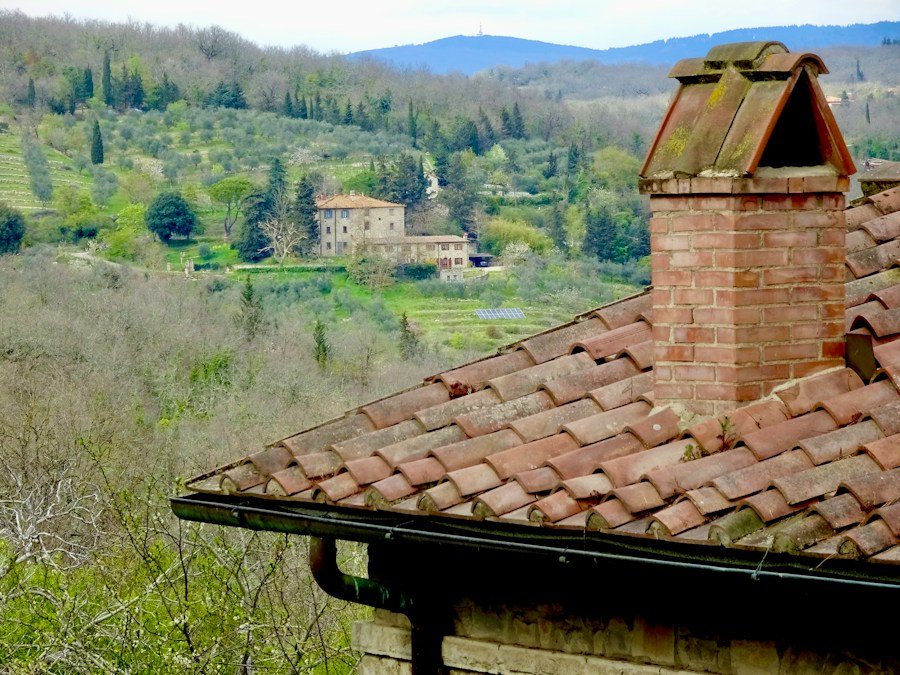
Downtown and the Princeton Historic District
The district around Nassau Street, Palmer Square, Mercer Street and Stockton Street spans Georgian houses such as the 1766 brick Bainbridge House, Federal and Greek Revival homes, Notman’s Gothic villas, Queen Anne and Shingle style houses and Collegiate Gothic buildings. Roofs here mix slate, standing-seam and flat-lock copper, and built-in gutters. Repairs need careful matching, and nearly all visible work goes through the Historic Preservation Commission.
Western Section
Library Place, Hodge Road and the streets toward Marquand Park hold Princeton’s largest nineteenth- and early twentieth-century houses, including the Woodrow Wilson House and Westland, Grover Cleveland’s former home. These are steep, many-gabled slate roofs with multiple chimneys, copper valleys and Yankee or box gutters. Typical calls are slipped slates, leaking chimney flashing and gutter linings that have finally cracked after decades of freeze and thaw.
Witherspoon-Jackson
Designated in 2016 as Princeton’s twentieth historic district, this neighbourhood of modest frame houses, many once combining homes and small businesses, sits along Witherspoon Street, Birch Avenue, Leigh Avenue and the streets between them. Most roofs are asphalt shingle over older wood shingle, with porch roofs and low-slope rear additions. Designation encourages renovation over demolition, so repairing the existing roof form is the usual path.
Jugtown
Around the corner of Nassau and Harrison Streets and along Evelyn Place, Jugtown’s National Register district covers about 15 acres and 23 houses, seven with eighteenth-century fabric and one with a beam dated 1730. The village took its name from potteries that started in 1766. Steep gables, irregular old framing and later Queen Anne and Shingle style additions make every roof tie-in a custom flashing job.
Riverside and Littlebrook
These former Township neighbourhoods, named for their elementary schools, grew mostly after World War II with colonials, ranches, split-levels and some mid-century modern houses. Roofs are asphalt shingle, with a few low-slope or flat modernist roofs. Common problems are first- or second-generation shingles nearing the end of life, ice dams over finished attics, and skylights and pipe boots that were never re-flashed during an earlier reroof.
Princeton Ridge
The wooded, rocky ridge north of the old Borough has larger lots, mid-century and contemporary houses and newer custom homes set among mature oaks and tulip trees. Shade keeps roofs damp, so moss, algae and premature cedar decay are common, and limb fall is the main storm risk. Low-slope sections and clerestory or skylight details on contemporary houses need membrane and metal flashing work rather than shingle repairs.
Lake Carnegie and Washington Road
Houses near Lake Carnegie and along Washington Road sit where Ida’s EF0 tornado ended on September 1, 2021, after crossing from West Windsor past Carnegie Center. Trees were snapped and uprooted and utility poles came down on Washington Road. Homes here have mature trees close to the house and large roof areas, so post-storm inspections focus on impact damage, cracked slate and bent gutters.
Princeton Basin and Port Mercer
These canal-era settlements along the Delaware and Raritan Canal, Stony Brook and the Millstone kept their own identity inside Greater Princeton. Expect nineteenth-century frame houses, farmhouse additions and a few converted outbuildings. Low ground near the water means damp crawlspaces and attics with condensation, and the 2021 Stony Brook record crest shows how fast water rises here, so we check attic ventilation alongside the roof surface.
What we fix in Princeton
What Roof Problems Do Princeton Homeowners See Most?
Princeton’s roof problems are mostly about age and shade: slate outliving its nails, built-in gutters wearing through, cedar rotting under the canopy and big trees falling in storms. These six issues come up again and again on our Princeton inspections.
Slate that has outlived its nails and flashing
Slate on an 1890s Western Section house or a downtown Federal home can last well over a century, but the iron nails and old flashing usually fail first. Slates slide out, valleys rust through and chimney flashing cracks. Princeton’s ordinance favours repairing original roofing, which suits slate well. Replacing failed pieces on copper hooks, relining valleys and re-flashing chimneys keeps a sound slate roof working for decades.
Yankee and box gutters wearing through
Many older Princeton houses have gutters built into the roof edge or cornice, lined with copper or terne. Seams crack from expansion, the lining wears thin, and water leaks into soffits, cornices and walls, often far from the gutter itself. Because these gutters shape the eave line of the house, relining in copper or a compatible membrane is the right repair, and removing them can draw historic review.
Cedar decay under heavy shade
Cedar shakes and shingles appear on Shingle style houses downtown and on newer houses on the Ridge. Under Princeton’s oaks, beeches and tulip trees, they stay damp, grow moss and split or cup well before their expected life. We replace failed courses with matching cedar, clear debris from keyways, and discuss trimming that lets the roof dry after rain.
Mature trees falling onto roofs
Sandy in 2012 brought down at least 50 trees on campus alone and closed more than 60 local roads, and Ida’s tornado snapped and uprooted trees along Washington Road. Large trees close to big houses make impact damage Princeton’s most serious storm risk. Slate and tile crack under limbs, rafters can break, and an open roof needs tarping before the next rain.
Ice dams over finished third floors
Many Princeton houses have finished attics, third-floor bedrooms or kneewall rooms added over the years, often with little insulation or ventilation behind the plaster. Heat escapes to the roof, snow melts and refreezes at the cold eave, and water backs up under slate or shingles. Fixing it means ice and water shield at eaves during repairs plus better air sealing and ventilation where possible.
Low-slope roofs on modern and mid-century houses
Princeton has a notable number of modernist and contemporary houses, from postwar designs in Littlebrook to architect-designed homes on the Ridge. Their flat or low-slope roofs, internal drains, clerestories and large skylights need membrane, metal and drainage details that shingle roofers often get wrong. Ponding, clogged drains and failed skylight curbs are the usual leak sources.
Princeton weather
Which Storms Have Damaged Roofs in Princeton?
Princeton’s worst roof damage has come from falling trees in wind storms and from extreme rain, not from coastal surge. These dated events show where Princeton roofs are most vulnerable.
October 29-30, 2012: Sandy
Sandy’s winds left about three quarters of Princeton without power, closed at least 60 local roads and knocked down at least 50 trees on the University campus, with many more across town. A resident was killed by a falling tree while clearing debris outside his house. For roofs, the lesson was impact damage from mature trees, and we still find patched rafters from that week.
September 1, 2021: Ida’s EF0 tornado
A tornado spun up from Ida’s remnants touched down near Route 1 in West Windsor at about 7:32 pm and ran nearly three miles past Carnegie Center and up Washington Road to Lake Carnegie, with winds estimated at 65 to 85 mph. It snapped and uprooted trees and brought down utility poles on Washington Road, the clearest recent example of tornado damage reaching Princeton.
September 1-2, 2021: record Stony Brook flood
Ida dropped 9.13 inches on Hopewell Township, upstream in the 44-square-mile Stony Brook basin, and the brook crested at a record 17.65 feet at Princeton hours after the rain stopped. Roofs on houses near the brook took on water through overwhelmed gutters and downspouts, and many owners found long-hidden flashing leaks during the hours of torrential rain.
October 29, 2011: snow on leaves
An unusually early storm dropped 4 to 8 inches of heavy, wet snow across most of Mercer County while trees still carried their leaves. Limbs bent and broke under the load, and downed trees and lines closed roads across the region. For Princeton’s tree-heavy streets, it was a reminder that limb fall onto roofs is not only a summer storm problem.
December 16-17, 2020: early winter snowstorm
Princeton recorded 7.3 inches of snow in this mid-December storm, followed by a cold spell. On houses with finished third floors and complex rooflines, snow sitting in valleys and behind chimneys melted and refroze into ice dams along the eaves. Several weeks of freeze and thaw like this are hard on old box gutters and on slates already held by weak nails.
Roofing services
How Do Our Roofing Services Apply to Princeton Homes?
In Princeton most work is preservation-minded repair: slate, copper, cedar and gutter restoration, with storm response after tree damage and shingle work in the postwar neighbourhoods. Here is how each service fits Princeton, and our roof repair NJ page explains our approach statewide.
Roof Leak Repair in Princeton
We trace Princeton leaks through slate valleys, chimney crickets, dormers and built-in gutters, where water can travel several feet inside a cornice before it shows. The repair is matched to the original material so it will pass Historic Preservation Commission scrutiny.
Emergency Roof Repair in Princeton
When a limb comes through a Western Section slate roof or a Ridge contemporary during a storm, request emergency help through our contact page. We tarp without nailing through sound slate, photograph damage for insurers and plan a matched permanent repair.
Storm Damage Roof Repair in Princeton
Princeton storm damage is mostly tree impact, cracked slate and bent copper gutters after events like Sandy and Ida. We separate storm damage from long-term wear in our report and source matching slate so the repair blends with the roof.
Roof Replacement in Princeton
When a Princeton roof truly needs replacing, the HPC standard calls for the same material and size, or a substitute of the same shape and size. We price natural slate, cedar and copper honestly and explain the review steps before work begins.
Roof Inspection in Princeton
A Princeton inspection covers slate condition by tapping and visual check, copper and terne gutter linings, chimney masonry, attic ventilation and tree clearance. Buyers in the Western Section and Jugtown use the photo report before closing on older houses.
Flat Roof Repair in Princeton
Princeton’s flat and low-slope roofs include porch decks, rear additions on Witherspoon-Jackson houses and modernist roofs in Littlebrook and on the Ridge. We repair EPDM, TPO and modified bitumen and fix drains and skylight curbs.
Metal Roof Repair in Princeton
Standing-seam and flat-lock copper are common on downtown porches, bays, dormers and some institutional roofs. We solder and reseal copper seams, replace corroded terne panels and keep metal details consistent with the house’s historic character.
Slate Roof Repair in Princeton
Slate is Princeton’s signature roof. We replace broken and slipped slates with matched pieces on copper hooks, rebuild valleys and re-flash chimneys and dormers, preserving roofs that the ordinance says should be maintained or repaired.
Shingle Roof Repair in Princeton
Asphalt shingles cover most houses in Riverside, Littlebrook and the newer parts of the former Township, plus many Witherspoon-Jackson homes. We repair wind damage, ice-dam leaks and worn pipe boots and match shingle colour wherever possible.
Roof Cleaning in Princeton
Under Princeton’s canopy, moss and algae grow fast on cedar, slate and north-facing shingle slopes. We use gentle, low-pressure cleaning that will not crack slate or strip shingle granules, and clear keyways and valleys while we work.
Gutter Repair in Princeton
We reline built-in Yankee and box gutters in copper or compatible membrane, repair half-round copper gutters and leaders, and resize downspouts where Ida-style downpours overflow them. Our goal is to keep the eave line looking original.
Commercial Roofing in Princeton
Nassau Street shops, Palmer Square buildings, churches and small offices have flat membranes, copper details and parapets. We repair and maintain these commercial roofs with permits and historic review handled as part of the job.
Princeton rules
What Permits and Historic Approvals Does Princeton Require for Roof Work?
Permits & local review
A detached one- or two-family house in Princeton needs no construction permit for reroofing, but if it sits in one of the 20 historic districts, visible roof changes usually need Historic Preservation Commission review first. Under N.J.A.C. 5:23-2.7, roof covering work on detached one- and two-family homes is ordinary maintenance. Princeton’s construction code official still issues permits for deck or structural work, a third layer, townhouses, condominiums and commercial buildings.
- Type 1 and Type 2 districts: In Type 1 districts, work visible from anywhere in the district is reviewed. In Type 2 districts, review covers work visible from a public right-of-way.
- Ordinary maintenance: Princeton’s code says ordinary maintenance that restores prior condition is not an alteration, so like-for-like slate or gutter repair is usually outside review.
- Replacement standard: Original roofing should be maintained or repaired. Replacement should be the same material and size, or a substitute of the same shape and size.
- Historic Preservation Officer: This officer processes preservation plans and can tell you whether your house is in a local district. National Register districts such as Jugtown and Mountain Avenue are separate listings.
- Condos and associations: Townhouse and condo owners also need association approval.
Insurance claims
On high-value Princeton houses the key insurance issue is whether your policy pays to repair slate, cedar or copper with the same materials, and whether it covers code or ordinance costs. Sudden tree impact, wind and the weight of snow and ice are usually covered, while worn nails, rusted valleys and gutter linings are usually treated as maintenance. Because Princeton’s ordinance expects replacement in the same material and size, ask your agent whether your policy includes ordinance or law coverage and how it handles matching undamaged sections. Tree claims are common here, so photograph the tree, the roof and any interior damage before cleanup. Our inspection report lists slate counts, gutter footage and copper details so an adjuster can price a matched repair rather than an asphalt substitute.
Pricing · updated November 2026
What Does Roof Repair Cost in Princeton?
As of November 2026, typical Princeton roof repairs run from about $400 for a small leak to $2,500 or more for slate and chimney work, with copper and historic matching pushing some jobs higher. These are New Jersey planning ranges; our guide to roof repair costs explains each line on a quote.
Single-source leak repair
$400 – $1,500
Finding and fixing one leak on a Princeton roof, such as a dormer cheek, a skylight curb on a Ridge contemporary or a cracked step flashing, with matched materials and photos.
Skylight re-flashing
$400 – $1,200
New curb or step flashing around skylights in Littlebrook ranches, finished third floors and modern houses, using copper or aluminium to suit the roof and the house’s character.
Valley repair
$500 – $1,500
Relining a rusted or cracked valley on a slate or cedar roof in the Western Section or downtown, typically in copper, with slates or shingles reset along both sides.
Chimney re-flashing
$600 – $1,800
Step and counter flashing let into the mortar, a cricket behind wide chimneys and repointing where needed on the tall brick chimneys of older Princeton houses.
Slate repair
$500 – $2,500+
Replacing broken or slipped slates with matched slate on copper hooks, staging on steep roofs and matching colour and size to meet the Historic Preservation Commission standard.
Emergency tarp
$300 – $1,200
Securing a tree-damaged roof after a Sandy or Ida type storm with tarps fastened to avoid further damage to slate and copper, plus photos for the insurance claim.
What moves the price in Princeton
- Material matching: Natural slate costs about $31.00 to $40.35 per square foot installed in New Jersey and cedar about $17.35 to $20.20, and matching salvaged colours adds sourcing time.
- Copper work: Soldered copper gutters, valleys and flashing cost more than aluminium but are expected on many Princeton houses.
- Historic review: Preparing photos and scopes for the Historic Preservation Commission and waiting for approval adds time on visible changes.
- Height and complexity: Three-storey Western Section houses with turrets, dormers and several chimneys need staging and roof brackets.
- Protecting landscaping: Mature gardens, slate walks and close trees make debris handling slower and more careful.
- Hidden structure: Old plank decking and rafters on 1700s and 1800s houses sometimes need repair once slate is lifted.
- Parking downtown: Narrow streets near Nassau Street limit dumpsters and lifts and may need municipal parking arrangements.
- Modern roof details: Internal drains, large skylights and clerestories on contemporary houses take specialist membrane work.
November 2026 planning ranges from Roof Observations, Fixr and our site-wide repair figures. They are not quotes. Every Princeton roof gets a free inspection and a written itemized quote before any work.
Who does the work
Why Princeton Homeowners Choose Roof Repair SNJ
- Repairing NJ roofs for 25+ years
- General liability + workers’ comp insurance
- Workmanship warranty: 2 years on repairs, 10 years on full replacements, in writing
- Photo report with every inspection
Check any roofer before you sign in Princeton
Ask for the 13VH registration number and confirm it on the NJ license lookup. NJ law requires a signed written contract showing the registration number and total price, and gives you until midnight of the third business day to cancel (N.J.S.A. 56:8-151).
Nearby
How Do Roofs Around Princeton Compare?
Princeton is ringed by suburbs whose roofs are newer and simpler, so the repairs there look very different. See our Mercer County roof repair page for the wider county, or roof repair in Trenton for the capital’s rowhouses.
West Windsor
Across Lake Carnegie, West Windsor and Princeton Junction are mainly 1970s to 2000s colonials and townhome communities with asphalt shingle roofs. Ida’s 2021 tornado touched down there first, near Route 1, before crossing into Princeton, and association approval is a regular step for townhome reroofs.
Lawrence Township
South along Route 206, Lawrence has the historic Lawrenceville village, larger-lot colonials and townhome developments. Some village houses share Princeton’s slate and cedar, but most of the township is shingle, and repairs focus on ventilation and valleys.
Hopewell Township
North and west of Princeton, Hopewell Township has farmhouses, stone and frame homes and newer estates on large lots. It took 9.13 inches of rain from Ida in 2021, and rural houses there often have barns, metal roofs and long driveways that change access and pricing.
Montgomery Township
Across the county line in Somerset, Montgomery is mostly 1980s to 2000s subdivisions with large, complex shingle roofs, plus older houses near Rocky Hill. Skylights, step flashing and second-generation shingle wear are the common repair items.
Plainsboro
East of Princeton in Middlesex County, Plainsboro is dominated by large apartment and condominium complexes and townhomes, where roofs are managed by associations. Individual owners there rarely hire roofers directly, unlike Princeton, where most houses are owner-managed.
In depth
Princeton Roof Questions, Answered in Depth
Repairing slate under Princeton’s same-material standard
Princeton’s preservation ordinance says original roofing should be maintained or repaired, and replacement should use the same material and size, so on a historic house slate repair is almost always the starting point. That fits how slate behaves. Quality Pennsylvania and Vermont slate can outlast several sets of nails and flashing, and most Princeton slate roofs we inspect have plenty of sound stone left.
A proper slate repair starts with an inspection from ladders, roof brackets or a lift, never by walking on the slate. We look for slipped pieces, cracked or delaminating slates, rusted nail heads, worn valleys and failed chimney flashing, and tap suspect slates to hear whether they are sound. Then we replace failed pieces with matching slate of the same size, thickness and colour, held with copper hooks or copper nails under the course above. Valleys are relined in copper, and chimneys get new step and counter flashing cut into the mortar joints.
Matching is the hard part. Older Princeton roofs often use slate from quarries that have closed, and some have faded or weathered unevenly. We source salvaged or new slate that matches as closely as possible and, where needed, move original slate from a hidden slope to the front and put the new material out of view.
Repairs that restore a roof to its prior condition count as ordinary maintenance under Princeton’s code, which generally keeps them outside Historic Preservation Commission review. A full replacement, or a switch to a different material, is a visible change that needs review. If a substitute is unavoidable, the ordinance asks for one of the same shape and size. Our slate roof repair page goes deeper on techniques.
Built-in gutters on Western Section and downtown houses
Built-in gutters are one of the most common hidden leak sources on older Princeton houses, and relining them is far cheaper than repairing the cornices and walls they eventually rot. Many Western Section and downtown homes have Yankee gutters formed into the roof edge or box gutters built into the cornice, lined with copper or tin-coated terne.
These troughs move every winter. Seams soldered decades ago crack, terne rusts through, and pooled leaves from Princeton’s oaks and maples hold water against the metal. Because the gutter sits inside the structure, a leak can run along a rafter or inside the cornice and appear as a stain several feet away, on a porch ceiling or an upstairs wall.
The repair options are relining with new soldered copper, which matches the original and lasts the longest, or lining with a fully adhered membrane under a copper or painted metal apron where budget is tight. Either way we first remove rotted wood in the trough, rebuild the slope so water reaches the outlet, and re-flash the outlet into a properly sized leader.
Removing a built-in gutter and hanging a modern gutter in front of the eave changes the look of the house. On a Princeton property in a historic district, that kind of visible change can trigger review, and it often makes ice damming worse. We recommend keeping the original system and maintaining it. A fall cleaning, a spring check of seams and outlets, and a quick look after heavy storms like Ida catch most problems before water gets into the walls. Read more on our gutter and roof-edge repair page.
When a tree hits your Princeton roof: lessons from Sandy and Ida
Tree impact is Princeton’s most serious roof emergency, and the first hours after the storm matter most: get people out of affected rooms, photograph everything, and get the roof covered. Sandy in October 2012 closed more than 60 local roads and brought down at least 50 trees on campus alone, and Ida’s tornado in 2021 snapped and uprooted trees along Washington Road.
Safety comes first. A limb resting on a roof can shift, and branches tangled in service lines are dangerous. Stay out of rooms under the damage, keep clear of downed wires and let a tree service remove the weight before roof work starts.
Documentation comes next. Photograph the tree, where it struck, the roof from the ground and every interior stain, crack or wet area, with dates. Keep damaged slates, copper pieces and debris until the adjuster has seen them, because they help prove the materials that need matching.
Then we secure the roof. On slate we use tarps strapped and weighted or fastened through the damaged area rather than nailing through sound slate, which would create new leaks. We check rafters and decking for cracks, brace them if necessary, and keep water out of plaster ceilings, which can collapse when soaked.
The permanent repair follows. If rafters or decking need replacement, that is structural work and needs a permit even on a detached house. Matching slate, cedar or copper may take time to source. Our written report separates storm damage from pre-existing wear, lists slate counts and copper footage, and helps your adjuster price a matched repair instead of an asphalt substitute.
Keeping cedar roofs alive under Princeton’s canopy
Cedar roofs in Princeton usually fail from moisture, not age, and better drying conditions plus targeted repair can add years before replacement. Cedar shakes and shingles show up on Shingle style and Colonial Revival houses in the older districts and on many newer homes on Princeton Ridge and in wooded parts of the former Township.
Under a full canopy of oaks, beeches and tulip trees, cedar stays wet after rain, collects needles and leaves in the keyways and grows moss. Wet cedar cups, splits and eventually rots, often starting on north slopes and below overhanging limbs. Mechanical damage from falling twigs and squirrels adds up too.
A good repair starts with cleaning: low-pressure washing and hand clearing of keyways and valleys so water drains freely. We then replace split, rotted or missing shingles with matching cedar, re-nail with stainless fasteners, and replace valley and step flashing where it has corroded. Trimming limbs back from the roof lets sun and air reach it, which does more for a cedar roof than any coating.
When cedar is beyond repair, replacement cost is a real question. In New Jersey cedar costs about $17.35 to $20.20 per square foot installed, compared with about $7.95 for architectural asphalt. On a house in a Princeton historic district, switching from cedar to asphalt is a visible material change that the Historic Preservation Commission is likely to review, since the ordinance prefers the same material or a substitute of the same shape and size. Outside the districts the choice is yours, and we give side-by-side prices so you can compare lifespan and appearance honestly.
Adding skylights, solar or a dormer to a Princeton historic house
On a Princeton house in a historic district, adding a skylight, dormer or roof-mounted equipment is an alteration, and whether it needs Historic Preservation Commission review depends mainly on whether it can be seen. Princeton’s code sets two kinds of districts. In a Type 1 district, proposed work visible from anywhere within the district is subject to review. In a Type 2 district, review applies to work visible from a public right-of-way.
That makes the location on the roof important. A low-profile skylight on a rear slope hidden by the house and trees may be outside review in a Type 2 district but inside it in a Type 1 district if neighbours can see it. A new dormer changes the roof shape, and the ordinance asks that roof shapes and materials on altered structures be visually compatible with the district.
Before we quote, we check with the Historic Preservation Officer whether your house is in a local district and which type, and we photograph the roof from the street and neighbouring views. If review is needed, we prepare drawings, product information and a written scope for your application, and we schedule the work after approval.
On the roofing side, these additions need careful detailing. Skylights in slate need copper curb flashing and soakers matched to the slate exposure. Dormers need step flashing woven into the courses and properly sized valleys. Mounting equipment on slate requires replacing slates around each attachment with flashed metal pieces so the anchors do not crack surrounding stone. Done right, the addition will not become the roof’s weak point. Done wrong, it is the first place a Princeton roof leaks.
FAQ
Roof Repair in Princeton, NJ: Frequently Asked Questions
Do I need Historic Preservation Commission approval to repair my Princeton roof?
Usually not for like-for-like repair. Princeton’s code treats ordinary maintenance that restores prior condition as outside the definition of an alteration. Replacing slate with a different material, adding skylights or dormers, or removing built-in gutters on a house in one of Princeton’s 20 districts generally needs review first.
Can I replace my Princeton slate roof with asphalt shingles?
Outside a historic district, yes. Inside one, Princeton’s ordinance says replacement roofing should be the same material and size, or a substitute of the same shape and size, so a switch from slate to asphalt is likely to need Historic Preservation Commission approval and may not be accepted.
How much does slate roof repair cost in Princeton?
Most Princeton slate repairs cost $500 to $2,500 or more in November 2026, depending on how many slates need matching, roof height and whether valleys or chimneys need new copper flashing. A full natural slate replacement runs about $31 to $40 per square foot installed.
Is my Princeton house in a historic district?
Princeton has 20 local historic districts overseen by the Historic Preservation Commission, plus National Register districts such as the Princeton Historic District, Jugtown and Mountain Avenue. The municipal Historic Preservation Officer can confirm whether your address is in a local district and whether it is Type 1 or Type 2.
Why do Western Section houses in Princeton leak at the gutters?
Many Western Section houses have built-in Yankee or box gutters lined with copper or terne. After decades of freeze and thaw, seams crack and linings wear through, so water leaks into cornices and walls. Relining the gutter in copper usually fixes it and keeps the original eave line.
What should I do if a tree falls on my roof in Princeton?
Leave the affected rooms, avoid downed wires and have a tree service remove the weight. Photograph the damage inside and out, then request an emergency tarp through our contact page. Sandy and Ida both brought down large trees across Princeton, and quick covering prevents ceiling collapse.
Do I need a permit to reroof a house in Princeton?
Not for a detached one- or two-family house under New Jersey’s ordinary maintenance rule. Princeton townhouses, condominiums and commercial buildings need a permit, as does any deck, rafter or structural repair or a third layer. Historic district review is separate from the construction permit.
How do I stop ice dams on my Princeton house?
Princeton ice dams usually form over finished third floors and kneewall rooms with little insulation. Air sealing and ventilation reduce the heat reaching the roof, and ice and water shield at the eaves protects the deck during repairs. Clearing valleys and box gutters before winter also helps.
Are cedar roofs a good choice on Princeton Ridge?
Cedar suits many Princeton Ridge houses but rots quickly under heavy shade. If you keep cedar, trim limbs, clean keyways and replace damaged shingles promptly. In New Jersey cedar costs about $17 to $20 per square foot installed, more than double architectural asphalt.
Which Princeton zip codes do you serve?
We serve all of Princeton, including 08540, 08542 in the former Borough and nearby addresses, from downtown and the Western Section to Jugtown, Witherspoon-Jackson, Riverside, Littlebrook, Princeton Ridge and the Lake Carnegie area. Start with a free inspection request on our contact page.
Did Ida’s tornado damage roofs in Princeton?
Ida’s EF0 tornado on September 1, 2021, crossed from West Windsor into Princeton and ended at Lake Carnegie, snapping and uprooting trees and bringing down poles on Washington Road. Most roof damage in Princeton came from falling trees and from the record Stony Brook rains that night.
How do I choose a roofer for a historic Princeton home?
Ask for photos of slate, cedar and copper work, a written scope that names materials and sizes, and a plan for Historic Preservation Commission review if needed. Confirm the contractor’s 13VH registration with the state and get a contract with a three-day cancellation right.
Reviewed by the Roof Repair SNJ team · Last updated November 2026
Free inspection
Request a Free Roof Inspection in Princeton
From slipped slate on Library Place to a worn box gutter in Jugtown or a leaking skylight in Littlebrook, book a free Princeton roof inspection and attach photos if you have them. You will get a photo report, a written itemized quote and plain advice on whether the Historic Preservation Commission needs to see the work. Nothing starts until you approve it.
No pressure and no obligation. If a repair will do, we’ll tell you.
Roof Repair SNJ
- Serving Princeton and all of Mercer County
- Request roof service in Princeton
- Mon–Fri 5:00 AM–10:00 PM · Sat 5:00 AM–6:00 PM · Emergencies 24/7
Sources: Princeton, New Jersey (Wikipedia) · Census Reporter: Princeton, Mercer County, NJ (ACS 2024) · Preservation New Jersey: Princeton · Princeton Code: historic preservation design criteria · Princeton Code: historic preservation definitions (Type 1 and Type 2 districts) · Princeton Historic District (Wikipedia) · Jugtown Historic District (Wikipedia) · NRHP listings in Mercer County, NJ (Wikipedia) · Daily Princetonian: In aftermath of Sandy, roads closed, trees fallen · Princeton University: 50 trees down on campus after Sandy · Planet Princeton: Ida tornado track · NWS Mount Holly: Ida event review · Office of the NJ State Climatologist: Ida report · NWS Mount Holly: October 29, 2011 snowstorm · NWS Mount Holly: December 16-17, 2020 event review · N.J.A.C. 5:23-2.7 Ordinary maintenance · NJ contractor registration lookup · N.J.S.A. 56:8-151 home improvement contracts · Roof Observations: New Jersey roof cost guide · Fixr: Roof replacement cost in New Jersey. Prices are planning ranges, not quotes. Permit and insurance information is general guidance; your town, policy and agent have the final word.