
Roof Repair NJ › NJ Locations › Essex County › East Orange
Ampere · Presidential Estates · Elmwood · 07017
Roof Repair in East Orange, NJ: Keeping Century-Old Two-Families, Mansions and Apartment Blocks Dry
Roof Repair SNJ repairs the roofs East Orange inherited from its commuter-suburb years: frame two-families in Ampere and the Teen Streets, large shade-tree houses in Presidential Estates, and brick apartment buildings with flat roofs near Elmwood and South Harrison Street. Every job starts with a free inspection with dated photos and a written itemized quote, and repairs carry a 2-year written workmanship warranty.
- Flat roofs on pre-war apartment blocks
- Slate, box gutters and chimneys on old houses
- Free photo inspection, written itemized quote
Free roof inspection in East Orange
Photos of every problem we find and an itemized written price before any work. Emergency requests handled 24/7.
Roof Repair SNJ
East Orange · Essex County · all 21 NJ counties
Free inspection
Roof, attic and gutters checked at no cost.
Insured
Liability and workers’ comp; certificate on request.
Written quotes
Itemized price in writing before any work.
Photo-documented
Every problem photographed, before and after.
Neighborhoods & homes
Railroad Suburb, Streetcar Blocks and Postwar Apartments: How East Orange Was Built
Each East Orange section was built in a different period and for a different buyer, and that is why the roofs differ: worker two-families around the 1890 Ampere station, large single-family houses for commuters in Presidential Estates, and brick apartment buildings along Main Street, Central Avenue and South Harrison Street. Below, section by section, is what was built and how those roofs are aging now.
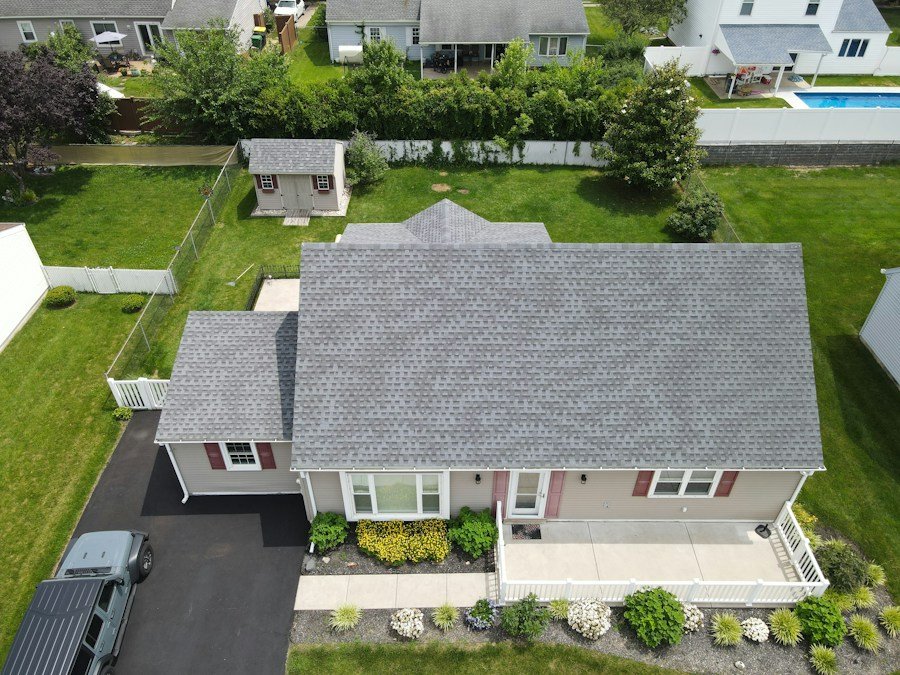
Ampere: houses for the factory and the 1890 station
Ampere station opened in 1890, and the Crocker Wheeler electrical plant nearby drew workers who needed modest houses close to the job. The result is blocks of frame two-families and small single-families with a pitched front roof, a shallow rear roof and an enclosed porch. Builders of that era used board sheathing and lapped tin or wood at the walls; a century and two or three re-roofings later, buried step flashing and soft rear decking cause most Ampere leaks.
Greenwood and the Teen Streets: the blocks the highways cut through
Named for Greenwood Avenue and its numbered teen streets, this section was a dense grid of frame two- and three-families before the Garden State Parkway and I-280 sliced through it. The houses that survived sit on narrow lots, with low-slope rear roofs that were never meant to carry shingles and gutters draining into shared side yards. Because ladders often have to stand on a neighbour’s driveway, planning access is part of every repair here.
Presidential Estates: big houses for the commuter era
Laid out with streets named for early presidents between Springdale Avenue, the Montclair-Boonton line and the Parkway, Presidential Estates was built for commuters who wanted large homes under shade trees. Those houses have the steep cross gables, dormers, wide brick chimneys and, in places, slate or clay tile that the period favoured. A century of leaf fall, limb strikes and freeze-thaw now shows up as worn valleys, loose slates, cracked crowns and rotted box gutters.
Elmwood: library-era blocks near the Newark line
Elmwood grew around Elmwood Park and the branch library that opened in 1912, one of East Orange’s surviving Carnegie libraries. The section mixes two-families and single-families with walk-up apartment buildings built close to the Newark line. Those walk-ups were finished with flat built-up roofs behind brick parapets, drained by one internal drain or a scupper. Today the original drains, tar-patched seams and cracked parapet caps are where water gets in.
Doddtown and Franklin: farm-name roots, college-era houses
Named for John Dodd, the Doddtown or Franklin section in the north holds the former Upsala College campus, now East Orange Campus High School on Prospect Street. Around it are older single-families and two-families with full attics, many of which gained dormers as families grew and rooms were rented out. Those added dormers were often framed and flashed quickly, and their cheek walls and the original box gutters are where we trace most leaks.
Brick Church and Central Avenue: the old shopping street
Brick Church station and the stretch of Central Avenue from 560 to 654, listed on the National Register in 1983 as the Central Avenue Commercial Historic District, are East Orange’s early twentieth-century shopping district. The buildings are masonry with flat roofs, parapets, skylights and, later, rooftop units bolted on. Old parapet caps, pitch pans around equipment added decades after construction and roof drains that were never upsized cause most of the leaks on this street.
South Harrison, Prospect and Main: apartment blocks old and new
Along South Harrison Street, home to the 1982-listed Ambrose-Ward Mansion, and along Prospect Street and Main Street, East Orange built brick elevator and walk-up apartment buildings as it became a city of renters. In the last decade new apartment buildings have gone up along South Harrison Street, Main Street and Evergreen Place. Old buildings carry patched built-up or modified bitumen; new ones TPO or EPDM. Both depend on clear drains and sound coping.
East Orange at a glance
From 1863 Township to Dense City: East Orange in Six Facts
Carved out of Orange in 1863 and made a city in 1899, East Orange filled up with commuter houses and apartment buildings long before the Parkway arrived, and its population peaked at 79,340 in 1950. Today almost 70,000 people live on under four square miles, most of them renters, under roofs that are often a century old. These six figures explain how that history shows up on the roof.
Population (2020 Census)
69,612
On 3.93 square miles of land, roughly 17,700 people per square mile, so the houses built here a century ago still stand a driveway width apart, roof edge to roof edge.
Owner-occupied homes
31.0%
Census QuickFacts, 2020-2024. Most households rent, so roof decisions on the city’s old two-families and apartment blocks sit with landlords, live-in owners or managers.
Median owner home value
$365,900
QuickFacts 2020-2024 estimate. Owners of older two-families weigh roof spending against rental income, so careful repairs often make more sense than tearing everything off.
Housing units (2020)
30,357
With 9.7 percent vacant in the 2020 count. An empty old house with a failing roof lets water and ice into the shared walls and roofs of the houses beside it.
National Register listings
6
Including the Central Avenue Commercial Historic District (560-654 Central Avenue, listed 1983), the Ambrose-Ward Mansion on South Harrison Street and three railroad stations.
ZIP codes
07017, 07018, 07019
Three ZIP codes cover a city bordered by Newark on the east and south, Orange and South Orange on the west, and Bloomfield and Glen Ridge on the north.
East Orange weather
Recent Storms That Tested East Orange’s Older Roofs
Houses built for nineteenth- and early twentieth-century weather are now facing trees planted a century ago, rain totals that broke records in 2021 and heavy snow loads on flat roofs. These events and conditions show where East Orange’s older roofs give way first.
June 26, 2024: the evening the trees came down
Fierce thunderstorms on the evening of June 26, 2024 left more than 50,000 New Jersey customers without power. In East Orange a 30-year-old man was killed when a large tree cracked and fell on him as he secured his backyard before the worst of the storm arrived. For a city of old shade trees standing over old houses, it was a stark reminder that tree care and roof care go together.
August 8, 2024: one uprooted tree, two houses
Early on August 8, 2024, a large, old tree was uprooted on a tree-lined East Orange street and fell across two homes. One house was left with ceiling damage on its third floor and limbs over its back deck; no one was hurt. On tall frame houses like these, a tree strike can crack rafters and century-old board sheathing, so an emergency tarp comes first, then a structural check and dated photos.
Ida, September 1, 2021: more rain than the drains were built for
Ida’s remnants dropped 8.41 inches on neighbouring Newark, its wettest day on record, and 8.39 inches on Maplewood, with East Orange in between. The single drains and scuppers of the city’s pre-war apartment roofs and the shallow rear roofs of its two-families were never sized for that. Water backed up behind parapets and found every weak seam, and many leaks from that night were patched rather than properly repaired.
Sandy and Isaias: wind through a mature canopy
On October 29, 2012, Superstorm Sandy brought a 78 mph gust to Newark, and on August 4, 2020, Tropical Storm Isaias cut power to 48,155 Essex County customers. Both storms hit East Orange in the same way, through its trees: limbs on roofs, creased and lifted shingles, torn ridge caps and gutters pulled from old fascia. Creased shingles that were never replaced still let water in during wind-driven rain.
Snow loads and freeze-thaw on masonry
The January 23-24, 2016 blizzard left 28.1 inches at Newark Airport, a record there, a few miles from East Orange. Snow drifts against apartment parapets and melts slowly into open seams, while uninsulated attics on old two-families build ice dams at the eaves. Each freeze-thaw swing also opens mortar in tall chimneys and parapets laid generations ago, so early spring always brings masonry-related leaks.
What we fix in East Orange
How Each Building Era’s Roof Details Fail in East Orange Today
East Orange roof leaks usually trace back to a detail from the period the house was built in: a low rear roof on an 1890s two-family, a box gutter on a commuter-era house, a parapet on a pre-war apartment block, or a dormer added later. These six failures account for most of what we repair in the city.
Shallow rear roofs on worker two-families
The two- and three-families of Ampere, Greenwood and Elmwood were built with a pitched front and a nearly flat rear over kitchens and back bedrooms, originally finished in tin or rolled roofing. Later owners laid shingles there at a pitch too low for them or coated the old roofing again and again. Wind-driven rain and winter ice push water back under those laps. A low-slope membrane on that section, tied properly into the main roof, ends the cycle.
Box gutters built into the eaves
Houses from the commuter years in Presidential Estates and Doddtown often have gutters built into the roof edge and lined with metal, hidden behind the cornice. Their seams split after decades of freeze-thaw, and the water rots rafter tails and stains top-floor ceilings. Relining with new metal or a membrane keeps the original eave line. Covering them and hanging a separate gutter usually traps water and hides rot until it spreads.
Step flashing buried under later siding
Through the middle of the twentieth century many East Orange frame houses were wrapped in asbestos shingle, aluminum or vinyl siding over the original clapboard. Where a porch or rear roof meets a wall, the old step flashing was often left in place or cut short. It has since rusted through. Repairing it properly means removing a course or two of siding, installing new step and counter flashing, then resetting the siding.
Parapets and caps on pre-war apartment blocks
The brick apartment buildings of Elmwood, Main Street and South Harrison Street were built with masonry parapets capped in stone or terracotta. After eighty or more winters, cap joints open and mortar washes out, and water runs down inside the wall to appear as a stain several rooms from where it entered. Repointing, resetting caps or adding metal coping and replacing counter flashing stops leaks no membrane patch can reach.
Drains sized for a different climate
Flat roofs on East Orange’s older apartment and commercial buildings were drained by one internal drain or a single scupper, sized long before rain like Ida’s arrived in 2021. Leaves from street trees and debris from rooftop units added decades later block them, and the roof ponds behind the parapet. Clearing and re-flashing the drain, fitting a new strainer and adding an overflow scupper where the wall allows are often the most valuable repairs on these buildings.
Old trees over old houses
East Orange was planted as a shade-tree suburb, and the trees set out in its early decades are now huge and, in some cases, failing. In 2024 falling trees killed a man in his backyard and crushed into two homes. On older houses, limbs crack board sheathing and rafters that are already a century old. After a strike we look at the attic side as well as the shingles, since structural damage often hides beneath intact-looking roofing.
East Orange rules
Permits, Resale Inspections and Historic Listings for Older East Orange Buildings
Permits & local review
Re-roofing a detached one- or two-family house in East Orange needs no construction permit, while attached houses, apartment buildings, deck replacement and structural repairs do. Since March 5, 2018, N.J.A.C. 5:23-2.7 has treated roof covering work on detached one- and two-family dwellings as ordinary maintenance, which covers many houses in Presidential Estates and Ampere. A permit is required for attached two-families and row-style houses, buildings with three or more units, commercial and mixed-use buildings, replacement of the old board sheathing or rafters, and any plan to add a third layer.
Permits are handled by the city’s Department of Code Enforcement, home to the Construction Official and subcode officials. East Orange also inspects homes on sale through its Certificate of Continued Occupancy process and rental units through a Certificate of Habitability, and an active leak or water-damaged ceiling can hold up either one. National Register listing of the Central Avenue Commercial Historic District and individual buildings does not, on its own, require local approval for private roof work, and we found no local historic commission; confirm with the city if your building is listed or uses public funds.
Insurance claims
In a city of century-old trees and houses, the typical East Orange roof claim is a tree or limb landing on the roof during a storm. Homeowners policies usually cover sudden damage of that kind, along with wind and the weight of ice and snow, and usually exclude wear, age and neglect. That last point matters on older roofs: an adjuster will separate storm damage from decades of deterioration, so clear photos taken soon after the event help. When a neighbour’s tree falls on your house, your own policy generally responds first. On two-families and apartment buildings, the owner’s policy covers the roof and tenants’ renters policies cover their belongings. We supply dated photos of the roof, attic and interior and a written scope; your policy and agent have the final word.
Roofing services
Roof Services Matched to East Orange’s Building Types
Old two-families need leak tracing and low-slope repairs, commuter-era houses need slate, chimney and box-gutter work, and apartment blocks need flat-roof and parapet repairs. Here is how each service fits the city’s buildings; full details are on each roof repair NJ service page.
Roof Leak Repair in East Orange
On an East Orange two-family the leak often starts at buried step flashing, a rear-roof transition or a cracked boot; on an apartment block, at a parapet cap or drain. We trace it from the stain back to the source and show you photos of the entry point before pricing anything.
Emergency Roof Repair in East Orange
When a century-old tree comes through a Presidential Estates gable or a storm opens a seam over a top-floor apartment near Main Street, request emergency help through the contact page at any hour. We tarp, secure loose material and document the damage for your insurer.
Storm Damage Roof Repair in East Orange
After storms like those of June and August 2024, we check old frame houses for creased shingles, cracked board sheathing and rafters, bent gutters and torn flashing. The dated photo report gives landlords and homeowners what an adjuster needs, including the attic side.
Roof Replacement in East Orange
When an old two-family already carries two shingle layers over board sheathing and a rear roof patched for decades, replacement is usually the better spend. We strip to the deck, replace rotted boards under the required permit and finish the rear section in a proper low-slope membrane.
Roof Inspection in East Orange
Our free inspection covers main, rear and porch roofs, chimneys, box gutters and the attic side where reachable. Sellers facing East Orange’s Certificate of Continued Occupancy inspection, and buyers of older two-families, often ask for the written condition report before closing.
Flat Roof Repair in East Orange
The pre-war apartment buildings of Elmwood, Main Street and South Harrison Street and the rear roofs of countless two-families are flat or nearly flat. We repair built-up, modified bitumen, EPDM and TPO, rebuild scuppers and drains and reset parapet coping.
Metal Roof Repair in East Orange
Metal on older East Orange houses means copper or galvanized valleys, tin porch roofs, box gutter linings and parapet coping. We repair seams, replace corroded sections and match metals and fasteners so new work does not corrode against old copper.
Slate Roof Repair in East Orange
Some commuter-era houses in Presidential Estates and Doddtown still carry their original slate on main roofs, dormers or bays. We replace broken slates individually with matching stone on copper hooks or nails and re-flash valleys and chimneys without walking on sound slate.
Shingle Roof Repair in East Orange
Most pitched roofs in the city are now asphalt over original board sheathing. We replace lifted and missing shingles, reseal tabs, rebuild ridge caps and replace pipe boots, matching colour and profile closely on Ampere and Elmwood houses that sit side by side.
Roof Cleaning in East Orange
Under East Orange’s old shade trees, north slopes grow moss that holds water against shingles and slate. We clean with low-pressure methods that protect granules and stone, clear packed valleys and gutters and can add zinc or copper strips to slow regrowth.
Gutter Repair in East Orange
On narrow lots, an overflowing gutter soaks your foundation and your neighbour’s wall. We re-pitch and reattach gutters, clear and resize leaders, repair old fascia and reline the built-in box gutters found on many of the city’s older houses.
Commercial Roofing in East Orange
We repair flat roofs on the early twentieth-century masonry storefronts of Central Avenue, mixed-use buildings near Brick Church station, churches and apartment blocks, covering built-up, modified bitumen, EPDM and TPO, with written scopes and photo reports for managers.
Pricing · updated November 2026
What Repairs on Older East Orange Roofs Cost in 2026
As of November 2026, most repairs on East Orange’s older roofs fall between $350 and $2,500, with chimney, box-gutter and flat-roof work on century-old buildings toward the top. These are site-wide planning ranges; your written quote follows a free inspection. Our roof repair cost guide explains how the ranges are built.
Minor shingle repair
$350 – $800
Replacing a few lifted or missing shingles and resealing tabs on an Ampere or Elmwood two-family, nailed into old board sheathing and matched closely to the roof the neighbours see.
Pipe boot or vent flashing
$250 – $600
New boots and flashing on plumbing vents and exhaust fans, often added decades after the house was built, a frequent source of top-floor leaks in subdivided older houses.
Single-source leak repair
$400 – $1,500
Tracing and fixing one leak, such as rusted step flashing under later siding, a dormer cheek wall added in mid-century, or the front-to-rear roof transition on a two-family.
Chimney re-flashing
$600 – $1,800
New step and counter flashing, a cricket where the chimney is wide, and crown or cap repair on the tall brick chimneys of Presidential Estates and Doddtown houses, with unused flues capped.
Flat-roof patch or seam repair
$400 – $2,500
Repairing built-up or modified bitumen seams, rebuilding a scupper or drain and resetting parapet coping on pre-war apartment blocks along South Harrison Street or rear roofs on Greenwood three-families.
Emergency tarp after a tree strike
$300 – $1,200
Closing an opening after an old tree or limb comes through the roof, with dated photos for the insurer. Tree removal is separate and handled by a tree service.
What moves the price in East Orange
- Board sheathing. Century-old plank decks have gaps and soft spots, and replacing sections needs a permit and adds material and labour.
- Layers already on the roof. Many older two-families already carry two shingle layers, so replacement means a full tear-off, since a third layer is not allowed.
- Rear-roof conversions. Turning a shingled low rear roof into a proper membrane costs more than another patch and lasts far longer.
- Masonry first. Parapets and chimneys laid generations ago often need repointing or new caps before any flashing will hold.
- Box gutters. Relining a built-in gutter is skilled work and costs more than hanging a new gutter, but it protects the cornice and rafters.
- Access on narrow lots. Greenwood and Ampere side yards often force ladder setups from the street or a neighbour’s driveway.
- Building type. Attached houses and apartment blocks need a city permit, adding fees and inspection time.
- Slate and copper. Repairing original slate costs more per square foot than asphalt, but far less than replacing it.
Ranges are planning figures as of November 2026, based on our site-wide repair ranges and published New Jersey cost data including the Roof Observations NJ guide (January 2026) and Fixr (2026). They are not quotes; your written itemized quote follows a free inspection.
Who does the work
Why East Orange Homeowners Choose Roof Repair SNJ
- Repairing NJ roofs for 25+ years
- General liability + workers’ comp insurance
- Workmanship warranty: 2 years on repairs, 10 years on full replacements, in writing
- Photo report with every inspection
Check any roofer before you sign in East Orange
Ask for the 13VH registration number and confirm it on the NJ license lookup. NJ law requires a signed written contract showing the registration number and total price, and gives you until midnight of the third business day to cancel (N.J.S.A. 56:8-151).
Nearby
How Neighbouring Towns’ Building Histories Give Them Different Roofs
East Orange shares a border, and much of its building history, with five towns, but each grew in its own way and its roofs show it. For the county-wide view, see our Essex County roof repair page.
Newark
Newark, wrapping around East Orange on the east and south, industrialised earlier and built denser, with more attached frame three-families and flat roofs in the Ironbound and North Ward. Vailsburg, along the shared line, looks a lot like Elmwood. Our Newark roof repair page covers those wards.
Orange
Orange, the parent town East Orange split from in 1863, kept more large Victorian and Queen Anne houses on its hillier western streets, so steep roofs, slate, turrets and ornate eaves come up there more often than in East Orange.
South Orange
South Orange grew mostly as a single-family suburb of 1910s to 1930s Colonial Revival and Tudor houses under heavy shade, so slate repair, moss and valley debris dominate, and there are few of the flat apartment roofs common in East Orange.
Bloomfield
Bloomfield, north of Ampere and Doddtown, filled in largely with 1920s to 1950s capes and colonials with dormers. Ice dams at the eaves and dormer flashing are its classic problems, with fewer big apartment roofs than East Orange.
Glen Ridge
Glen Ridge, a small, almost entirely single-family borough to the north, preserves many historic homes, and its Historic Preservation Commission reviews roof work on many of them, asking for plans and material samples East Orange owners rarely need.
Service areas
Roof Repair Near East Orange: Essex County Service Areas
We serve East Orange and every town around it. Bordering towns we also cover include Orange, South Orange, Bloomfield, Glen Ridge. See all of Essex County on our Essex County roof repair page or browse every county on the New Jersey service areas page.
All 22 towns we serve in Essex County
Belleville · Bloomfield · Caldwell · Cedar Grove · Essex Fells · Fairfield · Glen Ridge · Irvington · Livingston · Maplewood · Millburn · Montclair · Newark · North Caldwell · Nutley · Orange · Roseland · South Orange · Verona · West Caldwell · West Orange
In depth
Caring for East Orange’s Old Buildings: Five Roofs, Five Eras
The two-family built around 1900: why the rear roof always leaks
On a two-family from East Orange’s railroad-suburb years, the rear roof leaks because it was designed for metal or rolled roofing and later covered with materials that need more slope. The houses of Ampere, Greenwood and Elmwood were built quickly for working families and renters after stations like Ampere opened in 1890. Builders gave them a pitched front facing the street and a nearly flat rear over the kitchens, often finished in soldered tin. Tin on a low slope works when it is painted and maintained. Over the twentieth century, most of it was covered with rolled roofing, tar coatings or shingles.
Asphalt shingles on a very low slope let wind-driven rain and winter meltwater run back under the laps. Every patch adds weight and traps moisture against the old board sheathing, which softens at the eaves and around chimneys. By the time an owner calls, the problem is rarely one hole. It is a section that has been fighting its own design for decades.
The durable answer is to strip that rear section to the boards, replace any that are soft, and install a membrane made for low slope, usually modified bitumen or a single-ply membrane, with a metal or membrane detail where it meets the shingles on the front pitch. That transition is where cheap jobs fail. We also look at the leader below, because a new rear roof that drains into a cracked leader on a narrow side yard sends water into your basement or your neighbour’s.
If the house is detached and the boards are sound, the work is ordinary maintenance under state rules. Replacing boards, or working on an attached two-family, needs a permit from the city’s Department of Code Enforcement, and we include that in the quote. You get photos of each stage, from the old layers to the finished membrane, as a record for tenants, insurers or a future buyer.
Commuter-era houses in Presidential Estates: slate, copper and box gutters
The large houses of Presidential Estates and Doddtown were built with materials meant to be maintained for generations, and repairing slate, copper and box gutters usually costs far less over time than replacing them with asphalt. These were houses for families who commuted by rail and wanted space and shade: cross gables, dormers, tall brick chimneys and, on many, slate or clay tile with copper valleys.
Slate often outlasts its fasteners. When the original iron nails rust, slates slip; when a limb falls, a few crack. Each can be replaced individually with matching stone held by copper slate hooks or nails. Worn valleys can be relined in copper. Walking on slate breaks it, so we work from hooks, ladders and roof brackets. Where an earlier owner patched with asphalt shingles or tar, we remove the patch and restore the slate, since those mixed spots are frequent leak sources.
Box gutters are the second issue. Built into the eaves and lined with metal, they look like part of the cornice. After decades of freeze-thaw their seams open, and water rots the rafter tails and runs into top-floor rooms. Relining with new metal or a membrane keeps the original eave line. Hanging a separate gutter over a failed box gutter changes the look and often hides active rot.
Chimneys are the third. Wide chimneys built for coal furnaces and fireplaces take a beating at their base, and the flashing and crown fail first. New step and counter flashing, a cricket on the uphill side and a proper cap on unused flues solve most leaks. Last come the trees that gave the neighbourhood its character. A late-autumn valley and gutter cleaning, and trimming limbs over the roof, prevent both ice dams and tree-strike damage.
Pre-war apartment blocks on Main Street, South Harrison Street and Elmwood
East Orange’s older apartment buildings leak mainly at three points their builders could not have anticipated: drains facing modern rainfall, parapets after eighty winters, and equipment added to the roof decades later. As the city became a place of renters, brick walk-ups and elevator buildings rose along Main Street, Prospect Street and South Harrison Street and in Elmwood near the Newark line. Most were finished with built-up tar and gravel roofs behind masonry parapets, drained by one internal drain or a scupper.
Start with the drains. A single drain sized generations ago, with no overflow, ponds the moment leaves or debris block it. During Ida on September 1, 2021, when Newark next door recorded 8.41 inches, roofs like this filled behind their parapets within hours. We clear and test drains, replace strainers, check that the internal leader is not cracked and add an overflow scupper where the wall allows.
Next, the parapets. Stone or terracotta caps with open joints, washed-out mortar and failed counter flashing let water into the wall, where it shows up as a stain in an apartment well away from the real entry. Resetting caps or adding metal coping, repointing and new counter flashing fix leaks no roof patch can.
Finally, the add-ons: rooftop units, satellite mounts, vent stacks, bulkhead doors and skylights, each set into a roof that was never planned for them. Pitch pans dry out and curbs lose their flashing. We inspect and reseal or rebuild each one. Newer buildings along South Harrison Street and Evergreen Place use TPO or EPDM, but the same weak points apply. Multi-unit roof replacement and deck work need a city construction permit, and owners get a written scope and photo report to share with managers or lenders.
Mid-century changes: siding, dormers and the Parkway years
Many East Orange roof leaks come from changes made between the 1940s and 1970s, when houses were re-sided, attics were turned into rooms and whole blocks were reshaped by the Garden State Parkway and I-280. The city’s population peaked at 79,340 in 1950, and old houses were adapted to hold more people. Attics became bedrooms or apartments, dormers were added, and frame houses were wrapped in asbestos shingle, aluminum and, later, vinyl siding.
Each of those changes left a weak point. Dormers built quickly often have thin framing, little or no flashing at their cheek walls, and valleys where the dormer roof meets the main roof that were simply lapped with shingles. When siding went over the old clapboard, the step flashing where porch and rear roofs meet the walls was usually left in place or cut short. That flashing has now rusted through, and water runs behind the siding into the wall.
Fixing it properly means opening the siding. We remove a course or two, install new step flashing and counter flashing, and reset or replace the siding so the joint sheds water again. On dormers we rebuild the cheek-wall flashing and valleys and check the framing from inside. Roofers who only work on the shingle surface miss these, which is why the same leak returns after every patch.
In Greenwood, where the highways cut through, many surviving houses lost neighbours and gained exposed side walls that were never meant to face weather. Those walls and the roof edges above them deserve a close look. We document what we find with dated photos so you can see the cause, and repairs carry our 2-year written workmanship warranty.
Selling or renting an old East Orange house: the roof and the city inspections
Because East Orange inspects homes at sale and rental units for habitability, an old roof with an active leak can delay a closing or a new lease. The city lists applications for a Certificate of Occupancy and a Certificate of Continued Occupancy among its building forms, and a Certificate of Habitability among its Housing and Inspections forms. Inspectors look for conditions affecting safety and habitability, and a water-stained or sagging ceiling under a century-old roof invites questions.
For sellers, a roof inspection before listing is cheap insurance. Ours is free and comes with dated photos and a written condition report on the main, rear and porch roofs, chimneys, flashing, box gutters and what we can see from the attic. If something needs fixing, you get an itemized quote and can repair it before the city inspection or negotiate with the buyer knowing the facts.
For buyers, the report tells you which era of roof you are buying. A two-family with two shingle layers over soft board sheathing and a tar-coated rear roof is a different purchase from one with a recent tear-off and membrane. Ask the seller for records of past roof work, including the contractor’s 13VH registration number, and check it on the state Division of Consumer Affairs site.
For landlords, a leak over a tenant becomes a habitability issue quickly. Tenant and rent matters in East Orange run through the city’s Division of Rent Leveling and housing inspectors, so keep a record of when a leak was reported and when it was fixed. Our written scope and photos give you that record. We do not file city applications for you, but our documentation is written so you can hand it to an inspector or attorney.
FAQ
Roof Repair in East Orange, NJ: Frequently Asked Questions
Does re-roofing my old East Orange house need a permit?
Not for a detached one- or two-family house with sound boards, which New Jersey treats as ordinary maintenance. Attached houses, buildings of three or more units, commercial buildings, replacing old board sheathing or rafters, and a third layer all need a permit from East Orange’s Department of Code Enforcement.
How much does repairing an older East Orange roof cost?
As of November 2026, most repairs on East Orange’s older roofs run $350 to $2,500. Shingle and pipe boot fixes sit low, while chimney re-flashing, box-gutter relining and flat-roof work on pre-war apartment buildings sit higher. A free inspection gives you a written itemized quote.
Why does the back roof of my 1900s two-family in Ampere keep leaking?
Rear roofs on Ampere two-families were built nearly flat for tin or rolled roofing, and shingles laid there later cannot shed water at that pitch. Wind-driven rain and ice push water under the laps. A low-slope membrane on that section, tied properly into the front roof, ends the leak.
Can the original slate on my Presidential Estates house be saved?
Usually yes. Slate often outlasts its nails and flashing, so broken or slipped slates can be replaced one at a time with matching stone on copper hooks, and valleys relined in copper. We work from hooks and brackets to avoid cracking sound slate on these commuter-era houses.
What is a box gutter and why is mine rotting in East Orange?
A box gutter is built into the eave and lined with metal, common on older East Orange houses in Presidential Estates and Doddtown. After decades of freeze-thaw its seams split and water rots the rafter tails and cornice. Relining it with new metal or membrane keeps the original eave and stops the rot.
Who fixes flat roofs on old apartment buildings near Main Street?
We repair built-up, modified bitumen, EPDM and TPO roofs on East Orange apartment buildings, including original drains, scuppers, parapet caps, bulkheads and rooftop equipment flashing. Multi-unit roof replacement and deck work need a city permit, and owners receive a written scope and photo report.
Will a roof leak delay my Certificate of Continued Occupancy in East Orange?
It can. East Orange inspects homes on sale through its Certificate of Continued Occupancy process, and an active leak or water-damaged ceiling can raise questions. A pre-listing inspection with dated photos and a written report lets you repair or disclose problems before the city inspection.
Is Central Avenue a historic district that controls roof work?
The Central Avenue Commercial Historic District, 560 to 654 Central Avenue, was listed on the National Register in 1983. National Register listing alone does not require local approval for private roof work, and we found no East Orange historic commission. Confirm with the city, especially if public funds are involved.
Who pays when an old tree falls on my East Orange roof?
Your own homeowners insurer usually pays first, since policies generally cover sudden storm damage from falling trees regardless of whose yard the tree stood in. If the tree was clearly dead and its owner had been warned, your insurer may pursue them. Take dated photos before any cleanup.
Why does water come in behind the siding of my East Orange house?
On many East Orange houses re-sided in the mid-twentieth century, the step flashing where porch or rear roofs meet the wall was left in place and has rusted through. Water runs behind the siding into the wall. The fix is opening a course of siding and installing new step and counter flashing.
How do I check a roofer before work on my East Orange home?
Every home improvement contractor working in East Orange must be registered with the New Jersey Division of Consumer Affairs, with a number starting 13VH. Look it up on the state verification site, and insist on a written contract with the full price and a three-business-day right to cancel.
When is the best season for roof work on older East Orange houses?
Late spring and early fall suit planned work on East Orange’s older roofs, since shingles seal and membranes bond well in mild weather and slate is easier to handle. A late-autumn valley and gutter cleaning after the leaves fall is worth booking every year under the city’s old trees.
Reviewed by the Roof Repair SNJ team · Last updated November 2026
Free inspection
Book a Free Inspection of Your East Orange Roof
A rear roof on an 1890s Ampere two-family, slate and box gutters in Presidential Estates or a parapet on a pre-war apartment block near South Harrison Street: whatever era your building comes from, start with a free inspection and dated photos. Request your East Orange roof inspection for a written itemized quote. Repairs carry a 2-year written workmanship warranty and replacements 10 years.
No pressure and no obligation. If a repair will do, we’ll tell you.
Roof Repair SNJ
- Serving East Orange and all of Essex County
- Request roof service in East Orange
- Mon–Fri 5:00 AM–10:00 PM · Sat 5:00 AM–6:00 PM · Emergencies 24/7
Sources: U.S. Census Bureau QuickFacts: East Orange city, New Jersey · East Orange, New Jersey (Wikipedia: history, neighbourhoods, borders, housing units) · National Register of Historic Places listings in Essex County, New Jersey · City of East Orange code: Uniform Construction Code enforcing agency · City of East Orange directory (Department of Code Enforcement, Division of Rent Leveling) · City of East Orange Forms and Permits (CO, CCO, Certificate of Habitability) · ABC7: Man killed by falling tree in East Orange, June 26, 2024 storms · News 12 New Jersey: Large tree falls on two homes in East Orange · Effects of Hurricane Ida in the Northeastern United States (Newark 8.41 in.) · Office of the NJ State Climatologist: Ida rainfall totals · Effects of Hurricane Sandy in New Jersey (Newark 78 mph gust) · Patch: PSE&G outages hit 48K in Essex County during Isaias · Office of the NJ State Climatologist: January 2016 blizzard recap · N.J.A.C. 5:23-2.7 Ordinary maintenance (Cornell LII) · NJ Division of Consumer Affairs license verification · N.J.S.A. 56:8-151 Home improvement contracts (Justia) · Roof Observations: New Jersey roof cost guide (Jan 2026) · Fixr: Roof replacement cost in New Jersey (2026). Prices are planning ranges, not quotes. Permit and insurance information is general guidance; your town, policy and agent have the final word.