
Roof Repair NJ › NJ Locations › Cape May County
Ocean City · Wildwoods · Cape May · 16 towns
Roof Repair in Cape May County, NJ: Shore Homes, Condos and Victorian Roofs
Roof Repair SNJ fixes leaking, storm-damaged and worn roofs across all 16 Cape May County municipalities, from Ocean City and Sea Isle City to the Wildwoods, Cape May City and the mainland townships. Every visit starts with a free inspection with photos, followed by a written itemized quote, and we plan around rental weeks, salt air, flood-zone rules and Cape May’s historic district review.
- Barrier-island, bayside and mainland roofs covered
- Rental-season scheduling for shore owners
- Historic district and flood-zone paperwork explained
Free roof inspection in Cape May County
Photos of every problem we find and an itemized written price before any work. Emergency requests handled 24/7.
Roof Repair SNJ
16 Cape May County towns · all 21 NJ counties
Free inspection
Roof, attic and gutters checked at no cost.
Insured
Liability and workers’ comp; certificate on request.
Written quotes
Itemized price in writing before any work.
Photo-documented
Every problem photographed, before and after.
Cape May County at a glance
Cape May County at a Glance: What Shapes Its Roofs
Cape May County is a peninsula of five barrier islands, bayside villages and mainland townships where more than half the homes sit empty much of the year. That mix of salt air, open-ocean wind, tidal flooding and absentee ownership drives most of the roof problems we see here, from corroded fasteners in North Wildwood to cedar-shingle wear in Cape May City.
County seat
Cape May Court House
The seat sits in Middle Township, the county’s second-largest municipality, about midway down the peninsula on Route 9 and the Garden State Parkway.
Year-round residents
95,263 (2020)
Combined 2020 Census population of the 16 municipalities; Lower Township is largest at 22,057 and Cape May Point is smallest at 305 residents.
Housing units vs households
97,798 vs 46,121
ACS 2024 estimates show far more homes than year-round households, and the 2020 Census counted 58.8% of units as vacant, mostly seasonal second homes and rentals.
Barrier islands
5 islands, 30 miles of beach
Ocean City, Strathmere and Sea Isle, Avalon and Stone Harbor, the Wildwoods, and Cape May sit on islands largely built out to the dunes and the back bays.
Snow per year
About 10 to 15 inches
Rutgers climate data puts the extreme south of New Jersey at 10 to 15 inches, so wind, rain and salt cause far more roof damage than snow load here.
Historic landmark
Cape May City district
The Cape May Historic District became a National Historic Landmark in 1976 and holds more than 600 buildings, many of them Victorian frame houses rebuilt after the 1878 fire.
Homes & roofs
What Kinds of Homes and Roofs Does Cape May County Have?
Cape May County roofs split into four groups: Victorian frame houses in Cape May City, raised shore homes and condos on the barrier islands, 1950s and 1960s motels and cottages in the Wildwoods, and ranches, capes and newer subdivisions on the mainland. Each group fails in its own way, so a repair plan in Stone Harbor rarely looks like one in Villas or Woodbine.
Cape May City Victorians and cottages
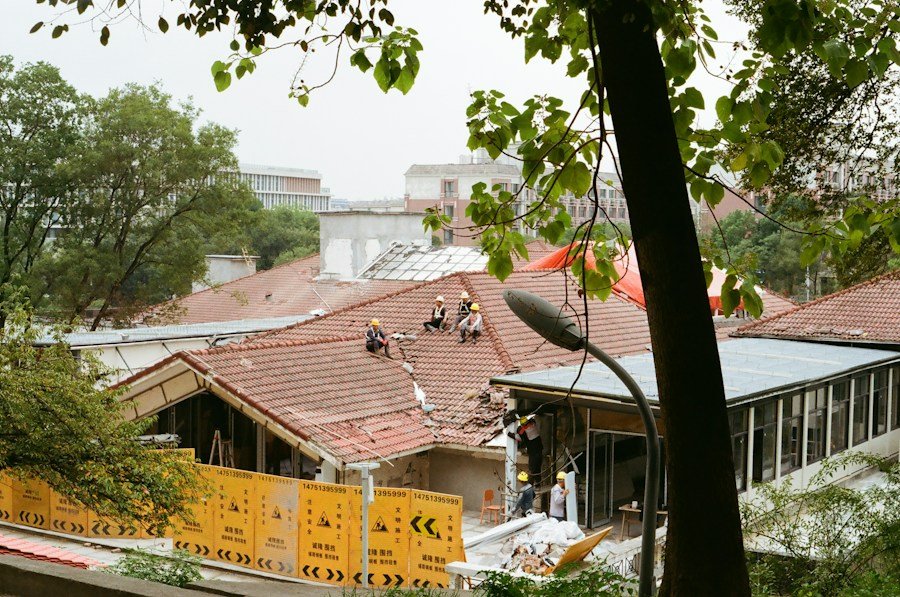
Inside the landmark district, steep gable and mansard roofs carry cedar shingle, slate, standing-seam metal or architectural asphalt on non-contributing buildings. Cresting, finials, turrets, dormers and built-in Yankee gutters are common. Leaks usually start at the hidden gutter linings, porch roof tie-ins and dormer cheeks, and the city’s design standards ask that original wood shingle, slate and built-in gutters be preserved or replaced in kind.
Ocean City duplexes and raised shore homes
Ocean City’s blocks are lined with up-and-down duplexes, newer three-story homes on pilings and older cottages from the early 1900s. Many have low-slope decks over living space, rooftop or third-floor balconies and complex hips. Membrane seams at deck doors, scupper outlets and flashing around rooftop HVAC stands are the repeat leak points, along with wind-lifted shingles on the ocean-facing slopes.
Wildwoods motels, condos and cottages
North Wildwood, Wildwood and Wildwood Crest still hold mid-century Doo Wop motels with flat roofs and parapets, many converted to condos, plus 1950s cottages and newer townhouse rows. Flat roofs with ponding near the coping, rusted parapet caps, failed scuppers and aging built-up or modified bitumen membranes drive most calls. Attached units also bring association approvals and municipal permits into the job.
Sea Isle City, Avalon and Stone Harbor shore homes
Sea Isle’s condos and duplexes sit close together, while Avalon and Stone Harbor have large custom homes with cedar shake, standing-seam copper or metal accents, and many valleys. These roofs see the hardest salt spray and long rental seasons. Corroded nails, failing pipe boots under hot sun, valley flashing that has pitted, and skylight curbs on bay-view rooms are typical repair items.
Lower Township bayside neighborhoods
Villas, North Cape May, Erma, Town Bank and Diamond Beach hold the county’s biggest stock of year-round ranches, capes and split-levels, many built from the 1950s through the 1980s, plus newer condos at Diamond Beach. Asphalt roofs here are often on their second layer. Wind off Delaware Bay and the ocean lifts tabs, and older homes show soft decking at eaves and around chimneys.
Middle Township: Court House, Rio Grande, Whitesboro
Middle Township mixes older farmhouses and early 1900s homes near Cape May Court House with ranches, colonials and newer developments around Rio Grande, Burleigh, Whitesboro, Del Haven and Green Creek. Mature trees along Route 9 and the bay creeks drop limbs in nor’easters. Typical work includes storm shingle repair, chimney re-flashing, ventilation fixes and replacing tired three-tab roofs.
Upper and Dennis Townships: Marmora to Belleplain
Marmora, Seaville, Beesleys Point, Petersburg, Tuckahoe, Ocean View, Dennisville and South Dennis are mainland, more wooded and partly inside the Pinelands Area. Larger lots with pines and oaks mean tree-fall damage, needle-clogged valleys and gutters, and moss on shaded slopes. Strathmere, the island part of Upper Township, behaves like the barrier towns, with salt exposure and flood-zone rules.
Woodbine, West Cape May and Cape May Point
Woodbine, founded in the 1890s, has older modest frame homes, with roofs that often need flashing and deck repair more than full replacement. West Cape May and Cape May Point have small cottages, many with cedar or older asphalt roofs, sitting in the path of open wind off the bay and ocean at the tip of the peninsula.
Cape May County weather
How Does Cape May County Weather Damage Roofs?
Cape May County roofs are damaged mostly by wind, salt and tidal storms, not snow. Hurricanes, nor’easters and the occasional tornado have hit the county hard, and the daily mix of salt air, humidity and summer sun ages fasteners, flashing and sealants faster than on inland roofs.
Hurricane Sandy, October 2012
Sandy caused at least $150 million in damage in Cape May County and pushed a record 8.9-foot tide at the Cape May-Lewes Ferry terminal. Roofs lost shingles and flashing, but the bigger long-term issue was flooding that triggered substantial-damage reviews and elevations. Many raised homes on the islands date from that rebuild, and their roofs are now reaching their first major repair cycle.
The January 23, 2016 nor’easter
USGS recorded a period-of-record tide of 6.61 feet at Cape May Harbor, higher than Sandy, while North Wildwood and Strathmere came within half a foot of their Sandy peaks. Sustained winds topped 40 mph with gusts over 50 mph near high tide. Long-duration nor’easters like this drive rain sideways under shingles and into soffits and dormer walls for hours at a time.
Isaias tornado, August 4, 2020
During Tropical Storm Isaias, the National Weather Service confirmed an EF1 tornado with winds near 100 mph that tracked about 5.25 miles from Strathmere to Marmora. Several homes lost portions of their roofs and a mobile home court was hit. The same storm toppled a church steeple in Ocean City, showing that summer tropical systems matter here as much as winter storms.
Salt air and corrosion
Salt spray carried on onshore wind settles on roofs for blocks inland from the beach. It corrodes standard nails, steel drip edge, galvanized flashing, gutter hangers and HVAC stands, and it eats the coating on cheap metal panels. On the islands we use stainless or hot-dipped fasteners and aluminum or copper flashing, because ordinary electro-galvanized parts can rust through years early.
Sun, humidity and sea breeze
Summer sun bakes south and west slopes, cracking rubber pipe boots and drying sealant at skylights and walls. Rutgers climate data notes sea breezes routinely push 5 to 10 miles inland, keeping humidity high, so poorly ventilated attics in Ocean City or Wildwood Crest can sweat and grow mildew. Algae streaks on north slopes and shaded mainland roofs are common.
Mild winters, sudden freezes
The coast stays warmer than inland New Jersey in fall and winter, and the county averages only about 10 to 15 inches of snow. When a real snowstorm does arrive, it often comes with strong wind that drifts snow into valleys and against dormers. Ice dams are less common than up north, but they form on poorly insulated capes and older mainland homes.
Roofing services
Which Roof Repair Services Do Cape May County Homes Need Most?
Cape May County calls center on wind and leak repair, flat and low-slope roofs on condos and motels, and salt-resistant flashing and fasteners on the islands. Here is how each of our 12 services applies on the peninsula, from the Ocean City boardwalk blocks to the farmhouses near Cape May Court House. Motel and condo owners can start with our flat roof repair for Cape May County condos and motels, and storm calls with storm damage roof repair after a shore nor’easter.
Roof Leak Repair in Cape May County
Leaks in Cape May County often appear after wind-driven rain, not ordinary showers. We trace water at deck doors, dormer walls, built-in gutters in Cape May City and skylight curbs on island homes, and we water-test when the source is hidden. Photos show exactly where water entered before any repair is priced.
Emergency Roof Repair in Cape May County
When a nor’easter or tropical storm opens a roof in Sea Isle or Villas, we tarp and secure it as soon as conditions are safe. Many owners are out of town, so we send photos of the damage and the temporary fix. Emergency requests go through the contact page any time.
Storm Damage Roof Repair in Cape May County
After storms like the 2016 nor’easter or the Isaias tornado, we document lifted shingles, creased tabs, torn membranes and bent flashing slope by slope. Shore owners get a dated photo report they can share with their insurer, plus a written quote that separates storm damage from older wear.
Roof Replacement in Cape May County
Replacements on the islands use high-wind shingle installs or standing-seam metal with corrosion-resistant fasteners, ice and water shield at eaves and valleys, and new flashing throughout. We schedule tear-offs before Memorial Day or after Labor Day when possible, so rental weeks and neighbors’ vacations are not disrupted.
Roof Inspection in Cape May County
Our inspections suit Cape May County buying and rental cycles: pre-purchase checks for second-home buyers, pre-season checks in April and May, and post-season checks in October. You get photos of fasteners, flashing, membrane seams and attic ventilation, plus a plain list of what needs attention now.
Flat Roof Repair in Cape May County
Flat and low-slope roofs are everywhere on Wildwood motels, Ocean City decks and Sea Isle condos. We repair TPO and EPDM seams, modified bitumen blisters, ponding areas, scuppers and parapet coping. Low-slope deck repairs over living space are planned with the deck surface and railing posts in mind.
Metal Roof Repair in Cape May County
Standing-seam and exposed-fastener metal is popular in Avalon, Stone Harbor and on porch roofs in Cape May City. We reseal and replace failed fasteners, re-crimp seams, treat rust spots and rebuild flashing. In the historic district, replacement panels follow the city’s guidance on low seam height and spacing.
Slate Roof Repair in Cape May County
Slate survives on some Cape May City Victorians, churches and older Woodbine buildings. We replace broken slates with matching stock, using copper nails and slate hooks, and repair valleys and ridges without walking on sound slate. The design standards ask owners to preserve original slate wherever possible.
Shingle Roof Repair in Cape May County
Most mainland homes in Lower, Middle, Upper and Dennis Townships carry asphalt shingles. We replace wind-lifted or creased shingles, reseal tabs, fix pipe boots and step flashing, and match color as closely as stock allows. On ocean blocks we hand-seal repairs so they hold in the next blow.
Roof Cleaning in Cape May County
Shaded mainland roofs near Belleplain and Tuckahoe grow moss and algae, and salt film builds up on island roofs. We use low-pressure, shingle-safe cleaning, never a pressure washer, and protect plantings and decks below. Cleaning also lets us spot loose fasteners and cracked boots early.
Gutter Repair in Cape May County
Salt corrodes steel hangers and seams fast, and pine needles clog gutters in Dennis and Upper Townships. We repair and reseal gutters, replace hangers with aluminum or stainless, and rebuild built-in gutter linings on Cape May City Victorians, where the design standards favor in-kind repair.
Commercial Roofing in Cape May County
Cape May County’s motels, restaurants, marinas and boardwalk shops depend on the summer season. We repair and maintain flat roofs, metal roofs and rooftop equipment curbs, and schedule bigger work in the off-season. Inspections before opening weekend catch problems while there is still time to fix them.
Cape May County rules
Do You Need a Permit for Roof Repair in Cape May County?
Permits & local review
For a detached one- or two-family home, replacing or repairing roof covering is ordinary maintenance under N.J.A.C. 5:23-2.7, so the state construction code does not require a permit. That covers many Ocean City up-and-down duplexes and most mainland houses. Several Cape May County situations change the answer:
- Cape May City historic district. The city’s Historic Preservation Commission reviews any change of roof material in the district and on historic sites, and the city’s design standards say a city permit is generally required even for replacing roof coverings. Plan for review before swapping cedar for asphalt or removing cresting or built-in gutters.
- Attached homes and condos. Townhouse rows in the Wildwoods, Diamond Beach condos and Sea Isle multi-unit buildings are not detached one- or two-family dwellings, so a permit from the municipal construction office is needed, plus association approval.
- Structural and deck work. Sheathing replacement, rafter repair or a third layer all require a permit.
- Flood zones. On the islands, if storm repairs reach 50% of a building’s pre-damage market value, FEMA’s substantial-damage rule can require bringing the home up to floodplain rules. The local floodplain administrator makes that call.
Insurance claims
Homeowners policies usually cover sudden wind, hail and tree damage to a Cape May County roof, but shore policies often carry a separate hurricane or named-storm deductible, and flood damage is a different policy entirely. If a tropical storm lifts shingles in Avalon, the named-storm deductible may apply instead of your regular one. If a tidal surge floods the first floor, that goes to flood insurance, not your homeowners carrier. Roof leaks caused by worn-out shingles or rusted flashing are usually excluded as wear. Because many owners are away when storms hit, documentation matters: we provide dated photos of each damaged slope, a written description of storm damage versus age-related wear, and an itemized repair quote. Your policy and agent have the final word on coverage, deductibles and what counts as a covered event.
Pricing · updated November 2026
How Much Does Roof Repair Cost in Cape May County?
As of November 2026, most Cape May County roof repairs fall between $350 and $2,500, while full replacements typically run $8,500 to $17,000 statewide and more on large island homes. Shore costs lean higher for corrosion-resistant materials, tall raised homes, flat roofs and historic-district work. See our NJ roof repair cost guide for more detail.
Minor shingle repair
$350 – $800
Replacing a few wind-lifted or creased shingles and hand-sealing tabs, common on ocean-facing slopes in Ocean City, North Wildwood and Wildwood Crest after a nor’easter or summer storm.
Pipe boot or vent flashing
$250 – $600
New boots or vent flashing where summer sun has cracked the rubber, a frequent leak source on rental homes in Sea Isle City and Stone Harbor with several bathrooms and vents.
Single-source leak repair
$400 – $1,500
Finding and fixing one leak at a deck door, dormer wall or skylight curb, with photo proof, typical on raised island homes and Lower Township capes with older flashing.
Chimney or skylight re-flashing
$400 – $1,800
New step and counter flashing at chimneys on mainland homes or skylight curbs on bay-view rooms, using aluminum or copper on the islands to resist salt corrosion.
Flat roof patch or seam
$400 – $2,500
Membrane seam, blister, scupper or coping repairs on Wildwoods motels, Ocean City decks and Sea Isle condos, sized by area, access and how much wet insulation is found.
Emergency tarp or slate repair
$300 – $2,500+
Storm tarping runs $300 to $1,200; slate repair on Cape May City Victorians runs $500 to $2,500 or more, depending on height, matching stock and historic district requirements.
What moves the price in Cape May County
- Height of raised homes. Island homes on pilings can be three stories or more, so lifts, extra ladders and fall protection add labor.
- Corrosion-resistant materials. Stainless or hot-dipped fasteners and aluminum or copper flashing cost more than standard parts, but ordinary steel corrodes quickly in salt air.
- Parking and access. In summer, parking in Ocean City, Sea Isle and the Wildwoods is tight, and some towns limit construction work or hours during peak season.
- Historic district standards. Cape May City may expect in-kind materials such as cedar, slate or built-in gutter linings, which take more labor than asphalt.
- Flat and low-slope roofs. Many motels, condos and decks have membranes, and wet insulation discovered during a repair can expand the scope.
- Absentee owners. Remote approvals, photo reports and key access arrangements add coordination when owners live in Pennsylvania or North Jersey.
- Association approvals. Condo and townhome boards may require specific materials, colors or insurance certificates before work begins.
- Season. Demand spikes after storms and in spring, while October through March often allows more flexible scheduling.
Planning ranges as of November 2026, not quotes. Repair ranges are Roof Repair SNJ site-wide planning figures; replacement range from Fixr (2026) and per-square-foot material costs from the Roof Observations NJ guide (January 2026). Your written itemized quote after a free inspection is the price that counts.
Who does the work
Why Cape May County Homeowners Choose Roof Repair SNJ
- Repairing NJ roofs for 25+ years
- General liability + workers’ comp insurance
- Workmanship warranty: 2 years on repairs, 10 years on full replacements, in writing
- Photo report with every inspection
Check any roofer before you sign in Cape May County
Ask for the 13VH registration number and confirm it on the NJ license lookup. NJ law requires a signed written contract showing the registration number and total price, and gives you until midnight of the third business day to cancel (N.J.S.A. 56:8-151).
16 towns
Roof Repair Notes for Cape May County Towns
Each Cape May County town has its own roof pattern, from Victorian cedar in Cape May City to flat-roof condos in Wildwood and raised duplexes in Ocean City. These notes cover the largest and most distinct municipalities; the full list of the 16 towns we serve appears below. Heading up the Parkway or across the Tuckahoe River? See our Atlantic County roof repair page, or roof repair in Cumberland County for the Delaware Bay side, and the statewide overview of roof repair NJ.
Lower Township
The county’s most populous municipality, with 22,057 residents, covers Villas, North Cape May, Erma, Town Bank, Fishing Creek and Diamond Beach. Year-round ranches and capes dominate, many on second roof layers. Bay wind lifts shingles along the Delaware Bay side, and older homes often show soft sheathing near eaves. Diamond Beach condos bring flat roof and association work.
Middle Township
Home to Cape May Court House, Rio Grande, Whitesboro, Burleigh, Green Creek and Goshen, with 20,380 residents. Older farmhouses and early 1900s homes near the courthouse need chimney and flashing attention, while ranches and newer colonials around Rio Grande see storm shingle damage and tree-limb hits. Shopping centers and offices along Route 47 and Route 9 have flat commercial roofs.
Ocean City
Ocean City’s 11,229 year-round residents are joined by many seasonal owners. Up-and-down duplexes, early 1900s cottages and new raised homes share tight lots. Low-slope decks, rooftop balconies and complex hips create seam and flashing leaks. Isaias toppled a church steeple here in 2020, a reminder that summer storms bring real wind. Detached two-family duplexes generally fall under ordinary maintenance.
Upper Township
Upper Township spans Marmora, Seaville, Beesleys Point, Petersburg, Tuckahoe and the island village of Strathmere. The August 2020 Isaias tornado tracked from Strathmere into Marmora and tore roofs along Route 9. Mainland lots are wooded, so tree-fall damage and clogged gutters are common, while Strathmere homes face salt exposure and flood-zone rules like the other islands.
Dennis Township
Dennisville, South Dennis, Ocean View and Belleplain are rural and wooded, with older farmhouses, capes and newer homes on large lots. Parts of the township lie in the Pinelands Area. Pine needles clog valleys and gutters, moss grows on shaded slopes, and storms bring branches down onto roofs. Repairs here are typically shingle, flashing and gutter work.
Wildwood and North Wildwood
Wildwood and North Wildwood have mid-century motels, condo conversions, cottages and townhouse rows. Flat roofs with parapets, aging modified bitumen and rusted coping caps are common. North Wildwood’s tide gauge came within half a foot of its Sandy peak in the January 2016 nor’easter, so flood-zone and substantial-damage questions come up after big storms.
Wildwood Crest
Wildwood Crest is known for its Doo Wop-era motels and quiet residential streets of 1950s and 1960s cottages and newer raised homes. Flat motel roofs need seam, scupper and coping maintenance before each season. Residential roofs face constant salt and wind off the ocean, so we pay close attention to fastener corrosion, drip edge and pipe boots.
Cape May City
Cape May City’s National Historic Landmark district holds more than 600 buildings, many Victorian frame houses. Roofs carry cedar shingle, slate, standing-seam metal and built-in gutters with cresting and finials. The Historic Preservation Commission reviews any change of roof material, and the design standards favor in-kind repair. Leaks often start at hidden gutter linings and porch tie-ins.
Sea Isle City
Sea Isle City has densely built condos, duplexes and raised single-family homes, many of them on pilings. Low-slope decks, multiple pipe vents and rooftop equipment produce most leaks. Ludlum Thorofare reached 6.44 feet during the 2016 nor’easter. Rental bookings mean many owners want repairs done between guest turnovers or in the off-season.
Avalon and Stone Harbor
Avalon and Stone Harbor have some of the county’s largest custom homes, with cedar shake, copper and metal accents, many valleys and big skylights. These roofs face open ocean wind and heavy salt. Valley flashing, skylight curbs, and corroded fasteners are common repair items, and owners often want detailed photo reports since they are away much of the year.
All 16 municipalities we serve in Cape May County
Lower · Middle · Upper · Ocean City · Dennis · Wildwood · North Wildwood · Wildwood Crest · Cape May · Woodbine · Sea Isle City · Avalon · West Cape May · Stone Harbor · West Wildwood · Cape May Point
Seasonal roof care
Cape May County Roof Maintenance Calendar
In Cape May County, the roofing calendar follows the rental season: inspect and repair in spring, avoid major work during peak summer weeks, and prepare for hurricanes and nor’easters in fall. Winter is short and mild, which makes it useful for off-season projects.
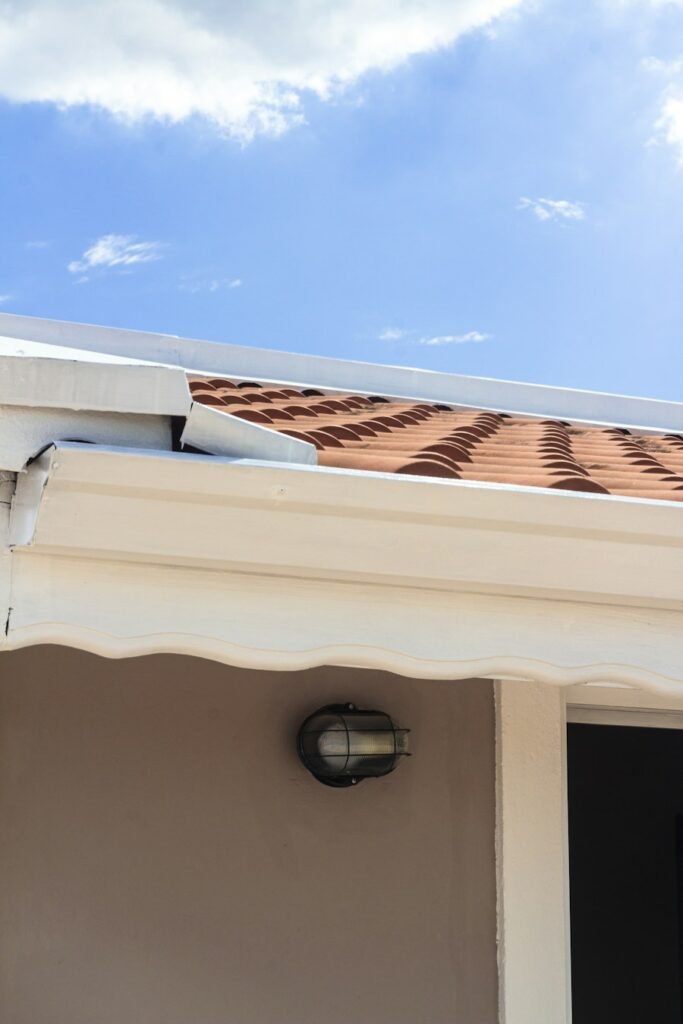
Spring is the best time to inspect and repair before rental season. Winter nor’easters leave lifted shingles, cracked membrane seams and loose flashing that may not leak until summer thunderstorms. Book an inspection in April or early May for island homes in Ocean City, Sea Isle City, Avalon and the Wildwoods so repairs are finished before Memorial Day. Check pipe boots, skylight curbs, deck door thresholds and rooftop equipment stands. Clean gutters of winter debris and pine needles on mainland homes in Dennis and Upper Townships. Condo associations should schedule flat roof maintenance before the first guests arrive. Spring is also a good window for historic district projects in Cape May City, since Historic Preservation Commission review takes time and should be wrapped up before summer crowds arrive.
Summer is peak season, so focus on urgent repairs and keep larger projects for spring or fall. Parking is scarce on the islands, and some towns limit construction work or hours during busy weeks. Heat and sun crack rubber pipe boots and dry out sealants on south and west slopes, and afternoon thunderstorms can expose those weak spots quickly. Tropical storms can arrive as early as July, as Isaias did on August 4, 2020. If a storm causes damage, we tarp and secure the roof first and send photos to owners who are away. Rental owners should let property managers know how to request emergency help through our contact page. Attic ventilation also matters in summer, because humid sea breeze air can condense in poorly vented attics and cause mold.
Fall is the main repair and replacement season in Cape May County, after rental weeks end and before winter storms. September and October remain active hurricane months, so inspect after Labor Day and fix any loose shingles, flashing or seams. This is the best time for full replacements on island homes, since neighbors are gone and parking is easier. Clean gutters after leaves and pine needles fall on mainland homes, especially in Dennis, Upper and Middle Townships. Have chimneys checked and re-flashed before heating season. Flat roof owners in the Wildwoods should clear scuppers and drains so winter rain does not pond. Condo boards can approve and schedule roof work during fall meetings so crews can start once the season winds down.
Winters are mild in Cape May County, but nor’easters bring the most dangerous wind and tide events of the year. The January 23, 2016 storm set a record tide at Cape May Harbor and brought gusts over 50 mph. Before winter, secure loose shingles and flashing, and check that attic insulation and ventilation are adequate so the occasional snowstorm does not cause ice dams on older capes and ranches. After a nor’easter, look for missing shingles, debris on flat roofs and water stains on ceilings. Many owners are away in winter, so ask a neighbor or property manager to check the home after storms. Winter can also be a good time for interior-side repairs, attic ventilation work and planning spring projects. Mild stretches allow exterior repairs on many days.
In depth
Cape May County Roofing Questions Most Contractors Skip
Working on a roof in the Cape May City historic district
In Cape May City’s historic district, plan for Historic Preservation Commission review before changing any roof material, and expect the design standards to favor in-kind repair. The district became a National Historic Landmark in 1976, and many of its more than 600 buildings are Victorian frame houses built after the 1878 fire. The city’s Historic Design Standards say original or historic wood shingle, slate and terracotta should be preserved. For contributing buildings, asphalt shingles are described as not an authentic historic roofing material, while on non-contributing buildings, composite roofing is appropriate if it existed when the building was built.
The standards also cover details that matter on these roofs. Cresting, finials, cupolas and turrets are character-defining and should be preserved or replaced in kind. Built-in or Yankee gutters should be repaired or relined, not replaced with exposed gutters. Standing-seam metal replacements should keep low seams that match the original spacing. Skylights, large vents and solar panels in visible locations are generally not appropriate on contributing properties.
For owners, this means three things. First, document the current roof with photos before work starts. Second, ask whether your building is contributing or non-contributing, since the rules differ. Third, allow time for review, which is why spring and fall are better than summer. We provide photos, material descriptions and repair scopes that make the review easier, and we repair built-in gutter linings, cedar and slate in a way that respects the standards.
Flood zones, raised homes and the 50% rule on the islands
If storm repairs on a barrier-island home reach 50% of its pre-damage market value, FEMA’s substantial-damage rule can require bringing the whole building into compliance with floodplain rules, including elevation. This matters across Ocean City, Sea Isle City, Avalon, Stone Harbor, the Wildwoods, Strathmere and Cape May. The local floodplain administrator or building official makes the determination, often using contractor estimates.
Roof repair alone rarely reaches that threshold, but it can contribute when a storm causes both roof and flood damage. After Sandy in 2012, many homes on the islands were elevated or rebuilt, and those homes now carry newer roofs that are approaching their first major repair cycle. Their height brings its own issues: more exposure to wind, harder access, and decks or balconies tied into the roof.
For owners with flood insurance, Increased Cost of Compliance coverage can provide up to $30,000 toward elevation or other mitigation when a home is substantially damaged. Keep your roof repair estimates separate from flood damage estimates so officials and insurers can see the scope clearly. Our written itemized quotes break out roof work by task, which helps when a floodplain administrator reviews the total.
Before starting major storm repairs in a flood zone, check with the municipal construction office. Rules vary by town, and some communities track cumulative improvements over time.
Scheduling roof work around rental season
The best time for roof work on Cape May County rental homes is April to mid-May and September through November, with urgent repairs handled any time. Summer weeks bring tenants, crowded streets and limited parking, and some shore towns limit construction work or hours during peak season, so check with the local construction office. A full replacement in July can disrupt both your guests and your neighbors.
Plan ahead. If a fall inspection shows the roof needs replacement, schedule it for the off-season rather than waiting for spring, when demand is high. For repairs during rental season, we work between guest turnovers when possible and keep the site clean. We can coordinate with property managers for access and send photos of each step to owners who are away.
Think about damage timing, too. Storms in late summer and early fall, like Isaias in August 2020, can hit while homes are occupied. Tell tenants and managers how to report leaks, and keep a basic emergency plan, including access to the attic and the main water shutoff.
Condo associations and multi-unit owners should budget roof maintenance on an annual cycle, with inspections each spring and fall. That keeps small seam or flashing problems from becoming mid-season leaks into guest units, which cost more in refunds and interior repairs than the roof work itself.
Choosing materials that survive salt air
On Cape May County’s islands, roof longevity depends as much on fasteners and flashing as on shingles or metal panels. Salt carried by onshore wind corrodes ordinary steel nails, drip edge, flashing and gutter hangers. A roof can look fine from the street while its fasteners rust and lose holding power underneath.
For asphalt shingle roofs near the ocean, we use high-wind installation patterns, corrosion-resistant nails, and ice and water shield at eaves, valleys and walls to resist wind-driven rain. Drip edge and flashing should be aluminum or copper, not plain steel. For metal roofs, standing-seam panels with hidden fasteners hold up better than exposed-fastener panels, and coatings and fastener materials matter. Mixing metals can cause galvanic corrosion, so copper flashing should not touch aluminum or galvanized steel without separation.
Flat roofs on condos and motels benefit from reflective membranes that handle summer heat, with properly sealed seams and corrosion-resistant coping. Rooftop HVAC stands should be checked for rust and re-flashed as needed.
On mainland homes in Dennis, Upper and Middle Townships, salt exposure drops off, but tree cover, shade and moss become the main concerns. There, standard architectural shingles with good ventilation and regular gutter cleaning perform well. We match materials to the location rather than using one specification for the whole county.
Condos, townhomes and duplexes: who handles the roof
In Cape May County condos and townhomes, the association usually controls roof work, and attached buildings need a municipal permit even for roof covering replacement. The state’s ordinary-maintenance exemption applies only to detached one- and two-family dwellings. That covers many Ocean City up-and-down duplexes, which are often two-family detached buildings, but not townhouse rows in the Wildwoods, Diamond Beach condos or multi-unit Sea Isle buildings.
Before arranging repairs, check your master deed or bylaws. Many associations own the roof and require approved contractors, specific materials or colors, and insurance certificates. Some condos split responsibility, with the association handling the main roof and owners handling decks or skylights over their units. In two-unit condos, owners often share roof costs and must agree on timing.
For associations, a written itemized quote helps the board compare bids and document decisions. Photos of each section of the roof show which units are affected and why. We provide both, and we can present findings to boards that meet only a few times a year.
If you own a duplex unit and the other owner does not want to repair, document the problem with photos and written notice, and check your agreement. Water does not respect property lines, and a leak over one unit often damages both. Timely repairs protect everyone’s investment and reduce insurance claims.
Hiring a roofer you can verify in Cape May County
Before hiring a roofer in Cape May County, confirm the company’s New Jersey home improvement registration, insurance, and written contract terms. After major storms, out-of-area crews often arrive looking for quick work, and seasonal homeowners can be easy targets because they are not around to supervise.
Every New Jersey home improvement contractor must register with the Division of Consumer Affairs. Registration numbers start with 13VH, and you can check them on the state’s lookup at newjersey.mylicense.com. Registered contractors must carry at least $500,000 in commercial general liability insurance, and you can ask for a certificate.
Under New Jersey law, contracts must be written and signed and must show the contractor’s legal name, business address, registration number, total price and a copy of the insurance certificate. You also have three business days to cancel. Do not sign a contract that leaves these out, and be cautious of large cash deposits or pressure to sign immediately after a storm.
For shore homes, ask how the roofer handles salt-air materials, flood-zone questions and historic district review if you are in Cape May City. Ask for photos of the damage and the finished work, especially if you will not be there. A good contractor explains the work in plain language and puts the warranty in writing. Ours is two years on repairs and ten years on full replacements.
FAQ
Roof Repair in Cape May County, NJ: Frequently Asked Questions
How much does roof repair cost in Cape May County?
Most Cape May County roof repairs cost between $350 and $2,500 as of November 2026. Small shingle repairs start around $350, leak repairs run $400 to $1,500, and flat roof seam work on condos or motels can reach $2,500. Raised island homes, historic materials and salt-resistant parts can push costs higher.
Do I need a permit to repair my roof in Ocean City or Sea Isle City?
For a detached one- or two-family home, roof covering repair or replacement is ordinary maintenance under New Jersey rules and needs no permit. Attached townhomes, condo buildings, deck or rafter work, and a third layer do require a permit from the municipal construction office, plus any association approval.
Does Cape May City require approval for roof work in the historic district?
Yes. Cape May City’s Historic Preservation Commission reviews any change of roof material in the historic district and on historic sites, and the design standards favor preserving cedar shingle, slate and built-in gutters. Check with the city before changing materials, removing cresting or adding skylights or solar panels in visible locations.
When is the best time to replace a roof on a Cape May County rental home?
The best windows are April to mid-May and September through November. Summer brings tenants, tight parking and seasonal construction limits in some shore towns. Fall is ideal for full replacements because rental weeks are over and winter nor’easters have not started. Urgent repairs can be done any time.
Why do roofs fail faster near the beach in Cape May County?
Salt air corrodes ordinary nails, steel drip edge, flashing and gutter hangers, while strong onshore wind lifts shingles and drives rain under them. Sun and humidity crack pipe boots and dry sealants. Using stainless or hot-dipped fasteners and aluminum or copper flashing helps island roofs last much longer.
Will my insurance pay for hurricane damage to my Cape May County roof?
Homeowners policies usually cover sudden wind damage, but many shore policies carry a separate named-storm or hurricane deductible that can be much higher than the standard one. Flood damage from storm surge requires flood insurance. Wear and corrosion are usually excluded. Your policy and agent decide what is covered.
Can you handle roof repairs if I live out of state?
Yes. Many Cape May County owners live elsewhere. We inspect the roof, send photos and a written itemized quote, coordinate access with you or your property manager, and document the finished work with photos. Emergency requests for tarping after storms can be sent through our contact page at any time.
What storms have damaged roofs in Cape May County?
Major events include Hurricane Sandy in October 2012, which caused at least $150 million in county damage, the January 23, 2016 nor’easter that set a record tide at Cape May Harbor, and an EF1 tornado during Isaias on August 4, 2020 that damaged roofs from Strathmere to Marmora.
Do flat roofs on Wildwood condos and motels need special maintenance?
Yes. Flat roofs in the Wildwoods face ponding, salt-corroded coping, clogged scuppers and aging membranes. Inspect them each spring before the season and each fall after it. Clear drains, reseal seams and fix blisters early, because leaks into guest units cost more in refunds and interior repairs than the roof work.
Does the substantial damage rule apply to roof repairs on the islands?
It can. If total repairs after a storm reach 50% of a flood-zone building’s pre-damage market value, FEMA rules may require bringing the home into floodplain compliance, including elevation. Roof work alone rarely reaches that level, but it counts toward the total. The local floodplain administrator makes the determination.
Reviewed by the Roof Repair SNJ team · Last updated November 2026
Nearby
Roof Repair Near Cape May County
We also work in the counties next to Cape May County. See every county we serve on our New Jersey service areas page, or start from our roof repair NJ homepage.
Free inspection
Get a Free Roof Inspection in Cape May County
Whether it is a leaking deck door in Ocean City, a lifted shingle in Villas or a built-in gutter in Cape May City, we start with a free inspection and photos. Request your free Cape May County roof inspection and get a written itemized quote. No pressure, and nothing is done without your approval.
No pressure and no obligation. If a repair will do, we’ll tell you.
Roof Repair SNJ
- Serving all 16 Cape May County towns
- Request roof service in Cape May County
- Mon–Fri 5:00 AM–10:00 PM · Sat 5:00 AM–6:00 PM · Emergencies 24/7
Sources: N.J.A.C. 5:23-2.7 Ordinary maintenance (Cornell LII) · Cape May Historic Design Standards (City of Cape May HPC) · Cape May Historic District (Wikipedia) · USGS: Summary of coastal flooding in New Jersey, January 22-24, 2016 · NWS Mount Holly: Isaias tornado, Strathmere to Marmora (PNS) · 6abc: Church steeple topples in Ocean City as Isaias hits · Cape May County, New Jersey (Wikipedia): Sandy, storms, housing, snowfall · Census Reporter: Cape May County profile (ACS 2024) · Rutgers Office of the NJ State Climatologist: NJ Climate Overview · NJ Pinelands Commission: Pinelands Area Municipalities · FEMA: Substantial damage · NJ Division of Consumer Affairs license verification · N.J.S.A. 56:8-151 home improvement contracts (Justia) · Roof Observations: New Jersey roof cost guide (Jan 2026) · Fixr: Roof replacement cost in New Jersey (2026). Prices are planning ranges, not quotes. Permit and insurance information is general guidance; your town, policy and agent have the final word.