
Roof Repair NJ › NJ Locations › Somerset County › Franklin Township
Somerset · Franklin Park · Griggstown · 08873
Roof Repair in Franklin Township, NJ: Somerset, Franklin Park and the Canal Villages
Roof Repair SNJ repairs and replaces roofs across Franklin Township in Somerset County, from postwar ranches and splits in Somerset and East Franklin to 1990s colonials and townhomes in Franklin Park and old farmhouses along the canal in Griggstown and Middlebush. You get a free inspection with dated photos, a written itemized quote, and a 2-year written workmanship warranty on repairs.
- Colonials, splits and townhome roofs
- Historic district roofs reviewed the right way
- Free photo inspection, written itemized quote
Free roof inspection in Franklin Township
Photos of every problem we find and an itemized written price before any work. Emergency requests handled 24/7.
Roof Repair SNJ
Franklin Township · Somerset County · all 21 NJ counties
Free inspection
Roof, attic and gutters checked at no cost.
Insured
Liability and workers’ comp; certificate on request.
Written quotes
Itemized price in writing before any work.
Photo-documented
Every problem photographed, before and after.
What we fix in Franklin Township
Why Do Franklin Township Roofs Fail Where They Do?
Many Franklin homeowners assume a newer house means a worry-free roof. In practice, the township’s 1980s to 2000s colonials and townhomes are exactly the roofs failing now, alongside ice dams on older capes, river-damp decks near the Millstone and tree damage on the wooded west side. Six problems we see again and again:
First-generation roofs on 1980s to 2000s homes
You might think a house built in 1995 still has plenty of roof left. Somerset County has the newest housing stock in New Jersey, with a median build year of 1982, and much of Franklin Park and the southern subdivisions was built then. Those original or first-replacement shingles are reaching the end. Granule loss in gutters, curled tabs on the south slope and cracked boots are the signs. One spot repair will not save a roof at that stage.
Valleys and skylights on big colonials
Large Franklin Park colonials have long valleys where two slopes meet, often under trees, plus skylights over family rooms. Valleys carry more water than any other part of the roof, and debris dams them. Skylight flashing kits from the original build are frequently at end of life. A leak at the skylight is usually the flashing, not the glass, and fixing it costs far less than replacing the roof.
Ice dams on Somerset capes and splits
A lot of people blame ice dams on the gutters. On the postwar capes and split-levels around Hamilton Street, the real cause is heat escaping into the attic and melting snow, which refreezes at the cold eave. Ice and water shield at the eaves helps, but balanced soffit and ridge ventilation and attic air sealing do the real work. More gutter guards will not fix it.
Shared roofs on townhome rows
If you own a Franklin townhome, you may assume your association fixes everything above your ceiling, or that you can hire any roofer for your section. Neither is reliably true. Townhome roofs run continuously across units, and the governing documents decide who repairs what. A repair on one unit that does not tie in to the next becomes everyone’s leak, and replacement on attached homes needs a construction permit.
River-damp decks and fascia near the Millstone
Homes near Canal Road, Weston and East Millstone sit in low, shaded, humid ground beside the Millstone and the canal. Even when floodwater never reaches the house, damp air and shade keep roof decks, fascia and soffits wet longer. We find soft eave boards, rotted fascia behind gutters and moss holding water on north slopes far more often here than in the drier subdivisions to the east.
Tree strikes on the wooded west side
Griggstown, Blackwells Mills and the wooded lots near the canal and Six Mile Run have big hardwoods over roofs. Many people assume no visible shingle damage means no damage after a limb falls. A heavy limb can crack rafters and decking without tearing a shingle. After a storm we look from the attic as well as the roof, especially on older houses with spaced board sheathing.
Pricing · updated November 2026
Why Do Franklin Roof Quotes Vary So Much?
Two Franklin quotes for the same leak can be far apart because one roofer prices the symptom and another prices the cause. As of November 2026, most repairs here run $350 to $1,800, with townhome tie-ins and historic-district work toward the top. These are site-wide planning ranges; your written quote follows a free inspection. Our roof repair cost guide explains how ranges are built.
Minor shingle repair
$350 – $800
Replacing a few wind-lifted or missing architectural shingles and resealing nearby tabs on a Franklin Park colonial or a single townhome section, matched to the neighbours’ colour.
Pipe boot or vent flashing
$250 – $600
Replacing original builder-grade boots that crack after 15 to 20 years in the sun, a very common leak in the 2000s subdivisions and age-restricted communities in the south of the township.
Single-source leak repair
$400 – $1,500
Tracing and fixing one leak at a skylight, valley, chimney or split-level wall junction, with photos showing you the cause before and after the repair.
Chimney or skylight re-flashing
$400 – $1,800
New step and counter flashing on a chimney, or a new flashing kit on an aging skylight over a Franklin Park family room, often the real cause of a leak blamed on the roof.
Valley repair
$500 – $1,500
Rebuilding a worn or debris-damaged valley on a large colonial, with new ice and water shield underneath, where two slopes and a tree canopy send water to one channel.
Rotted deck or fascia section
$500 – $2,000+
Replacing soft sheathing at the eaves and rotted fascia on damp, shaded homes near Canal Road and East Millstone. Sheathing replacement needs a permit.
What moves the price in Franklin Township
- Historic review. Inside the canal zone or the four village districts, preparing for commission review adds time, and approved materials, such as relined built-in gutters, may cost more.
- Townhome tie-ins. Repairing one section of a continuous row means tying in neatly to the neighbours’ roofs and matching shingles, plus association paperwork.
- Roof size and complexity. Big Franklin Park colonials have long valleys, dormers and skylights that add labour compared with a simple ranch.
- Age of the roof. On a 25-year-old roof, brittle shingles break during repair, so more material is replaced around the fix.
- Deck condition. Spaced board sheathing on old farmhouses and damp decks near the Millstone may need replacing, which requires a permit.
- Ventilation fixes. Ending ice dams on Somerset capes may mean adding soffit or ridge vents and air sealing, beyond the shingle repair itself.
- Trees. Wooded west-side lots often need limbs cut back before work, a separate tree-service cost.
Ranges are planning figures as of November 2026, based on our site-wide repair ranges and published New Jersey data such as the Roof Observations NJ guide (January 2026) and Fixr (2026, typical NJ replacement $8,500 to $17,000). They are not quotes; your written itemized quote follows a free inspection.
Franklin Township rules
Do I Really Need Permission to Re-Roof in Franklin Township?
Permits & local review
Most Franklin homeowners need no construction permit to re-roof, but many in the historic districts still need the historic commission’s approval before work starts, and townhome owners need a permit. Since March 5, 2018, re-roofing detached one- and two-family dwellings is ordinary maintenance under N.J.A.C. 5:23-2.7, and Franklin’s Construction Code Department confirms replacement roofs on those homes no longer need a permit. You still need one to replace sheathing or rafters, for townhomes and other attached homes, for commercial buildings, and for a third layer.
Here is the step people miss. The township says all siding and roof replacements on structures in a historic district still require Historic Commission review and approval before work begins. That covers property within 1,000 feet of the D&R Canal and the East Millstone, Franklin Park, Kingston and Middlebush village districts. The Department of Planning and Zoning forwards applications to the Historic Preservation Advisory Commission. Townhome and condo owners also need association approval. In flood areas near the Millstone and Raritan, a home declared substantially damaged after a flood may face elevation rules before major repairs.
Insurance claims
Many people believe their homeowners policy covers anything that goes wrong with the roof. It usually covers sudden damage, such as wind, hail, falling trees and the weight of ice and snow, and usually excludes wear, age and neglect. That matters on Franklin’s many 1980s to 2000s roofs, where an adjuster will separate storm damage from old shingles that were already failing. Flood is another surprise: river water from the Millstone or Raritan is covered only by flood insurance, not by your homeowners policy, even though rain through a storm-damaged roof can be a regular claim. For townhomes, the master policy and your unit policy split the roof differently by community. We provide dated photos and a written scope; your policy and agent have the final word.
Neighborhoods & homes
Do I Really Live in Franklin? Sections, Houses and Roofs Across the Township
If your mail says Somerset, Franklin Park, East Millstone, Kingston or Zarephath, you are almost certainly in Franklin Township, and its rules apply to your roof. Kendall Park is the exception people confuse it with: that one is in South Brunswick. Here is what the roofs look like in each part of Franklin.
Somerset and East Franklin (Hamilton Street, Easton Avenue)
The older northern end of the township, near the New Brunswick and Piscataway lines, is mostly postwar ranches, capes and split-levels along and off Hamilton Street and Easton Avenue. Many of these roofs are on their third covering. You will see low-pitch ranch roofs with tired pipe boots, capes with ice dams at the eaves and split-levels where the upper roof meets the lower wall with step flashing that has rusted out.
Franklin Park and the Route 27 corridor (08823)
Along Route 27 toward Kingston, Franklin Park is a mix of larger colonials and townhome communities, many from the late twentieth century, wrapped around the old Franklin Park Village, which is a local historic district. Big colonials here have long valleys, skylights and complicated rooflines. Townhome rows share continuous roofs, and most owners first hear about their association’s roof rules when a leak appears between units.
Six Mile Run, Ten Mile Run and the newer south
South of Amwell Road, Six Mile Run and Ten Mile Run hold some of the township’s newest subdivisions and age-restricted communities, including Canal Walk, built from 2002 to 2018, and Somerset Run, built from 2004 to 2007. These roofs are now 10 to 20-plus years old, which is the age when first-generation architectural shingles start losing granules and builder-grade pipe boots and ridge vents begin to fail.
Middlebush Village and Franklin Center (Amwell Road)
Around Amwell Road and South Middlebush Road, the old crossroads village of Middlebush is a local historic district, surrounded by Franklin Center’s later houses. Inside the district you find nineteenth-century farmhouses with cedar or old three-tab roofs, built-in gutters and spaced board sheathing. In 2015 the commission approved a cedar-to-architectural change on South Middlebush Road only with the built-in gutters relined and the original spaced sheathing kept.
Griggstown, Blackwells Mills and Canal Road
On the township’s western edge, Canal Road follows the D&R Canal and the Millstone River through Griggstown and Blackwells Mills. Every property within 1,000 feet of the canal is in a local historic district, so roof replacements need commission review. Houses here range from old canal-era homes to later ones on wooded lots, with heavy shade, moss and limb damage, and the river cuts off the Griggstown Causeway when it floods.
East Millstone and Weston
East Millstone, across the canal and river from Millstone Borough, is a small village and a local historic district, with older frame houses close to the road, slate or old asphalt roofs, and porches with low-slope roofing. Weston, by the old mill site on the Millstone across from Manville, sits close to some of the worst flooding in the county. Both mix historic review with river-damp conditions that rot fascia and decking.
Kingston Village (08528)
Kingston straddles the Franklin and South Brunswick line near the Millstone and Route 27, and the Franklin portion is one of the township’s local historic districts. The 49-acre Kingston Mill Historic District, listed on the National Register in 1986, sits at the river crossing. Older stone and frame buildings carry slate, wood and metal roofs, and the Franklin side’s roof replacements go before the commission.
Franklin Township at a glance
Why Isn’t ‘Somerset, NJ’ a Town of Its Own? Franklin Township in Six Facts
Plenty of people think Somerset, Franklin Park and Griggstown are separate towns. They are all sections of one township, Franklin, the largest municipality in Somerset County. That matters for your roof, because one Construction Code Department and one historic commission make the calls for all of them. Here is the township at a glance.
Population (2020 Census)
68,364
Somerset County’s largest municipality and New Jersey’s 19th largest, with homes ranging from postwar ranches to 2010s age-restricted communities and 18th-century farmhouses.
Land area
46.17 sq mi
About 1,481 people per square mile. Crews may drive 20 minutes from a Hamilton Street cape to a Griggstown farmhouse without ever leaving the township.
Largest section
Somerset (22,083)
2010 census-designated place count. Franklin Park (13,295), East Franklin (8,669) and Franklin Center (4,460) follow, and all share the same township construction office.
Local historic districts
5
Everything within 1,000 feet of the D&R Canal, plus East Millstone, Franklin Park, Kingston and Middlebush villages. Roof replacements there need historic commission review.
D&R Canal in the township
22 miles
The canal and the Millstone River run the township’s western side, so the 1,000-foot historic zone and river flooding both touch hundreds of homes along Canal Road.
ZIP codes
6
08873 and 08875 Somerset, 08823 Franklin Park, 08528 Kingston, 08890 Zarephath and part of 08540 Princeton. Different mailing names, one Franklin Township.
Franklin Township weather
Do River Floods Really Have Anything to Do With My Roof?
Yes, more than you would think. Franklin’s biggest storms, such as Ida, Floyd and Irene, are remembered for the Raritan and Millstone floods, but the same storms tore shingles, dropped trees and left roofs leaking, and a flood-damaged house can face rules that affect roof work. These five events and conditions matter most here.
Ida, September 1-2, 2021
Township Manager Robert Vornlocker called Ida one for the record books: the Raritan and Millstone reached record levels, more streets flooded and more water rescues were needed than in past storms, and a township official called the flooding catastrophic. Across the Millstone in Manville, the Raritan crested near 27.6 feet. Roofs that stayed dry still took hours of torrential rain, and leaks that started that night were often patched rather than properly repaired.
March 6, 2026: the Millstone over its banks again
Heavy overnight rain pushed the Millstone to 10.82 feet at about 9:45 a.m. on March 6, 2026, above its 10-foot flood stage, closing the Griggstown Causeway between Canal Road and River Road. Floods like this are a reminder that west-side homes deal with constant damp. Keep gutters and leaders flowing away from the house, and watch fascia and soffits for rot.
Floyd, 1999, and Irene, 2011
Floyd on September 16, 1999 drove the Raritan at Bound Brook, just across from the township’s northern edge at South Bound Brook, to a record 42.5 feet, and Irene on August 28, 2011 put the Raritan at Manville at 26.24 feet. Many Franklin roofs were damaged or replaced after those storms. A roof installed in 1999 or 2000 is now well past the typical life of its shingles.
Ice dams and freeze-thaw winters
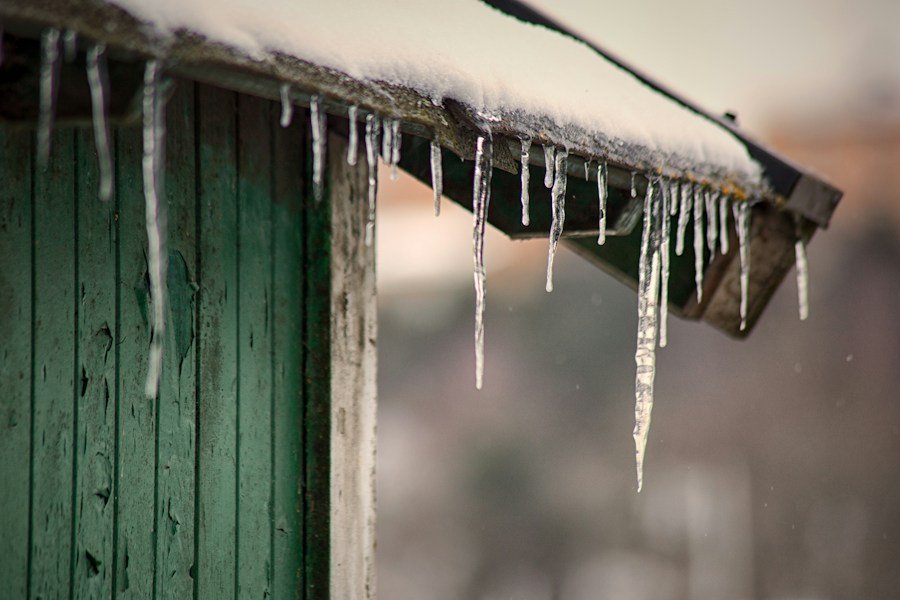
Central Jersey often sits on the line between snow and rain, so Franklin roofs see sleet, refreezing and many freeze-thaw swings each winter. That is hard on eaves, chimneys and flashing. Ice dams form most on capes and splits with thin attic insulation in the Somerset and East Franklin sections, and meltwater pushed under shingles shows up as stains along exterior walls.
Summer thunderstorms and heat
Most of New Jersey sees 25 to 30 thunderstorm days a year. In Franklin, summer storms bring short bursts of wind, sheets of rain and occasional small hail, while July sun bakes south-facing slopes on big colonials in Franklin Park and the southern subdivisions. Heat ages asphalt and loosens sealant around pipe boots and skylights, and cloudbursts overflow valleys clogged with spring seed and debris.
Roofing services
Do I Really Need a Specialist, or Will Any Roofer Do in Franklin?
Any registered roofer can replace shingles on a Franklin colonial, but a historic-district farmhouse, a townhome row or a slate roof in Kingston each need specific know-how. Here is how each of our services applies in the township; full details are on each roof repair NJ service page.
Roof Leak Repair in Franklin Township
A stain on your ceiling does not automatically mean a new roof. On Franklin colonials the culprit is usually a skylight, valley, chimney or pipe boot. We find the actual source, show you photos and fix that, then tell you honestly how much life the rest of the roof has.
Emergency Roof Repair in Franklin Township
When a limb comes through a roof in Griggstown or wind tears open a ridge on a Franklin Park colonial, request emergency help through the contact page at any hour. We tarp the opening, secure loose material and document the damage for your insurer.
Storm Damage Roof Repair in Franklin Township
After summer storms and nor’easters, we check Franklin roofs for lifted and creased shingles, broken seal strips, damaged ridge vents and limb strikes, including from the attic side. You get a dated photo report your adjuster can work from.
Roof Replacement in Franklin Township
Many 1980s to 2000s Franklin roofs are due. We tear off to the deck, replace damaged sheathing under a permit, and install ice and water shield, proper ventilation and new flashing. Inside a historic district, we help you prepare for the commission’s review first.
Roof Inspection in Franklin Township
Our free inspection covers shingles, flashing, valleys, skylights, vents, gutters and the attic where we can reach it. Franklin buyers of 1990s colonials and townhomes often ask for one before closing, since the original roof is the big unknown.
Flat Roof Repair in Franklin Township
Flat and low-slope sections in Franklin are mostly porch roofs on older village houses, rear additions, and commercial buildings along Hamilton Street and Easton Avenue. We repair EPDM, TPO and modified bitumen and fix the transitions where low slope meets shingles.
Metal Roof Repair in Franklin Township
Metal in Franklin means standing-seam porch roofs on Middlebush and East Millstone farmhouses, copper valleys, barn and outbuilding roofs on the west side, and metal accents on newer homes. We repair seams, refasten panels and replace corroded flashing.
Slate Roof Repair in Franklin Township
Slate survives on some older homes and churches in Kingston, East Millstone and the canal villages. We replace broken slates individually with matching stone on copper hooks or nails and re-flash valleys and chimneys without walking on the slate.
Shingle Roof Repair in Franklin Township
Most Franklin roofs are asphalt architectural shingles. We replace lifted and missing shingles, reseal tabs, replace boots and ridge caps, and match colour and profile as closely as possible on townhome rows where your section sits beside your neighbours’.
Roof Cleaning in Franklin Township
On wooded lots near the canal and Six Mile Run, moss and algae hold water on north slopes. We clean with low-pressure methods that protect granules, clear packed valleys and gutters, and can add zinc or copper strips to slow regrowth.
Gutter Repair in Franklin Township
Gutters on Franklin homes clog with seeds in spring and leaves in fall, and overflow drives water into fascia and basements. We re-pitch and reattach gutters, extend leaders away from foundations and reline the built-in gutters on older farmhouses.
Commercial Roofing in Franklin Township
We repair low-slope roofs on retail and office buildings along Route 27, Hamilton Street and Easton Avenue, churches, and light-industrial buildings near I-287, with written scopes and photo reports for property managers.
Who does the work
Why Franklin Township Homeowners Choose Roof Repair SNJ
- Repairing NJ roofs for 25+ years
- General liability + workers’ comp insurance
- Workmanship warranty: 2 years on repairs, 10 years on full replacements, in writing
- Photo report with every inspection
Check any roofer before you sign in Franklin Township
Ask for the 13VH registration number and confirm it on the NJ license lookup. NJ law requires a signed written contract showing the registration number and total price, and gives you until midnight of the third business day to cancel (N.J.S.A. 56:8-151).
Nearby
Do Neighbouring Towns Have the Same Roof Problems as Franklin?
Some do, many do not. Franklin borders eleven municipalities in three counties, and the closer they sit to the rivers or to older city blocks, the more their roofs differ from Franklin Park’s subdivisions. For the county view, see our Somerset County roof repair page, and for the neighbour to the north-west, our Bridgewater roof repair page.
New Brunswick
New Brunswick, across the township’s northern edge near Hamilton Street and Easton Avenue, is a dense city of older two-families, row houses and apartment buildings near Rutgers, so flat roofs, rental-building repairs and attached-home permits are far more common there than in Franklin.
South Brunswick
South Brunswick lies across Route 27 to the south-east and includes Kendall Park, which many people assume is part of Franklin. Its subdivisions resemble Franklin Park’s, but permits and inspections go through South Brunswick’s own offices, and Kingston is split between the two.
Manville
Manville, across the Millstone and Raritan to the west, flooded far worse than Franklin in Floyd and Ida, with the Raritan cresting near 27.6 feet in 2021. Many of its compact homes were rebuilt after floods, and substantial-damage rules come up there more often.
Hillsborough Township
Hillsborough, to the west across the Millstone, is mostly 1980s to 2000s colonials on larger lots, so its roof ages match Franklin Park’s, but it has fewer of Franklin’s older postwar capes and splits and it does not share Franklin’s local canal-zone review along Canal Road.
South Bound Brook
South Bound Brook, a small borough on the Raritan at the township’s northern tip, has older, closely spaced frame homes beside the canal and the river, and flood history tied to Floyd’s record crest at Bound Brook in 1999.
Service areas
Roof Repair Near Franklin Township: Somerset County Service Areas
We serve Franklin Township and every town around it. Bordering towns we also cover include New Brunswick (Middlesex County), North Brunswick (Middlesex County), South Brunswick (Middlesex County), Piscataway (Middlesex County), South Bound Brook, Manville, Hillsborough, Montgomery. See all of Somerset County on our Somerset County roof repair page or browse every county on the New Jersey service areas page.
All 21 towns we serve in Somerset County
Bedminster · Bernards · Bernardsville · Bound Brook · Branchburg · Bridgewater · Far Hills · Green Brook · Hillsborough · Manville · Millstone Borough · Montgomery · North Plainfield · Peapack and Gladstone · Raritan · Rocky Hill · Somerville · South Bound Brook · Warren · Watchung
In depth
Five Franklin Township Roof Myths, Taken Apart
Myth: no permit needed means no approval needed in a historic district
Wrong, and it is the most expensive misunderstanding in Franklin. Even though detached one- and two-family homes no longer need a construction permit to re-roof, the township says all siding and roof replacements in a historic district still require Historic Commission review and approval before the work starts. Franklin’s local districts are bigger than people expect. Every property within 1,000 feet of the D&R Canal is included, along with East Millstone Village, Franklin Park Village, Kingston Village and Middlebush Village. If you live along Canal Road in Griggstown or Blackwells Mills, you are very likely inside one.
How it works: you apply through the Department of Planning and Zoning, which forwards your materials to the Historic Preservation Advisory Commission, a volunteer board, and your project goes on the next open meeting agenda. You generally do not have to contact the commission directly. Bring clear photos of the existing roof, the product you want, and details of any changes to gutters, trim or sheathing.
What the commission cares about shows up in its minutes. On April 7, 2015 it approved replacing a roughly 30-year-old cedar roof on South Middlebush Road with architectural asphalt shingles by a 5-4 vote, but only with the built-in gutters repaired, relined and reused and the original spaced sheathing kept under the new plywood. The same night it unanimously approved an in-kind three-tab replacement on Canal Road in Griggstown, and approved dimensional shingles on the Rutgers Prep Elm Farmhouse over one member’s objection that dimensional shingles are not truly in-kind.
The lesson: in-kind work moves quickly, material changes get debated, and original details like built-in gutters matter. Start early, ask the township whether your property is in a district, and do not let anyone tear off a roof there before approval. We help you assemble photos and product sheets for the application.
Myth: my 1990s house is too new to need a roof
Not anymore. If your Franklin Park colonial or southern-subdivision home was built in the 1980s, 1990s or early 2000s and still has its first roof, that roof is at or near the end of its life, whatever the house’s age suggests. Somerset County has the newest housing stock in New Jersey, with a median build year of 1982, and Franklin grew enormously in those decades. That makes it easy to think of these houses as new. Their roofs are not.
Many of the original roofs on homes from that era were three-tab or early architectural shingles installed by production builders, with builder-grade pipe boots, basic ridge vents and sometimes thin ice protection at the eaves. After 20 to 30 summers on a south-facing slope, the asphalt dries out, granules wash into the gutters, tabs curl and the seal strips stop holding in wind.
Here is how to tell. Look for granules piling up at downspout outlets, shingles that look lighter or patchy on the sunny side, tabs lifting along the rakes and ridge, cracked rubber collars around plumbing vents, and dark streaks on the attic sheathing near the eaves. One leak around a boot can be repaired for a few hundred dollars. Several symptoms together mean you are paying for repairs on a roof that is finished.
The good news: a detached house outside the historic districts needs no permit to re-roof, unless we find sheathing to replace. A replacement is also the right moment to fix ventilation and add ice and water shield at the eaves, valleys and around skylights. Our free inspection tells you plainly whether you are in repair territory or replacement territory, with photos, so you can plan instead of reacting to the next storm.
Myth: my townhome association handles the whole roof
Sometimes it does, often it does not, and in some Franklin communities it depends on whether the problem is the shingles, the flashing or the deck. Franklin has many townhome communities along the Route 27 corridor and elsewhere, plus age-restricted communities such as Canal Walk and Somerset Run with attached homes. Roofs on those rows run continuously from unit to unit, which means one unit’s repair affects the neighbours on both sides.
Start with your governing documents: the master deed, bylaws and any maintenance chart. They define whether the roof is a common element maintained by the association, a limited common element you pay for, or part of your unit. Many associations also require written approval and their own approved contractors, and some require the work to match a community-wide shingle colour.
Then the permit. Townhomes are attached dwellings, so they fall outside the ordinary-maintenance exemption. Replacing roofing on a townhome in Franklin generally needs a construction permit from the township’s Construction Code Department, in addition to association approval. Do not let anyone tell you otherwise because a single-family neighbour re-roofed without one.
Finally, the technical part. When only one section of a row is repaired or replaced, the joints at the party walls are where the next leak starts. New shingles must be woven or stepped properly into the neighbours’ roofs, and fire separation details at the party wall must be respected. We document the condition of adjacent sections with photos before we start, so no one is blamed for damage that was already there, and we give the association a written scope it can approve. Repairs carry our 2-year written workmanship warranty.
Myth: ice dams mean I need bigger gutters or heat cables
Gutters do not cause ice dams and bigger gutters do not cure them. On Franklin’s postwar capes, ranches and split-levels, ice dams come from warm attics melting snow that then refreezes at the cold eave. The Somerset and East Franklin sections around Hamilton Street and Easton Avenue are full of these houses, and many have finished upper rooms or kneewall attics with little insulation and poor airflow.
Here is the mechanism. Heat from the living space leaks into the roof deck. Snow on the upper roof melts, runs down to the overhang, which is outside and cold, and freezes. The ridge of ice grows, and new meltwater pools behind it and works under the shingles. That water shows up as stains along exterior walls, peeling paint at the top of the wall or wet insulation in the kneewall.
Heat cables can keep a channel open, but they treat the symptom and use electricity all winter. Gutter guards and larger gutters do nothing, since the ice forms on the roof itself.
The real fixes, in order of impact: air seal the attic floor and kneewall areas so warm air stops reaching the deck; make sure insulation covers the ceiling evenly; open up soffit vents and pair them with a ridge vent so cold air flows under the deck; and when the roof is replaced, install ice and water shield at least two feet inside the warm wall line. Central Jersey’s freeze-thaw winters, where snow turns to sleet and back, make this more important, not less. We inspect the attic as well as the roof, so the quote addresses the cause instead of just the stained ceiling.
Myth: if the shingles look fine after a storm, the roof is fine
Not on Franklin’s wooded west side, and not on older houses with board sheathing. A falling limb can crack rafters or decking while the shingles above look scuffed at most, and wind can break seal strips without removing a single shingle. Griggstown, Blackwells Mills, the canal and Six Mile Run areas, and much of the Middlebush countryside have mature hardwoods leaning over roofs, and summer thunderstorms and the remnants of tropical storms bring them down.
After a limb strike, look for a dip or wave in the roofline, cracked or sagging boards seen from the attic, nail points pushed through the deck, or light coming through. Inside, watch for new cracks in ceiling drywall or plaster. On older farmhouses with spaced plank sheathing, a cracked board can let the roofing above sag and leak months later.
Wind is subtler. Architectural shingles are held by nails and a factory seal strip. Strong gusts can lift tabs enough to break that seal and drop them back flat. From the ground the roof looks perfect, but those tabs now flap in moderate wind and let water under. Creased shingles show a faint horizontal line across the tab. Insurers generally treat this as sudden wind damage if it is documented soon after the storm.
What to do: after a significant storm, take your own photos from the ground and note the date, then book an inspection. Ours is free and covers the roof surface and the attic side, with dated photos for your adjuster. If there is an opening, request emergency help through our contact page and we will tarp it. Do not climb onto a damaged roof yourself, especially a steep one under wet leaves.
FAQ
Roof Repair in Franklin Township, NJ: Frequently Asked Questions
Do I really need a permit to replace my roof in Franklin Township?
Not for a detached one- or two-family house, which New Jersey treats as ordinary maintenance, unless sheathing or rafters are replaced. Townhomes, attached homes, commercial buildings and a third layer need a permit from Franklin’s Construction Code Department. Historic-district homes need commission approval either way.
Is my Somerset, NJ address actually in Franklin Township?
Usually yes. Somerset (08873 and 08875), Franklin Park (08823), Kingston (08528) and Zarephath (08890) addresses are sections of Franklin Township, and its construction office and historic commission cover them. Kendall Park is different: it is part of South Brunswick, across Route 27.
Why does my Franklin historic-district roof need approval if no permit is required?
Because the township says all siding and roof replacements in historic districts still need Historic Commission review before work starts. That covers property within 1,000 feet of the D&R Canal and the East Millstone, Franklin Park, Kingston and Middlebush villages. Apply through Planning and Zoning.
Can I switch from cedar to asphalt shingles in Middlebush?
Possibly, with approval. In 2015 Franklin’s commission approved a cedar-to-architectural change on South Middlebush Road by a 5-4 vote, on condition that the built-in gutters were relined and reused and the original spaced sheathing kept. Expect debate on material changes and plan for conditions.
How much does roof repair cost in Franklin Township?
As of November 2026, most Franklin repairs run $350 to $1,800. Pipe boots and a few shingles sit at the low end; skylight and chimney flashing, valleys and rotted decking on damp homes near the Millstone sit higher. A free inspection gives you a written itemized quote for your roof.
My Franklin Park house is from 1995. Is the roof really due?
If it is the original roof, very likely. Somerset County’s median home dates to 1982, and many 1980s to 2000s Franklin roofs are now 25 to 35 years old. Granules in the gutters, curled tabs and cracked boots mean you are near replacement, and spot repairs will buy only limited time.
Who fixes the roof on my Franklin townhome?
Your governing documents decide. In some Franklin communities the association maintains the roof; in others the unit owner pays. Most require association approval and matching shingles, and replacement on attached homes needs a township permit. Check the master deed before hiring anyone.
Does homeowners insurance cover Millstone River flood damage to my house?
No. River flooding from the Millstone or Raritan is covered only by flood insurance. Your homeowners policy usually covers sudden roof damage such as wind, hail, falling trees and the weight of snow and ice, and rain that enters through that damage, but not wear, age or rising floodwater.
Why do I get ice dams on my cape in the Somerset section?
Because heat escapes into the attic, melts snow on the upper roof, and the water refreezes at the cold eave. Bigger gutters will not fix it. Air sealing, even insulation, soffit and ridge ventilation, and ice and water shield at replacement solve most ice dams on Franklin capes and splits.
Do you repair slate roofs in Kingston or East Millstone?
Yes. We replace broken slates one at a time with matching stone on copper hooks or nails, and re-flash valleys and chimneys without walking on the slate. Both Kingston and East Millstone are local historic districts in Franklin, so a full replacement or material change needs commission review.
Is a skylight leak a sign my Franklin roof is shot?
Usually not. On big Franklin Park colonials, skylight leaks most often come from an aging flashing kit or a valley above the skylight, not the glass or the whole roof. Re-flashing typically costs $400 to $1,800 and can buy years if the surrounding shingles are sound.
How do I check that a roofer can legally work in Franklin Township?
Ask for their New Jersey home improvement contractor registration, a number starting 13VH, and look it up on the Division of Consumer Affairs verification site. Franklin homeowners should get a written contract showing the total price, insurance certificate and a three-business-day right to cancel.
Reviewed by the Roof Repair SNJ team · Last updated November 2026
Free inspection
Get a Straight Answer on Your Franklin Township Roof
Not sure if it is a repair or a replacement, whether you need commission approval on Canal Road, or who pays on your townhome row? Start with a free inspection and dated photos. Request your free Franklin Township roof inspection and get a written itemized quote. Repairs carry a 2-year written workmanship warranty, and replacements carry 10 years.
No pressure and no obligation. If a repair will do, we’ll tell you.
Roof Repair SNJ
- Serving Franklin Township and all of Somerset County
- Request roof service in Franklin Township
- Mon–Fri 5:00 AM–10:00 PM · Sat 5:00 AM–6:00 PM · Emergencies 24/7
Sources: Franklin Township, Somerset County, New Jersey (Wikipedia: sections, borders, area, ZIPs, Kingston Mill HD) · Franklin Township: Local historic districts · Franklin Township: Historic Preservation Advisory Commission · Franklin Township HPAC minutes, April 7, 2015 · Franklin Township Construction Code Department: General permit instructions · Franklin Reporter: Ida causes havoc in the eight villages · Franklin Reporter: Township manager on Ida · News 12 New Jersey: Millstone River flooding closes Griggstown Causeway, March 6, 2026 · NWS MARFC: Raritan River at Manville historic crests · NRCC: Ida rainfall and Raritan River at Manville record · Effects of Hurricane Floyd in New Jersey · Stacker: Counties with the oldest homes in New Jersey (ACS 2023) · Office of the NJ State Climatologist: Climate overview · 55places: Active adult communities in Somerset, NJ · N.J.A.C. 5:23-2.7 Ordinary maintenance (Cornell LII) · NJ Division of Consumer Affairs license verification · N.J.S.A. 56:8-151 Home improvement contracts (Justia) · Roof Observations: New Jersey roof cost guide (Jan 2026) · Fixr: Roof replacement cost in New Jersey (2026). Prices are planning ranges, not quotes. Permit and insurance information is general guidance; your town, policy and agent have the final word.